The Fall of Bashar Assad Government and Turkey’s Role and Challenges

2024/12/14 | interview, Politics, top news

Strategic Council Online – Interview: An expert on Turkish affairs said: The power vacuum in the region after the US military withdrawal from Iraq and its intensification after the withdrawal from Afghanistan opened up space for maneuvering by regional powers, especially Turkey. In the meantime, Ankara, relying on national power, an active foreign policy, and cooperation with the main power blocs in the international system, turned towards ambition and role-playing in the affairs of countries and regional issues, the most important example of which we are witnessing today in Syria.

In an interview with the Strategic Council on Foreign Relations website regarding Turkey’s positions and role in the process of the collapse of the Syrian regime, Jafar Haqpanah stated: Turkey was known as a regional power in the past, but it is gradually achieving the status of an emerging power that, like South Korea, South Africa, and Brazil, can be active in more than one region and have a political, security, and military function, in a way that forces major and global powers to take their security considerations into account and sometimes find a parallel partnership with them in significant games. This does not simply refer to the field of foreign relations of countries but rather arises from the components of national power, economic power, and soft power, and the mobility of elites who can create cohesion and strengthen the social base at home while having a correct understanding of the logic of power and with that, adjust their rhythm and move forward.

He continued: “In the past 25 years, Turkey has maintained its power despite some setbacks, including in Syria in the past 10 years, and has made great achievements in the economic, technological, and industrial fields despite facing many problems. Also, despite all the internal divisions it has had, it has been able to create cohesion among the political elites. Of course, internal competition has led to the strengthening of the country’s power. In fact, the transformation that has taken place in Turkey’s foreign policy in recent years is the result of the tremendous changes in Turkey. Given the country’s geopolitical and geoeconomic situation, its national power has increased. Naturally, its foreign policy direction will change accordingly.”

This expert on Turkish affairs stated: In the past, Turkey’s foreign policy was business-oriented and avoided foreign intervention, but when it reached high levels of economic power, soft power, and alliances with the main power blocs in the international system, it is natural that its foreign policy would become more active and be accompanied by adventurism and interventionism.

Stating that some people mistakenly refer to Turkey’s approach as neo-Ottomanism, he added: “Of course, this process has been full of ups and downs, but Turkey has played an active role in its peripheral regions, and it was completely in line with the situation it had in the region.” The important point is that realism in Turkey’s foreign policy is accompanied by considering the country’s power components. Of course, pursuing this policy sometimes led to failure.

Haqpanah said: “What caused Turkey to pay special attention to developments in the Middle East since 2011 was the power vacuum in the region after the withdrawal of American troops from Iraq and the lack of attention America paid to the region. In this atmosphere, Iran claimed power in the region, which did not please Turkey.”

Regarding Turkey’s response to regional developments in the past ten years, he stated that Turkey’s intervention in regional crises, including in Syria, failed because this type of interventionism had not been experienced in the country’s strategic culture. However, this situation was temporary, and in the past seven or eight years, Turkey has rebuilt itself in foreign policy and is now playing a field role in Syria.

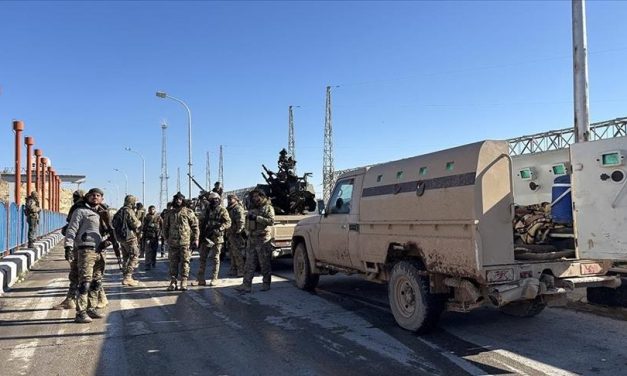
As the main Syrian opposition groups are under its supervision, it has also established contacts with regional powers and the international system in a way that it treats Iran and Russia on the one hand and the Israeli regime and the Arab countries of the region on the other as a mediator and at the same time a share seeker. This expert on Turkish affairs, emphasizing that Turkey is a definite winner in the current events related to Syria, stated: At the same time, Turkey must know that it is in a region that has a contradictory nature, meaning that in the Middle East, the situation of friends and enemies is not very clear, and this creates a complex situation. Currently, in Syria, Tahrir al-Sham and Sultan Murad’s groups are affiliated with Turkey. Still, there is no such control over the Free Syrian Army, the Syrian Kurdish opposition, the extremist Sunni Umayyad movements, and the Salafi and ISIS underground movements, and there is no guarantee that they will be able to organize everything. In any case, Syria is a bankrupt country, and unlike Iraq, it has extensive natural resources. After the honeymoon that will probably appear following the collapse of the Assad regime, problems will begin emerging, rival powers will come to the fore, and these conditions will make coalition-building difficult and complicated. On the other hand, Turkey’s security concerns, especially concerning the Kurds, are increasing, and perhaps one of the reasons for its consultations with Iran and Russia is these security issues. Therefore, Turkey will probably turn to Qatar, Saudi Arabia, and other countries in the region and seek their help in the process of state-nation building and management of rival groups. In any case, a challenging and problematic period is ahead in Syria.

Concerning Turkey’s achievement in the Syrian crisis, he stated that Turkey showed that it can learn from its foreign policy failures and compensate for them.

Asked what danger Turkey has avoided in border equations with Assad’s departure, the analyst said: In this regard, Turkey is still in a fragile situation. The future of the Syrian Kurds and refugees and the activities of small and large groups that a rival power may support are among the challenges facing Turkey. Therefore, Turkey’s security challenges are severe and may become actual. Perhaps a weakened Bashar Assad could better respond to Turkey’s security concerns. Still, Turkey has greater ambitions and goals in competition with other powers, including Iran, Egypt, Russia, and even the Israeli regime. They now see themselves one step ahead of all these powers in the region, and this issue should not be ignored in analyses.

He added that Turkey’s main characteristic is that it is a bargainer. Unlike Iran, which has failed to consolidate its achievements in the region over the years and force others to recognize these achievements, Turkey is now ready to negotiate with Iran and Russia and does not avoid it, and this is a significant point that should be considered in the country’s policy.

Regarding Recep Tayyip Erdogan’s statements that Bashar Assad did not accept cooperation, Haqpanah said: Perhaps he is referring to an opportunity Bashar Assad missed during all the years that the “Astana” initiative was formed, and that was the inability to understand the developments in the Middle East, and the international system and the internal issues of Syria that determined the current situation. In fact, as important as victory on the battlefield is that the fate of the war is ultimately determined in the halls of negotiation and bargaining.
0 Comments

LATEST CONTENT

America’s Zero-Sum Game in Iraq

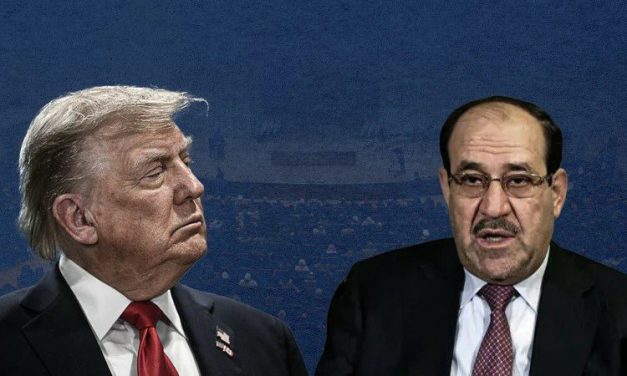
Online Strategic Council – Memoir: The swift selection of Nouri al-Maliki for the premiership constitutes a new phase in Iraq’s political sphere. Multiple factors have played a role in this process, the most important being the prevailing situation in Iraq and the region. Under such circumstances, Iraq requires a powerful and experienced prime minister who can keep the country away from the dangers of wars and crises.

America’s Strategy for Creating Tension in the Asia-Pacific

Strategic Council Online – Opinion: Relations between some countries in the Asia-Pacific region, such as China and Japan or China and Australia, which were previously relatively normal, are trending towards deterioration, and the primary reason for this is the aggressive policies of the United States of America.

The Collapse of the European Security Illusion with the Continuation of the Ukraine War?

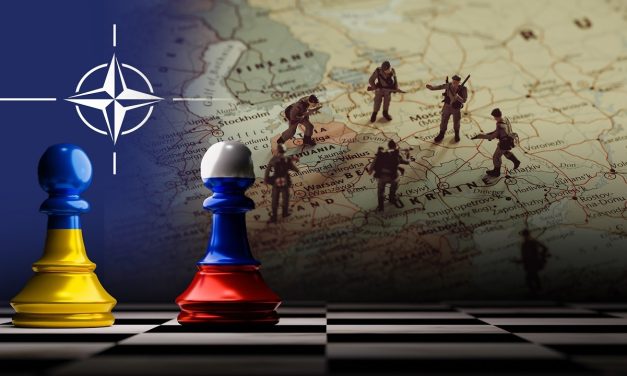
Strategic Council Online – Interview: The Ukraine war has become a new turning point in the political, security, and even commercial relations of allies on both sides of the Atlantic. While this war is nearing its fourth year, many questions still remain regarding its future and its consequences; among them, will the continuation of the Ukraine war lead to the collapse of the European security illusion?

Is Greenland Pushing Europe Toward China?

Strategic Council Online – Interview: A European affairs expert believes that the seizure of Greenland will certainly weaken America’s relations with Europe and its allies. Donald Trump’s view is that he does not need these countries, but if Europe faces significant pressure from the United States, it is natural for it to move toward China.

Alarm Bells Sound for ISIS Revival in Syria: Threat to Iraq and West Asia

Strategic Council Online – Opinion: Numerous documents and pieces of evidence indicate that ISIS, which in recent years has been the region’s biggest threat to security and stability after the Zionist regime, has once again in recent months become a focal point for political and security exploitation by American and Zionist regime security, intelligence, and political circles.

Afghanistan’s Effective Role in the Economy of Eurasia

Strategic Council Online – Interview: A regional affairs researcher stated: Despite projects such as the Khaf-Herat railway and the Herat-Balkh-Mazar-i-Sharif corridor being on the agenda, insecurity and the absence of an inclusive government remain the most significant obstacles to realizing transit corridors and Afghanistan playing an effective role in the economy of Eurasia.

Loading

Últimas publicaciones

America’s Zero-Sum Game in Iraq

Online Strategic Council – Memoir: The swift selection of Nouri al-Maliki for the premiership constitutes a new phase in Iraq’s political sphere. Multiple factors have played a role in this process, the most important being the prevailing situation in Iraq and the region. Under such circumstances, Iraq requires a powerful and experienced prime minister who can keep the country away from the dangers of wars and crises.

America’s Strategy for Creating Tension in the Asia-Pacific

Strategic Council Online – Opinion: Relations between some countries in the Asia-Pacific region, such as China and Japan or China and Australia, which were previously relatively normal, are trending towards deterioration, and the primary reason for this is the aggressive policies of the United States of America.

The Collapse of the European Security Illusion with the Continuation of the Ukraine War?

Strategic Council Online – Interview: The Ukraine war has become a new turning point in the political, security, and even commercial relations of allies on both sides of the Atlantic. While this war is nearing its fourth year, many questions still remain regarding its future and its consequences; among them, will the continuation of the Ukraine war lead to the collapse of the European security illusion?

Is Greenland Pushing Europe Toward China?

Strategic Council Online – Interview: A European affairs expert believes that the seizure of Greenland will certainly weaken America’s relations with Europe and its allies. Donald Trump’s view is that he does not need these countries, but if Europe faces significant pressure from the United States, it is natural for it to move toward China.

Alarm Bells Sound for ISIS Revival in Syria: Threat to Iraq and West Asia

Strategic Council Online – Opinion: Numerous documents and pieces of evidence indicate that ISIS, which in recent years has been the region’s biggest threat to security and stability after the Zionist regime, has once again in recent months become a focal point for political and security exploitation by American and Zionist regime security, intelligence, and political circles.

Afghanistan’s Effective Role in the Economy of Eurasia

Strategic Council Online – Interview: A regional affairs researcher stated: Despite projects such as the Khaf-Herat railway and the Herat-Balkh-Mazar-i-Sharif corridor being on the agenda, insecurity and the absence of an inclusive government remain the most significant obstacles to realizing transit corridors and Afghanistan playing an effective role in the economy of Eurasia.

Loading

DERNIER CONTENU

America’s Zero-Sum Game in Iraq

Online Strategic Council – Memoir: The swift selection of Nouri al-Maliki for the premiership constitutes a new phase in Iraq’s political sphere. Multiple factors have played a role in this process, the most important being the prevailing situation in Iraq and the region. Under such circumstances, Iraq requires a powerful and experienced prime minister who can keep the country away from the dangers of wars and crises.

America’s Strategy for Creating Tension in the Asia-Pacific

Strategic Council Online – Opinion: Relations between some countries in the Asia-Pacific region, such as China and Japan or China and Australia, which were previously relatively normal, are trending towards deterioration, and the primary reason for this is the aggressive policies of the United States of America.

The Collapse of the European Security Illusion with the Continuation of the Ukraine War?

Strategic Council Online – Interview: The Ukraine war has become a new turning point in the political, security, and even commercial relations of allies on both sides of the Atlantic. While this war is nearing its fourth year, many questions still remain regarding its future and its consequences; among them, will the continuation of the Ukraine war lead to the collapse of the European security illusion?

Is Greenland Pushing Europe Toward China?

Strategic Council Online – Interview: A European affairs expert believes that the seizure of Greenland will certainly weaken America’s relations with Europe and its allies. Donald Trump’s view is that he does not need these countries, but if Europe faces significant pressure from the United States, it is natural for it to move toward China.

Alarm Bells Sound for ISIS Revival in Syria: Threat to Iraq and West Asia

Strategic Council Online – Opinion: Numerous documents and pieces of evidence indicate that ISIS, which in recent years has been the region’s biggest threat to security and stability after the Zionist regime, has once again in recent months become a focal point for political and security exploitation by American and Zionist regime security, intelligence, and political circles.

Afghanistan’s Effective Role in the Economy of Eurasia

Strategic Council Online – Interview: A regional affairs researcher stated: Despite projects such as the Khaf-Herat railway and the Herat-Balkh-Mazar-i-Sharif corridor being on the agenda, insecurity and the absence of an inclusive government remain the most significant obstacles to realizing transit corridors and Afghanistan playing an effective role in the economy of Eurasia.

Loading