Commercial Exploitation of Peace; The Gaza Committee in Confrontation with International Legitimacy

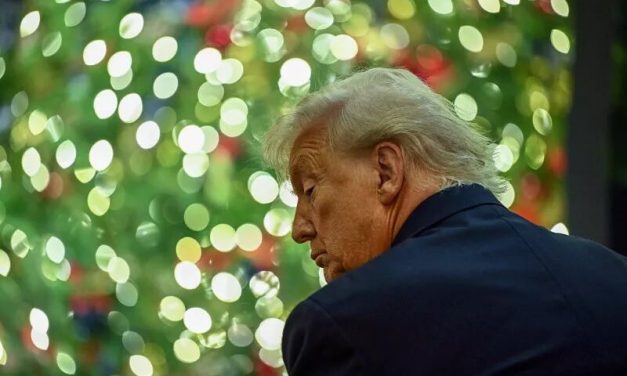
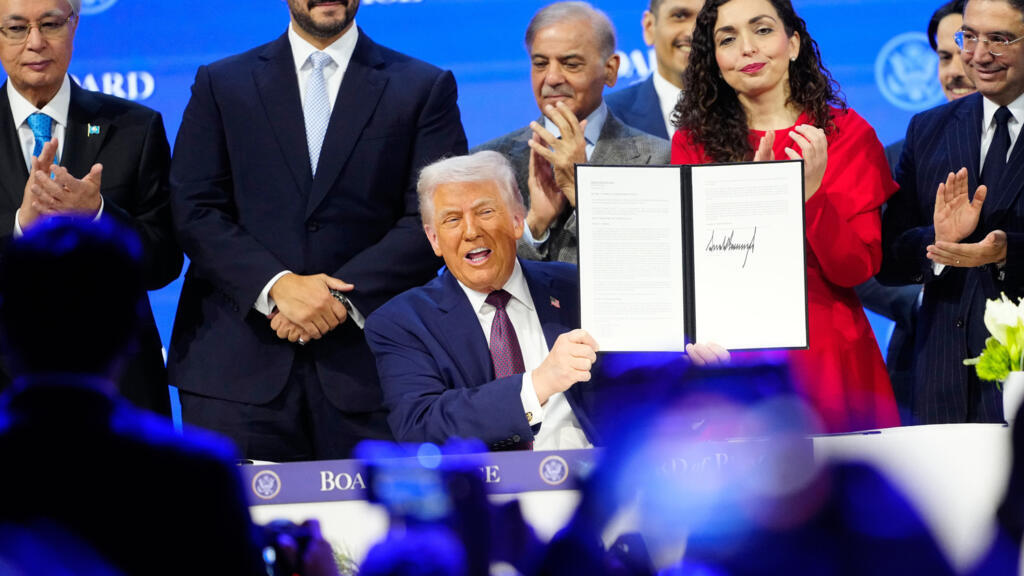
Strategic Council Online – Report: While the second phase of the implementation of the Gaza ceasefire has begun, the establishment of the “Peace Board” chaired by Donald Trump on the sidelines of the Davos meeting (22 January 2026) has become more than a technical mechanism for reconstruction and has turned into a test for the future of the international order. Despite the signing of the charter by 22 out of 60 invited countries, the limited presence of global leaders at the Davos ceremony and the non-acceptance of this body by the European Union and key Western countries indicate a deep divide in global perceptions of the legitimacy of this mechanism. In this report, drawing on the analysis of Hadi Borhani, a regional affairs expert, and international data, three strategic questions are addressed: Is the Peace Board an instrument for implementing UN Security Council Resolution 2803 or a substitute for the United Nations? How does the hierarchical architecture of this committee intensify executive challenges in Gaza? And finally, can this body create sustainable peace without the cooperation of Palestinians and with the concentration of power in the hands of a single individual?

Architecture of Power: From “Paid Membership” to Lifetime Presidency

Hadi Borhani, in an interview with the Strategic Council on Foreign Relations website, noted that so far 22 countries have accepted the invitation to join this committee and have signed its charter, recalling that Trump had invited approximately 60 countries to join this committee.

According to published reports, any country wishing to obtain permanent membership in this committee must pay one billion dollars; otherwise, the renewal of its three-year presence in the committee will be contingent upon Trump’s decision.

This financial structure has turned the Peace Board into a “pay-to-play club,” in which legitimacy is determined on the basis of financial capacity rather than international consensus. Legal analyses by the European Union show that the committee’s charter concentrates exclusive powers in the hands of the committee’s chair. Trump is the only individual whose name is mentioned in the charter and who has the right to invite countries, set the agenda, establish or dissolve subsidiary bodies, and even nominate his own successor. This design, according to Hugh Lovatt, an expert at the European Council on Foreign Relations, has transformed the committee from a multilateral institution into “a top-down project to consolidate Trump’s control over global affairs.”

Legitimacy Gap: A Charter That Forgot Gaza

Borhani stated regarding this committee: It is not clear how decisions of this Trump-chaired committee, which is supposed to oversee the administration of Gaza, will be made, but it is clear that the executive institution or body responsible for administering Gaza operates under the supervision of the Peace Board.

Here, a fundamental contradiction becomes evident: while UN Security Council Resolution 2803, which “welcomed” the establishment of the committee, was explicitly focused on Gaza, the Peace Board’s charter makes no reference whatsoever to Gaza and presents itself as a permanent body for managing all global crises. This disconnect has intensified concerns about the committee becoming “a substitute for the United Nations”—as Trump himself has claimed. Mary Robinson, former chair of “The Elders,” described this discrepancy as a “delusion of power,” since we are dealing with an organization whose charter does not even mention the name of the region it is supposed to administer.

The executive structure of the committee further deepens this legitimacy gap. The Gaza Executive Committee, composed of 11 members appointed by Trump, lacks any Palestinian representative, while the Israeli regime holds a seat.

According to Borhani, the National Committee for the Administration of Gaza (NCAG), which is supposed to direct day-to-day affairs, has been formed under the chairmanship of Ali Shaath; however, the Israeli regime opposes this appointment and also rejects the presence of Qatar and Türkiye in the administration of Gaza—while the United States has accepted it. This confrontation shows that the Peace Board not only fails to resolve Gaza’s political challenges, but rather institutionalizes them within a new layer of regional rivalries.

Gaza: The Initial Test for a New Institution

Borhani emphasized: Although conditions in Gaza are relatively calm and it is unlikely that unforeseen events will change these conditions, political issues regarding how Gaza should be administered will remain the main challenge. Each of the parties involved in the Gaza issue is trying to pursue its desired conditions by attracting Trump’s support.

Referring to the fact that the ceasefire plan, following the unprecedented crimes of the Israeli regime against Gaza and the mass killing of civilians, was ultimately implemented after extensive back-and-forth, he said: In the first phase of the implementation of this plan, on the one hand, the Israeli regime sought to influence this process in order to carry out the criminal objectives it had against the people of Gaza and Palestine.

He added: The Israeli regime sought to completely eliminate Hamas and expel the people of Gaza from the region. Had it not been for international opposition and the opposition of neighboring countries of the Israeli regime, including Egypt and Jordan, this regime would have been inclined to implement its plan.

Borhani continued: On the other hand, some regional countries, including Türkiye, Egypt, Qatar, Pakistan, and Saudi Arabia, given their good relations with the United States and Trump personally, sought to be influential in the ceasefire process and the Gaza peace plan.

This analysis is consistent with the report of Ramiz Alakbarov, the UN Special Representative, who warned on 28 January 2026 that the reopening of the Rafah crossing—committed to by Trump and the National Committee for the Administration of Gaza—has not yet been fully implemented and has been limited only to the passage of goods. While the recovery of the body of the last Israeli hostage was Israel’s precondition for opening the crossing, this commitment has not been fulfilled. This failure to implement the commitments of the first phase raises a strategic question: If the Peace Board cannot follow through on simple commitments such as opening the crossing, how can it manage the second phase—the creation of an international stabilization force?

Three Actors, Three Visions: A Clash of Interests in the Shadow of the Peace Board

Borhani identified the Israeli regime, Arab and Islamic countries, and the United States as the three main actors in the process of implementing the Gaza ceasefire, stating: These three actors played an important role in implementing the first phase of the peace plan, namely the Gaza ceasefire, and in the second phase, the issue of disarming Hamas and administering Gaza will be discussed.

He continued: The United States and Islamic countries insist that the second phase of the Gaza peace plan must begin sooner and have explicitly stated that the Rafah crossing must be opened. Recently, the Israeli regime has accepted opening the Rafah crossing on a limited basis, which, however, only includes the passage of goods and equipment.

This clash of interests places the Peace Board in a difficult position, because:

  • The Israeli regime, while opposing the presence of Qatar and Türkiye, seeks the complete disarmament of Hamas without the return of the Palestinian government to Gaza.
  • Islamic countries (Egypt, Qatar, Türkiye) emphasize the return of the Palestinian government and their active role in administering Gaza.
  • The United States is attempting to balance between these two axes, but with the concentration of power in Trump’s hands, institutional decisions are shaped by the personal calculations of the committee’s chair rather than by a consensus-based process.

Peace at the Cost of Weakening the Multilateral Order?

The Gaza Peace Board has emerged at a historic moment that not only determines the future of Gaza, but also puts the fate of the international order to the test. Three existential challenges threaten this body:

  • Legitimacy crisis: The non-membership of the European Union and key Western countries, combined with the “pay-for-membership” structure, has deprived it of global consensus. As António Costa, President of the European Council, emphasized, this body is incompatible with the principles of the UN Charter.
  • Implementation gap: A charter that makes no reference to Gaza, while its mission is defined on the basis of UN Security Council Resolution 2803, indicates a profound discrepancy between promise and reality. The absence of Palestinians from the Gaza Executive Committee has turned this gap into a local legitimacy crisis.
  • Unipolarization of power: The concentration of authority in the hands of a single individual—Trump as lifetime chair—not only contradicts the principles of international democracy, but also exposes decisions to fluctuations in personal calculations. As international analyses have warned, this structure may reproduce crises within the framework of personal power rivalries rather than resolve them.

Ultimately, the success or failure of the Peace Board in Gaza is not limited to the reopening of the Rafah crossing or the status of Hamas. This body is a test of the fundamental question of whether sustainable peace can be created by bypassing the United Nations and concentrating power in the hands of one country—or even one individual. Gaza’s answer to this question will shape the fate of the global order in the twenty-first century far beyond West Asia.


This text was translated using artificial intelligence and may contain errors. If you notice a clear error that makes the text incomprehensible, please inform the website editors.
0 Comments

LATEST CONTENT

Commercial Exploitation of Peace; The Gaza Committee in Confrontation with International Legitimacy

Strategic Council Online – Report: While the second phase of the implementation of the Gaza ceasefire has begun, the establishment of the “Peace Board” chaired by Donald Trump on the sidelines of the Davos meeting (22 January 2026) has become more than a technical mechanism for reconstruction and has turned into a test for the future of the international order.
Despite the signing of the charter by 22 out of 60 invited countries, the limited presence of global leaders at the Davos ceremony and the non-acceptance of this body by the European Union and key Western countries indicate a deep divide in global perceptions of the legitimacy of this mechanism.
In this report, drawing on the analysis of Hadi Borhani, a regional affairs expert, and international data, three strategic questions are addressed: Is the Peace Board an instrument for implementing UN Security Council Resolution 2803 or a substitute for the United Nations? How does the hierarchical architecture of this committee intensify executive challenges in Gaza? And finally, can this body create sustainable peace without the cooperation of Palestinians and with the concentration of power in the hands of a single individual?

America’s Zero-Sum Game in Iraq

Online Strategic Council – Memoir: The swift selection of Nouri al-Maliki for the premiership constitutes a new phase in Iraq’s political sphere. Multiple factors have played a role in this process, the most important being the prevailing situation in Iraq and the region. Under such circumstances, Iraq requires a powerful and experienced prime minister who can keep the country away from the dangers of wars and crises.

America’s Strategy for Creating Tension in the Asia-Pacific

Strategic Council Online – Opinion: Relations between some countries in the Asia-Pacific region, such as China and Japan or China and Australia, which were previously relatively normal, are trending towards deterioration, and the primary reason for this is the aggressive policies of the United States of America.

The Collapse of the European Security Illusion with the Continuation of the Ukraine War?

Strategic Council Online – Interview: The Ukraine war has become a new turning point in the political, security, and even commercial relations of allies on both sides of the Atlantic. While this war is nearing its fourth year, many questions still remain regarding its future and its consequences; among them, will the continuation of the Ukraine war lead to the collapse of the European security illusion?

Is Greenland Pushing Europe Toward China?

Strategic Council Online – Interview: A European affairs expert believes that the seizure of Greenland will certainly weaken America’s relations with Europe and its allies. Donald Trump’s view is that he does not need these countries, but if Europe faces significant pressure from the United States, it is natural for it to move toward China.

Alarm Bells Sound for ISIS Revival in Syria: Threat to Iraq and West Asia

Strategic Council Online – Opinion: Numerous documents and pieces of evidence indicate that ISIS, which in recent years has been the region’s biggest threat to security and stability after the Zionist regime, has once again in recent months become a focal point for political and security exploitation by American and Zionist regime security, intelligence, and political circles.

Afghanistan’s Effective Role in the Economy of Eurasia

Strategic Council Online – Interview: A regional affairs researcher stated: Despite projects such as the Khaf-Herat railway and the Herat-Balkh-Mazar-i-Sharif corridor being on the agenda, insecurity and the absence of an inclusive government remain the most significant obstacles to realizing transit corridors and Afghanistan playing an effective role in the economy of Eurasia.

Loading

Últimas publicaciones

Commercial Exploitation of Peace; The Gaza Committee in Confrontation with International Legitimacy

Strategic Council Online – Report: While the second phase of the implementation of the Gaza ceasefire has begun, the establishment of the “Peace Board” chaired by Donald Trump on the sidelines of the Davos meeting (22 January 2026) has become more than a technical mechanism for reconstruction and has turned into a test for the future of the international order.
Despite the signing of the charter by 22 out of 60 invited countries, the limited presence of global leaders at the Davos ceremony and the non-acceptance of this body by the European Union and key Western countries indicate a deep divide in global perceptions of the legitimacy of this mechanism.
In this report, drawing on the analysis of Hadi Borhani, a regional affairs expert, and international data, three strategic questions are addressed: Is the Peace Board an instrument for implementing UN Security Council Resolution 2803 or a substitute for the United Nations? How does the hierarchical architecture of this committee intensify executive challenges in Gaza? And finally, can this body create sustainable peace without the cooperation of Palestinians and with the concentration of power in the hands of a single individual?

America’s Zero-Sum Game in Iraq

Online Strategic Council – Memoir: The swift selection of Nouri al-Maliki for the premiership constitutes a new phase in Iraq’s political sphere. Multiple factors have played a role in this process, the most important being the prevailing situation in Iraq and the region. Under such circumstances, Iraq requires a powerful and experienced prime minister who can keep the country away from the dangers of wars and crises.

America’s Strategy for Creating Tension in the Asia-Pacific

Strategic Council Online – Opinion: Relations between some countries in the Asia-Pacific region, such as China and Japan or China and Australia, which were previously relatively normal, are trending towards deterioration, and the primary reason for this is the aggressive policies of the United States of America.

The Collapse of the European Security Illusion with the Continuation of the Ukraine War?

Strategic Council Online – Interview: The Ukraine war has become a new turning point in the political, security, and even commercial relations of allies on both sides of the Atlantic. While this war is nearing its fourth year, many questions still remain regarding its future and its consequences; among them, will the continuation of the Ukraine war lead to the collapse of the European security illusion?

Is Greenland Pushing Europe Toward China?

Strategic Council Online – Interview: A European affairs expert believes that the seizure of Greenland will certainly weaken America’s relations with Europe and its allies. Donald Trump’s view is that he does not need these countries, but if Europe faces significant pressure from the United States, it is natural for it to move toward China.

Alarm Bells Sound for ISIS Revival in Syria: Threat to Iraq and West Asia

Strategic Council Online – Opinion: Numerous documents and pieces of evidence indicate that ISIS, which in recent years has been the region’s biggest threat to security and stability after the Zionist regime, has once again in recent months become a focal point for political and security exploitation by American and Zionist regime security, intelligence, and political circles.

Afghanistan’s Effective Role in the Economy of Eurasia

Strategic Council Online – Interview: A regional affairs researcher stated: Despite projects such as the Khaf-Herat railway and the Herat-Balkh-Mazar-i-Sharif corridor being on the agenda, insecurity and the absence of an inclusive government remain the most significant obstacles to realizing transit corridors and Afghanistan playing an effective role in the economy of Eurasia.

Loading

DERNIER CONTENU

Commercial Exploitation of Peace; The Gaza Committee in Confrontation with International Legitimacy

Strategic Council Online – Report: While the second phase of the implementation of the Gaza ceasefire has begun, the establishment of the “Peace Board” chaired by Donald Trump on the sidelines of the Davos meeting (22 January 2026) has become more than a technical mechanism for reconstruction and has turned into a test for the future of the international order.
Despite the signing of the charter by 22 out of 60 invited countries, the limited presence of global leaders at the Davos ceremony and the non-acceptance of this body by the European Union and key Western countries indicate a deep divide in global perceptions of the legitimacy of this mechanism.
In this report, drawing on the analysis of Hadi Borhani, a regional affairs expert, and international data, three strategic questions are addressed: Is the Peace Board an instrument for implementing UN Security Council Resolution 2803 or a substitute for the United Nations? How does the hierarchical architecture of this committee intensify executive challenges in Gaza? And finally, can this body create sustainable peace without the cooperation of Palestinians and with the concentration of power in the hands of a single individual?

America’s Zero-Sum Game in Iraq

Online Strategic Council – Memoir: The swift selection of Nouri al-Maliki for the premiership constitutes a new phase in Iraq’s political sphere. Multiple factors have played a role in this process, the most important being the prevailing situation in Iraq and the region. Under such circumstances, Iraq requires a powerful and experienced prime minister who can keep the country away from the dangers of wars and crises.

America’s Strategy for Creating Tension in the Asia-Pacific

Strategic Council Online – Opinion: Relations between some countries in the Asia-Pacific region, such as China and Japan or China and Australia, which were previously relatively normal, are trending towards deterioration, and the primary reason for this is the aggressive policies of the United States of America.

The Collapse of the European Security Illusion with the Continuation of the Ukraine War?

Strategic Council Online – Interview: The Ukraine war has become a new turning point in the political, security, and even commercial relations of allies on both sides of the Atlantic. While this war is nearing its fourth year, many questions still remain regarding its future and its consequences; among them, will the continuation of the Ukraine war lead to the collapse of the European security illusion?

Is Greenland Pushing Europe Toward China?

Strategic Council Online – Interview: A European affairs expert believes that the seizure of Greenland will certainly weaken America’s relations with Europe and its allies. Donald Trump’s view is that he does not need these countries, but if Europe faces significant pressure from the United States, it is natural for it to move toward China.

Alarm Bells Sound for ISIS Revival in Syria: Threat to Iraq and West Asia

Strategic Council Online – Opinion: Numerous documents and pieces of evidence indicate that ISIS, which in recent years has been the region’s biggest threat to security and stability after the Zionist regime, has once again in recent months become a focal point for political and security exploitation by American and Zionist regime security, intelligence, and political circles.

Afghanistan’s Effective Role in the Economy of Eurasia

Strategic Council Online – Interview: A regional affairs researcher stated: Despite projects such as the Khaf-Herat railway and the Herat-Balkh-Mazar-i-Sharif corridor being on the agenda, insecurity and the absence of an inclusive government remain the most significant obstacles to realizing transit corridors and Afghanistan playing an effective role in the economy of Eurasia.

Loading