Brussels and Beijing: Cautious Cooperation Based on Dependency with a Flavor of Distrust

2025/08/17 | Note, Politics, top news

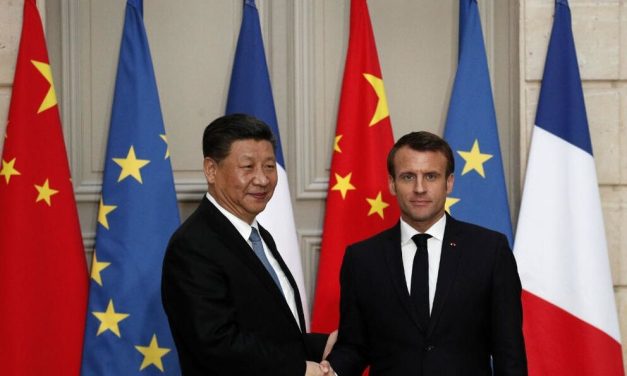
Strategy Council Online - Opinion: At the recent summit of European Union leaders and China, held in Beijing to mark the 50th anniversary of diplomatic relations, the parties once again sought to redefine their relationship in an atmosphere filled with mutual opportunities and threats. While the European Union emphasized the need to deepen cooperation with China, particularly in combating climate change and removing trade barriers, the heavy shadow of the Ukraine crisis and the escalating geopolitical tensions between Washington and Beijing pushed the talks to an unprecedented level of prudence and caution.

Morteza Makki – European Affairs Expert
At this meeting, the European Union asked China, as a permanent member of the Security Council, to fulfill its responsibility regarding Russia’s war against Ukraine and to distance itself from military and technological support for Moscow. However, underlying this request is a delicate balance between Europe’s economic needs vis-à-vis China and its geopolitical concerns regarding Russia and America. In reality, Brussels today finds itself in a position where it cannot bear the costs of confronting China, especially given that the Trump administration’s tariff policies have placed Europe in severe economic straits.
The United States, as the largest trading partner of European countries, has effectively blocked part of Europe’s economic growth potential by imposing heavy tariffs on European export goods. In such an environment, China, as Europe’s second-largest export market, has become a critical option for Brussels; an option that Europeans cannot easily forgo. But on the other hand, as the Chatham House think tank warned in its recent report, Europe’s excessive closeness to China without considering security and political considerations could turn the European Union into a passive player in the great game of global powers.
The issue of Europe’s severe trade deficit with China and the numerous restrictions on European companies’ access to the Chinese market were also key axes of the talks. China, with its monopoly on rare mineral resources, holds powerful leverage in negotiations with Europe and is well aware of how dependent Brussels is on Beijing for supplying these vital materials. Analysts at the Bruegel think tank believe this mutual dependency has created a fragile balance, any shift in which could have grave consequences for both sides.
However, the geopolitical dimension of China-Russia relations remains one of the challenging points in Beijing-Brussels relations. The Chinese have a clear understanding of Russia’s importance as a trump card in strategic bargaining with America and Europe. For this reason, the increasing level of cooperation between Beijing and Moscow in the fields of energy, technology, and the military has continued, disregarding European demands. Simultaneously, China, understanding Europe’s strategic weakness in the post-Ukraine war conditions and the widening gap in the Brussels-Washington security axis, has adopted a policy towards the European Union blending diplomatic disregard with economic bargaining.
China’s cold and ceremonial behavior towards the European delegation during their recent visit to Beijing reflected this realistic and power-based approach. Unlike in the past, Beijing showed little inclination to hold high-level meetings or warmly welcome European officials; this could be a clear message to Brussels that, in global power equations, China no longer sees Europe as an equal partner. The European Policy Centre (EPC) noted in its recent analysis that Europe today, more than ever, needs to redefine its position in relations with China; a position that cannot be based on previous perceptions of European soft power.
On the other hand, American analysts like Richard Haass and Ian Bremmer emphasize that the European Union currently lacks both the ability to confront China and the capacity to benefit fully from an alliance with America against Beijing. Despite all political and security tensions, America and China have a deep entanglement of economic dependencies. At the same time, Europe lacks such an advantage and has therefore become a weaker player in the game of global competition.
The reality is that the European Union is currently passing through a phase where it could have made demands on Beijing, relying on its economic and political power. Still, the economic pressures from America’s tariff policies, the energy and security crisis stemming from the Ukraine war, and Europe’s strategic isolation in global geopolitical equations have caused Brussels to adopt a more cautious stance towards China. For this reason, the European Union has no choice but to present its demands to Beijing, considering its current position and within a framework of realism and prudence.
Overall, the medium-term outlook for China-Europe relations is more likely to trend towards cautious and conservative cooperation than towards confrontation and tension; a cooperation in which both sides will try to meet their vital needs while preventing larger crises in bilateral relations. This is precisely the space that European think tanks refer to as “managing competition in the shadow of dependency,” an expression that aptly describes the coordinates of Beijing-Brussels relations in the current turbulent era.

0 Comments

LATEST CONTENT

The Zionist Regime’s Time Bomb Activated in the West Bank

Strategic Council Online – Opinion: In the midst of America’s military deployment to West Asia and the Persian Gulf, which has increased tensions at the regional and global levels, the Zionist regime has seized the opportunity and accelerated the advancement of its ambitious projects, including the process of the illegal annexation of the West Bank to the occupied territories.

With the End of New START, How Will the Future of Nuclear Security Be Shaped?

Strategic Council Online – Opinion: With the collapse of the last pillar of nuclear arms control between Washington and Moscow, the world stands on the threshold of a ruleless order that both carries the scent of unlimited competition and conceals within itself the possibility of new forms of bargaining.

Loading

Últimas publicaciones

The Zionist Regime’s Time Bomb Activated in the West Bank

Strategic Council Online – Opinion: In the midst of America’s military deployment to West Asia and the Persian Gulf, which has increased tensions at the regional and global levels, the Zionist regime has seized the opportunity and accelerated the advancement of its ambitious projects, including the process of the illegal annexation of the West Bank to the occupied territories.

With the End of New START, How Will the Future of Nuclear Security Be Shaped?

Strategic Council Online – Opinion: With the collapse of the last pillar of nuclear arms control between Washington and Moscow, the world stands on the threshold of a ruleless order that both carries the scent of unlimited competition and conceals within itself the possibility of new forms of bargaining.

Loading

DERNIER CONTENU

The Zionist Regime’s Time Bomb Activated in the West Bank

Strategic Council Online – Opinion: In the midst of America’s military deployment to West Asia and the Persian Gulf, which has increased tensions at the regional and global levels, the Zionist regime has seized the opportunity and accelerated the advancement of its ambitious projects, including the process of the illegal annexation of the West Bank to the occupied territories.

With the End of New START, How Will the Future of Nuclear Security Be Shaped?

Strategic Council Online – Opinion: With the collapse of the last pillar of nuclear arms control between Washington and Moscow, the world stands on the threshold of a ruleless order that both carries the scent of unlimited competition and conceals within itself the possibility of new forms of bargaining.

Loading

DERNIER CONTENU

The Zionist Regime’s Time Bomb Activated in the West Bank

Strategic Council Online – Opinion: In the midst of America’s military deployment to West Asia and the Persian Gulf, which has increased tensions at the regional and global levels, the Zionist regime has seized the opportunity and accelerated the advancement of its ambitious projects, including the process of the illegal annexation of the West Bank to the occupied territories.

With the End of New START, How Will the Future of Nuclear Security Be Shaped?

Strategic Council Online – Opinion: With the collapse of the last pillar of nuclear arms control between Washington and Moscow, the world stands on the threshold of a ruleless order that both carries the scent of unlimited competition and conceals within itself the possibility of new forms of bargaining.

Loading

DERNIER CONTENU

The Zionist Regime’s Time Bomb Activated in the West Bank

Strategic Council Online – Opinion: In the midst of America’s military deployment to West Asia and the Persian Gulf, which has increased tensions at the regional and global levels, the Zionist regime has seized the opportunity and accelerated the advancement of its ambitious projects, including the process of the illegal annexation of the West Bank to the occupied territories.

With the End of New START, How Will the Future of Nuclear Security Be Shaped?

Strategic Council Online – Opinion: With the collapse of the last pillar of nuclear arms control between Washington and Moscow, the world stands on the threshold of a ruleless order that both carries the scent of unlimited competition and conceals within itself the possibility of new forms of bargaining.

Loading