4 Operational Strategies for Benefiting from the Shocks of the Global Financial System

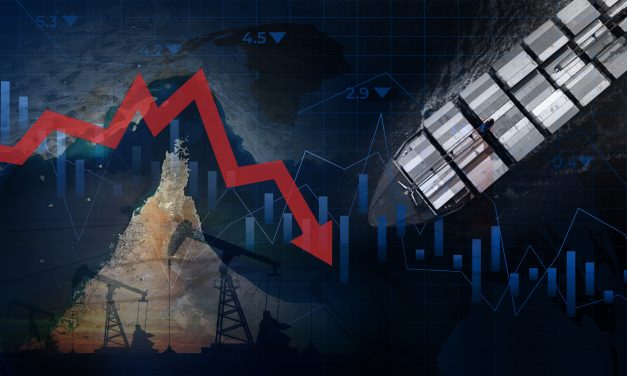
Strategic Council Online – Opinion: The tariff war and currency competition have propelled the global financial order into a phase where each shock can represent both a threat to the dollar and an opportunity for the rearrangement of global trade.

Negar Kheradmand – International Economics Expert

In recent years, the commercial and technological rivalry between the United States and China has transcended tariffs and extended into the realm of the monetary and currency systems. However, can the tariff war and the resulting financial pressures lead to a weakening of the dollar’s position, while simultaneously creating an operational space for developing non-dollar trade mechanisms for countries under sanctions? Although the dollar appears likely to remain the main pillar of the global financial system, the shocks stemming from US-China geoeconomic competition have provided limited but exploitable windows to create alternative financial arrangements.

Tariffs, Debt, and the Resilience of the Dollar

Analyses published by the Atlantic Council indicate that available data still do not suggest the imminent collapse of the dollar, and its share in global foreign exchange reserves, despite a gradual decline, remains dominant. The report emphasizes that the depth of US financial markets and their high liquidity are advantages that are not easily substituted.

However, Eurasia Review has discussed that Donald Trump’s tariff policies, despite widespread criticism, have revived parts of domestic industries and led to a redefinition of supply chains. These policies, alongside the slower growth of national debt in 2025, present a complex picture of the US economy, which simultaneously faces inflationary challenges and domestic political pressures.

Analyses from the Peterson Institute also show that the post-COVID-19 inflation experience and controversies surrounding trade policies have affected global confidence in the stability of US policymaking. Additionally, discussions regarding the potential legal nullification of some tariffs by the Supreme Court have increased legal uncertainty. This set of factors, while not yet destabilizing the dollar’s position, has strengthened the incentive for countries to diversify their currency reserves.

Currency and Digital Rivalry; From Digital Yuan to Local Settlement

The US-China rivalry has now also extended to central bank digital currencies. China, through the development of the digital yuan, seeks to reduce dependence on financial infrastructure dominated by the dollar. In this framework, digital currency is considered not merely a payment tool but part of a geoeconomic strategy.

Simultaneously, analyses published by PIIE on technological shocks, such as the AI leap and competition over critical minerals, indicate that the digital economy and technological infrastructure have become a new layer of great power competition. Control over the supply chains of critical minerals, essential to advanced industries and green technologies, could become a lever of financial and industrial pressure.

In such an environment, the use of local currencies in bilateral trade among China, India, and Russia has increased. Although this trend still constitutes a small fraction of global trade, it holds operational significance for countries under sanctions. Reducing dependence on the dollar clearing system and utilizing alternative payment financial systems mitigates the risk of secondary sanctions and provides greater room for maneuver.

Operational Strategies for Capitalizing on Shocks

Merely focusing on the dollar’s decline or survival does not aid practical policymaking. What is important is the design of implementation mechanisms for financial diversification. First, developing bilateral and multilateral monetary agreements with countries such as China, India, and Russia can enable the settlement of a portion of trade in local currencies. These agreements must be accompanied by convertibility guarantee mechanisms and risk management to secure the confidence of economic actors.

Second, leveraging central bank digital currencies or regional payment platforms can reduce transaction costs and dependence on dollar-dominated networks. In this path, technical cooperation with economies possessing operational experience in this field is of key importance.

Third, establishing multilateral clearing funds for trade in strategic goods such as energy and minerals could divert part of the exchanges from the dollar circuit. The experience of limited cooperation within the BRICS framework demonstrates that such mechanisms, while still in their early stages, have development potential.

Fourth, diversifying foreign exchange reserves and increasing the share of gold and non-dollar currencies in the reserve portfolio acts as a hedge against geoeconomic volatility risks. This measure must be accompanied by structural reforms in the domestic banking system to maintain financial stability.

The tariff war and currency rivalry between the US and China have pushed the global financial system into a phase of controlled uncertainty. The dollar remains the dominant currency, but political, legal, and technological shocks have increased the incentive for diversification. For countries under sanctions, this situation does not signify the imminent collapse of the dollar order, but rather a limited opportunity to design parallel mechanisms. Capitalizing on this opportunity requires a pragmatic approach, gradual diversification, and avoiding complete dependence on any single alternative currency.

Ultimately, the future of the global financial system will likely be neither a unipolar-dollar nor a rapidly transformed fully multi-currency system. Instead, it will move towards a hybrid order in which astute actors can, by creating flexible infrastructure and targeted cooperation, exploit fissures in great-power competition to advance their national interests.

This text was translated using artificial intelligence and may contain errors. If you notice a clear error that makes the text incomprehensible, please inform the website editors.
0 Comments

LATEST CONTENT

Iran’s Success in the Narrative Battle in Cyberspace

SCFR Online – Opinion: In the war between Iran and the United States, the main battlefield was not defined solely in the military domain; rather, the battle of narratives in cyberspace—particularly through memes—reached a decisive level.

The Global Energy Shock Situation and Future Scenarios

SCFR Online – Opinion: Only one month after the beginning of the Ramadan War, maritime traffic in the Strait of Hormuz decreased dramatically, with Bloomberg announcing a reduction of 103 vessels; Brent oil prices rose by more than 50 percent, and gasoline prices in the United States increased by 31.4 percent. Additionally, benchmark gas prices in Europe showed a 73.4 percent increase.

Al-Zaydi’s Selection as Prime Minister, The Beginning of a New Chapter in Iraq

SCFR Online – Note: After approximately five months of political deadlock and institutional confusion, Ali al-Zaydi has finally been selected as Iraq’s Prime Minister. Al-Zaydi’s selection as Prime Minister represents a positive sign of the completion of the government formation process and the beginning of a new phase in Iraqi politics and governance. The emergence of a young, technocratic figure from the third generation of politicians—in a context where the country has been administered by traditional figures for decades—revives hope that Iraq may perhaps distance itself from the repetitive cycle of crises and experience a new path of stability, efficiency, and regional convergence.

Intensifying Intra-Party Divisions in the United States Regarding the Zionist Regime

SCFR Online – Note: Over recent decades, support for the Zionist regime has been one of the few issues commanding bipartisan consensus in US foreign policy. Since the Cold War era, Republicans and Democrats have generally agreed on the necessity of preserving the security and survival of the Zionist regime as Washington’s most strategic ally in West Asia—and indeed, globally. However, developments in recent years—particularly the Gaza war, escalating regional conflicts, the expansion of tensions into Lebanon, and this regime’s recent warmongering against Iran—have caused this traditional consensus, especially within the Democratic Party, to face significant fractures.

Loading

Últimas publicaciones

Iran’s Success in the Narrative Battle in Cyberspace

SCFR Online – Opinion: In the war between Iran and the United States, the main battlefield was not defined solely in the military domain; rather, the battle of narratives in cyberspace—particularly through memes—reached a decisive level.

The Global Energy Shock Situation and Future Scenarios

SCFR Online – Opinion: Only one month after the beginning of the Ramadan War, maritime traffic in the Strait of Hormuz decreased dramatically, with Bloomberg announcing a reduction of 103 vessels; Brent oil prices rose by more than 50 percent, and gasoline prices in the United States increased by 31.4 percent. Additionally, benchmark gas prices in Europe showed a 73.4 percent increase.

Al-Zaydi’s Selection as Prime Minister, The Beginning of a New Chapter in Iraq

SCFR Online – Note: After approximately five months of political deadlock and institutional confusion, Ali al-Zaydi has finally been selected as Iraq’s Prime Minister. Al-Zaydi’s selection as Prime Minister represents a positive sign of the completion of the government formation process and the beginning of a new phase in Iraqi politics and governance. The emergence of a young, technocratic figure from the third generation of politicians—in a context where the country has been administered by traditional figures for decades—revives hope that Iraq may perhaps distance itself from the repetitive cycle of crises and experience a new path of stability, efficiency, and regional convergence.

Intensifying Intra-Party Divisions in the United States Regarding the Zionist Regime

SCFR Online – Note: Over recent decades, support for the Zionist regime has been one of the few issues commanding bipartisan consensus in US foreign policy. Since the Cold War era, Republicans and Democrats have generally agreed on the necessity of preserving the security and survival of the Zionist regime as Washington’s most strategic ally in West Asia—and indeed, globally. However, developments in recent years—particularly the Gaza war, escalating regional conflicts, the expansion of tensions into Lebanon, and this regime’s recent warmongering against Iran—have caused this traditional consensus, especially within the Democratic Party, to face significant fractures.

Loading

DERNIER CONTENU

Iran’s Success in the Narrative Battle in Cyberspace

SCFR Online – Opinion: In the war between Iran and the United States, the main battlefield was not defined solely in the military domain; rather, the battle of narratives in cyberspace—particularly through memes—reached a decisive level.

The Global Energy Shock Situation and Future Scenarios

SCFR Online – Opinion: Only one month after the beginning of the Ramadan War, maritime traffic in the Strait of Hormuz decreased dramatically, with Bloomberg announcing a reduction of 103 vessels; Brent oil prices rose by more than 50 percent, and gasoline prices in the United States increased by 31.4 percent. Additionally, benchmark gas prices in Europe showed a 73.4 percent increase.

Al-Zaydi’s Selection as Prime Minister, The Beginning of a New Chapter in Iraq

SCFR Online – Note: After approximately five months of political deadlock and institutional confusion, Ali al-Zaydi has finally been selected as Iraq’s Prime Minister. Al-Zaydi’s selection as Prime Minister represents a positive sign of the completion of the government formation process and the beginning of a new phase in Iraqi politics and governance. The emergence of a young, technocratic figure from the third generation of politicians—in a context where the country has been administered by traditional figures for decades—revives hope that Iraq may perhaps distance itself from the repetitive cycle of crises and experience a new path of stability, efficiency, and regional convergence.

Intensifying Intra-Party Divisions in the United States Regarding the Zionist Regime

SCFR Online – Note: Over recent decades, support for the Zionist regime has been one of the few issues commanding bipartisan consensus in US foreign policy. Since the Cold War era, Republicans and Democrats have generally agreed on the necessity of preserving the security and survival of the Zionist regime as Washington’s most strategic ally in West Asia—and indeed, globally. However, developments in recent years—particularly the Gaza war, escalating regional conflicts, the expansion of tensions into Lebanon, and this regime’s recent warmongering against Iran—have caused this traditional consensus, especially within the Democratic Party, to face significant fractures.

Loading

DERNIER CONTENU

Iran’s Success in the Narrative Battle in Cyberspace

SCFR Online – Opinion: In the war between Iran and the United States, the main battlefield was not defined solely in the military domain; rather, the battle of narratives in cyberspace—particularly through memes—reached a decisive level.

The Global Energy Shock Situation and Future Scenarios

SCFR Online – Opinion: Only one month after the beginning of the Ramadan War, maritime traffic in the Strait of Hormuz decreased dramatically, with Bloomberg announcing a reduction of 103 vessels; Brent oil prices rose by more than 50 percent, and gasoline prices in the United States increased by 31.4 percent. Additionally, benchmark gas prices in Europe showed a 73.4 percent increase.

Al-Zaydi’s Selection as Prime Minister, The Beginning of a New Chapter in Iraq

SCFR Online – Note: After approximately five months of political deadlock and institutional confusion, Ali al-Zaydi has finally been selected as Iraq’s Prime Minister. Al-Zaydi’s selection as Prime Minister represents a positive sign of the completion of the government formation process and the beginning of a new phase in Iraqi politics and governance. The emergence of a young, technocratic figure from the third generation of politicians—in a context where the country has been administered by traditional figures for decades—revives hope that Iraq may perhaps distance itself from the repetitive cycle of crises and experience a new path of stability, efficiency, and regional convergence.

Intensifying Intra-Party Divisions in the United States Regarding the Zionist Regime

SCFR Online – Note: Over recent decades, support for the Zionist regime has been one of the few issues commanding bipartisan consensus in US foreign policy. Since the Cold War era, Republicans and Democrats have generally agreed on the necessity of preserving the security and survival of the Zionist regime as Washington’s most strategic ally in West Asia—and indeed, globally. However, developments in recent years—particularly the Gaza war, escalating regional conflicts, the expansion of tensions into Lebanon, and this regime’s recent warmongering against Iran—have caused this traditional consensus, especially within the Democratic Party, to face significant fractures.

Loading

DERNIER CONTENU

Iran’s Success in the Narrative Battle in Cyberspace

SCFR Online – Opinion: In the war between Iran and the United States, the main battlefield was not defined solely in the military domain; rather, the battle of narratives in cyberspace—particularly through memes—reached a decisive level.

The Global Energy Shock Situation and Future Scenarios

SCFR Online – Opinion: Only one month after the beginning of the Ramadan War, maritime traffic in the Strait of Hormuz decreased dramatically, with Bloomberg announcing a reduction of 103 vessels; Brent oil prices rose by more than 50 percent, and gasoline prices in the United States increased by 31.4 percent. Additionally, benchmark gas prices in Europe showed a 73.4 percent increase.

Al-Zaydi’s Selection as Prime Minister, The Beginning of a New Chapter in Iraq

SCFR Online – Note: After approximately five months of political deadlock and institutional confusion, Ali al-Zaydi has finally been selected as Iraq’s Prime Minister. Al-Zaydi’s selection as Prime Minister represents a positive sign of the completion of the government formation process and the beginning of a new phase in Iraqi politics and governance. The emergence of a young, technocratic figure from the third generation of politicians—in a context where the country has been administered by traditional figures for decades—revives hope that Iraq may perhaps distance itself from the repetitive cycle of crises and experience a new path of stability, efficiency, and regional convergence.

Intensifying Intra-Party Divisions in the United States Regarding the Zionist Regime

SCFR Online – Note: Over recent decades, support for the Zionist regime has been one of the few issues commanding bipartisan consensus in US foreign policy. Since the Cold War era, Republicans and Democrats have generally agreed on the necessity of preserving the security and survival of the Zionist regime as Washington’s most strategic ally in West Asia—and indeed, globally. However, developments in recent years—particularly the Gaza war, escalating regional conflicts, the expansion of tensions into Lebanon, and this regime’s recent warmongering against Iran—have caused this traditional consensus, especially within the Democratic Party, to face significant fractures.

Loading