Importance and strategic dimensions of Iran’s President visit to Syria

2023/05/14 | Note, Politics, top news

Strategic Council Online—Opinion: The two-day visit of Mr. Raisi, the president of the Islamic Republic of Iran, to Syria is important from different dimensions. This trip, which has had many reflections in the media and political circles of the region, has a vital role in the implementation of dozens of economic and commercial agreements, as well as the signing of new military and security agreements, which were agreed upon by the parties during the past years but were not fully implemented. Barsam Mohammadi—Expert in regional issues

Reorganizing and strengthening bilateral relations and expanding and improving the level of economic and commercial cooperation were among the main goals of this trip, about which meaningful negotiations were held between the presidents and officials of the two countries.

Significance of the visit

The visit of the president of Iran to Syria has strategic importance from various political, economic, and regional dimensions regarding the developments in the occupied territories.

The concurrency of this trip with the political and diplomatic developments that we are witnessing in the region, including the improvement of relations between Iran and Saudi Arabia, the progress of relations between Arab countries and Syria, the efforts of Tehran and Moscow to normalize relations between Syria and Turkey, and important openings in some security and military cases, including the war in Yemen has increased the importance of this trip, which is discussed below:

Political dimensions:

Mr. Raisi’s trip to Syria should not be considered in the framework of the regular and periodic visits of the two countries officials to each other. Although Bashar Assad has visited Iran twice in the last 13 years, in 2018 and 2022, during this period, the president Islamic Republic of Iran has not visited Syria at this qualitative and quantitative level.

From this point of view, the visit of the president of the Islamic Republic of Iran to Damascus shows that not only the “strategic weight” and “political position” of Syria in the foreign policy of the Islamic Republic of Iran has not decreased, but Tehran in the new era, which operates within the framework of “pivot to Asia,” is seeking a “significant transformation” in the existing relations with Syria through the consolidation and strengthening of bilateral ties in various fields.

The critical point is that in recent months, a proposition was heard and seen mainly in the foreign opposition media regarding Iran and Syria that because the relations between the Islamic Republic of Iran and Syria are losing color, and with the arrival of Arab countries to Damascus, Tehran no longer has its former influence and strategic importance. The quality of the president of Iran’s presence in Syria, which the people also welcomed, nullified all these propaganda and projections.

Regional dimensions

Under the circumstances that the occupied territories are witnessing significant strategic developments and the Palestinian issue is strongly being highlighted and is at the center of attention; also, at a time when the Zionist regime, for the first time in the past 75 years and in an unprecedented way has faced deep existential crises from inside and outside, the meeting of the presidents of Iran and Syria, who are considered to be the primary and governmental pillars of the Islamic Resistance Front, has an “important message of resistance.”

The widespread reaction of the media and experts of the Zionist regime to this trip, so that the reports of Mr. Raisi’s presence in Syria were at the top of the news in the Hebrew media, comes back to the fact that the new period of Tehran-Damascus relations will also affect the process of developments in the occupied territories.

Hebrew-language media have declared that “the Iranian president’s visit to Syria is very exceptional and should worry Israel.” Channel 13 of the Zionist regime also announced by presenting an analysis that “The Islamic Republic of Iran wants to unify and consolidate the axis of Iran-Hezbollah-Hamas-Islamic Jihad, and this makes it implement a new program regarding Middle East politics.”

At the same time, the remarks of the president of the Islamic Republic of Iran in the meeting with Bashar Assad also in the shrine of Hazrat Zainab (PBUH) and in the interview with the Al-Mayadeen network, which contained essential themes of anti-Zionism and support for the resistance front, confirm this issue.

It is necessary to point out that this trip and Tehran’s effort to strengthen strategic relations with Syria while complementing the improvement of Arab countries’ relations with Syria enhance the elements of Damascus’s national power in the military, economic, etc. fields to overcome the security crisis finally.

Economic dimensions

As mentioned at the beginning of this opinion, economic and commercial issues were one of the important agendas of Mr. Raisi’s trip to Syria.

Under conditions that Syria is in an unfavorable economic situation and requires foreign investments for economic revival and reconstruction, the Islamic Republic of Iran has been one of the priorities of Syria’s foreign policy, especially in the last 12 years, due to its friendly relations with this country. It has good capacities to be one of the pioneer countries in Syria’s new and post-crisis era, where the country’s foreign relations with Arab countries are improving.

During this visit, the two countries presidents signed a long-term strategic cooperation agreement and a memorandum of understanding on cooperation in the oil and energy industry.

Concluding point

Mr. Raisi’s visit to Syria was a power maneuver of the two countries at a crucial historical moment in the region; where on the one hand, we are witnessing new relations and alliances within the region, and on the other hand, we see the intensification of the existential crises of the Zionist regime, which was the source of a significant part of the security crises and the Syrian civil war.

The Islamic Republic of Iran is a “strategic and honest ally” of Syria, which has paid the price of this alliance and companionship in various ways. Just as the content of the Supreme Leader of the Islamic Revolution’s speech last year in the meeting with Bashar Assad was significant, no country can replace Iran and Tehran’s honest services for Syria. In that meeting, the Supreme Leader of the Islamic Revolution, referring to the “expressions of friendship and affection of some countries that were on the front against Syria in the past years,” emphasized that “the future line should be clarified using experience.”

In general, the visit of the president of the Islamic Republic of Iran to Damascus will help open a new chapter of strategic relations between the Islamic Republic of Iran and Syria.
0 Comments

Submit a Comment

Your email address will not be published. Required fields are marked *

LATEST CONTENT

The Security Equation of Southern Lebanon for the Zionist Regime

Strategic Council Online – Opinion: American-Zionist objectives in the region are not limited to weakening Hezbollah. Efforts to disarm Iraqi resistance groups such as Kata’ib Hezbollah and the Popular Mobilization Forces are also part of their subsequent plans.

Commercial Exploitation of Peace; The Gaza Committee in Confrontation with International Legitimacy

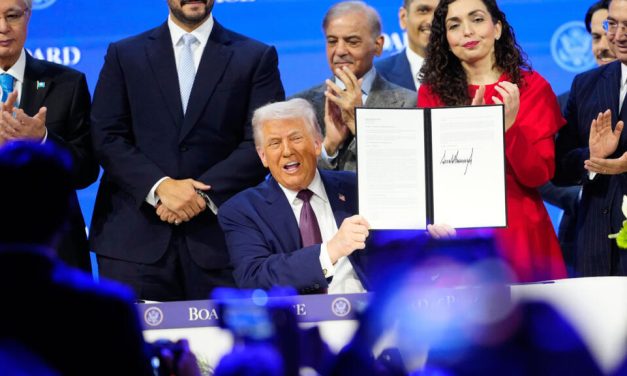
Strategic Council Online – Report: While the second phase of the implementation of the Gaza ceasefire has begun, the establishment of the “Peace Board” chaired by Donald Trump on the sidelines of the Davos meeting (22 January 2026) has become more than a technical mechanism for reconstruction and has turned into a test for the future of the international order.
Despite the signing of the charter by 22 out of 60 invited countries, the limited presence of global leaders at the Davos ceremony and the non-acceptance of this body by the European Union and key Western countries indicate a deep divide in global perceptions of the legitimacy of this mechanism.
In this report, drawing on the analysis of Hadi Borhani, a regional affairs expert, and international data, three strategic questions are addressed: Is the Peace Board an instrument for implementing UN Security Council Resolution 2803 or a substitute for the United Nations? How does the hierarchical architecture of this committee intensify executive challenges in Gaza? And finally, can this body create sustainable peace without the cooperation of Palestinians and with the concentration of power in the hands of a single individual?

America’s Zero-Sum Game in Iraq

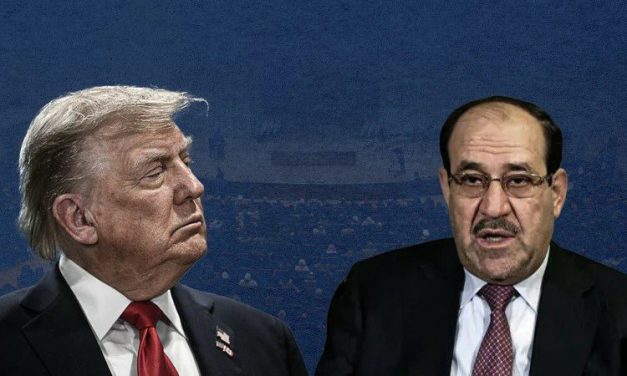
Online Strategic Council – Memoir: The swift selection of Nouri al-Maliki for the premiership constitutes a new phase in Iraq’s political sphere. Multiple factors have played a role in this process, the most important being the prevailing situation in Iraq and the region. Under such circumstances, Iraq requires a powerful and experienced prime minister who can keep the country away from the dangers of wars and crises.

America’s Strategy for Creating Tension in the Asia-Pacific

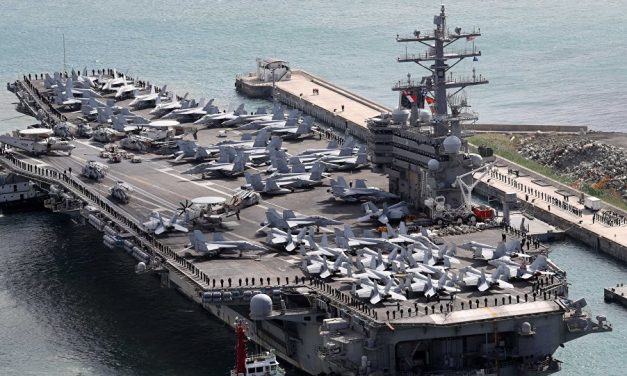
Strategic Council Online – Opinion: Relations between some countries in the Asia-Pacific region, such as China and Japan or China and Australia, which were previously relatively normal, are trending towards deterioration, and the primary reason for this is the aggressive policies of the United States of America.

Loading

Últimas publicaciones

The Security Equation of Southern Lebanon for the Zionist Regime

Strategic Council Online – Opinion: American-Zionist objectives in the region are not limited to weakening Hezbollah. Efforts to disarm Iraqi resistance groups such as Kata’ib Hezbollah and the Popular Mobilization Forces are also part of their subsequent plans.

Commercial Exploitation of Peace; The Gaza Committee in Confrontation with International Legitimacy

Strategic Council Online – Report: While the second phase of the implementation of the Gaza ceasefire has begun, the establishment of the “Peace Board” chaired by Donald Trump on the sidelines of the Davos meeting (22 January 2026) has become more than a technical mechanism for reconstruction and has turned into a test for the future of the international order.
Despite the signing of the charter by 22 out of 60 invited countries, the limited presence of global leaders at the Davos ceremony and the non-acceptance of this body by the European Union and key Western countries indicate a deep divide in global perceptions of the legitimacy of this mechanism.
In this report, drawing on the analysis of Hadi Borhani, a regional affairs expert, and international data, three strategic questions are addressed: Is the Peace Board an instrument for implementing UN Security Council Resolution 2803 or a substitute for the United Nations? How does the hierarchical architecture of this committee intensify executive challenges in Gaza? And finally, can this body create sustainable peace without the cooperation of Palestinians and with the concentration of power in the hands of a single individual?

America’s Zero-Sum Game in Iraq

Online Strategic Council – Memoir: The swift selection of Nouri al-Maliki for the premiership constitutes a new phase in Iraq’s political sphere. Multiple factors have played a role in this process, the most important being the prevailing situation in Iraq and the region. Under such circumstances, Iraq requires a powerful and experienced prime minister who can keep the country away from the dangers of wars and crises.

America’s Strategy for Creating Tension in the Asia-Pacific

Strategic Council Online – Opinion: Relations between some countries in the Asia-Pacific region, such as China and Japan or China and Australia, which were previously relatively normal, are trending towards deterioration, and the primary reason for this is the aggressive policies of the United States of America.

Loading

DERNIER CONTENU

The Security Equation of Southern Lebanon for the Zionist Regime

Strategic Council Online – Opinion: American-Zionist objectives in the region are not limited to weakening Hezbollah. Efforts to disarm Iraqi resistance groups such as Kata’ib Hezbollah and the Popular Mobilization Forces are also part of their subsequent plans.

Commercial Exploitation of Peace; The Gaza Committee in Confrontation with International Legitimacy

Strategic Council Online – Report: While the second phase of the implementation of the Gaza ceasefire has begun, the establishment of the “Peace Board” chaired by Donald Trump on the sidelines of the Davos meeting (22 January 2026) has become more than a technical mechanism for reconstruction and has turned into a test for the future of the international order.
Despite the signing of the charter by 22 out of 60 invited countries, the limited presence of global leaders at the Davos ceremony and the non-acceptance of this body by the European Union and key Western countries indicate a deep divide in global perceptions of the legitimacy of this mechanism.
In this report, drawing on the analysis of Hadi Borhani, a regional affairs expert, and international data, three strategic questions are addressed: Is the Peace Board an instrument for implementing UN Security Council Resolution 2803 or a substitute for the United Nations? How does the hierarchical architecture of this committee intensify executive challenges in Gaza? And finally, can this body create sustainable peace without the cooperation of Palestinians and with the concentration of power in the hands of a single individual?

America’s Zero-Sum Game in Iraq

Online Strategic Council – Memoir: The swift selection of Nouri al-Maliki for the premiership constitutes a new phase in Iraq’s political sphere. Multiple factors have played a role in this process, the most important being the prevailing situation in Iraq and the region. Under such circumstances, Iraq requires a powerful and experienced prime minister who can keep the country away from the dangers of wars and crises.

America’s Strategy for Creating Tension in the Asia-Pacific

Strategic Council Online – Opinion: Relations between some countries in the Asia-Pacific region, such as China and Japan or China and Australia, which were previously relatively normal, are trending towards deterioration, and the primary reason for this is the aggressive policies of the United States of America.

Loading

DERNIER CONTENU

The Security Equation of Southern Lebanon for the Zionist Regime

Strategic Council Online – Opinion: American-Zionist objectives in the region are not limited to weakening Hezbollah. Efforts to disarm Iraqi resistance groups such as Kata’ib Hezbollah and the Popular Mobilization Forces are also part of their subsequent plans.

Commercial Exploitation of Peace; The Gaza Committee in Confrontation with International Legitimacy

Strategic Council Online – Report: While the second phase of the implementation of the Gaza ceasefire has begun, the establishment of the “Peace Board” chaired by Donald Trump on the sidelines of the Davos meeting (22 January 2026) has become more than a technical mechanism for reconstruction and has turned into a test for the future of the international order.
Despite the signing of the charter by 22 out of 60 invited countries, the limited presence of global leaders at the Davos ceremony and the non-acceptance of this body by the European Union and key Western countries indicate a deep divide in global perceptions of the legitimacy of this mechanism.
In this report, drawing on the analysis of Hadi Borhani, a regional affairs expert, and international data, three strategic questions are addressed: Is the Peace Board an instrument for implementing UN Security Council Resolution 2803 or a substitute for the United Nations? How does the hierarchical architecture of this committee intensify executive challenges in Gaza? And finally, can this body create sustainable peace without the cooperation of Palestinians and with the concentration of power in the hands of a single individual?

America’s Zero-Sum Game in Iraq

Online Strategic Council – Memoir: The swift selection of Nouri al-Maliki for the premiership constitutes a new phase in Iraq’s political sphere. Multiple factors have played a role in this process, the most important being the prevailing situation in Iraq and the region. Under such circumstances, Iraq requires a powerful and experienced prime minister who can keep the country away from the dangers of wars and crises.

America’s Strategy for Creating Tension in the Asia-Pacific

Strategic Council Online – Opinion: Relations between some countries in the Asia-Pacific region, such as China and Japan or China and Australia, which were previously relatively normal, are trending towards deterioration, and the primary reason for this is the aggressive policies of the United States of America.

Loading

DERNIER CONTENU

The Security Equation of Southern Lebanon for the Zionist Regime

Strategic Council Online – Opinion: American-Zionist objectives in the region are not limited to weakening Hezbollah. Efforts to disarm Iraqi resistance groups such as Kata’ib Hezbollah and the Popular Mobilization Forces are also part of their subsequent plans.

Commercial Exploitation of Peace; The Gaza Committee in Confrontation with International Legitimacy

Strategic Council Online – Report: While the second phase of the implementation of the Gaza ceasefire has begun, the establishment of the “Peace Board” chaired by Donald Trump on the sidelines of the Davos meeting (22 January 2026) has become more than a technical mechanism for reconstruction and has turned into a test for the future of the international order.
Despite the signing of the charter by 22 out of 60 invited countries, the limited presence of global leaders at the Davos ceremony and the non-acceptance of this body by the European Union and key Western countries indicate a deep divide in global perceptions of the legitimacy of this mechanism.
In this report, drawing on the analysis of Hadi Borhani, a regional affairs expert, and international data, three strategic questions are addressed: Is the Peace Board an instrument for implementing UN Security Council Resolution 2803 or a substitute for the United Nations? How does the hierarchical architecture of this committee intensify executive challenges in Gaza? And finally, can this body create sustainable peace without the cooperation of Palestinians and with the concentration of power in the hands of a single individual?

America’s Zero-Sum Game in Iraq

Online Strategic Council – Memoir: The swift selection of Nouri al-Maliki for the premiership constitutes a new phase in Iraq’s political sphere. Multiple factors have played a role in this process, the most important being the prevailing situation in Iraq and the region. Under such circumstances, Iraq requires a powerful and experienced prime minister who can keep the country away from the dangers of wars and crises.

America’s Strategy for Creating Tension in the Asia-Pacific

Strategic Council Online – Opinion: Relations between some countries in the Asia-Pacific region, such as China and Japan or China and Australia, which were previously relatively normal, are trending towards deterioration, and the primary reason for this is the aggressive policies of the United States of America.

Loading