Factors Effective in US Defeat, Rapid Withdrawal from Afghanistan

2021/09/18 | Note, Politics, top news

Strategic Council Online - Note: After Vietnam, the hasty withdrawal from Afghanistan is the second US “fatal defeat” experience in a foreign war in the post-World War II era that has dealt a heavy blow on the US international standing. Hamid Khoshayand – analyst of international affairs

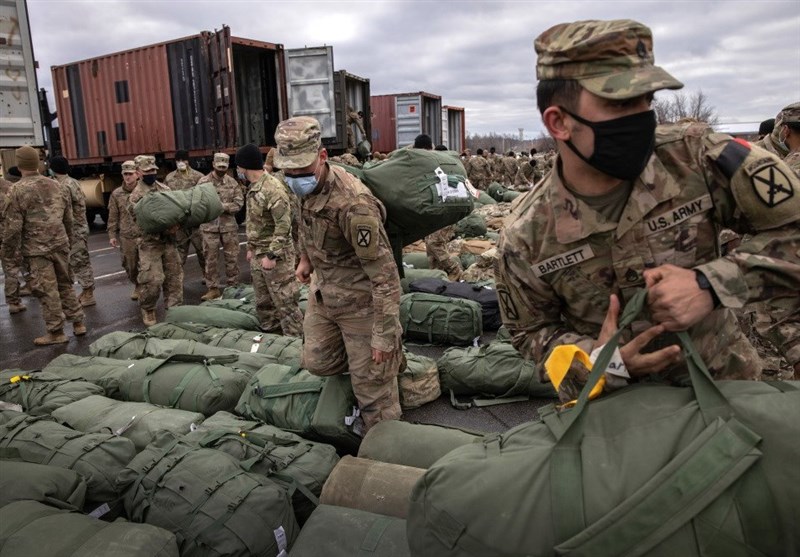
The United States was forced to sign a withdrawal agreement with an enemy (Taliban) for the removal of which invaded Afghanistan 20 years ago and in those two decades, sent 775,000 troops to Afghanistan to fight with it!

Heavy blow on US prestige in Afghanistan

In Afghanistan, the blow on prestige is significant for the US in military, political and strategic dimensions.

In the “military dimension”, the United States at one point increased the number of its troop in Afghanistan to 120,000 and even unveiled the “mother of bombs” and other advanced weapons in that country, but failed to achieve outstanding success.

In the “political dimension”, over the years, while building the political and governance infrastructures in line with the White House in Afghanistan; to the extent that a figure like Ashraf Ghani came to power who has spent a significant part of his life in the United States and was a US protégé, but could not resist the Taliban and eventually fled Afghanistan.

In the “strategic dimension”, in 2017, Donald Trump put the “South Asian Strategy” on the agenda. Managing the Afghan scene, putting pressure on Pakistan and encouraging India to participate in Afghanistan were the basis of the plan. Finally, this plan did not work out and failed.

Effective causes for US failure in Afghanistan

The failure of the United States in Afghanistan, to such an extent that brings that country back to 20 years ago or even worse to the first place, is due to several factors and components, reference to the important cases of which is made in the following:

  1. A) Lack of knowledge and awareness about Afghanistan

The United States invaded Afghanistan without any accurate knowledge of its ethnic-tribal texture, religious nature, culture, history, geography, trends, processes, etc. Afghanistan is known as the “cemetery of the great empires”. This means that all the equations, strategies and plans of the big international powers, according to the special conditions that exist in Afghanistan, will be frustrated in that country, to the extent that so far no power has emerged victorious from the war in that country. In the past century, Britain invaded Afghanistan three times during the colonial period, but suffered a disastrous fate. After that, Afghanistan was under the Soviet occupation for 10 years, but it failed in Afghanistan as much that the whole Soviet project collapsed.

Former US Ambassador to NATO Maj. Gen. Douglas Lute has keynote speeches on Afghanistan. In one of his interviews with the Washington Post he says: We have fundamentally failed to recognize Afghanistan. We did not understand what we were doing! The fact that Secretary of Defense Gen. Lloyd Austin during his visit to Afghanistan earlier this year puts in another way. In that visit and after meeting Ashraf Ghani he wrote in a tweet: He has come to understand and know more! The statements of two of the highest-ranking former and current US military officials are thought-provoking in that they show the 20-year US presence in Afghanistan has been devoid of full knowledge of that country.

In this regard, in recent months, the Washington Post has obtained 2,000 pages of documents on the war in Afghanistan, the study of the introduction of which shows that the US presence in Afghanistan was without deep and fundamental awareness. Dozens of US and Afghan officials acknowledged this in interviews with the Washington Post that many of Washington’s policies and programs, from training the Afghan police and military up to combating تجارت تریاک, were doomed to failure from the outset because of they had been designed on the basis of raw and without understanding assumptions about that country. Other factors effective in the US defeat in Afghanistan are in line with such important and fundamental factor, which is in fact the cause of causes.

  1. B) Unrealistic targets and strategies

The United States invaded Afghanistan and over the past two decades claimed to be fighting terrorism and extremism and democratizing the country, which lacked the required capabilities and realistic strategies, while considering the realities and political trends in Afghanistan. In the words of Henry Kissinger, ‘military objectives in Afghanistan were very absolute and unachievable, while simultaneously political goals were unattainable.’ US programs in Afghanistan were successful as long as they were able to defeat al-Qaeda. As soon as the Taliban withdrew from Afghanistan, the US strategic focus in that country was “fundamentally disrupted”, as such that the US no longer had a clear plan to advance its goals in that country, and if it had, it did not match the ethnic and cultural structure, religion and the specific circumstances of Afghan society.

  1. C) Insisting on formation of a modern central government

After the defeat of al-Qaeda and withdrawal of the Taliban from Afghanistan, the United States sought to establish a “modern central government” in that country. Unaware that Kabul never had the experience of a modern government. Because tribes and clans strongly resist the central government and do not tolerate it. The ideal version of Afghanistan is an inclusive government with the participation of all groups, political currents and ethnicities and religions; a fact that the United States, for whatever reason, ignored and concentrated all its focus on forming a central government that could wield power throughout Afghanistan.

  1. D) Foreign support for the Taliban

Although the Taliban were weak at times, they were never eliminated in Afghanistan. Stephen Walt, Professor of International Relations at Harvard University, published a note in the Foreign Policy in 2013, saying: Achieving victory in Afghanistan seemed unlikely, as Pakistan continued to support the Taliban and its territory was a good territory for the militant group’s activities. When the Taliban were under pressure, they could always go to Pakistan and prepare themselves for another was on another day. Meanwhile, other countries in the region also provided logistical support to the Taliban. The Taliban could not survive against the United States without foreign support.

Final point

The US withdrawal from Afghanistan came at a time when assessments of the US military, intelligence and political institutions showed that there was no clear prospect of victory and success, even at very low levels, in Afghanistan’s 20-year war for the White House. The United States had no choice but to lose in Afghanistan; the fact that Henry Kissinger, a former secretary of state and national security adviser and US diplomacy theorist, highlighted in a recent note in the Economist, emphasizing: What happened in Afghanistan was a voluntary and inevitable defeat for the United States, and that Washington saw itself in a situation that forced to withdraw from Afghanistan. The United States lost the war in Afghanistan while, according to Kissinger, there is no other possible strategic measure to make up for its defeat in Afghanistan. The uncoordinated and hasty departure from Afghanistan has left the American friends disappointed, the enemies happy, and the observers confused.

0 Comments

Submit a Comment

Your email address will not be published. Required fields are marked *

LATEST CONTENT

An Analysis of Russia’s Move to Officially Cancel the Agreement to Destroy Plutonium Stocks

Strategic Council Online- Interview: A researcher from the Middle East Strategic Studies Center, referring to Russia’s recent move to cancel the agreement to destroy plutonium stocks officially, stated: Russia, through such actions, is sending messages to declare that the era of Western control and domination is over, and that Moscow is monitoring actions. The reality is that the Ukraine war has intensified the geopolitical confrontation between Russia and the US/West, and Moscow is trying to redefine the rules of the global security game.

The Impact of International Developments on the Energy Market

Online Strategic Council – Interview: An international affairs expert stated that analyzing the energy market, global market developments, and its opportunities and threats for Iran has today become a serious issue for our country. This issue has become even more important, particularly amid the global crises in Ukraine and the Persian Gulf, which have affected the price and demand for oil in our country.

Trump’s Approach Towards Nigeria: An Attempt to Redefine American Influence in Africa

Strategic Council Online – Interview: An African affairs analyst stated: The West and Sahel region of Africa has today become one of the main axes of geopolitical competition among major powers, and the United States is worried that if China and Russia’s presence becomes solidified, it will be effectively eliminated from the economic and security spheres of this region.

The Necessity of Shaping Technology Diplomacy in a Data-Driven Global Order

Strategic Council Online-Interview: An international technology expert said, “While the world is moving towards the bipolarization of cyberspace and digital separation, Iran is inevitably compelled to establish its independent position in the new data-driven order by redefining technology diplomacy.”

Redefining the Discourse of Resistance After the 12-Day War

Strategic Council Online – Interview: A West Asia affairs analyst said: After the 12-day war, Iran, by redefining the discourse of resistance and utilizing media diplomacy, strengthened its soft and regional legitimacy against the Western narrative.

Iran’s Future Position in the Global Rare Minerals Supply Chain

Strategic Council Online- Interview: A geological studies expert stated: While global competition over rare minerals has intensified, Iran can, by relying on regional cooperation from Chabahar to Central Asia, achieve a strategic position in the global rare minerals supply chain.

Loading

Últimas publicaciones

An Analysis of Russia’s Move to Officially Cancel the Agreement to Destroy Plutonium Stocks

Strategic Council Online- Interview: A researcher from the Middle East Strategic Studies Center, referring to Russia’s recent move to cancel the agreement to destroy plutonium stocks officially, stated: Russia, through such actions, is sending messages to declare that the era of Western control and domination is over, and that Moscow is monitoring actions. The reality is that the Ukraine war has intensified the geopolitical confrontation between Russia and the US/West, and Moscow is trying to redefine the rules of the global security game.

The Impact of International Developments on the Energy Market

Online Strategic Council – Interview: An international affairs expert stated that analyzing the energy market, global market developments, and its opportunities and threats for Iran has today become a serious issue for our country. This issue has become even more important, particularly amid the global crises in Ukraine and the Persian Gulf, which have affected the price and demand for oil in our country.

Trump’s Approach Towards Nigeria: An Attempt to Redefine American Influence in Africa

Strategic Council Online – Interview: An African affairs analyst stated: The West and Sahel region of Africa has today become one of the main axes of geopolitical competition among major powers, and the United States is worried that if China and Russia’s presence becomes solidified, it will be effectively eliminated from the economic and security spheres of this region.

The Necessity of Shaping Technology Diplomacy in a Data-Driven Global Order

Strategic Council Online-Interview: An international technology expert said, “While the world is moving towards the bipolarization of cyberspace and digital separation, Iran is inevitably compelled to establish its independent position in the new data-driven order by redefining technology diplomacy.”

Redefining the Discourse of Resistance After the 12-Day War

Strategic Council Online – Interview: A West Asia affairs analyst said: After the 12-day war, Iran, by redefining the discourse of resistance and utilizing media diplomacy, strengthened its soft and regional legitimacy against the Western narrative.

Iran’s Future Position in the Global Rare Minerals Supply Chain

Strategic Council Online- Interview: A geological studies expert stated: While global competition over rare minerals has intensified, Iran can, by relying on regional cooperation from Chabahar to Central Asia, achieve a strategic position in the global rare minerals supply chain.

Loading

DERNIER CONTENU

An Analysis of Russia’s Move to Officially Cancel the Agreement to Destroy Plutonium Stocks

Strategic Council Online- Interview: A researcher from the Middle East Strategic Studies Center, referring to Russia’s recent move to cancel the agreement to destroy plutonium stocks officially, stated: Russia, through such actions, is sending messages to declare that the era of Western control and domination is over, and that Moscow is monitoring actions. The reality is that the Ukraine war has intensified the geopolitical confrontation between Russia and the US/West, and Moscow is trying to redefine the rules of the global security game.

The Impact of International Developments on the Energy Market

Online Strategic Council – Interview: An international affairs expert stated that analyzing the energy market, global market developments, and its opportunities and threats for Iran has today become a serious issue for our country. This issue has become even more important, particularly amid the global crises in Ukraine and the Persian Gulf, which have affected the price and demand for oil in our country.

Trump’s Approach Towards Nigeria: An Attempt to Redefine American Influence in Africa

Strategic Council Online – Interview: An African affairs analyst stated: The West and Sahel region of Africa has today become one of the main axes of geopolitical competition among major powers, and the United States is worried that if China and Russia’s presence becomes solidified, it will be effectively eliminated from the economic and security spheres of this region.

The Necessity of Shaping Technology Diplomacy in a Data-Driven Global Order

Strategic Council Online-Interview: An international technology expert said, “While the world is moving towards the bipolarization of cyberspace and digital separation, Iran is inevitably compelled to establish its independent position in the new data-driven order by redefining technology diplomacy.”

Redefining the Discourse of Resistance After the 12-Day War

Strategic Council Online – Interview: A West Asia affairs analyst said: After the 12-day war, Iran, by redefining the discourse of resistance and utilizing media diplomacy, strengthened its soft and regional legitimacy against the Western narrative.

Iran’s Future Position in the Global Rare Minerals Supply Chain

Strategic Council Online- Interview: A geological studies expert stated: While global competition over rare minerals has intensified, Iran can, by relying on regional cooperation from Chabahar to Central Asia, achieve a strategic position in the global rare minerals supply chain.

Loading