
Seyed Reza Mirtaher – Strategic Affairs Expert
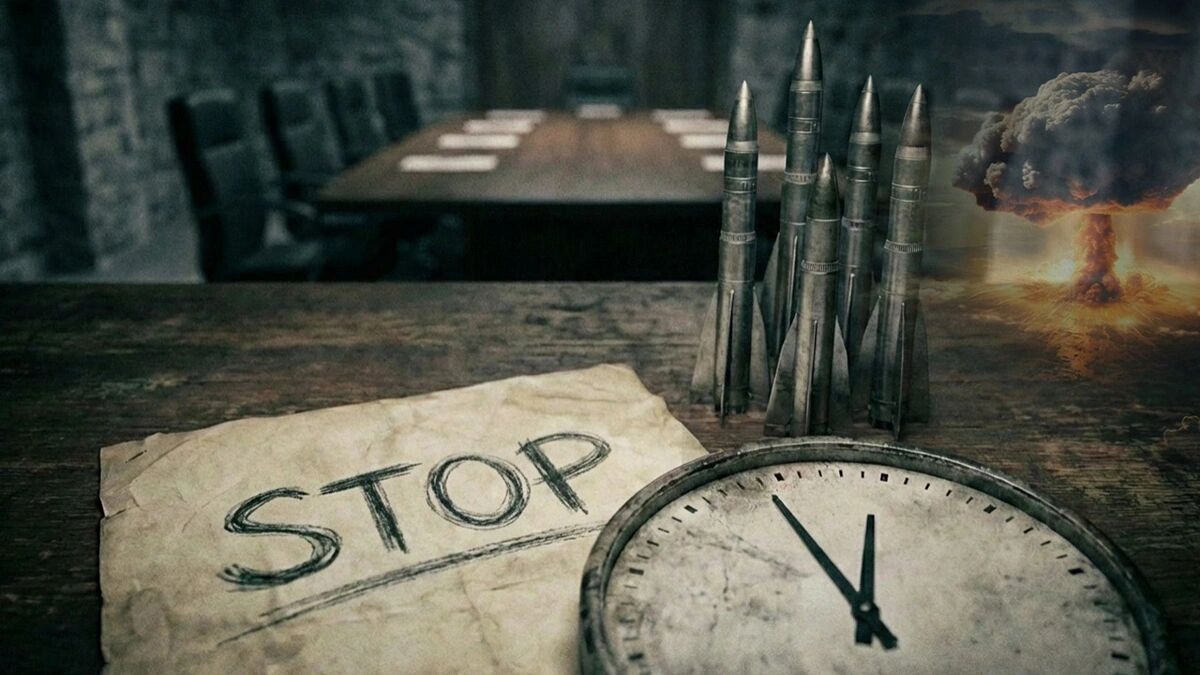
The New START treaty was an agreement between the United States and Russia signed on April 8, 2010, in Prague for nuclear arms control. According to this treaty, the number of ready-to-use nuclear weapons of the two countries was to be limited, with the main goal of reducing the risk of nuclear war and maintaining a kind of strategic balance and transparency between the two major nuclear powers.
The most important provisions of this treaty include the following:
Each party can have a maximum of 1,550 operational nuclear warheads.
The number of missiles and bombers capable of delivering nuclear weapons is to be limited.
The two countries are allowed to inspect each other’s nuclear facilities to ensure the other party is properly implementing the agreement.
The treaty’s initial validity period was 10 years, until 2021, after which, at Moscow’s suggestion, the two countries extended it for another five years (until February 2026).
During these five years, numerous consultations and exchanges of views took place between the United States and Russia regarding another renewal of this treaty. However, the conditions put forward by Washington made reaching a new agreement subject to complex circumstances. The most important condition of the United States was that, in any new strategic nuclear arms reduction treaty, China must also be present. But China announced that due to the imbalance between the size of its nuclear arsenal and that of the United States and Russia, entering such a framework lacked strategic justification.
Currently, Beijing seeks to develop its nuclear capabilities across the land, air, and sea domains, and, from a strategic perspective, any limitation at this stage could hinder the achievement of its deterrence goals. Meanwhile, Russia, in some instances, supported China’s position and even suggested that if China were to join the New START treaty, other nuclear powers should also participate in such agreements.
On the other hand, simultaneous developments in nuclear policy-making showed that the operational trend among great powers was inclined more towards modernizing and strengthening strategic capabilities than towards limitation. Programs related to rebuilding nuclear infrastructure, developing launch systems, and enhancing operational capacities indicated a gradual shift in approach from “arms control” to “redefining deterrence.”
During the last two years of the agreement, the two sides no longer showed a willingness to implement certain commitments, such as the monitoring mechanisms, and both parties distanced themselves from full implementation in various ways. With the arrival of February 2026, this treaty officially ended, and thus, the last binding bilateral framework in the field of nuclear arms control was eliminated.
Consequences of the End of Arms Control
These consequences can be considered in two parts:
- A) International and Regional Consequences
The end of New START can be regarded as the conclusion of one of the most important mechanisms for regulating nuclear competition in the international system. In the new situation, there is no effective and binding framework to impose limits on the development of nuclear weapons by great powers, which could weaken previous arms control trends and increase countries’ inclination to develop deterrence capabilities.
Under such circumstances, the likelihood of a new round of global arms race increases; a race in which the logic of the balance of power replaces that of mutual restraint.
In fact, after the collapse of the New START treaty, official nuclear powers including the United States, Russia, China, Britain, France, and India, as well as Pakistan and North Korea and the Zionist regime as unofficial powers, will naturally face no further restrictions in this area, which could lead to a severe weakening of the NPT (Non-Proliferation Treaty). With the end of New START, there will be no agreement capable of halting the arms race and preventing the expansion of nuclear arsenals. This event would be a major blow to international and nuclear security.
The absence of arms control mechanisms will manifest its consequences at various regional levels. In East Asia, China will likely accelerate its nuclear capability development process. Near China, North Korea, relying on its nuclear arsenal capacity, seeks to operationalize new capabilities such as building its first submarine capable of launching intercontinental ballistic missiles.
Under these conditions, India and Pakistan, the other two nuclear-armed countries, will also increase efforts to enhance their nuclear capabilities, which will intensify the arms race.
With the collapse of New START, the Zionist regime, as the sole de facto possessor of nuclear weapons in West Asia, will have greater freedom of action in developing its strategic capabilities in the absence of any international restrictions or oversight; an event that could lead to an increased level of insecurity in the region.
Other regional countries, including Saudi Arabia and Egypt, following the collapse of New START, will likely pursue specific atomic programs either openly or covertly.
- B) Consequences for Iran
For Iran, increased instability in the international and regional environment means a rise in potential threats and a reduction in the reliability of legal mechanisms to curb the arms race. The more the global environment faces destabilizing factors, the greater the likelihood of hard crises and tensions.
Iran must generally make serious efforts to establish a kind of balance against regional enemies, especially the Israeli regime; in a way that this deterrent capability prevents any new military action by Tel Aviv against Iran, while simultaneously guaranteeing Iran’s capability for action or reciprocal response in case of a new attack by the Israeli regime.
The end of the New START treaty marks the international system’s entry into a new phase of strategic developments: one in which arms control gives way to power competition, and security is increasingly defined by balance, deterrence, and countries’ real capacities.
In this same period, strengthening deterrence components and creating an effective balance emerged as a strategic necessity, thereby making the enhancement of Iran’s missile capability and the adoption of an offensive doctrine or strategic pre-emptive strikes highly effective. Also, Iran must increase its strategic preparedness against instability arising from great power competition; alongside these, the enhancement of scientific and technical capacities in the field of peaceful nuclear energy should be considered, and by utilizing active diplomacy, manage tensions and prevent competitions from turning into hard crises.
This text was translated using artificial intelligence and may contain errors. If you notice a clear error that makes the text incomprehensible, please inform the website editors.







0 Comments