
Hamid Khoshayand – Regional affairs expert
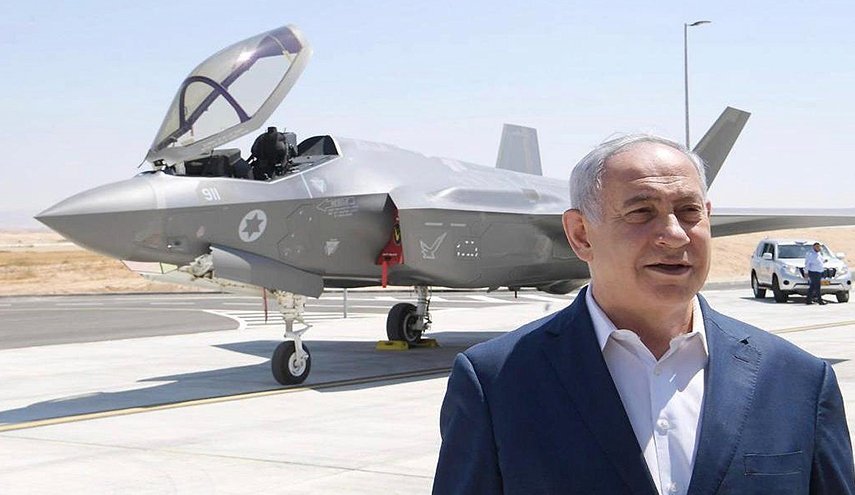
Turkey and Saudi Arabia continue negotiations to purchase F-35 fighter jets from the United States. In response to a question about a potential deal to sell F-35s to Turkey, U.S. President Donald Trump said, “We are thinking very seriously about this matter.” Trump has also recently expressed his support for selling F-35 fighter jets to Saudi Arabia. These statements come as the Zionist regime strongly opposes any U.S. move to sell F-35s to these two countries and any other country in West Asia.
The Zionist Regime’s Security Logic in Opposing F-35 Sales
The Zionist regime’s opposition to this matter, and the intensive and serious efforts made by its officials at the highest levels in the White House and Congress to prevent the sale of F-35s to Ankara and Riyadh, is considered entirely natural; because the Zionist regime does not want its air superiority in one of the most important regions in the world, namely West Asia and the Islamic world where its main and strategic enemies are located, to be weakened.
The Zionist regime’s decades-long monopoly on possessing the F-35 has turned this fighter jet into a strategic tool that guarantees not only the security of this regime but also its ability to project power and create cross-border deterrence. In other words, the Zionist regime’s insistence on monopolizing the F-35 in the region is driven by a precise security and military calculation, in which maintaining a qualitative monopoly, guaranteeing absolute air superiority, and preserving cross-border deterrence tools are its key pillars.
For several decades, the Zionist regime has compensated for its lack of strategic depth with air superiority and access to the most advanced American fighter jets. The stealth capabilities, integrated information systems, and other features of this aircraft have allowed Tel Aviv to design and execute operations deep within the territory of any potential enemy in the region when needed, with minimal risk to itself. Losing the monopoly on this capability and it falling into the hands of, particularly, Turkey and Saudi Arabia—two regional rivals of the Zionist regime with high financial capabilities and geopolitical ambitions—would mean reducing the qualitative gap and increasing the cost of any future offensive action for this regime.
The desire and intensive efforts of Turkey and Saudi Arabia to conclude contracts for purchasing F-35s from the United States—which, if realized, will undoubtedly be a significant milestone in the history of U.S. arms sales in the region—raise the question of whether the United States will retreat from its policy of preserving the Zionist regime’s air superiority in the region or not.
In response to this question, it must be said that the Trump administration’s policy in this area is shaped by two important issues, or rather two opposing pressures; on the one hand, the United States still considers itself committed to maintaining the qualitative military superiority of the Zionist regime as the cornerstone of the bilateral alliance in the region. On the other hand, the United States, and especially the Trump administration, cannot ignore the extensive financial and economic benefits of regional alliances, particularly with wealthy countries like Saudi Arabia; benefits that play an effective role in fulfilling the “America First” slogan.
It is worth noting that selling F-35s to allies like Saudi Arabia, which are among the leading candidates to join the normalization process and the Abraham Accords, also indicates Washington’s desire to use this fighter jet as a tool to integrate its allies’ camp.
Strategic Consequences and Future Prospects
The intense resistance of the Zionist regime indicates the existence of clear red lines for Tel Aviv in this area. The United States will likely, in the short term, condition the sale of F-35s to these two countries on strict security guarantees against its regional and international rivals and enemies and against using them against the interests of the Zionist regime. However, in the long term, the logic of geopolitics and the interests of major arms companies will drive Washington towards gradually expanding the circle of F-35 owners among its allies.
In any case, the Zionist regime considers the sale of F-35s to Saudi Arabia and Turkey a serious threat to its security unless the United States preserves this regime’s air superiority through specific mechanisms. Within this framework, it seems the United States will try, while selling this aircraft to other regional allies (currently, Turkey and Saudi Arabia are the leading candidates), to preserve the Zionist regime’s operational superiority over other regional possessors by controlling access to specific software and hardware capabilities, support systems, and spare parts.
This process, while somewhat weakening the absolute technical superiority the Zionist regime enjoyed in the past, allows Washington to meet the demands of Turkey, Saudi Arabia, and other F-35 applicants while still maintaining the Zionist regime as the most advanced and effective possessor of this aircraft in the region and guaranteeing an acceptable level of security and deterrence for this regime.
Ultimately, whether with guarantees or without guarantees or any other alternative mechanism, the Zionist regime may, for the first time in decades, face a reduction in the qualitative weapons gap with some of its neighbors; a situation that could seriously challenge the foundations of its security doctrine, based on deterrence through absolute technological superiority.
At the same time, it must also be noted that the entry of F-35s into the arsenals of regional countries could fuel a new arms race in West Asia, aligned with U.S. interests, and further destabilize the region’s security environment; a process that, while boosting the market for American arms companies, will ultimately lead to increased insecurity and instability in the region.








0 Comments