Europe’s Threat to Deploy Military Forces in Ukraine: From Words to Actions

Strategic Council Online – Interview: An expert on Eurasian and Russian affairs stated that the West's reaction to Russia's threats regarding any deployment of foreign forces in Ukraine, whether under NATO or as an independent force, will be a combination of caution and deterrence. He said: Despite the desire of Europe and America to deploy military forces in Ukraine, they emphasize indirect support for Ukraine, including economic sanctions and increased diplomatic pressure on Moscow, and at best propose deploying neutral observers in Ukraine.

Mehdi Seif Tabrizi, in an interview with the Strategic Council on Foreign Relations’ website, stated: “It does not seem that a ceasefire agreement in Ukraine will be reached in the short term or even the medium term, and the prospect of achieving peace between Russia and Ukraine is very remote.”

He added: Under current conditions, proposing the idea of deploying European forces in Ukraine after the start of a peace process between Kyiv and Moscow as peacekeeping forces is considered as warlike as transferring long-range missiles to Kyiv to target urban centers deep inside Russian territory. Essentially, from Moscow’s perspective, one of the most important reasons for the start of the Ukraine war was the presence of NATO forces in Ukraine and near its borders, contrary to the Minsk agreements, and NATO’s eastward expansion. The presence of coalition forces from European countries under any title in Ukrainian territory will not only not address Russia’s security concerns. Still, it will likely lead to the continuation and expansion of the war between Russia and other European countries that are NATO members. Vladimir Putin, in his recent speech at the Eastern Economic Forum in Vladivostok (2025), clearly revealed Russia’s decision to target any foreign force on Ukrainian soil, under any title and mission, as a legitimate target for Moscow. This stance was adopted in response to the meeting of the Coalition of Friends of Ukraine held in Paris a few weeks ago.

This expert on Eurasian and Russian affairs, regarding the messages in Putin’s statements about the legitimacy of any foreign target on Ukrainian soil, stated: First, Moscow wants to present the presence of Western forces on Ukrainian soil as its red line, which, from Russia’s perspective, necessitates a military response. Accordingly, the Kremlin will not allow Ukrainian territory to become a permanent base for the West (NATO). The experience of NATO’s expansion into Eastern Europe (from the Baltics to Poland) is deeply etched in the Kremlin’s historical memory as a “threat,” and it views any effort by the West to deploy military forces in Ukraine as a repetition of that same pattern.

Tabrizi said: Secondly, with these statements, Putin is trying to question the international and political justification for the presence of any kind of foreign forces on Ukrainian soil and, alongside that, increase the political and military costs of deploying troops in Ukraine for the West.

He continued: From another perspective, by repeating such statements, the Kremlin effectively questions the legitimacy of “Western peacekeeping forces.” From Moscow’s perspective, Western forces will not be peacekeepers but “occupying forces.” This discourse-building is also important from a psychological and propaganda standpoint, as it convinces Russia’s domestic and non-Western target audience that Moscow is engaged in legitimate defense.

This expert on Eurasian and Russian affairs noted: Putin’s words should be considered a “declaration of a strategic red line.” Moscow, with this position, pursues two goals: First, operational deterrence. In other words, the West must consider the potential threats of direct confrontation with Russia before deploying its forces. Second, legitimization. Meaning, by labeling foreign forces as “legitimate targets,” Russia tries to portray its potential response from now on as “legitimate” self-defense.

Tabrizi emphasized that past experiences have shown Russia does not consider any red lines set by other countries as legitimate when defending its own security and national interests. Moscow has military tools at its disposal for limited and targeted operations, from long-range missiles like the “Orel” to drones and cyber-attacks. However, the Kremlin is well aware that direct confrontation with NATO could escalate the crisis beyond the region and lead to unpredictable consequences. Therefore, the most likely scenario in dealing with foreign forces in Ukraine would be limited and precise attacks against bases or equipment related to foreign troops, not a full-scale confrontation.

He further said: Russia’s hardline stance against any forces under the title of Western ‘peacekeepers’ pushes the war towards a strategic stalemate for Kyiv and its supporters. Putin has drawn his red line with this threat. Any deployment of foreign forces is a license to “attack” those forces, which could include precise drone or missile attacks, and this could be carried out in a way that avoids all-out war with the European side.

This expert on Eurasian and Russian affairs, regarding the likely future of political and security developments between Russia and Ukraine, stated: The continuation of Russia’s gradual occupation of eastern Ukraine, considering general war fatigue in Europe (with the spread of anti-war protests in Germany and France) and Trump’s pressure to make a “deal” with Russia, will ultimately force the West to retreat. Overall, the persistence of these conditions leads to the strengthening of Russia’s positions.

Tabrizi emphasized that, at best, a ceasefire would be agreed upon, which could collapse at any moment. In general, the prospect of peace in the war between Ukraine and Russia is very remote in the short term.

In response to the question of whether, given Putin’s threats, the West will abandon the idea of deploying forces in Ukraine, he stated: This threat has certainly been effective, as Russia has maintained its pressure on the battle lines. Western governments, especially in Europe, are very sensitive and vulnerable to the political and security consequences of deploying troops to Ukraine. War-weary European public opinion will react strongly to casualties and the risks of direct war. Therefore, contrary to declared policies, the West attempts to minimize the human cost of the Ukraine conflict for European countries and refrains from sending ground military forces, except in very limited cases.

This expert on Eurasian and Russian affairs stated: Western leaders are well aware that direct entry into the war could lead to a direct confrontation with Russia as a nuclear power; hence, this issue is probably off the agenda in Washington, Berlin, and Paris.

He continued: Instead of pursuing this policy, the West has adopted a “lower-cost” policy, which involves continuing to send advanced weapons, training military forces on the soil of European countries, and intensifying economic pressure against Moscow. Given these points, it can be said that Putin’s threat has been largely deterrent. But this does not mean a complete halt to Western support for Ukraine; instead, only its form has changed. Instead of direct involvement, the West seeks to continue the war by proxy.

Tabrizi said: The West’s reaction to Russia’s threats is a combination of caution and deterrence. The United States, both during Biden’s and Trump’s terms, has repeatedly stated that it will not send its soldiers into Ukrainian territory. Also, Donald Trump’s stance over the past 8 months clearly shows that Washington has changed its perspective regarding financial aid as well. Europe’s purchase of American military equipment in exchange for payment could reduce Europeans’ capacity for providing sustained and long-term assistance. On the other hand, the US has suspended all its financial aid to the Ukrainian government and instead, through military and intelligence aid, tries to ensure that Kyiv’s hands are not empty on the military front. But Europe is plagued by numerous divisions: Eastern Europe, such as Poland and the Baltics, takes a harder line towards Russia and has even sometimes spoken of the idea of deploying forces in Ukraine. At the same time, on the Eastern European front, countries like Hungary, Slovakia, and Serbia have opposed European sanctions against Russia and have withdrawn from support schemes for Ukraine. However, Western Europe, including Germany, France, England, and Italy, as leaders of Europe, has taken strong stances against Russia. Nevertheless, regarding troop deployment to Ukraine, they have adopted a cautious position and avoided direct confrontation with Russia. These internal divisions in Europe have practically eliminated the possibility of consensus on deploying forces in Ukraine. Therefore, the overall Western reaction will focus more on indirect support for Ukraine, economic sanctions, and diplomatic pressure against Russia, and at best, proposing the deployment of neutral observers.
0 Comments

LATEST CONTENT

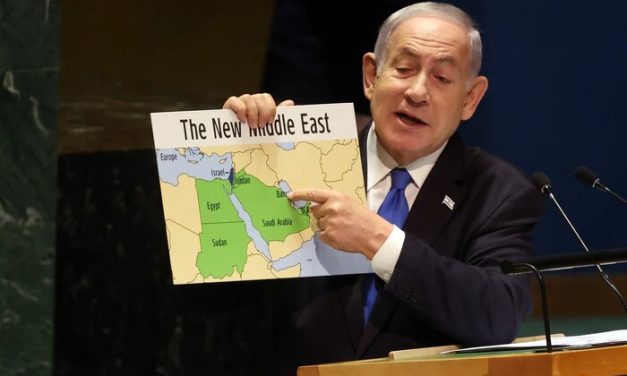
The US Ambassador Lifts the Veil; The Strategic Danger of the “Greater Israel” Project for West Asia

Strategic Council Online –Opinion: The “Greater Israel” project, whose realization requires the annexation of parts of the territory of regional countries into the occupied lands, has long passed the stage of theorization and, especially in recent months, has taken on an operational form. This plan, which was once discussed in extremist Zionist circles as an unattainable ideal, is today, with the explicit support of the United States, being transformed into an executive program targeting the regional order.

European Independence from the United States; From Dream to Reality

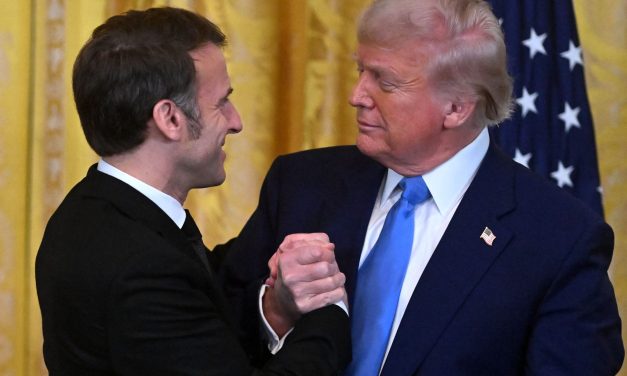
Strategic Council Online – Opinion: Europe has spoken of “strategic autonomy” for years, but each new crisis reveals that the gap between its aspiration for self-reliance and the reality of its security dependence on the United States remains significantly unbridged.

The Arctic; From Geographical Freezing to Geopolitical Boiling

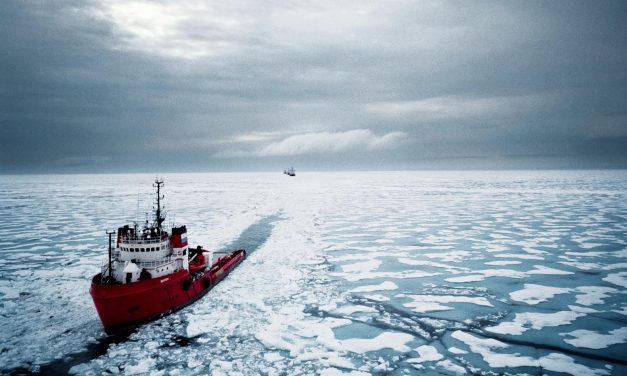
Strategic Council Online – Opinion: The Arctic is no longer a frozen, remote periphery; it has become a live theater of great-power competition, where sea routes, port infrastructure, the law of the sea, and military deterrence are intertwined, shaping the future of maritime security.

The Zionist Regime’s Time Bomb Activated in the West Bank

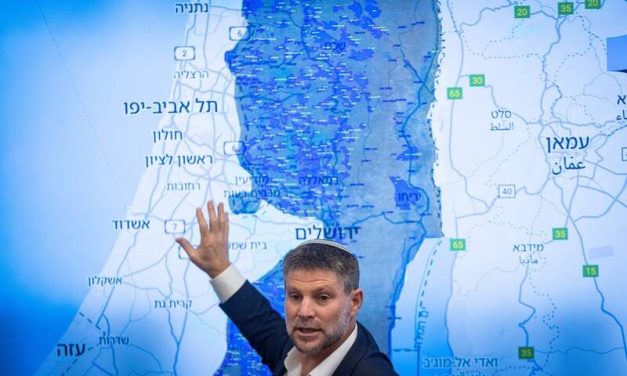
Strategic Council Online – Opinion: In the midst of America’s military deployment to West Asia and the Persian Gulf, which has increased tensions at the regional and global levels, the Zionist regime has seized the opportunity and accelerated the advancement of its ambitious projects, including the process of the illegal annexation of the West Bank to the occupied territories.

Loading

Últimas publicaciones

The US Ambassador Lifts the Veil; The Strategic Danger of the “Greater Israel” Project for West Asia

Strategic Council Online –Opinion: The “Greater Israel” project, whose realization requires the annexation of parts of the territory of regional countries into the occupied lands, has long passed the stage of theorization and, especially in recent months, has taken on an operational form. This plan, which was once discussed in extremist Zionist circles as an unattainable ideal, is today, with the explicit support of the United States, being transformed into an executive program targeting the regional order.

European Independence from the United States; From Dream to Reality

Strategic Council Online – Opinion: Europe has spoken of “strategic autonomy” for years, but each new crisis reveals that the gap between its aspiration for self-reliance and the reality of its security dependence on the United States remains significantly unbridged.

The Arctic; From Geographical Freezing to Geopolitical Boiling

Strategic Council Online – Opinion: The Arctic is no longer a frozen, remote periphery; it has become a live theater of great-power competition, where sea routes, port infrastructure, the law of the sea, and military deterrence are intertwined, shaping the future of maritime security.

The Zionist Regime’s Time Bomb Activated in the West Bank

Strategic Council Online – Opinion: In the midst of America’s military deployment to West Asia and the Persian Gulf, which has increased tensions at the regional and global levels, the Zionist regime has seized the opportunity and accelerated the advancement of its ambitious projects, including the process of the illegal annexation of the West Bank to the occupied territories.

Loading

DERNIER CONTENU

The US Ambassador Lifts the Veil; The Strategic Danger of the “Greater Israel” Project for West Asia

Strategic Council Online –Opinion: The “Greater Israel” project, whose realization requires the annexation of parts of the territory of regional countries into the occupied lands, has long passed the stage of theorization and, especially in recent months, has taken on an operational form. This plan, which was once discussed in extremist Zionist circles as an unattainable ideal, is today, with the explicit support of the United States, being transformed into an executive program targeting the regional order.

European Independence from the United States; From Dream to Reality

Strategic Council Online – Opinion: Europe has spoken of “strategic autonomy” for years, but each new crisis reveals that the gap between its aspiration for self-reliance and the reality of its security dependence on the United States remains significantly unbridged.

The Arctic; From Geographical Freezing to Geopolitical Boiling

Strategic Council Online – Opinion: The Arctic is no longer a frozen, remote periphery; it has become a live theater of great-power competition, where sea routes, port infrastructure, the law of the sea, and military deterrence are intertwined, shaping the future of maritime security.

The Zionist Regime’s Time Bomb Activated in the West Bank

Strategic Council Online – Opinion: In the midst of America’s military deployment to West Asia and the Persian Gulf, which has increased tensions at the regional and global levels, the Zionist regime has seized the opportunity and accelerated the advancement of its ambitious projects, including the process of the illegal annexation of the West Bank to the occupied territories.

Loading

DERNIER CONTENU

The US Ambassador Lifts the Veil; The Strategic Danger of the “Greater Israel” Project for West Asia

Strategic Council Online –Opinion: The “Greater Israel” project, whose realization requires the annexation of parts of the territory of regional countries into the occupied lands, has long passed the stage of theorization and, especially in recent months, has taken on an operational form. This plan, which was once discussed in extremist Zionist circles as an unattainable ideal, is today, with the explicit support of the United States, being transformed into an executive program targeting the regional order.

European Independence from the United States; From Dream to Reality

Strategic Council Online – Opinion: Europe has spoken of “strategic autonomy” for years, but each new crisis reveals that the gap between its aspiration for self-reliance and the reality of its security dependence on the United States remains significantly unbridged.

The Arctic; From Geographical Freezing to Geopolitical Boiling

Strategic Council Online – Opinion: The Arctic is no longer a frozen, remote periphery; it has become a live theater of great-power competition, where sea routes, port infrastructure, the law of the sea, and military deterrence are intertwined, shaping the future of maritime security.

The Zionist Regime’s Time Bomb Activated in the West Bank

Strategic Council Online – Opinion: In the midst of America’s military deployment to West Asia and the Persian Gulf, which has increased tensions at the regional and global levels, the Zionist regime has seized the opportunity and accelerated the advancement of its ambitious projects, including the process of the illegal annexation of the West Bank to the occupied territories.

Loading

DERNIER CONTENU

The US Ambassador Lifts the Veil; The Strategic Danger of the “Greater Israel” Project for West Asia

Strategic Council Online –Opinion: The “Greater Israel” project, whose realization requires the annexation of parts of the territory of regional countries into the occupied lands, has long passed the stage of theorization and, especially in recent months, has taken on an operational form. This plan, which was once discussed in extremist Zionist circles as an unattainable ideal, is today, with the explicit support of the United States, being transformed into an executive program targeting the regional order.

European Independence from the United States; From Dream to Reality

Strategic Council Online – Opinion: Europe has spoken of “strategic autonomy” for years, but each new crisis reveals that the gap between its aspiration for self-reliance and the reality of its security dependence on the United States remains significantly unbridged.

The Arctic; From Geographical Freezing to Geopolitical Boiling

Strategic Council Online – Opinion: The Arctic is no longer a frozen, remote periphery; it has become a live theater of great-power competition, where sea routes, port infrastructure, the law of the sea, and military deterrence are intertwined, shaping the future of maritime security.

The Zionist Regime’s Time Bomb Activated in the West Bank

Strategic Council Online – Opinion: In the midst of America’s military deployment to West Asia and the Persian Gulf, which has increased tensions at the regional and global levels, the Zionist regime has seized the opportunity and accelerated the advancement of its ambitious projects, including the process of the illegal annexation of the West Bank to the occupied territories.

Loading