Dimensions and Consequences of the Gap in US-European Relations

2025/03/09 | Note, Politics, top news

Strategic Council Online – Opinion: US-European relations are moving towards “divergence” unprecedentedly. The Trump administration’s humiliating actions and statements regarding the European Union show that relations between the two sides are entering a new phase of “gap” and subsequent “tension.”

Barsam Mohammadi – International Affairs Expert

In recent weeks, a “new discourse” has dominated US foreign policy towards Europe, which has been the country’s “most extreme period of unilateralism” since World War II and has never been seen before. The main signs of this discourse should be sought in the harsh and unprecedented statements of US Vice President J.D. Vance at the recent Munich Security Conference, who emphasized that contrary to the traditional speeches that American officials make at this conference, “the threat to Europe does not come from China or Russia. I am concerned about the threat within Europe, which is that Europe is retreating from some of its most fundamental values,  ​​which are shared with the United States.”

In a sense, Vance has introduced the internal developments in Europe as the “main enemies” of the Trump administration. Notably, Vance’s words were “appreciated” by the US President, and Trump accompanied him.

The US President has subjected European countries to such severe attacks with statements and actions that are unfriendly and outside the known frameworks of bilateral relations (from imposing a 25% tariff on European imports to threatening to withdraw from NATO and dissolve the European Union) that no US president has ever seen before.

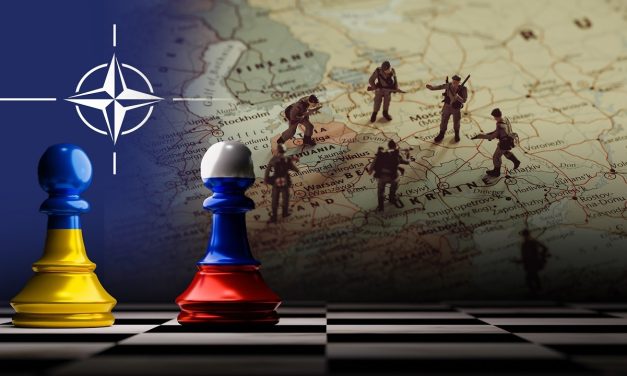
The starting point of the profound changes in the US administration’s transatlantic relations should be seen in the “review” of this country’s policies towards Ukraine and Russia. Trump has unilaterally and without any consultation or agreement from European allies, while cutting off all economic, military, etc. aid to Ukraine, made this country a “conciliatory factor” in his negotiations with Russia. This event is exactly contrary to the macro approaches of European and even American foreign policy.

The Trump administration’s foreign policy approach should be assessed as an important “turning point” and, of course, “challenging” in Washington-Brussels relations, especially since the US tariff issue is seriously shocking European economies, including the export-oriented economy of Germany.

It seems that the Trump administration has bigger goals in mind for Europe, with the effort to “dissolve the European Union” and “weaken” these countries and, as a result, completely align them with the United States for the purpose of maximum economic exploitation, at the top of these goals. In addition, the Trump administration’s efforts to “weaken NATO” should not be overlooked.

Trump has not given European countries more than two options to determine the status of NATO: either they must allocate 5 percent of their GDP (two and a half times the current share) to NATO military spending, or else the United States will withdraw from NATO. Trump’s condition in this regard is such that he knows very well that it is almost impossible for all European countries to provide this figure. Of course, this could be a prelude to the US withdrawal from NATO, especially when the US withdrawal from NATO is one of the ideas of the first term of Trump’s presidency, which he has raised several times in private meetings and conversations. Trump’s statements and actions show that he is seeking to realize two significant changes in transatlantic relations: first, the dissolution of the European Union, and second, the weakening of NATO. The result that is going to be achieved for America is that Europe and America will return to the years before 1941, when America will regain its headquarters role and will not be involved in European wars, and every war and conflict that is going to happen will be with Europe on one side, with European countries providing the money, goods, and weapons.

In any case, the policy that Trump is pursuing on some issues, including Russia (preferring enemies to European allies and friends), conflicts with the country’s national security doctrine and will undoubtedly have “destructive consequences” for Europe, as it will pose a danger and a “serious challenge” to the economy, security, and even the political processes and governance of the Union.

In any case, America has placed Europe in a dilemma between “bad” and “worse”; Either it must pay the “cost” of Trump’s actions and policies at various levels or deal with their “destructive consequences,” both of which could mean further weakening of Europe in regional and global arrangements, or the Union must consider serious arrangements and mechanisms for its “strategic independence” from the United States, which is also not possible in the short term and comes with costs for European countries. Given that the United States has played a vital role in maintaining European security and stability since the end of World War II, strategic independence from the United States may increase Europe’s “vulnerability” in economic, political, military, and security dimensions for an indefinite period. In any case, the conditions in which European countries are caught today and are exposed to Trump’s pressures, humiliations, and radical actions are the path they themselves chose after World War II. This is the price that Europe pays for its complete “trust,” “reliance,” and “association” with America on global and regional issues. Today, Europe is in a difficult situation; it cannot easily remove itself from the American circle, nor does it have the capacity to confront American pressures.
0 Comments

LATEST CONTENT

America’s Zero-Sum Game in Iraq

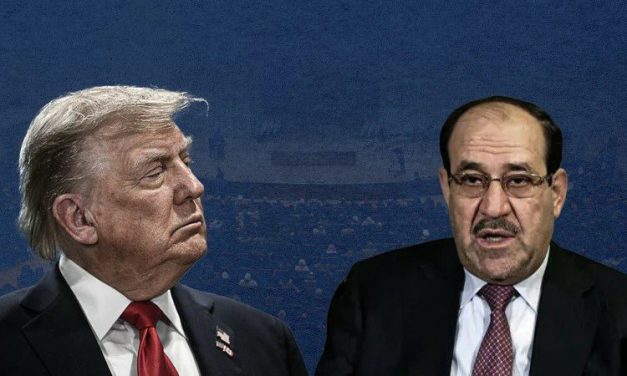
Online Strategic Council – Memoir: The swift selection of Nouri al-Maliki for the premiership constitutes a new phase in Iraq’s political sphere. Multiple factors have played a role in this process, the most important being the prevailing situation in Iraq and the region. Under such circumstances, Iraq requires a powerful and experienced prime minister who can keep the country away from the dangers of wars and crises.

America’s Strategy for Creating Tension in the Asia-Pacific

Strategic Council Online – Opinion: Relations between some countries in the Asia-Pacific region, such as China and Japan or China and Australia, which were previously relatively normal, are trending towards deterioration, and the primary reason for this is the aggressive policies of the United States of America.

The Collapse of the European Security Illusion with the Continuation of the Ukraine War?

Strategic Council Online – Interview: The Ukraine war has become a new turning point in the political, security, and even commercial relations of allies on both sides of the Atlantic. While this war is nearing its fourth year, many questions still remain regarding its future and its consequences; among them, will the continuation of the Ukraine war lead to the collapse of the European security illusion?

Is Greenland Pushing Europe Toward China?

Strategic Council Online – Interview: A European affairs expert believes that the seizure of Greenland will certainly weaken America’s relations with Europe and its allies. Donald Trump’s view is that he does not need these countries, but if Europe faces significant pressure from the United States, it is natural for it to move toward China.

Alarm Bells Sound for ISIS Revival in Syria: Threat to Iraq and West Asia

Strategic Council Online – Opinion: Numerous documents and pieces of evidence indicate that ISIS, which in recent years has been the region’s biggest threat to security and stability after the Zionist regime, has once again in recent months become a focal point for political and security exploitation by American and Zionist regime security, intelligence, and political circles.

Afghanistan’s Effective Role in the Economy of Eurasia

Strategic Council Online – Interview: A regional affairs researcher stated: Despite projects such as the Khaf-Herat railway and the Herat-Balkh-Mazar-i-Sharif corridor being on the agenda, insecurity and the absence of an inclusive government remain the most significant obstacles to realizing transit corridors and Afghanistan playing an effective role in the economy of Eurasia.

Loading

Últimas publicaciones

America’s Zero-Sum Game in Iraq

Online Strategic Council – Memoir: The swift selection of Nouri al-Maliki for the premiership constitutes a new phase in Iraq’s political sphere. Multiple factors have played a role in this process, the most important being the prevailing situation in Iraq and the region. Under such circumstances, Iraq requires a powerful and experienced prime minister who can keep the country away from the dangers of wars and crises.

America’s Strategy for Creating Tension in the Asia-Pacific

Strategic Council Online – Opinion: Relations between some countries in the Asia-Pacific region, such as China and Japan or China and Australia, which were previously relatively normal, are trending towards deterioration, and the primary reason for this is the aggressive policies of the United States of America.

The Collapse of the European Security Illusion with the Continuation of the Ukraine War?

Strategic Council Online – Interview: The Ukraine war has become a new turning point in the political, security, and even commercial relations of allies on both sides of the Atlantic. While this war is nearing its fourth year, many questions still remain regarding its future and its consequences; among them, will the continuation of the Ukraine war lead to the collapse of the European security illusion?

Is Greenland Pushing Europe Toward China?

Strategic Council Online – Interview: A European affairs expert believes that the seizure of Greenland will certainly weaken America’s relations with Europe and its allies. Donald Trump’s view is that he does not need these countries, but if Europe faces significant pressure from the United States, it is natural for it to move toward China.

Alarm Bells Sound for ISIS Revival in Syria: Threat to Iraq and West Asia

Strategic Council Online – Opinion: Numerous documents and pieces of evidence indicate that ISIS, which in recent years has been the region’s biggest threat to security and stability after the Zionist regime, has once again in recent months become a focal point for political and security exploitation by American and Zionist regime security, intelligence, and political circles.

Afghanistan’s Effective Role in the Economy of Eurasia

Strategic Council Online – Interview: A regional affairs researcher stated: Despite projects such as the Khaf-Herat railway and the Herat-Balkh-Mazar-i-Sharif corridor being on the agenda, insecurity and the absence of an inclusive government remain the most significant obstacles to realizing transit corridors and Afghanistan playing an effective role in the economy of Eurasia.

Loading

DERNIER CONTENU

America’s Zero-Sum Game in Iraq

Online Strategic Council – Memoir: The swift selection of Nouri al-Maliki for the premiership constitutes a new phase in Iraq’s political sphere. Multiple factors have played a role in this process, the most important being the prevailing situation in Iraq and the region. Under such circumstances, Iraq requires a powerful and experienced prime minister who can keep the country away from the dangers of wars and crises.

America’s Strategy for Creating Tension in the Asia-Pacific

Strategic Council Online – Opinion: Relations between some countries in the Asia-Pacific region, such as China and Japan or China and Australia, which were previously relatively normal, are trending towards deterioration, and the primary reason for this is the aggressive policies of the United States of America.

The Collapse of the European Security Illusion with the Continuation of the Ukraine War?

Strategic Council Online – Interview: The Ukraine war has become a new turning point in the political, security, and even commercial relations of allies on both sides of the Atlantic. While this war is nearing its fourth year, many questions still remain regarding its future and its consequences; among them, will the continuation of the Ukraine war lead to the collapse of the European security illusion?

Is Greenland Pushing Europe Toward China?

Strategic Council Online – Interview: A European affairs expert believes that the seizure of Greenland will certainly weaken America’s relations with Europe and its allies. Donald Trump’s view is that he does not need these countries, but if Europe faces significant pressure from the United States, it is natural for it to move toward China.

Alarm Bells Sound for ISIS Revival in Syria: Threat to Iraq and West Asia

Strategic Council Online – Opinion: Numerous documents and pieces of evidence indicate that ISIS, which in recent years has been the region’s biggest threat to security and stability after the Zionist regime, has once again in recent months become a focal point for political and security exploitation by American and Zionist regime security, intelligence, and political circles.

Afghanistan’s Effective Role in the Economy of Eurasia

Strategic Council Online – Interview: A regional affairs researcher stated: Despite projects such as the Khaf-Herat railway and the Herat-Balkh-Mazar-i-Sharif corridor being on the agenda, insecurity and the absence of an inclusive government remain the most significant obstacles to realizing transit corridors and Afghanistan playing an effective role in the economy of Eurasia.

Loading