Europe’s Strategic Independence Overshadowed by Domestic Challenges and Trump’s Policies

2024/12/28 | Note, Politics, top news

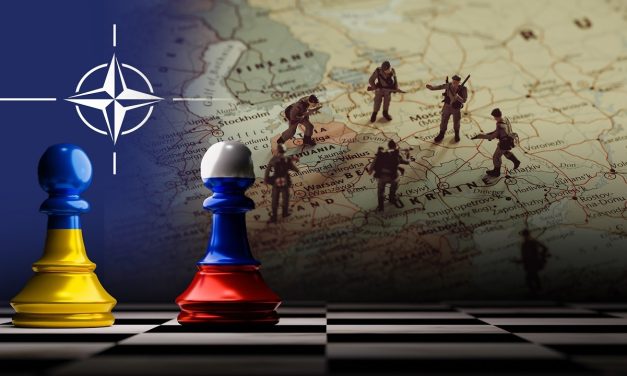
Strategic Council Online—Opinion: Over the past three years, Europe has acted during the Ukrainian conflict in a way that has allowed it to pursue disparate policy options, including supporting Ukraine in its conflict with Russia, maintaining the structure of the European security order, and not bringing European military forces into the war. The escalation of military conflicts in Ukraine, the possibility of a reduction in military aid from Washington, and the possibility of a forced ceasefire have placed European governments in a difficult position.

Mohsen Jalali – Researcher on European Affairs

Today, Europe faces two challenging options regarding the war in Ukraine; either it must decisively accept and guarantee a ceasefire (using European forces), or it must accept the risk of a wider conflict in the coming years, which may not be limited to Ukraine. On the one hand, without a significant military presence in Ukraine, any ceasefire/security mechanism will likely be ignored by Russia. One of the main concerns in Europe in recent months has been that Trump’s presence will force European governments to become more militarily involved in Ukraine. Of course, Trump has also announced in recent weeks that he will refrain from sending American troops to Ukraine and that this responsibility will lie with Europe. For this reason, French President Emmanuel Macron is trying to gather support for the formation of a European peacekeeping force. He recently traveled to Poland to present his proposal, which was rejected. It is likely that Trump will first seek to end the war or manage the tension by temporarily increasing tensions by raising the supply of military weapons to Ukraine. However, at any time, it is possible that the responsibility for military conflicts will be transferred to Europe. The fact is that deterrence in Eastern Europe is not possible by relying on a limited peacekeeping force, and it will not provide any barrier against ceasefire violations and renewed Russian aggression. The alternative is to deploy a larger force, which entails accepting the risk of intense and widespread military clashes with Russian forces in case of a ceasefire violation. On the other hand, Russia will not accept a large military presence on the ceasefire border lines. Whether Europe can carry out such a mission depends on several considerations.

Apart from the issue of the readiness of European forces, the challenges associated with the withdrawal strategy, and the need for US technical and logistical support, the challenge is related to the political will to enter into a military conflict among European countries. The question is whether, after accepting the ceasefire, if Russia attacks European forces, Brussels can provide a coordinated military response, whether it is likely to focus on lobbying the US, or whether some European countries may withdraw their forces unilaterally. In such a situation, the presence of strong political leadership in Europe is of great importance.

Key European leaders, including Olaf Schulz in Germany and Emmanuel Macron in France, have been weakened by domestic crises, leaving the continent without coherent leadership in the face of Trump’s potentially divisive policies and the Ukraine crisis. The collapse of the German government and the upcoming elections will delay the country’s ability to lead Europe at best. Britain, while seeking to strengthen ties with Europe, faces the constraints of Brexit. Italy and Poland, despite ambitious policies, lack the collective influence needed to lead Europe effectively. In such circumstances, France is facing an unprecedented political crisis. First, François Bayrou, who recently emerged as France’s new prime minister, ran unsuccessfully in 2007 on the slogan that public debt was the main enemy of the French economy. According to the French National Statistics Center, government debt increased from 1.2 trillion euros that year to 113 percent of GDP, equivalent to 3.3 trillion euros in December 2024. Without the necessary reforms, this trend will continue until 2030.

It should be noted that according to EU regulations, government debt should not exceed 60% of GDP. It was in this context that Michel Barnier, in September 2024, was appointed Prime Minister with the mission of organizing the country’s financial system and proposed a 2025 budget with a 40 billion euro reduction in spending and a 20 billion euro increase in tax revenues (a total of 60 billion euro in savings), which of course faced strong opposition from the left in the parliament. After numerous amendments to the budget bill and the failure to lobby the far-right (National Assembly), the Barnier government decided to implement the budget bill without parliamentary approval using Article 49.3 of the Constitution, which provides a special mechanism for exiting a political deadlock.

The opposition immediately met this with action and a vote of no confidence (331 in favor, 246 against) in the Barnier government. This situation has been unprecedented since 1962. The alliance of the far right and the far left has been essential in achieving this situation. Supporters of the government believe that Marine Le Pen’s move to support the no-confidence vote goes beyond the dissolution of Michel Barnier’s government and is aimed at ousting Emmanuel Macron. In a speech last week, Le Pen referred to the conditions set out in the constitution and the situation of government dissolution. According to the law, in such a situation, the president has three options:


The first option is to dissolve the parliament and hold new elections, which can only be held once a year by law. Given Macron’s decision to call early elections this year (after his defeat in the European Parliament elections), a new dissolution of the parliament is not possible until July 2025.

The second option is to form a new government, which is very difficult given the deep divisions between the political currents in the parliament. It should not be forgotten that the government of Gabriel Ettel, which was formed in January 2024, resigned in September, and the government of Michel Barnier received a vote of no confidence three months later.

The third option is for President Macron to resign, which is probably the far right’s preferred option.

According to a poll published by BFM TV, 63% of respondents believed that after the vote of no confidence in Barnier, the president should also resign. Macron has explicitly rejected this. Now, with the introduction of François Bayrou, the French cabinet will face the challenge of receiving a new vote of confidence from the parliament and the instability of the government.

Therefore, when Europe is facing significant geopolitical challenges, domestic political instability in a country like France poses a dilemma for Europe’s capacity for coordinated action in response to the surrounding developments. In other words, the weakening of the position of mainstream parties in key European countries, especially France, alongside the rise of populist movements and murmurs of public opposition to increased military involvement in the Ukraine war, has raised the possibility that European governments will fundamentally redefine their policies around Trump’s approach. Thus, the European strategic independence initiative will be effectively overshadowed by the Trump administration’s policies and the domestic challenges of European countries.
0 Comments

LATEST CONTENT

America’s Zero-Sum Game in Iraq

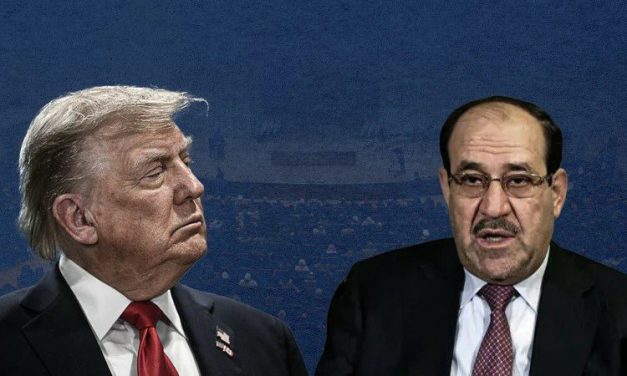
Online Strategic Council – Memoir: The swift selection of Nouri al-Maliki for the premiership constitutes a new phase in Iraq’s political sphere. Multiple factors have played a role in this process, the most important being the prevailing situation in Iraq and the region. Under such circumstances, Iraq requires a powerful and experienced prime minister who can keep the country away from the dangers of wars and crises.

America’s Strategy for Creating Tension in the Asia-Pacific

Strategic Council Online – Opinion: Relations between some countries in the Asia-Pacific region, such as China and Japan or China and Australia, which were previously relatively normal, are trending towards deterioration, and the primary reason for this is the aggressive policies of the United States of America.

The Collapse of the European Security Illusion with the Continuation of the Ukraine War?

Strategic Council Online – Interview: The Ukraine war has become a new turning point in the political, security, and even commercial relations of allies on both sides of the Atlantic. While this war is nearing its fourth year, many questions still remain regarding its future and its consequences; among them, will the continuation of the Ukraine war lead to the collapse of the European security illusion?

Is Greenland Pushing Europe Toward China?

Strategic Council Online – Interview: A European affairs expert believes that the seizure of Greenland will certainly weaken America’s relations with Europe and its allies. Donald Trump’s view is that he does not need these countries, but if Europe faces significant pressure from the United States, it is natural for it to move toward China.

Alarm Bells Sound for ISIS Revival in Syria: Threat to Iraq and West Asia

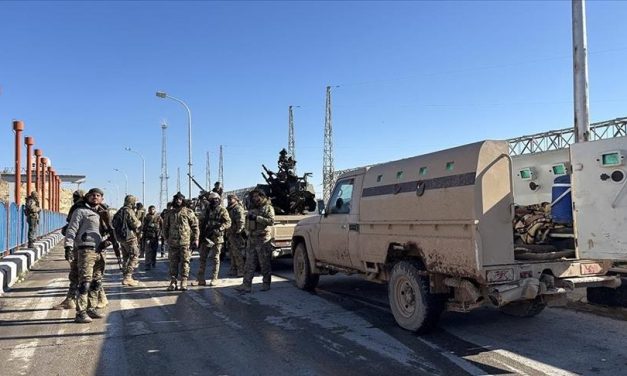
Strategic Council Online – Opinion: Numerous documents and pieces of evidence indicate that ISIS, which in recent years has been the region’s biggest threat to security and stability after the Zionist regime, has once again in recent months become a focal point for political and security exploitation by American and Zionist regime security, intelligence, and political circles.

Afghanistan’s Effective Role in the Economy of Eurasia

Strategic Council Online – Interview: A regional affairs researcher stated: Despite projects such as the Khaf-Herat railway and the Herat-Balkh-Mazar-i-Sharif corridor being on the agenda, insecurity and the absence of an inclusive government remain the most significant obstacles to realizing transit corridors and Afghanistan playing an effective role in the economy of Eurasia.

Loading

Últimas publicaciones

America’s Zero-Sum Game in Iraq

Online Strategic Council – Memoir: The swift selection of Nouri al-Maliki for the premiership constitutes a new phase in Iraq’s political sphere. Multiple factors have played a role in this process, the most important being the prevailing situation in Iraq and the region. Under such circumstances, Iraq requires a powerful and experienced prime minister who can keep the country away from the dangers of wars and crises.

America’s Strategy for Creating Tension in the Asia-Pacific

Strategic Council Online – Opinion: Relations between some countries in the Asia-Pacific region, such as China and Japan or China and Australia, which were previously relatively normal, are trending towards deterioration, and the primary reason for this is the aggressive policies of the United States of America.

The Collapse of the European Security Illusion with the Continuation of the Ukraine War?

Strategic Council Online – Interview: The Ukraine war has become a new turning point in the political, security, and even commercial relations of allies on both sides of the Atlantic. While this war is nearing its fourth year, many questions still remain regarding its future and its consequences; among them, will the continuation of the Ukraine war lead to the collapse of the European security illusion?

Is Greenland Pushing Europe Toward China?

Strategic Council Online – Interview: A European affairs expert believes that the seizure of Greenland will certainly weaken America’s relations with Europe and its allies. Donald Trump’s view is that he does not need these countries, but if Europe faces significant pressure from the United States, it is natural for it to move toward China.

Alarm Bells Sound for ISIS Revival in Syria: Threat to Iraq and West Asia

Strategic Council Online – Opinion: Numerous documents and pieces of evidence indicate that ISIS, which in recent years has been the region’s biggest threat to security and stability after the Zionist regime, has once again in recent months become a focal point for political and security exploitation by American and Zionist regime security, intelligence, and political circles.

Afghanistan’s Effective Role in the Economy of Eurasia

Strategic Council Online – Interview: A regional affairs researcher stated: Despite projects such as the Khaf-Herat railway and the Herat-Balkh-Mazar-i-Sharif corridor being on the agenda, insecurity and the absence of an inclusive government remain the most significant obstacles to realizing transit corridors and Afghanistan playing an effective role in the economy of Eurasia.

Loading

DERNIER CONTENU

America’s Zero-Sum Game in Iraq

Online Strategic Council – Memoir: The swift selection of Nouri al-Maliki for the premiership constitutes a new phase in Iraq’s political sphere. Multiple factors have played a role in this process, the most important being the prevailing situation in Iraq and the region. Under such circumstances, Iraq requires a powerful and experienced prime minister who can keep the country away from the dangers of wars and crises.

America’s Strategy for Creating Tension in the Asia-Pacific

Strategic Council Online – Opinion: Relations between some countries in the Asia-Pacific region, such as China and Japan or China and Australia, which were previously relatively normal, are trending towards deterioration, and the primary reason for this is the aggressive policies of the United States of America.

The Collapse of the European Security Illusion with the Continuation of the Ukraine War?

Strategic Council Online – Interview: The Ukraine war has become a new turning point in the political, security, and even commercial relations of allies on both sides of the Atlantic. While this war is nearing its fourth year, many questions still remain regarding its future and its consequences; among them, will the continuation of the Ukraine war lead to the collapse of the European security illusion?

Is Greenland Pushing Europe Toward China?

Strategic Council Online – Interview: A European affairs expert believes that the seizure of Greenland will certainly weaken America’s relations with Europe and its allies. Donald Trump’s view is that he does not need these countries, but if Europe faces significant pressure from the United States, it is natural for it to move toward China.

Alarm Bells Sound for ISIS Revival in Syria: Threat to Iraq and West Asia

Strategic Council Online – Opinion: Numerous documents and pieces of evidence indicate that ISIS, which in recent years has been the region’s biggest threat to security and stability after the Zionist regime, has once again in recent months become a focal point for political and security exploitation by American and Zionist regime security, intelligence, and political circles.

Afghanistan’s Effective Role in the Economy of Eurasia

Strategic Council Online – Interview: A regional affairs researcher stated: Despite projects such as the Khaf-Herat railway and the Herat-Balkh-Mazar-i-Sharif corridor being on the agenda, insecurity and the absence of an inclusive government remain the most significant obstacles to realizing transit corridors and Afghanistan playing an effective role in the economy of Eurasia.

Loading