Analysis of Causes for OPEC+ Decision to Cut Oil Production, Its Consequences

2023/04/09 | Economy, interview, top news

Strategic Council Online - Interview: An expert on Saudi affairs stated that concerning the considerations the oil-producing countries had about the drop in oil prices, the decision to reduce supply by OPEC+ was probable. He added: Bin Salman, with bitter experiences in the past, emphasizes that the US should give special privileges to Saudi Arabia in exchange for lowering the price of oil, removing the pressure and considering the interests of that country.

In an interview with the website of the Strategic Council on Foreign Relations, Amin Parto pointed to the OPEC+ decision to reduce its production by 1.16 million barrels of oil despite the announcement of the US opposition to the conclusion, adding: Last month, oil prices fell by as much as 70 dollars per barrel due to concerns about reduced demand caused by the global banking crisis. Although this price increased to 80 dollars per barrel after that, the demand for energy consumption will decrease with the end of the winter and cold season, and the oil price is expected to fall.

Saying that all the producers, especially Saudi Arabia, welcomed the decision to reduce production, he pointed out the positions of countries regarding the decision of OPEC+ to reduce output and continued: Saudi Arabia is generally trying not to politicize oil production. However, under the current situation, the country seeks to show the independence of its opinion and will to the US. Riyadh has demonstrated that it does not want to be influenced by the pressures of the West to manage energy prices during the war in Ukraine and move in line with the US policy to reduce Russia’s income.

The analyst of Saudi affairs stated that another factor in OPEC+’s decision to reduce oil supply was the neutralization of the drop in oil prices following the agreement between Tehran and Riyadh and said: Saudi Arabia announced that this voluntary reduction in production is a preventive measure aimed at supporting market stability. Forecasts by energy market analysts show that this reduction could push the oil price above 100 dollars per barrel this year, which may reach 110 dollars in the summer.

Parto referred to the release of the strategic oil reserves of the United States and France and Washington’s refusal to fill those reserves in the 2023 fiscal year, as well as the US administration’s concern about the consequences of rising oil prices on curbing current inflation in countries affected by inflationary pressure and added: Considering the possibilities that the oil-producing countries had regarding the price drop, the decision to reduce the supply seemed likely. Especially the non-OPEC producers do not see themselves as bound to consider the balance in the supply and demand market. Because of this, OPEC+ was forced to reduce production again.

Referring to Saudi Arabia’s role in the decision to reduce OPEC+ oil production, he noted: Riyadh has considered a limit of profit for its economy. Considering that the policies and approaches of Saudi Arabia are not comparable to 10 years ago, it prioritizes profit for itself over anything else. Saudi Arabia does not want the oil to fall below 80 dollars because economic costs and the implementation of development programs require keeping the oil price at a certain level. A one-dollar drop in oil prices for Saudi Arabia, which produces about 10 million barrels of oil per day, will mean an annual loss of about four billion dollars.

This expert on Saudi affairs emphasized: In the current situation, oil has a more important place and importance for Riyadh and economic profit than the political influence of that country. For this reason, the acceptance of the decision to reduce oil production by that country was predictable.

Parto referred to the reaction of the White House and calling it irrational to reduce oil production and stated: The Democrats need the economic satisfaction of the people in this situation; in addition, the increase in energy prices for the US, especially about the efforts to increase economic growth in post-COVID conditions, brings an increase in inflation.

Regarding the news published in connection with the UAE’s criticism of Saudi Arabia’s policies for not accompanying the United States and emphasizing the reduction in oil production, as well as the possibility of the country leaving OPEC+ following the continuation of this reduction, he said: Increasing production will generate more income for the UAE. However, Abu Dhabi does not seem to have such a decision, and there is little possibility for the UAE to leave OPEC+ for several reasons. The UAE does not have the same position in the oil market as Saudi Arabia, Russia, the US, or Canada. This country is more interested in gaining prestige and creating alliances.

Parto explained: While maintaining its position in OPEC, the UAE is trying to create various lobbies and alliances to balance with Saudi Arabia. Qatar’s withdrawal from OPEC was due to its low production, and it did not have an influential presence. Still, the UAE does not have such a situation because if the UAE wants to be effective in the global oil market, this position will be possible with its presence in OPEC.

The analyst of Saudi affairs stated that the UAE does not want its relations with Saudi Arabia to become complicated and challenging and tries to manage the differences, adding: Abu Dhabi has gained many benefits from its association with Riyadh in the past years, and at the same time, it has caused harm, dangers and challenges to Saudi Arabia. Among other things, we have witnessed this approach in the case of Yemen, the establishment of a military base in that country, and efforts to establish a relationship with the Zionist regime. Now that they have reached problems with each other regarding Yemen, Iran, Abraham Accords, influence, and economic status, withdrawal from OPEC will worsen their relationship and deepen their differences.

While explaining other consequences of the OPEC+ oil production cut, he pointed to the remarks of an American official who said: ‘We do not agree with Saudi Arabia on all issues, but we are partners in all issues,’ and continued: Although Saudi Arabia is trying to hit the Democrats in the US and sees the presence of the Republicans more to its advantage, Bin Salman, with his bitter experiences in the past, emphasizes that in exchange for lowering the price of oil, the US should give special privileges to Saudi Arabia, remove the pressure from Saudi Arabia and consider the interests of that country. Although the Saudis do not violate their red lines in relations with the US, they pursue their interests independently and more seriously than before.
0 Comments

Submit a Comment

Your email address will not be published. Required fields are marked *

LATEST CONTENT

The Security Equation of Southern Lebanon for the Zionist Regime

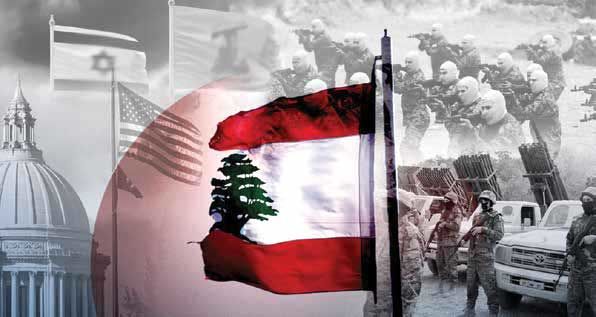
Strategic Council Online – Opinion: American-Zionist objectives in the region are not limited to weakening Hezbollah. Efforts to disarm Iraqi resistance groups such as Kata’ib Hezbollah and the Popular Mobilization Forces are also part of their subsequent plans.

Commercial Exploitation of Peace; The Gaza Committee in Confrontation with International Legitimacy

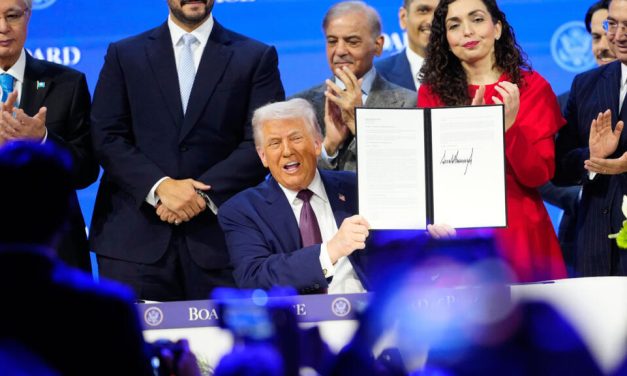
Strategic Council Online – Report: While the second phase of the implementation of the Gaza ceasefire has begun, the establishment of the “Peace Board” chaired by Donald Trump on the sidelines of the Davos meeting (22 January 2026) has become more than a technical mechanism for reconstruction and has turned into a test for the future of the international order.
Despite the signing of the charter by 22 out of 60 invited countries, the limited presence of global leaders at the Davos ceremony and the non-acceptance of this body by the European Union and key Western countries indicate a deep divide in global perceptions of the legitimacy of this mechanism.
In this report, drawing on the analysis of Hadi Borhani, a regional affairs expert, and international data, three strategic questions are addressed: Is the Peace Board an instrument for implementing UN Security Council Resolution 2803 or a substitute for the United Nations? How does the hierarchical architecture of this committee intensify executive challenges in Gaza? And finally, can this body create sustainable peace without the cooperation of Palestinians and with the concentration of power in the hands of a single individual?

America’s Zero-Sum Game in Iraq

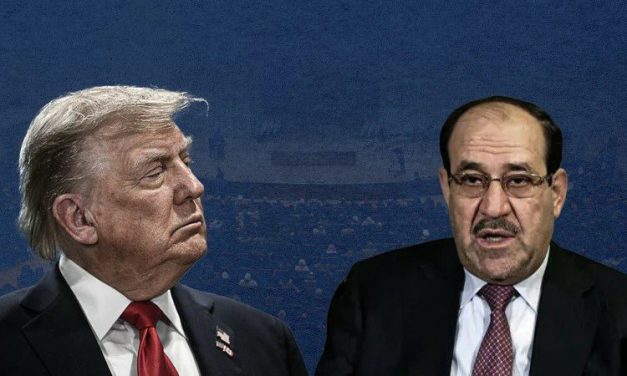
Online Strategic Council – Memoir: The swift selection of Nouri al-Maliki for the premiership constitutes a new phase in Iraq’s political sphere. Multiple factors have played a role in this process, the most important being the prevailing situation in Iraq and the region. Under such circumstances, Iraq requires a powerful and experienced prime minister who can keep the country away from the dangers of wars and crises.

America’s Strategy for Creating Tension in the Asia-Pacific

Strategic Council Online – Opinion: Relations between some countries in the Asia-Pacific region, such as China and Japan or China and Australia, which were previously relatively normal, are trending towards deterioration, and the primary reason for this is the aggressive policies of the United States of America.

Loading

Últimas publicaciones

The Security Equation of Southern Lebanon for the Zionist Regime

Strategic Council Online – Opinion: American-Zionist objectives in the region are not limited to weakening Hezbollah. Efforts to disarm Iraqi resistance groups such as Kata’ib Hezbollah and the Popular Mobilization Forces are also part of their subsequent plans.

Commercial Exploitation of Peace; The Gaza Committee in Confrontation with International Legitimacy

Strategic Council Online – Report: While the second phase of the implementation of the Gaza ceasefire has begun, the establishment of the “Peace Board” chaired by Donald Trump on the sidelines of the Davos meeting (22 January 2026) has become more than a technical mechanism for reconstruction and has turned into a test for the future of the international order.
Despite the signing of the charter by 22 out of 60 invited countries, the limited presence of global leaders at the Davos ceremony and the non-acceptance of this body by the European Union and key Western countries indicate a deep divide in global perceptions of the legitimacy of this mechanism.
In this report, drawing on the analysis of Hadi Borhani, a regional affairs expert, and international data, three strategic questions are addressed: Is the Peace Board an instrument for implementing UN Security Council Resolution 2803 or a substitute for the United Nations? How does the hierarchical architecture of this committee intensify executive challenges in Gaza? And finally, can this body create sustainable peace without the cooperation of Palestinians and with the concentration of power in the hands of a single individual?

America’s Zero-Sum Game in Iraq

Online Strategic Council – Memoir: The swift selection of Nouri al-Maliki for the premiership constitutes a new phase in Iraq’s political sphere. Multiple factors have played a role in this process, the most important being the prevailing situation in Iraq and the region. Under such circumstances, Iraq requires a powerful and experienced prime minister who can keep the country away from the dangers of wars and crises.

America’s Strategy for Creating Tension in the Asia-Pacific

Strategic Council Online – Opinion: Relations between some countries in the Asia-Pacific region, such as China and Japan or China and Australia, which were previously relatively normal, are trending towards deterioration, and the primary reason for this is the aggressive policies of the United States of America.

Loading

DERNIER CONTENU

The Security Equation of Southern Lebanon for the Zionist Regime

Strategic Council Online – Opinion: American-Zionist objectives in the region are not limited to weakening Hezbollah. Efforts to disarm Iraqi resistance groups such as Kata’ib Hezbollah and the Popular Mobilization Forces are also part of their subsequent plans.

Commercial Exploitation of Peace; The Gaza Committee in Confrontation with International Legitimacy

Strategic Council Online – Report: While the second phase of the implementation of the Gaza ceasefire has begun, the establishment of the “Peace Board” chaired by Donald Trump on the sidelines of the Davos meeting (22 January 2026) has become more than a technical mechanism for reconstruction and has turned into a test for the future of the international order.
Despite the signing of the charter by 22 out of 60 invited countries, the limited presence of global leaders at the Davos ceremony and the non-acceptance of this body by the European Union and key Western countries indicate a deep divide in global perceptions of the legitimacy of this mechanism.
In this report, drawing on the analysis of Hadi Borhani, a regional affairs expert, and international data, three strategic questions are addressed: Is the Peace Board an instrument for implementing UN Security Council Resolution 2803 or a substitute for the United Nations? How does the hierarchical architecture of this committee intensify executive challenges in Gaza? And finally, can this body create sustainable peace without the cooperation of Palestinians and with the concentration of power in the hands of a single individual?

America’s Zero-Sum Game in Iraq

Online Strategic Council – Memoir: The swift selection of Nouri al-Maliki for the premiership constitutes a new phase in Iraq’s political sphere. Multiple factors have played a role in this process, the most important being the prevailing situation in Iraq and the region. Under such circumstances, Iraq requires a powerful and experienced prime minister who can keep the country away from the dangers of wars and crises.

America’s Strategy for Creating Tension in the Asia-Pacific

Strategic Council Online – Opinion: Relations between some countries in the Asia-Pacific region, such as China and Japan or China and Australia, which were previously relatively normal, are trending towards deterioration, and the primary reason for this is the aggressive policies of the United States of America.

Loading

DERNIER CONTENU

The Security Equation of Southern Lebanon for the Zionist Regime

Strategic Council Online – Opinion: American-Zionist objectives in the region are not limited to weakening Hezbollah. Efforts to disarm Iraqi resistance groups such as Kata’ib Hezbollah and the Popular Mobilization Forces are also part of their subsequent plans.

Commercial Exploitation of Peace; The Gaza Committee in Confrontation with International Legitimacy

Strategic Council Online – Report: While the second phase of the implementation of the Gaza ceasefire has begun, the establishment of the “Peace Board” chaired by Donald Trump on the sidelines of the Davos meeting (22 January 2026) has become more than a technical mechanism for reconstruction and has turned into a test for the future of the international order.
Despite the signing of the charter by 22 out of 60 invited countries, the limited presence of global leaders at the Davos ceremony and the non-acceptance of this body by the European Union and key Western countries indicate a deep divide in global perceptions of the legitimacy of this mechanism.
In this report, drawing on the analysis of Hadi Borhani, a regional affairs expert, and international data, three strategic questions are addressed: Is the Peace Board an instrument for implementing UN Security Council Resolution 2803 or a substitute for the United Nations? How does the hierarchical architecture of this committee intensify executive challenges in Gaza? And finally, can this body create sustainable peace without the cooperation of Palestinians and with the concentration of power in the hands of a single individual?

America’s Zero-Sum Game in Iraq

Online Strategic Council – Memoir: The swift selection of Nouri al-Maliki for the premiership constitutes a new phase in Iraq’s political sphere. Multiple factors have played a role in this process, the most important being the prevailing situation in Iraq and the region. Under such circumstances, Iraq requires a powerful and experienced prime minister who can keep the country away from the dangers of wars and crises.

America’s Strategy for Creating Tension in the Asia-Pacific

Strategic Council Online – Opinion: Relations between some countries in the Asia-Pacific region, such as China and Japan or China and Australia, which were previously relatively normal, are trending towards deterioration, and the primary reason for this is the aggressive policies of the United States of America.

Loading

DERNIER CONTENU

The Security Equation of Southern Lebanon for the Zionist Regime

Strategic Council Online – Opinion: American-Zionist objectives in the region are not limited to weakening Hezbollah. Efforts to disarm Iraqi resistance groups such as Kata’ib Hezbollah and the Popular Mobilization Forces are also part of their subsequent plans.

Commercial Exploitation of Peace; The Gaza Committee in Confrontation with International Legitimacy

Strategic Council Online – Report: While the second phase of the implementation of the Gaza ceasefire has begun, the establishment of the “Peace Board” chaired by Donald Trump on the sidelines of the Davos meeting (22 January 2026) has become more than a technical mechanism for reconstruction and has turned into a test for the future of the international order.
Despite the signing of the charter by 22 out of 60 invited countries, the limited presence of global leaders at the Davos ceremony and the non-acceptance of this body by the European Union and key Western countries indicate a deep divide in global perceptions of the legitimacy of this mechanism.
In this report, drawing on the analysis of Hadi Borhani, a regional affairs expert, and international data, three strategic questions are addressed: Is the Peace Board an instrument for implementing UN Security Council Resolution 2803 or a substitute for the United Nations? How does the hierarchical architecture of this committee intensify executive challenges in Gaza? And finally, can this body create sustainable peace without the cooperation of Palestinians and with the concentration of power in the hands of a single individual?

America’s Zero-Sum Game in Iraq

Online Strategic Council – Memoir: The swift selection of Nouri al-Maliki for the premiership constitutes a new phase in Iraq’s political sphere. Multiple factors have played a role in this process, the most important being the prevailing situation in Iraq and the region. Under such circumstances, Iraq requires a powerful and experienced prime minister who can keep the country away from the dangers of wars and crises.

America’s Strategy for Creating Tension in the Asia-Pacific

Strategic Council Online – Opinion: Relations between some countries in the Asia-Pacific region, such as China and Japan or China and Australia, which were previously relatively normal, are trending towards deterioration, and the primary reason for this is the aggressive policies of the United States of America.

Loading