Objectives & Motivations of Bin Salman Regional Tour

2021/12/23 | Note, Politics, top news

Strategic Council Online- Opinion: Regional tour of Mohammad Bin Salman to five countries of Oman, Bahrain, UAE, Kuwait and Qatar (Persian Gulf Cooperation Council members) is considered to be the most important political, economic and security momentum of the Crown Prince of Saudi Arabia in the last days of 2021. It is also interpreted as a remedial measure for fragile situation of Saudis at the regional and world levels. It should be noted that one of the objectives of Mohammad Bin Salman was to consult with the authorities of littoral Arab states of Persian Gulf and to make a consensus to confront some of the regional as well as the global issues such as Yemen, Iran, JCPOA revival, etc. Hamid Khoshayand, Expert of Regional Issues

Bin Salman started his regional tour from Oman and concluded it in Kuwait in a situation when Saudi Arabia has been facing with difficult circumstances at internal and external scenes. That’s why Saudi Crown Prince followed different objectives and motivations in his regional tour. He intended to proceed with the objectives of his internal, regional and international foreign policies through trips to the member countries of the Council which was, of course, accompanied with media attention on the verge of holding the 42th Annual Meeting of the Persian Gulf Cooperation Council.

“Volatile” and “Unpleasant” situation Saudi Arabia has been facing with in the region is caused by various factors the important part of which was emanated from the ambitious policies and measures adopted by Bin Salman ever since he was appointed as the Minister of Defense in 2015 and then ascended to Crown Prince of the country in 2017.

Continuity of Yemen war, supporting some crisis-making and destabilizing fractions in some Arab and rival countries, fanning ethnical, sectarian as well as religious violence, suppression and apprehending many elites, intellectuals, writers, religious as well as political activists, defenders of human rights inside Saudi Arabia, quelling crown princes who opposed Bin Salman as the Crown Prince and also remaining unscathed from chastisement and accountability against the slaughtering Khashoggi are all among measures and issues that not only caused defamation and fragility of Bin Salman himself position but also led to political isolation of Saudi Arabia outside the country and has destabilized the position and status of the country in the region and the whole world.

The Crown Prince who is, in fact, also considered as the “potential” and “de facto” ruler of the country is looking for upgrading his role-playing in the region through improving his distorted political prestige, sorting out geopolitical disputes and solidifying foreign relations with the allies of Saudi Arabia with some of them including Qatar and UAE has become divergence and full of tensions within the recent years.

Saudi Arabia has clearly felt within the last year that it should not pin too much hope to remain as an ally of the U.S. Saudi court and Bin Salman himself have well understood that the U.S. is not a trustworthy partner in the regional challenges. As it has indicated within the last year, one can not count on the White House. This issue has nothing to do with taking office by Biden and his democrat Administration in the U.S. but it originates from trends and processes of policy making in the U.S. that casts a utilitarian eye to Arabian countries in general and Saudi Arabia in particular; what Trump as the former U.S. president called as “milk cow”!

Bin Salman as main custodian for following up 2030 Perspective initiation and $ 500 billion of NEOM project knows that without the partnership and accompaniment of littoral Arab states of Persian Gulf will not lead to a favorable and expected result. Within the framework of 2030 Perspective, Jeddah city is due to become the political, commercial, religious, media capital as well as tourist center of Saudi Arabia. Therefore, by making trip to littoral states of Persian Gulf he intended to plan and to lobby with foreign firms to transfer their offices to Jeddah.

Moreover, having known that littoral Arab states of Persian Gulf have distanced themselves on regional and international issues from their unity of position and coordination to adopt necessary measures, Saudi court is seeking for strengthening mechanism to promote synergy, coordination and unanimity over regional and international issues.

Moreover, the coincidence of Bin Salman regional tour with major strategic operation of Ansarollah for liberation of Ma’areb that has placed the country in a strong field, military, political and strategic impasse, has made the impression that Riyadh is soliciting its partners in the Persian Gulf Cooperation Council to find a comprehensive and low-cost face saving solution to get rid of its difficult situation in Yemen. However, Saudi Arabia has tabled an already failed plan to put an end to Yemeni war within the past few days, the basis of which is to stabilize Mansour Haadi government in Yemen and its acceptance by parties involved. In order to implement the plan, Riyadh needs the accompaniment of Arab countries, particularly UAE and Qatar.

Iran is amid other main motivations of regional tour of Saudi Arabia Crown Prince which was taken place at the peak of Iran’s JCPOA negotiations with 4+1. Through his regional tour to the capitals of littoral Arab states of Persian Gulf, Saudi Arabia Crown Prince intended to take necessary benefits from the lobbying of these countries in the U.S. and Europe to influence on Vienna talks and also probable including of regional as well as missile issues in the agenda of talks.

Lebanon chastisement and confronting Hezbollah through direct consultancy with the members of the Persian Gulf Cooperation Council was another objective of Bin Salman in his trips to littoral states of Persian Gulf; Riyadh had particularly noticed within the past few months that an important part of Yemen war dossier is managed by Hezbollah. Moreover, Bin Salman deep seated resentment against George Kordahi, Lebanese Minister of Information is not over yet. Because, Kordahi has recently condemned the Saudi Arabia measures in Yemen war and thus revealed a sensitive point and in a way staged a heavy psychological strike on Saudi Arabia.

In the course of the tour, many bilateral contracts were also concluded between Saudi Arabia and some of littoral Arab states of Persian Gulf in economic, trade, etc. fields which were of importance within the framework of bilateral relations and were considered amid the marginal objectives of Bin Salman regional tour.
0 Comments

Submit a Comment

Your email address will not be published. Required fields are marked *

LATEST CONTENT

The Security Equation of Southern Lebanon for the Zionist Regime

Strategic Council Online – Opinion: American-Zionist objectives in the region are not limited to weakening Hezbollah. Efforts to disarm Iraqi resistance groups such as Kata’ib Hezbollah and the Popular Mobilization Forces are also part of their subsequent plans.

Commercial Exploitation of Peace; The Gaza Committee in Confrontation with International Legitimacy

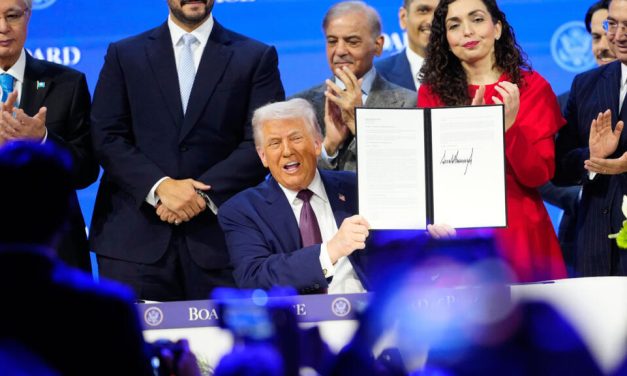
Strategic Council Online – Report: While the second phase of the implementation of the Gaza ceasefire has begun, the establishment of the “Peace Board” chaired by Donald Trump on the sidelines of the Davos meeting (22 January 2026) has become more than a technical mechanism for reconstruction and has turned into a test for the future of the international order.
Despite the signing of the charter by 22 out of 60 invited countries, the limited presence of global leaders at the Davos ceremony and the non-acceptance of this body by the European Union and key Western countries indicate a deep divide in global perceptions of the legitimacy of this mechanism.
In this report, drawing on the analysis of Hadi Borhani, a regional affairs expert, and international data, three strategic questions are addressed: Is the Peace Board an instrument for implementing UN Security Council Resolution 2803 or a substitute for the United Nations? How does the hierarchical architecture of this committee intensify executive challenges in Gaza? And finally, can this body create sustainable peace without the cooperation of Palestinians and with the concentration of power in the hands of a single individual?

America’s Zero-Sum Game in Iraq

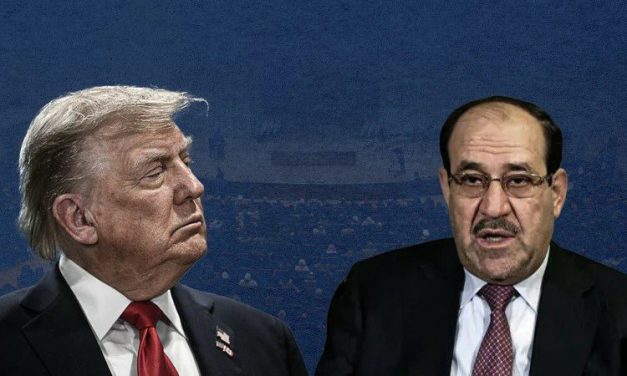
Online Strategic Council – Memoir: The swift selection of Nouri al-Maliki for the premiership constitutes a new phase in Iraq’s political sphere. Multiple factors have played a role in this process, the most important being the prevailing situation in Iraq and the region. Under such circumstances, Iraq requires a powerful and experienced prime minister who can keep the country away from the dangers of wars and crises.

America’s Strategy for Creating Tension in the Asia-Pacific

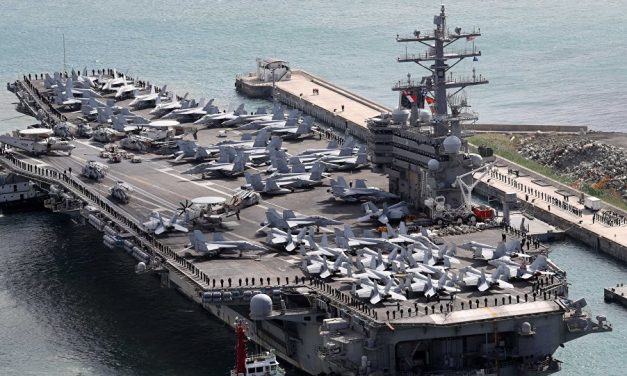
Strategic Council Online – Opinion: Relations between some countries in the Asia-Pacific region, such as China and Japan or China and Australia, which were previously relatively normal, are trending towards deterioration, and the primary reason for this is the aggressive policies of the United States of America.

Loading

Últimas publicaciones

The Security Equation of Southern Lebanon for the Zionist Regime

Strategic Council Online – Opinion: American-Zionist objectives in the region are not limited to weakening Hezbollah. Efforts to disarm Iraqi resistance groups such as Kata’ib Hezbollah and the Popular Mobilization Forces are also part of their subsequent plans.

Commercial Exploitation of Peace; The Gaza Committee in Confrontation with International Legitimacy

Strategic Council Online – Report: While the second phase of the implementation of the Gaza ceasefire has begun, the establishment of the “Peace Board” chaired by Donald Trump on the sidelines of the Davos meeting (22 January 2026) has become more than a technical mechanism for reconstruction and has turned into a test for the future of the international order.
Despite the signing of the charter by 22 out of 60 invited countries, the limited presence of global leaders at the Davos ceremony and the non-acceptance of this body by the European Union and key Western countries indicate a deep divide in global perceptions of the legitimacy of this mechanism.
In this report, drawing on the analysis of Hadi Borhani, a regional affairs expert, and international data, three strategic questions are addressed: Is the Peace Board an instrument for implementing UN Security Council Resolution 2803 or a substitute for the United Nations? How does the hierarchical architecture of this committee intensify executive challenges in Gaza? And finally, can this body create sustainable peace without the cooperation of Palestinians and with the concentration of power in the hands of a single individual?

America’s Zero-Sum Game in Iraq

Online Strategic Council – Memoir: The swift selection of Nouri al-Maliki for the premiership constitutes a new phase in Iraq’s political sphere. Multiple factors have played a role in this process, the most important being the prevailing situation in Iraq and the region. Under such circumstances, Iraq requires a powerful and experienced prime minister who can keep the country away from the dangers of wars and crises.

America’s Strategy for Creating Tension in the Asia-Pacific

Strategic Council Online – Opinion: Relations between some countries in the Asia-Pacific region, such as China and Japan or China and Australia, which were previously relatively normal, are trending towards deterioration, and the primary reason for this is the aggressive policies of the United States of America.

Loading

DERNIER CONTENU

The Security Equation of Southern Lebanon for the Zionist Regime

Strategic Council Online – Opinion: American-Zionist objectives in the region are not limited to weakening Hezbollah. Efforts to disarm Iraqi resistance groups such as Kata’ib Hezbollah and the Popular Mobilization Forces are also part of their subsequent plans.

Commercial Exploitation of Peace; The Gaza Committee in Confrontation with International Legitimacy

Strategic Council Online – Report: While the second phase of the implementation of the Gaza ceasefire has begun, the establishment of the “Peace Board” chaired by Donald Trump on the sidelines of the Davos meeting (22 January 2026) has become more than a technical mechanism for reconstruction and has turned into a test for the future of the international order.
Despite the signing of the charter by 22 out of 60 invited countries, the limited presence of global leaders at the Davos ceremony and the non-acceptance of this body by the European Union and key Western countries indicate a deep divide in global perceptions of the legitimacy of this mechanism.
In this report, drawing on the analysis of Hadi Borhani, a regional affairs expert, and international data, three strategic questions are addressed: Is the Peace Board an instrument for implementing UN Security Council Resolution 2803 or a substitute for the United Nations? How does the hierarchical architecture of this committee intensify executive challenges in Gaza? And finally, can this body create sustainable peace without the cooperation of Palestinians and with the concentration of power in the hands of a single individual?

America’s Zero-Sum Game in Iraq

Online Strategic Council – Memoir: The swift selection of Nouri al-Maliki for the premiership constitutes a new phase in Iraq’s political sphere. Multiple factors have played a role in this process, the most important being the prevailing situation in Iraq and the region. Under such circumstances, Iraq requires a powerful and experienced prime minister who can keep the country away from the dangers of wars and crises.

America’s Strategy for Creating Tension in the Asia-Pacific

Strategic Council Online – Opinion: Relations between some countries in the Asia-Pacific region, such as China and Japan or China and Australia, which were previously relatively normal, are trending towards deterioration, and the primary reason for this is the aggressive policies of the United States of America.

Loading

DERNIER CONTENU

The Security Equation of Southern Lebanon for the Zionist Regime

Strategic Council Online – Opinion: American-Zionist objectives in the region are not limited to weakening Hezbollah. Efforts to disarm Iraqi resistance groups such as Kata’ib Hezbollah and the Popular Mobilization Forces are also part of their subsequent plans.

Commercial Exploitation of Peace; The Gaza Committee in Confrontation with International Legitimacy

Strategic Council Online – Report: While the second phase of the implementation of the Gaza ceasefire has begun, the establishment of the “Peace Board” chaired by Donald Trump on the sidelines of the Davos meeting (22 January 2026) has become more than a technical mechanism for reconstruction and has turned into a test for the future of the international order.
Despite the signing of the charter by 22 out of 60 invited countries, the limited presence of global leaders at the Davos ceremony and the non-acceptance of this body by the European Union and key Western countries indicate a deep divide in global perceptions of the legitimacy of this mechanism.
In this report, drawing on the analysis of Hadi Borhani, a regional affairs expert, and international data, three strategic questions are addressed: Is the Peace Board an instrument for implementing UN Security Council Resolution 2803 or a substitute for the United Nations? How does the hierarchical architecture of this committee intensify executive challenges in Gaza? And finally, can this body create sustainable peace without the cooperation of Palestinians and with the concentration of power in the hands of a single individual?

America’s Zero-Sum Game in Iraq

Online Strategic Council – Memoir: The swift selection of Nouri al-Maliki for the premiership constitutes a new phase in Iraq’s political sphere. Multiple factors have played a role in this process, the most important being the prevailing situation in Iraq and the region. Under such circumstances, Iraq requires a powerful and experienced prime minister who can keep the country away from the dangers of wars and crises.

America’s Strategy for Creating Tension in the Asia-Pacific

Strategic Council Online – Opinion: Relations between some countries in the Asia-Pacific region, such as China and Japan or China and Australia, which were previously relatively normal, are trending towards deterioration, and the primary reason for this is the aggressive policies of the United States of America.

Loading

DERNIER CONTENU

The Security Equation of Southern Lebanon for the Zionist Regime

Strategic Council Online – Opinion: American-Zionist objectives in the region are not limited to weakening Hezbollah. Efforts to disarm Iraqi resistance groups such as Kata’ib Hezbollah and the Popular Mobilization Forces are also part of their subsequent plans.

Commercial Exploitation of Peace; The Gaza Committee in Confrontation with International Legitimacy

Strategic Council Online – Report: While the second phase of the implementation of the Gaza ceasefire has begun, the establishment of the “Peace Board” chaired by Donald Trump on the sidelines of the Davos meeting (22 January 2026) has become more than a technical mechanism for reconstruction and has turned into a test for the future of the international order.
Despite the signing of the charter by 22 out of 60 invited countries, the limited presence of global leaders at the Davos ceremony and the non-acceptance of this body by the European Union and key Western countries indicate a deep divide in global perceptions of the legitimacy of this mechanism.
In this report, drawing on the analysis of Hadi Borhani, a regional affairs expert, and international data, three strategic questions are addressed: Is the Peace Board an instrument for implementing UN Security Council Resolution 2803 or a substitute for the United Nations? How does the hierarchical architecture of this committee intensify executive challenges in Gaza? And finally, can this body create sustainable peace without the cooperation of Palestinians and with the concentration of power in the hands of a single individual?

America’s Zero-Sum Game in Iraq

Online Strategic Council – Memoir: The swift selection of Nouri al-Maliki for the premiership constitutes a new phase in Iraq’s political sphere. Multiple factors have played a role in this process, the most important being the prevailing situation in Iraq and the region. Under such circumstances, Iraq requires a powerful and experienced prime minister who can keep the country away from the dangers of wars and crises.

America’s Strategy for Creating Tension in the Asia-Pacific

Strategic Council Online – Opinion: Relations between some countries in the Asia-Pacific region, such as China and Japan or China and Australia, which were previously relatively normal, are trending towards deterioration, and the primary reason for this is the aggressive policies of the United States of America.

Loading