Golden Opportunity for Iranian Private Sector in Syrian Reconstruction

2020/01/11 | Economy, Note, top news

Strategic Council Online: With stability gradually returning to Syria, the countries at war with Syria are now struggling to make a contribution to rebuilding the country and at the same time reap the economic benefits. Mohammad Lahooti - President of the Iranian Export Confederation

During the civil war in Syria, we saw almost the whole world was acting against Damascus and only a few countries sided with the current Syrian government in the all-out war that occurred in the country. The Islamic Republic of Iran was the most important and most influential country to remain on the side of Damascus throughout the conflict.

So, now that Syria is in the process of reconstruction and modernization, Iran must have the upper hand and, as it was alongside Syria under the critical conditions of war, Tehran could cooperate with the Syrian government and nation in their economic development.

Certainly, given the closeness and intimacy that exist between Iran and Syria, this is possible and welcomed by the Syrians, and they are ready to cooperate; but to what extent is Iran ready to take action and invest in reconstruction of Syria is another important matter to consider.

That’s why now is the time to rapidly mobilize different groups in different sectors of the economy; Experience shows that we usually do not take advantage of the opportunities and conditions we sometimes have, just as we had the opportunity to enter the Russian market over the past three years and Qatari market over the last  year and a half, but for many reasons we missed the opportunity to make good use of it.

While other countries, which had differences with Russia or Qatar and minimized their political ties to the lowest level, are now extending a hand of friendship to re-entered those markets to safeguard their national interests and economic growth.

It should be noted that the Arab states have a zero percent tariff on trade between them in the form of a joint customs agreement and therefore their export to Syria is calculated at zero percent tariff; so we have to revive our preferential trade agreement with Syria and strive to bring the export tariffs to zero in order to be able to compete with the Arab countries in this field.

With this experience, we should not allow the new market facing Iran’s exports, namely Syria, to have the same fate. Of course, if we do not provide the platforms, we will not be able to take advantage of these conditions: so it seems that the first thing to do as soon as the Arab countries return and open their embassies in Syria is to support the exporters.

The next point is the issue of transportation. We have export problems and even in the Qatari market, because of the lack of transportation infrastructure, we had to offer our ports to the Turks to use them to supply goods to Qatar; Once again the profits of exports to Qatar went into the pockets of Iran’s rivals. Therefore, we should facilitate the issue of transportation to Syria in the current situation and reduce its associated costs.

The next area for investment in Syria today is engineering services. Iran is well known in the world for technical and engineering services, but as we always have had the weakness, lack of support for technical and engineering exporters, which is problematic in most markets, because Iranian exporters are unfortunately unable  to provide surety bonds appropriate to the request of the other party.

On the other hand, the tough conditions of issuing surety bonds compel the exporters to have little activity in this field, while the export incentives for the country’s technical and engineering services are also very important, as one of Iran’s fierce competitors in the Syrian market is Turkey, which is countering Iran in all areas, including engineering and technical services.

Therefore, if export incentives like those offered in 1385-1389 (2006 – 2010) that stood at 8 percent in support of technical and engineering services were revived, surely exporters of Iranian technical and engineering services would benefit from these conditions and have an open hand for competition.

On the other hand, the resources of the National Development Fund to support exports to Syria should also be used and special conditions should be provided for exporters in this area to maintain presence in Syria.

Another advantageous sector of the Iranian economy that needs to be supported in order to maintain presence in the Syrian market is the Iranian food industry, which has great potential and can be active in the Syrian market. Along with this, we should not neglect the advantages of exporting ceramic tiles, cement and steel, as these are commodities needed in reconstruction process in Syria. Supporting these industries can put all industrial units in motion.

In conclusion, it should be noted that Iran should take the most advantage of Syria’s reconstruction potential provided that that policymaking in Iran is also commensurate with export protection so that the problems that exist with exports, foreign exchange commitment, and exchange rates are solved and the Central Bank, that is currently trying to regulate the foreign exchange market will continue its control of the market and facilitates restoration of the special foreign exchange rates for exports.

At the same time, banking relations between Iran and Syria should also be facilitated and, on the other hand, financial channels between the two countries be activated by using the national currencies as well, in a way that the sanctions would not create difficulties.

If all these conditions are met in time and in place, we can certainly have a great deal of advantages in Syria and its reconstruction; but if we once again lose the chance, our competitors will easily take our place. It should be noted that this opportunity is not long-term, and short-term contracts are closed and become operational quickly. Therefore, the government and the Ministry of Foreign Affairs should organize this effort as soon as possible. Meantime, Commercial Advisers and the Ministry of Economy of the Islamic Republic of Iran should provide opportunities for the Iranian private sector to allow Iranian exporters to be present in this new market and not waste this great opportunity.
0 Comments

Submit a Comment

Your email address will not be published. Required fields are marked *

LATEST CONTENT

The Security Equation of Southern Lebanon for the Zionist Regime

Strategic Council Online – Opinion: American-Zionist objectives in the region are not limited to weakening Hezbollah. Efforts to disarm Iraqi resistance groups such as Kata’ib Hezbollah and the Popular Mobilization Forces are also part of their subsequent plans.

Commercial Exploitation of Peace; The Gaza Committee in Confrontation with International Legitimacy

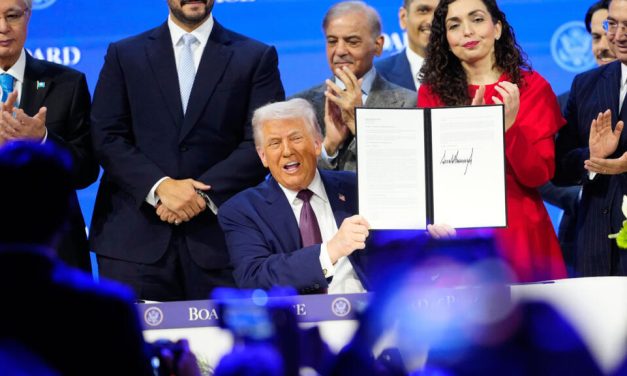
Strategic Council Online – Report: While the second phase of the implementation of the Gaza ceasefire has begun, the establishment of the “Peace Board” chaired by Donald Trump on the sidelines of the Davos meeting (22 January 2026) has become more than a technical mechanism for reconstruction and has turned into a test for the future of the international order.
Despite the signing of the charter by 22 out of 60 invited countries, the limited presence of global leaders at the Davos ceremony and the non-acceptance of this body by the European Union and key Western countries indicate a deep divide in global perceptions of the legitimacy of this mechanism.
In this report, drawing on the analysis of Hadi Borhani, a regional affairs expert, and international data, three strategic questions are addressed: Is the Peace Board an instrument for implementing UN Security Council Resolution 2803 or a substitute for the United Nations? How does the hierarchical architecture of this committee intensify executive challenges in Gaza? And finally, can this body create sustainable peace without the cooperation of Palestinians and with the concentration of power in the hands of a single individual?

America’s Zero-Sum Game in Iraq

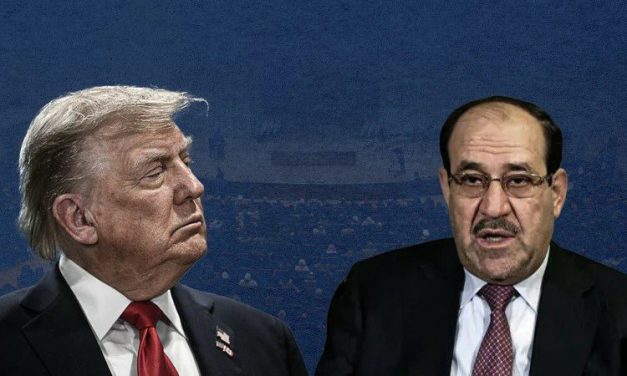
Online Strategic Council – Memoir: The swift selection of Nouri al-Maliki for the premiership constitutes a new phase in Iraq’s political sphere. Multiple factors have played a role in this process, the most important being the prevailing situation in Iraq and the region. Under such circumstances, Iraq requires a powerful and experienced prime minister who can keep the country away from the dangers of wars and crises.

America’s Strategy for Creating Tension in the Asia-Pacific

Strategic Council Online – Opinion: Relations between some countries in the Asia-Pacific region, such as China and Japan or China and Australia, which were previously relatively normal, are trending towards deterioration, and the primary reason for this is the aggressive policies of the United States of America.

Loading

Últimas publicaciones

The Security Equation of Southern Lebanon for the Zionist Regime

Strategic Council Online – Opinion: American-Zionist objectives in the region are not limited to weakening Hezbollah. Efforts to disarm Iraqi resistance groups such as Kata’ib Hezbollah and the Popular Mobilization Forces are also part of their subsequent plans.

Commercial Exploitation of Peace; The Gaza Committee in Confrontation with International Legitimacy

Strategic Council Online – Report: While the second phase of the implementation of the Gaza ceasefire has begun, the establishment of the “Peace Board” chaired by Donald Trump on the sidelines of the Davos meeting (22 January 2026) has become more than a technical mechanism for reconstruction and has turned into a test for the future of the international order.
Despite the signing of the charter by 22 out of 60 invited countries, the limited presence of global leaders at the Davos ceremony and the non-acceptance of this body by the European Union and key Western countries indicate a deep divide in global perceptions of the legitimacy of this mechanism.
In this report, drawing on the analysis of Hadi Borhani, a regional affairs expert, and international data, three strategic questions are addressed: Is the Peace Board an instrument for implementing UN Security Council Resolution 2803 or a substitute for the United Nations? How does the hierarchical architecture of this committee intensify executive challenges in Gaza? And finally, can this body create sustainable peace without the cooperation of Palestinians and with the concentration of power in the hands of a single individual?

America’s Zero-Sum Game in Iraq

Online Strategic Council – Memoir: The swift selection of Nouri al-Maliki for the premiership constitutes a new phase in Iraq’s political sphere. Multiple factors have played a role in this process, the most important being the prevailing situation in Iraq and the region. Under such circumstances, Iraq requires a powerful and experienced prime minister who can keep the country away from the dangers of wars and crises.

America’s Strategy for Creating Tension in the Asia-Pacific

Strategic Council Online – Opinion: Relations between some countries in the Asia-Pacific region, such as China and Japan or China and Australia, which were previously relatively normal, are trending towards deterioration, and the primary reason for this is the aggressive policies of the United States of America.

Loading

DERNIER CONTENU

The Security Equation of Southern Lebanon for the Zionist Regime

Strategic Council Online – Opinion: American-Zionist objectives in the region are not limited to weakening Hezbollah. Efforts to disarm Iraqi resistance groups such as Kata’ib Hezbollah and the Popular Mobilization Forces are also part of their subsequent plans.

Commercial Exploitation of Peace; The Gaza Committee in Confrontation with International Legitimacy

Strategic Council Online – Report: While the second phase of the implementation of the Gaza ceasefire has begun, the establishment of the “Peace Board” chaired by Donald Trump on the sidelines of the Davos meeting (22 January 2026) has become more than a technical mechanism for reconstruction and has turned into a test for the future of the international order.
Despite the signing of the charter by 22 out of 60 invited countries, the limited presence of global leaders at the Davos ceremony and the non-acceptance of this body by the European Union and key Western countries indicate a deep divide in global perceptions of the legitimacy of this mechanism.
In this report, drawing on the analysis of Hadi Borhani, a regional affairs expert, and international data, three strategic questions are addressed: Is the Peace Board an instrument for implementing UN Security Council Resolution 2803 or a substitute for the United Nations? How does the hierarchical architecture of this committee intensify executive challenges in Gaza? And finally, can this body create sustainable peace without the cooperation of Palestinians and with the concentration of power in the hands of a single individual?

America’s Zero-Sum Game in Iraq

Online Strategic Council – Memoir: The swift selection of Nouri al-Maliki for the premiership constitutes a new phase in Iraq’s political sphere. Multiple factors have played a role in this process, the most important being the prevailing situation in Iraq and the region. Under such circumstances, Iraq requires a powerful and experienced prime minister who can keep the country away from the dangers of wars and crises.

America’s Strategy for Creating Tension in the Asia-Pacific

Strategic Council Online – Opinion: Relations between some countries in the Asia-Pacific region, such as China and Japan or China and Australia, which were previously relatively normal, are trending towards deterioration, and the primary reason for this is the aggressive policies of the United States of America.

Loading

DERNIER CONTENU

The Security Equation of Southern Lebanon for the Zionist Regime

Strategic Council Online – Opinion: American-Zionist objectives in the region are not limited to weakening Hezbollah. Efforts to disarm Iraqi resistance groups such as Kata’ib Hezbollah and the Popular Mobilization Forces are also part of their subsequent plans.

Commercial Exploitation of Peace; The Gaza Committee in Confrontation with International Legitimacy

Strategic Council Online – Report: While the second phase of the implementation of the Gaza ceasefire has begun, the establishment of the “Peace Board” chaired by Donald Trump on the sidelines of the Davos meeting (22 January 2026) has become more than a technical mechanism for reconstruction and has turned into a test for the future of the international order.
Despite the signing of the charter by 22 out of 60 invited countries, the limited presence of global leaders at the Davos ceremony and the non-acceptance of this body by the European Union and key Western countries indicate a deep divide in global perceptions of the legitimacy of this mechanism.
In this report, drawing on the analysis of Hadi Borhani, a regional affairs expert, and international data, three strategic questions are addressed: Is the Peace Board an instrument for implementing UN Security Council Resolution 2803 or a substitute for the United Nations? How does the hierarchical architecture of this committee intensify executive challenges in Gaza? And finally, can this body create sustainable peace without the cooperation of Palestinians and with the concentration of power in the hands of a single individual?

America’s Zero-Sum Game in Iraq

Online Strategic Council – Memoir: The swift selection of Nouri al-Maliki for the premiership constitutes a new phase in Iraq’s political sphere. Multiple factors have played a role in this process, the most important being the prevailing situation in Iraq and the region. Under such circumstances, Iraq requires a powerful and experienced prime minister who can keep the country away from the dangers of wars and crises.

America’s Strategy for Creating Tension in the Asia-Pacific

Strategic Council Online – Opinion: Relations between some countries in the Asia-Pacific region, such as China and Japan or China and Australia, which were previously relatively normal, are trending towards deterioration, and the primary reason for this is the aggressive policies of the United States of America.

Loading

DERNIER CONTENU

The Security Equation of Southern Lebanon for the Zionist Regime

Strategic Council Online – Opinion: American-Zionist objectives in the region are not limited to weakening Hezbollah. Efforts to disarm Iraqi resistance groups such as Kata’ib Hezbollah and the Popular Mobilization Forces are also part of their subsequent plans.

Commercial Exploitation of Peace; The Gaza Committee in Confrontation with International Legitimacy

Strategic Council Online – Report: While the second phase of the implementation of the Gaza ceasefire has begun, the establishment of the “Peace Board” chaired by Donald Trump on the sidelines of the Davos meeting (22 January 2026) has become more than a technical mechanism for reconstruction and has turned into a test for the future of the international order.
Despite the signing of the charter by 22 out of 60 invited countries, the limited presence of global leaders at the Davos ceremony and the non-acceptance of this body by the European Union and key Western countries indicate a deep divide in global perceptions of the legitimacy of this mechanism.
In this report, drawing on the analysis of Hadi Borhani, a regional affairs expert, and international data, three strategic questions are addressed: Is the Peace Board an instrument for implementing UN Security Council Resolution 2803 or a substitute for the United Nations? How does the hierarchical architecture of this committee intensify executive challenges in Gaza? And finally, can this body create sustainable peace without the cooperation of Palestinians and with the concentration of power in the hands of a single individual?

America’s Zero-Sum Game in Iraq

Online Strategic Council – Memoir: The swift selection of Nouri al-Maliki for the premiership constitutes a new phase in Iraq’s political sphere. Multiple factors have played a role in this process, the most important being the prevailing situation in Iraq and the region. Under such circumstances, Iraq requires a powerful and experienced prime minister who can keep the country away from the dangers of wars and crises.

America’s Strategy for Creating Tension in the Asia-Pacific

Strategic Council Online – Opinion: Relations between some countries in the Asia-Pacific region, such as China and Japan or China and Australia, which were previously relatively normal, are trending towards deterioration, and the primary reason for this is the aggressive policies of the United States of America.

Loading