Risks and Opportunities of Redefining West Asia in America’s Defense Strategy

Strategic Council Online – Opinion: While Washington's new strategic documents focus on competition with China and Russia, they also seek to transform West Asia into an arena for containing Iran through regional powers and asymmetric deterrence.

Bahman Tavakoli – American Affairs Expert

Key Principles of the New National Security and National Defense Strategy

Based on analyses by research institutions, the National Defense Strategy (NDS) and National Security Strategy (NSS) documents from Trump’s second administration are grounded in several fundamental principles.

The central axis is the identification of great power competition as the defining challenge of the era. Within this framework, China is defined as the “pacing challenge” and Russia as the “acute threat.” This focus prioritizes the Indo-Pacific region, followed by Europe.

The second principle emphasizes deterrence through the application of power and the denial of access to adversaries, which is embodied in the concept of “discriminant power” or asymmetric deterrence. This concept means the combined, intelligent use of all national instruments – economic, diplomatic, informational, and military – to apply pressure on an adversary’s points of weakness without engaging in a full-scale conventional war.

The third principle is devolving greater responsibility for regional security to allies. Washington has distanced itself from the role of global policeman and expects allies to shoulder a greater share of security costs and missions. This approach forms the core of the change in America’s interaction with West Asia.

Redefining West Asia’s Role within the Broader Framework

The claim of reduced strategic importance for West Asia in Trump’s documents is a misleading analysis. As analysts point out, these documents do not downplay the significance of West Asia; they redefine it. The region is seen not as an independent focal point, but as a secondary arena within the larger competition with China and Russia, and also as the stage for implementing a strategy to contain Iran.

Energy stability, although America’s direct dependency has been reduced, remains vital to the economic security of its European and Asian allies. Furthermore, West Asia is maintained as a market for arms and a testing ground for new military technologies and trilateral security cooperation (e.g., the Israeli regime – UAE – America). Therefore, the change is in the form of presence, not in the nature of interests.

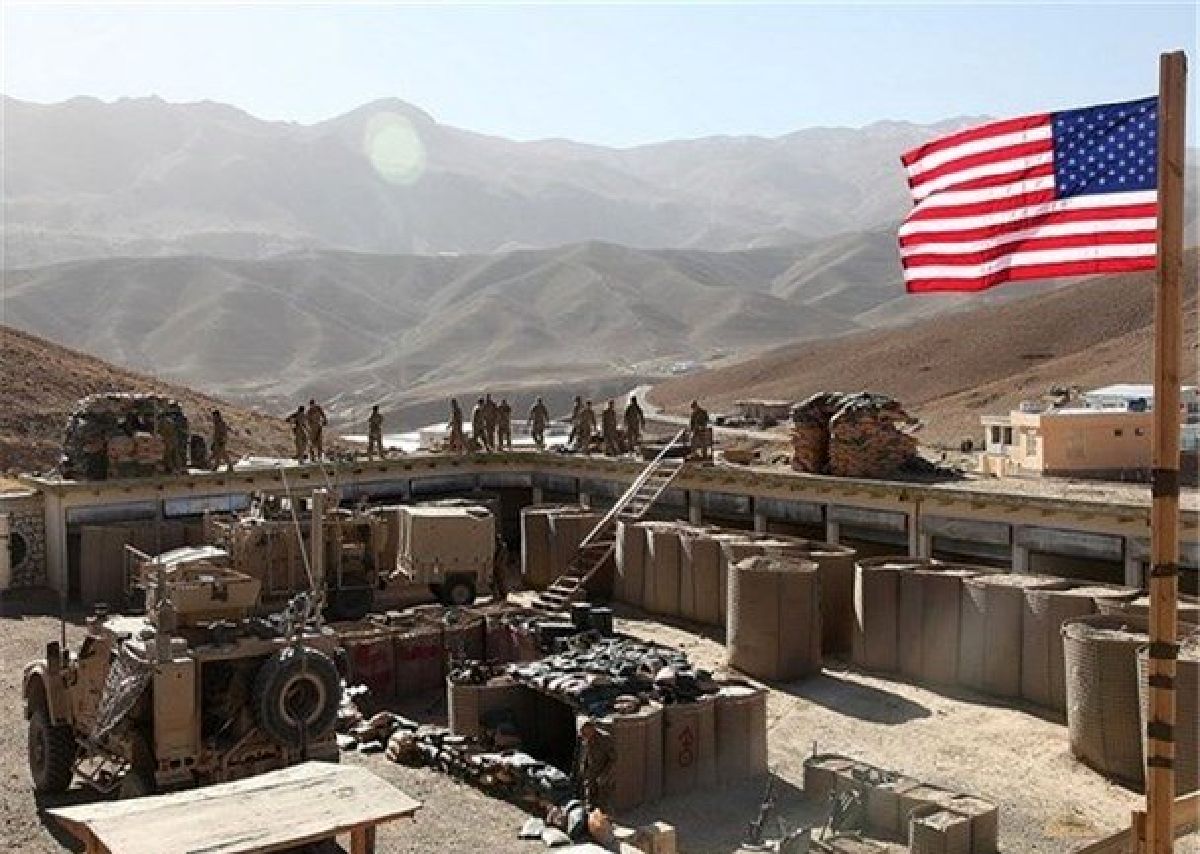
Direct and extensive human presence is reduced in favor of a more agile presence, based on technology and remotely operated assets (such as drones and cyber), as well as greater reliance on the forces of regional allies. This transformation is an effort to adapt America’s approach to new domestic and international realities.

America’s Strategy Against Iran

The new strategy advances the containment of the Islamic Republic of Iran through two interconnected mechanisms. The first mechanism is implementing a policy of “discriminant power” against Iran. This concept means separating different domains of confrontation and applying targeted pressure in each, without necessarily requiring overall conflict.

For example, America might simultaneously intensify cyber actions against Iran’s missile programs, continue maximum financial pressure through sanctions, and, in the maritime domain, confront potential “shipping disruptions” through its allies. The goal is to impose asymmetric and unpredictable costs on Iran across multiple fronts, to deplete its resources and will.

The second mechanism is the unprecedented enhancement of the military and security capabilities of key regional allies, namely the Israeli regime and other regional countries. Trump’s strategy emphasizes a “coalition of willing and capable allies.” This means selling more advanced weaponry, such as missile defense systems and fifth-generation F-35 fighter jets, to the UAE, strengthening intelligence cooperation, and creating joint command structures among these allies.

In this model, America plays the role of facilitator, supplier, and supporter, while the allies are placed on the front line of physical and security confrontation. From Washington’s perspective, this approach reduces America’s direct costs while embroiling Iran in a costly security competition with its neighbors.

Risks and Opportunities of the New Strategy

This strategic shift creates a complex set of risks and opportunities for Iran. On the threat side, the risk of increased proxy and indirect conflicts rises sharply. America’s potential regional allies might miscalculate and, with Washington’s coordination and the centrality of the Zionist regime, attempt to create a network of threats in the cyber, maritime, and aerial domains.

However, this strategy also presents vital opportunities for Iran. The primary opportunity is to reduce the physical presence of American military forces in the region. The relative withdrawal of ground forces and even the reduction of some aerial and naval assets will increase Iran’s room for maneuver.

Furthermore, America’s focus on competition with China and Russia leaves limited political and military capacity and attention for day-to-day crisis management in West Asia. This “relative absence” could create gaps in oversight and immediate reaction.

Additionally, increased pressure on allies to pay for their own security might, over time, create rifts in their alliance or lead to financial fatigue.

Iran can, through active diplomacy, strive to deepen these rifts and reduce the cohesion of the opposing front. Ultimately, Iran’s success in managing this new period will depend on understanding this strategic shift, increasing tactical flexibility, strengthening internal deterrence, and wisely exploiting the contradictions present in the adversary’s strategy.

This text was translated using artificial intelligence and may contain errors. If you notice an apparent mistake that makes the text incomprehensible, please inform the website editors.
0 Comments

LATEST CONTENT

Commercial Exploitation of Peace; The Gaza Committee in Confrontation with International Legitimacy

Strategic Council Online – Report: While the second phase of the implementation of the Gaza ceasefire has begun, the establishment of the “Peace Board” chaired by Donald Trump on the sidelines of the Davos meeting (22 January 2026) has become more than a technical mechanism for reconstruction and has turned into a test for the future of the international order.
Despite the signing of the charter by 22 out of 60 invited countries, the limited presence of global leaders at the Davos ceremony and the non-acceptance of this body by the European Union and key Western countries indicate a deep divide in global perceptions of the legitimacy of this mechanism.
In this report, drawing on the analysis of Hadi Borhani, a regional affairs expert, and international data, three strategic questions are addressed: Is the Peace Board an instrument for implementing UN Security Council Resolution 2803 or a substitute for the United Nations? How does the hierarchical architecture of this committee intensify executive challenges in Gaza? And finally, can this body create sustainable peace without the cooperation of Palestinians and with the concentration of power in the hands of a single individual?

America’s Zero-Sum Game in Iraq

Online Strategic Council – Memoir: The swift selection of Nouri al-Maliki for the premiership constitutes a new phase in Iraq’s political sphere. Multiple factors have played a role in this process, the most important being the prevailing situation in Iraq and the region. Under such circumstances, Iraq requires a powerful and experienced prime minister who can keep the country away from the dangers of wars and crises.

America’s Strategy for Creating Tension in the Asia-Pacific

Strategic Council Online – Opinion: Relations between some countries in the Asia-Pacific region, such as China and Japan or China and Australia, which were previously relatively normal, are trending towards deterioration, and the primary reason for this is the aggressive policies of the United States of America.

The Collapse of the European Security Illusion with the Continuation of the Ukraine War?

Strategic Council Online – Interview: The Ukraine war has become a new turning point in the political, security, and even commercial relations of allies on both sides of the Atlantic. While this war is nearing its fourth year, many questions still remain regarding its future and its consequences; among them, will the continuation of the Ukraine war lead to the collapse of the European security illusion?

Loading

Últimas publicaciones

Commercial Exploitation of Peace; The Gaza Committee in Confrontation with International Legitimacy

Strategic Council Online – Report: While the second phase of the implementation of the Gaza ceasefire has begun, the establishment of the “Peace Board” chaired by Donald Trump on the sidelines of the Davos meeting (22 January 2026) has become more than a technical mechanism for reconstruction and has turned into a test for the future of the international order.
Despite the signing of the charter by 22 out of 60 invited countries, the limited presence of global leaders at the Davos ceremony and the non-acceptance of this body by the European Union and key Western countries indicate a deep divide in global perceptions of the legitimacy of this mechanism.
In this report, drawing on the analysis of Hadi Borhani, a regional affairs expert, and international data, three strategic questions are addressed: Is the Peace Board an instrument for implementing UN Security Council Resolution 2803 or a substitute for the United Nations? How does the hierarchical architecture of this committee intensify executive challenges in Gaza? And finally, can this body create sustainable peace without the cooperation of Palestinians and with the concentration of power in the hands of a single individual?

America’s Zero-Sum Game in Iraq

Online Strategic Council – Memoir: The swift selection of Nouri al-Maliki for the premiership constitutes a new phase in Iraq’s political sphere. Multiple factors have played a role in this process, the most important being the prevailing situation in Iraq and the region. Under such circumstances, Iraq requires a powerful and experienced prime minister who can keep the country away from the dangers of wars and crises.

America’s Strategy for Creating Tension in the Asia-Pacific

Strategic Council Online – Opinion: Relations between some countries in the Asia-Pacific region, such as China and Japan or China and Australia, which were previously relatively normal, are trending towards deterioration, and the primary reason for this is the aggressive policies of the United States of America.

The Collapse of the European Security Illusion with the Continuation of the Ukraine War?

Strategic Council Online – Interview: The Ukraine war has become a new turning point in the political, security, and even commercial relations of allies on both sides of the Atlantic. While this war is nearing its fourth year, many questions still remain regarding its future and its consequences; among them, will the continuation of the Ukraine war lead to the collapse of the European security illusion?

Loading

DERNIER CONTENU

Commercial Exploitation of Peace; The Gaza Committee in Confrontation with International Legitimacy

Strategic Council Online – Report: While the second phase of the implementation of the Gaza ceasefire has begun, the establishment of the “Peace Board” chaired by Donald Trump on the sidelines of the Davos meeting (22 January 2026) has become more than a technical mechanism for reconstruction and has turned into a test for the future of the international order.
Despite the signing of the charter by 22 out of 60 invited countries, the limited presence of global leaders at the Davos ceremony and the non-acceptance of this body by the European Union and key Western countries indicate a deep divide in global perceptions of the legitimacy of this mechanism.
In this report, drawing on the analysis of Hadi Borhani, a regional affairs expert, and international data, three strategic questions are addressed: Is the Peace Board an instrument for implementing UN Security Council Resolution 2803 or a substitute for the United Nations? How does the hierarchical architecture of this committee intensify executive challenges in Gaza? And finally, can this body create sustainable peace without the cooperation of Palestinians and with the concentration of power in the hands of a single individual?

America’s Zero-Sum Game in Iraq

Online Strategic Council – Memoir: The swift selection of Nouri al-Maliki for the premiership constitutes a new phase in Iraq’s political sphere. Multiple factors have played a role in this process, the most important being the prevailing situation in Iraq and the region. Under such circumstances, Iraq requires a powerful and experienced prime minister who can keep the country away from the dangers of wars and crises.

America’s Strategy for Creating Tension in the Asia-Pacific

Strategic Council Online – Opinion: Relations between some countries in the Asia-Pacific region, such as China and Japan or China and Australia, which were previously relatively normal, are trending towards deterioration, and the primary reason for this is the aggressive policies of the United States of America.

The Collapse of the European Security Illusion with the Continuation of the Ukraine War?

Strategic Council Online – Interview: The Ukraine war has become a new turning point in the political, security, and even commercial relations of allies on both sides of the Atlantic. While this war is nearing its fourth year, many questions still remain regarding its future and its consequences; among them, will the continuation of the Ukraine war lead to the collapse of the European security illusion?

Loading

DERNIER CONTENU

Commercial Exploitation of Peace; The Gaza Committee in Confrontation with International Legitimacy

Strategic Council Online – Report: While the second phase of the implementation of the Gaza ceasefire has begun, the establishment of the “Peace Board” chaired by Donald Trump on the sidelines of the Davos meeting (22 January 2026) has become more than a technical mechanism for reconstruction and has turned into a test for the future of the international order.
Despite the signing of the charter by 22 out of 60 invited countries, the limited presence of global leaders at the Davos ceremony and the non-acceptance of this body by the European Union and key Western countries indicate a deep divide in global perceptions of the legitimacy of this mechanism.
In this report, drawing on the analysis of Hadi Borhani, a regional affairs expert, and international data, three strategic questions are addressed: Is the Peace Board an instrument for implementing UN Security Council Resolution 2803 or a substitute for the United Nations? How does the hierarchical architecture of this committee intensify executive challenges in Gaza? And finally, can this body create sustainable peace without the cooperation of Palestinians and with the concentration of power in the hands of a single individual?

America’s Zero-Sum Game in Iraq

Online Strategic Council – Memoir: The swift selection of Nouri al-Maliki for the premiership constitutes a new phase in Iraq’s political sphere. Multiple factors have played a role in this process, the most important being the prevailing situation in Iraq and the region. Under such circumstances, Iraq requires a powerful and experienced prime minister who can keep the country away from the dangers of wars and crises.

America’s Strategy for Creating Tension in the Asia-Pacific

Strategic Council Online – Opinion: Relations between some countries in the Asia-Pacific region, such as China and Japan or China and Australia, which were previously relatively normal, are trending towards deterioration, and the primary reason for this is the aggressive policies of the United States of America.

The Collapse of the European Security Illusion with the Continuation of the Ukraine War?

Strategic Council Online – Interview: The Ukraine war has become a new turning point in the political, security, and even commercial relations of allies on both sides of the Atlantic. While this war is nearing its fourth year, many questions still remain regarding its future and its consequences; among them, will the continuation of the Ukraine war lead to the collapse of the European security illusion?

Loading

DERNIER CONTENU

Commercial Exploitation of Peace; The Gaza Committee in Confrontation with International Legitimacy

Strategic Council Online – Report: While the second phase of the implementation of the Gaza ceasefire has begun, the establishment of the “Peace Board” chaired by Donald Trump on the sidelines of the Davos meeting (22 January 2026) has become more than a technical mechanism for reconstruction and has turned into a test for the future of the international order.
Despite the signing of the charter by 22 out of 60 invited countries, the limited presence of global leaders at the Davos ceremony and the non-acceptance of this body by the European Union and key Western countries indicate a deep divide in global perceptions of the legitimacy of this mechanism.
In this report, drawing on the analysis of Hadi Borhani, a regional affairs expert, and international data, three strategic questions are addressed: Is the Peace Board an instrument for implementing UN Security Council Resolution 2803 or a substitute for the United Nations? How does the hierarchical architecture of this committee intensify executive challenges in Gaza? And finally, can this body create sustainable peace without the cooperation of Palestinians and with the concentration of power in the hands of a single individual?

America’s Zero-Sum Game in Iraq

Online Strategic Council – Memoir: The swift selection of Nouri al-Maliki for the premiership constitutes a new phase in Iraq’s political sphere. Multiple factors have played a role in this process, the most important being the prevailing situation in Iraq and the region. Under such circumstances, Iraq requires a powerful and experienced prime minister who can keep the country away from the dangers of wars and crises.

America’s Strategy for Creating Tension in the Asia-Pacific

Strategic Council Online – Opinion: Relations between some countries in the Asia-Pacific region, such as China and Japan or China and Australia, which were previously relatively normal, are trending towards deterioration, and the primary reason for this is the aggressive policies of the United States of America.

The Collapse of the European Security Illusion with the Continuation of the Ukraine War?

Strategic Council Online – Interview: The Ukraine war has become a new turning point in the political, security, and even commercial relations of allies on both sides of the Atlantic. While this war is nearing its fourth year, many questions still remain regarding its future and its consequences; among them, will the continuation of the Ukraine war lead to the collapse of the European security illusion?

Loading