F-35 Sale to Saudi Arabia: From Promise to Reality

Strategic Council Online - Interview: An international affairs analyst said: The issue of selling the F-35 to Saudi Arabia is not merely a military case, but rather part of a regional engineering that Washington is trying to advance.

Shadow of Ambiguity over Washington and Riyadh’s Agreements
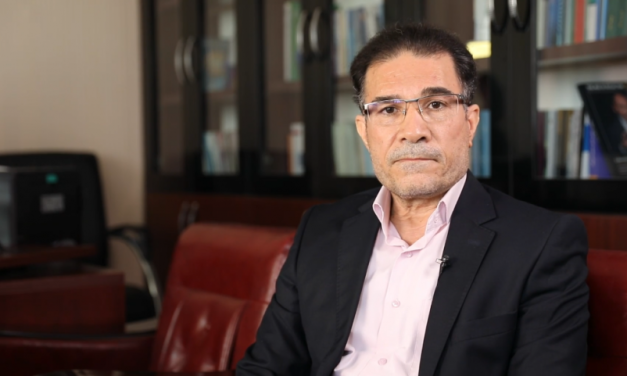
Seyed Jalal Sadatian, in an interview with the website of the Strategic Council on Foreign Relations, stated: “The Saudi Crown Prince’s trip to Washington and its media display is the result of an incomplete deal more than it is the product of a strategic agreement.” Referring to published reports, he said: “The fact that Mohammed bin Salman was able to be present at the White House was a symbolic achievement for him, but strategically, this trip is still shrouded in ambiguity.”
The university professor emphasized: “This very ambiguity has caused the case of selling the F-35 to Saudi Arabia to enter a more complex stage.” Sadatian explained: “Contrary to what some media imply, this meeting not only did not lead to the signing of any definitive agreement, but numerous reports of tension and disagreement in the negotiations before the meeting of Salman and Trump have been published. This indicates that Washington still exercises great caution in providing security guarantees and finalizing the sale of the F-35 to Riyadh.” He added, “Now, even upgrading the level of Saudi Arabia’s security partnership, including granting the title of major non-NATO ally, is also ambiguous. Currently, about 20 countries hold this title, but the actual use of its benefits has always been limited. On the other hand, Saudi Arabia has not yet been able to sign a mutual defense pact similar to Qatar’s with America, because Washington considers this level of commitment justifiable only if it is part of a comprehensive political-security package including normalization with the Israeli regime.”
Sadatian emphasized: “This set of facts shows that the issue of selling the F-35 is not merely a military case, but part of a regional engineering that Washington is trying to advance.” He added: “America wants to use the sale of the F-35 as leverage for normalization, but Saudi Arabia will only accept this concession if it receives formal security guarantees approved by the Senate.”

Saudi Arabia’s Effort to Obtain a Mutual Defense Pact
The international affairs analyst, referring to the role of the Israeli regime in a potential US agreement with Saudi Arabia for the sale of the F-35, stated: “Tel Aviv views this deal not as a military purchase, but as a tool for political pressure. The main condition of the Israeli regime is that the sale of the F-35 to Saudi Arabia is only acceptable when the process of normalizing relations with Riyadh is operationalized.”
He explained: “From the perspective of the Israeli regime, Qualitative Military Edge (QME) means that absolute red line. Because any access by an Arab country to fifth-generation fighter aircraft, without being part of a common political-security framework, is considered a threat.” Sadatian, citing reports published in Zionist media, said: “Some Tel Aviv officials have even suggested that Saudi Arabia’s potential F-35s not be stationed in the west of the country, because an F-35 can reach the air borders of the Israeli regime in a few minutes. This indicates the level of deep security concern among the officials of this regime.” He added, “Alongside these concerns, the issue of the potential transfer of F-35 technology to China or Russia is also raised. This concern could complicate Washington’s decision-making process further.”
Sadatian, analyzing the latest regional developments, said: “The events in Gaza and the pressure of Arab world public opinion have caused Saudi Arabia to condition normalization on tangible steps towards the establishment of a Palestinian state. This means that the Israeli regime can no longer bring Saudi Arabia into the Abraham Accords with merely symbolic concessions.”
In this framework, the international affairs analyst added, “American diplomats believe the main demand of the Saudis is a mutual defense pact. But its realization is only possible when a comprehensive package including normalization and trilateral security coordination among the US, the Israeli regime, and Saudi Arabia is formed.”

Transformation of the Regional Security Structure
Sadatian continued: “For Saudi Arabia, purchasing the F-35 is not just a defense deal. This fighter jet symbolizes Riyadh’s entry into the exclusive club of American fifth-generation customers and is considered a kind of seal of approval on strategic closeness to Washington.” He continued: “But since the deal is not finalized and even its timeline is unclear, Saudi Arabia does not know when it can benefit from the promises. According to published analyses, the sale of the F-35 is the beginning of a long and ambiguous process that may not lead to actual delivery until years later – or even never.”
The university professor emphasized: “If the F-35 is delivered to Saudi Arabia, a new phase of arms competition will take shape in the Persian Gulf, in such a way that other countries will either seek similar purchases or try to obtain equivalent technology from their partners. This process could transform the region’s security structure.” He added, “There is no consensus within the Israeli regime’s cabinet either. Some see this deal as a direct threat, and some say if it is part of a broader security-political package, it could be part of the Israeli regime’s desired order.”
Sadatian, in his final summary, stated: “The Israeli regime accepts the sale of the fighter jet only if relations with Riyadh are normalized, and Saudi Arabia accepts normalization only if it receives formal security guarantees. This mutual conditioning has taken the deal out of a simple military purchase and turned it into one of the most sensitive geopolitical cases in the region.” He said: “Whether this deal is ultimately implemented or remains in suspension for years depends on the developments in US-Israeli regime relations, the future of the Gaza war, and Saudi Arabia’s ability to gain real concessions from Washington. But what is certain is that without a comprehensive political package, none of the parties will be willing to sign this agreement finally.”
0 Comments

LATEST CONTENT

An Analysis of Europe’s Approach Towards Iran

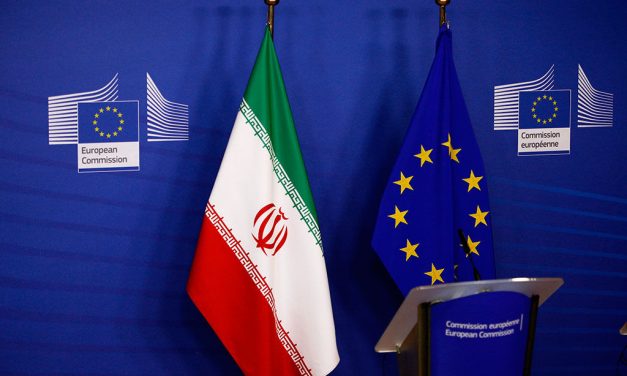
Strategic Council Online – Opinion: The sanctions imposed by the European Union against the Islamic Republic of Iran before the activation of the snapback mechanism represent an effort to exert additional political and economic pressure on our country to change the system’s behavior regarding regional developments.

The Outlook for Ukraine Peace Negotiations

Strategic Council Online – Opinion: After nearly four years of conflict, the outlook for Ukraine-Russia peace negotiations remains unclear; not due to a lack of initiatives, but because of deep conflicts of interest, Russia’s strategy of exploiting the battlefield situation politically, and European confusion and lack of consensus. Achieving a lasting peace seems out of reach.

Review of the 2026 budget of the Zionist regime

Strategic Council Online – Opinion: It appears that the primary focus of the 2026 budget of the Israeli regime is on simultaneously managing war pressures, social discontent, and political ambiguities; even if this approach leads to the postponement of structural reforms and increases financial risks in the medium-term horizon.

The Implications of the United States’ New National Security Strategy on Global Order

Strategic Council Online – Opinion: The United States’ 2025 National Security Strategy (NSS 2025) is not merely a revision of Washington’s foreign policy, but an official declaration redefining its interests, sphere of influence, and the framework of international relations. This change could shake the foundations of the post-Cold War order and place Europe and NATO in a difficult position.

The goals of the Israeli regime in its military attacks on Syria

Strategic Council Online – Interview: A West Asian affairs expert said: One of the main objectives of the recent attacks by the Israeli regime on Syria is to prevent the establishment of a strong central authority or government in Syria. Therefore, it is trying to prevent the comprehensive rule of the new government under the name of Ahmad al-Sharaa or al-Julani by attacking and invading southern Syria and various regions of the country, even Damascus.

China’s Strategy to Become a Global Military Power

Strategic Council Online – Opinion: With its large arsenal of hypersonic missiles, advanced cyber capabilities, extensive satellite network, and survivable nuclear triad, China has become a serious competitor to the United States. Nevertheless, in strategic documents, including the 2025 National Security Document, China describes itself as a development-oriented power committed to the international order, whose path to rise does not pass through war.

Loading

Últimas publicaciones

An Analysis of Europe’s Approach Towards Iran

Strategic Council Online – Opinion: The sanctions imposed by the European Union against the Islamic Republic of Iran before the activation of the snapback mechanism represent an effort to exert additional political and economic pressure on our country to change the system’s behavior regarding regional developments.

The Outlook for Ukraine Peace Negotiations

Strategic Council Online – Opinion: After nearly four years of conflict, the outlook for Ukraine-Russia peace negotiations remains unclear; not due to a lack of initiatives, but because of deep conflicts of interest, Russia’s strategy of exploiting the battlefield situation politically, and European confusion and lack of consensus. Achieving a lasting peace seems out of reach.

Review of the 2026 budget of the Zionist regime

Strategic Council Online – Opinion: It appears that the primary focus of the 2026 budget of the Israeli regime is on simultaneously managing war pressures, social discontent, and political ambiguities; even if this approach leads to the postponement of structural reforms and increases financial risks in the medium-term horizon.

The Implications of the United States’ New National Security Strategy on Global Order

Strategic Council Online – Opinion: The United States’ 2025 National Security Strategy (NSS 2025) is not merely a revision of Washington’s foreign policy, but an official declaration redefining its interests, sphere of influence, and the framework of international relations. This change could shake the foundations of the post-Cold War order and place Europe and NATO in a difficult position.

The goals of the Israeli regime in its military attacks on Syria

Strategic Council Online – Interview: A West Asian affairs expert said: One of the main objectives of the recent attacks by the Israeli regime on Syria is to prevent the establishment of a strong central authority or government in Syria. Therefore, it is trying to prevent the comprehensive rule of the new government under the name of Ahmad al-Sharaa or al-Julani by attacking and invading southern Syria and various regions of the country, even Damascus.

China’s Strategy to Become a Global Military Power

Strategic Council Online – Opinion: With its large arsenal of hypersonic missiles, advanced cyber capabilities, extensive satellite network, and survivable nuclear triad, China has become a serious competitor to the United States. Nevertheless, in strategic documents, including the 2025 National Security Document, China describes itself as a development-oriented power committed to the international order, whose path to rise does not pass through war.

Loading

DERNIER CONTENU

An Analysis of Europe’s Approach Towards Iran

Strategic Council Online – Opinion: The sanctions imposed by the European Union against the Islamic Republic of Iran before the activation of the snapback mechanism represent an effort to exert additional political and economic pressure on our country to change the system’s behavior regarding regional developments.

The Outlook for Ukraine Peace Negotiations

Strategic Council Online – Opinion: After nearly four years of conflict, the outlook for Ukraine-Russia peace negotiations remains unclear; not due to a lack of initiatives, but because of deep conflicts of interest, Russia’s strategy of exploiting the battlefield situation politically, and European confusion and lack of consensus. Achieving a lasting peace seems out of reach.

Review of the 2026 budget of the Zionist regime

Strategic Council Online – Opinion: It appears that the primary focus of the 2026 budget of the Israeli regime is on simultaneously managing war pressures, social discontent, and political ambiguities; even if this approach leads to the postponement of structural reforms and increases financial risks in the medium-term horizon.

The Implications of the United States’ New National Security Strategy on Global Order

Strategic Council Online – Opinion: The United States’ 2025 National Security Strategy (NSS 2025) is not merely a revision of Washington’s foreign policy, but an official declaration redefining its interests, sphere of influence, and the framework of international relations. This change could shake the foundations of the post-Cold War order and place Europe and NATO in a difficult position.

The goals of the Israeli regime in its military attacks on Syria

Strategic Council Online – Interview: A West Asian affairs expert said: One of the main objectives of the recent attacks by the Israeli regime on Syria is to prevent the establishment of a strong central authority or government in Syria. Therefore, it is trying to prevent the comprehensive rule of the new government under the name of Ahmad al-Sharaa or al-Julani by attacking and invading southern Syria and various regions of the country, even Damascus.

China’s Strategy to Become a Global Military Power

Strategic Council Online – Opinion: With its large arsenal of hypersonic missiles, advanced cyber capabilities, extensive satellite network, and survivable nuclear triad, China has become a serious competitor to the United States. Nevertheless, in strategic documents, including the 2025 National Security Document, China describes itself as a development-oriented power committed to the international order, whose path to rise does not pass through war.

Loading