Macron’s Failure in Realizing Europe’s Military Independence from US

Strategic Council Online - Opinion: French President Emmanuel Macron for some time has been thinking about improving Europe’s position and role in NATO and reducing the US influence. But the political and security equations of Europe show against the wishes of the French president. Morteza Makki – Expert on Europe affairs

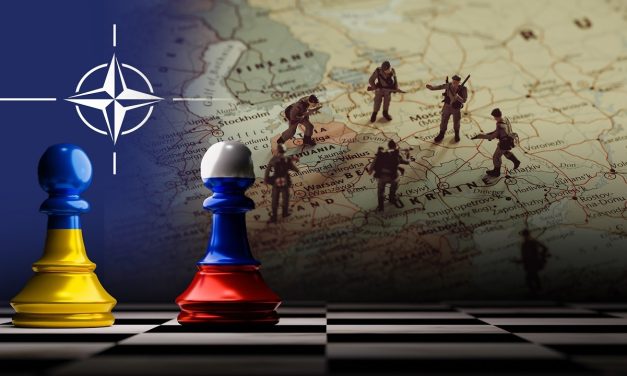
A look at the development process of NATO after the collapse of the Soviet Union and Russia’s attack on Ukraine clearly shows the current security situation in Europe at the present juncture.

The political, economic and security situation of the European Union should be divided into before and after the Ukraine war. After the Second World War, European governments tried to form a global union with economic and then political and security convergence so that they could play an active role in the political, security and economic equations of the world. During the period of the bipolar system, due to the American security umbrella, NATO played a role under the shadow of the United States in political, economic and security equations, but after the collapse of the Soviet Union, France, as a country that was always a protesting member of NATO, is trying to change NATO security arrangements. At the same time, Marshal de Gaulle removed that country from NATO’s military wing. The French believed that they could shape independent European security arrangements outside NATO. Considering that NATO’s existential philosophy had also disappeared after the collapse of the Warsaw Pact, the French thought that they could make maximum use of that vacuum of NATO’s existential philosophy to improve Europe’s position in global equations. But the bloody crises in the Balkan region in the first half of the 1990s and the Kosovo crisis in the late 90s showed that the Europeans are unable to manage the crises of their neighboring countries, and the United States also made the most of the Balkan crises in the 1990s to the necessity of NATO’s security umbrella in Europe.

But this theory, desire and expectation always remained in France that they could form an independent European security structure and this political and security gap existed among the allies on both sides of the Atlantic Ocean.

The kind of confrontation with Russia as the successor of the Soviet Union has largely revealed the gap between Europe and the United States. Since the beginning of the collapse of the Soviet Union, the Americans sought to contain Russia at its borders, and even acceptance of Russia into the NATO participation program in the 1990s was an attempt to deceive Russia, which wanted to become a European partner in the common European home under the structure of the Organization for Security and Cooperation in Europe.

But Boris Yeltsin’s Western policy and his government’s yielding to the West led to Vladimir Putin’s rise to power with Russian nationalistic policies. Also, Russia under the leadership of Putin tried to strengthen and consolidate Russia’s ties with the former Soviet republics by forming regional organizations and institutions. Under such circumstances, the Americans continued the policy of expanding NATO to the East within the framework of limiting Russia in its borders and even sought to join the former Soviet republics in the NATO treaty.

Georgia and Ukraine were the two countries that wanted to join NATO. The main root of Georgia’s crisis in 2008 was the country’s attempt to become a member in NATO.

The United States and Europe had a different view on how to manage the crisis in Georgia. The back and forth trip that French President Nicolas Sarkozy had to Tbilisi and Moscow and the strategic policy of Sarkozy and Angela Merkel, the then chancellor of Germany, in postponing the issue of Georgia and Ukraine’s acceptance into the NATO alliance, showed that the Europeans wanted to respect Russia’s considerations in Its sphere of influence is in the territory of the former Soviet Union, and never sought tension with their big neighbor.

During the Crimea crisis and annexation of that region to Russia in 2014, although many sanctions were imposed against Russia, those sanctions were not to the extent that they would have a serious impact on the economic and political relations between Russia and the Union, especially the axes of Germany and France. During that period, the Europeans also signed several agreements to expand joint defense and military cooperation. Agreements that could be the infrastructure for the achievement of independent European security arrangements.

But Russia’s attack on Ukraine in February last year fundamentally changed the political, security, economic and energy equations of the West with Russia.

The Europeans, especially Merkel, the former chancellor of Germany, prior to the Russian attack believed they should try to change the behavior and policies of Russia by expanding political, economic and even security cooperation with Russia. But after Russia’s attack on Ukraine, the Europeans had no choice but to follow and accompany the United States in supporting Ukraine in the battle with the Russian army, and this gap between Europe and the United States in how to deal with Russia disappeared.

Now, it is true that the Secretary General of NATO is a European political figure, but he is only in charge of managing the secretariat and the administrative organization of that alliance, and practically the military command of NATO is in the hands of the US. Also, the size and manner of military assistance to the Ukrainian government regarding the type of equipment and its amount is specified by the US administration.

We even saw that the German government, which was supposed to increase its military budget to 2 percent in a 10-year period, increased its military budget by 100 billion euros following Russia’s attack on Ukraine.

This was contrary to the policies of Western governments towards Germany after the end of World War II, which tried to prevent Germany from having a strong army. Now, almost all EU members have increased their military budget, but this budget increase does not lead to convergence in common foreign and security policy. The situation after Russia’s attack on Ukraine has imposed such defense policy on the European governments. And that’s in a situation where after Russia’s attack on Ukraine, those countries faced an increase in energy prices, an increase in budget deficit and unprecedented inflation in the past four decades. Emmanuel Macron’s speech in this situation about trying to create a common defense and security structure without the US support is not in line with the changes in the political and security equations in Europe after Russia’s attack on Ukraine, and Europe, for many years, continues to find itself in need of the security umbrella of NATO under the influence of the United States.
0 Comments

Submit a Comment

Your email address will not be published. Required fields are marked *

LATEST CONTENT

America’s Zero-Sum Game in Iraq

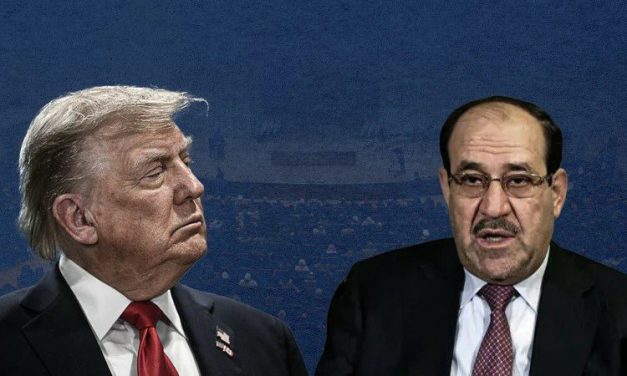
Online Strategic Council – Memoir: The swift selection of Nouri al-Maliki for the premiership constitutes a new phase in Iraq’s political sphere. Multiple factors have played a role in this process, the most important being the prevailing situation in Iraq and the region. Under such circumstances, Iraq requires a powerful and experienced prime minister who can keep the country away from the dangers of wars and crises.

America’s Strategy for Creating Tension in the Asia-Pacific

Strategic Council Online – Opinion: Relations between some countries in the Asia-Pacific region, such as China and Japan or China and Australia, which were previously relatively normal, are trending towards deterioration, and the primary reason for this is the aggressive policies of the United States of America.

The Collapse of the European Security Illusion with the Continuation of the Ukraine War?

Strategic Council Online – Interview: The Ukraine war has become a new turning point in the political, security, and even commercial relations of allies on both sides of the Atlantic. While this war is nearing its fourth year, many questions still remain regarding its future and its consequences; among them, will the continuation of the Ukraine war lead to the collapse of the European security illusion?

Is Greenland Pushing Europe Toward China?

Strategic Council Online – Interview: A European affairs expert believes that the seizure of Greenland will certainly weaken America’s relations with Europe and its allies. Donald Trump’s view is that he does not need these countries, but if Europe faces significant pressure from the United States, it is natural for it to move toward China.

Alarm Bells Sound for ISIS Revival in Syria: Threat to Iraq and West Asia

Strategic Council Online – Opinion: Numerous documents and pieces of evidence indicate that ISIS, which in recent years has been the region’s biggest threat to security and stability after the Zionist regime, has once again in recent months become a focal point for political and security exploitation by American and Zionist regime security, intelligence, and political circles.

Afghanistan’s Effective Role in the Economy of Eurasia

Strategic Council Online – Interview: A regional affairs researcher stated: Despite projects such as the Khaf-Herat railway and the Herat-Balkh-Mazar-i-Sharif corridor being on the agenda, insecurity and the absence of an inclusive government remain the most significant obstacles to realizing transit corridors and Afghanistan playing an effective role in the economy of Eurasia.

Loading

Últimas publicaciones

America’s Zero-Sum Game in Iraq

Online Strategic Council – Memoir: The swift selection of Nouri al-Maliki for the premiership constitutes a new phase in Iraq’s political sphere. Multiple factors have played a role in this process, the most important being the prevailing situation in Iraq and the region. Under such circumstances, Iraq requires a powerful and experienced prime minister who can keep the country away from the dangers of wars and crises.

America’s Strategy for Creating Tension in the Asia-Pacific

Strategic Council Online – Opinion: Relations between some countries in the Asia-Pacific region, such as China and Japan or China and Australia, which were previously relatively normal, are trending towards deterioration, and the primary reason for this is the aggressive policies of the United States of America.

The Collapse of the European Security Illusion with the Continuation of the Ukraine War?

Strategic Council Online – Interview: The Ukraine war has become a new turning point in the political, security, and even commercial relations of allies on both sides of the Atlantic. While this war is nearing its fourth year, many questions still remain regarding its future and its consequences; among them, will the continuation of the Ukraine war lead to the collapse of the European security illusion?

Is Greenland Pushing Europe Toward China?

Strategic Council Online – Interview: A European affairs expert believes that the seizure of Greenland will certainly weaken America’s relations with Europe and its allies. Donald Trump’s view is that he does not need these countries, but if Europe faces significant pressure from the United States, it is natural for it to move toward China.

Alarm Bells Sound for ISIS Revival in Syria: Threat to Iraq and West Asia

Strategic Council Online – Opinion: Numerous documents and pieces of evidence indicate that ISIS, which in recent years has been the region’s biggest threat to security and stability after the Zionist regime, has once again in recent months become a focal point for political and security exploitation by American and Zionist regime security, intelligence, and political circles.

Afghanistan’s Effective Role in the Economy of Eurasia

Strategic Council Online – Interview: A regional affairs researcher stated: Despite projects such as the Khaf-Herat railway and the Herat-Balkh-Mazar-i-Sharif corridor being on the agenda, insecurity and the absence of an inclusive government remain the most significant obstacles to realizing transit corridors and Afghanistan playing an effective role in the economy of Eurasia.

Loading

DERNIER CONTENU

America’s Zero-Sum Game in Iraq

Online Strategic Council – Memoir: The swift selection of Nouri al-Maliki for the premiership constitutes a new phase in Iraq’s political sphere. Multiple factors have played a role in this process, the most important being the prevailing situation in Iraq and the region. Under such circumstances, Iraq requires a powerful and experienced prime minister who can keep the country away from the dangers of wars and crises.

America’s Strategy for Creating Tension in the Asia-Pacific

Strategic Council Online – Opinion: Relations between some countries in the Asia-Pacific region, such as China and Japan or China and Australia, which were previously relatively normal, are trending towards deterioration, and the primary reason for this is the aggressive policies of the United States of America.

The Collapse of the European Security Illusion with the Continuation of the Ukraine War?

Strategic Council Online – Interview: The Ukraine war has become a new turning point in the political, security, and even commercial relations of allies on both sides of the Atlantic. While this war is nearing its fourth year, many questions still remain regarding its future and its consequences; among them, will the continuation of the Ukraine war lead to the collapse of the European security illusion?

Is Greenland Pushing Europe Toward China?

Strategic Council Online – Interview: A European affairs expert believes that the seizure of Greenland will certainly weaken America’s relations with Europe and its allies. Donald Trump’s view is that he does not need these countries, but if Europe faces significant pressure from the United States, it is natural for it to move toward China.

Alarm Bells Sound for ISIS Revival in Syria: Threat to Iraq and West Asia

Strategic Council Online – Opinion: Numerous documents and pieces of evidence indicate that ISIS, which in recent years has been the region’s biggest threat to security and stability after the Zionist regime, has once again in recent months become a focal point for political and security exploitation by American and Zionist regime security, intelligence, and political circles.

Afghanistan’s Effective Role in the Economy of Eurasia

Strategic Council Online – Interview: A regional affairs researcher stated: Despite projects such as the Khaf-Herat railway and the Herat-Balkh-Mazar-i-Sharif corridor being on the agenda, insecurity and the absence of an inclusive government remain the most significant obstacles to realizing transit corridors and Afghanistan playing an effective role in the economy of Eurasia.

Loading