The goals of the Israeli regime in its military attacks on Syria

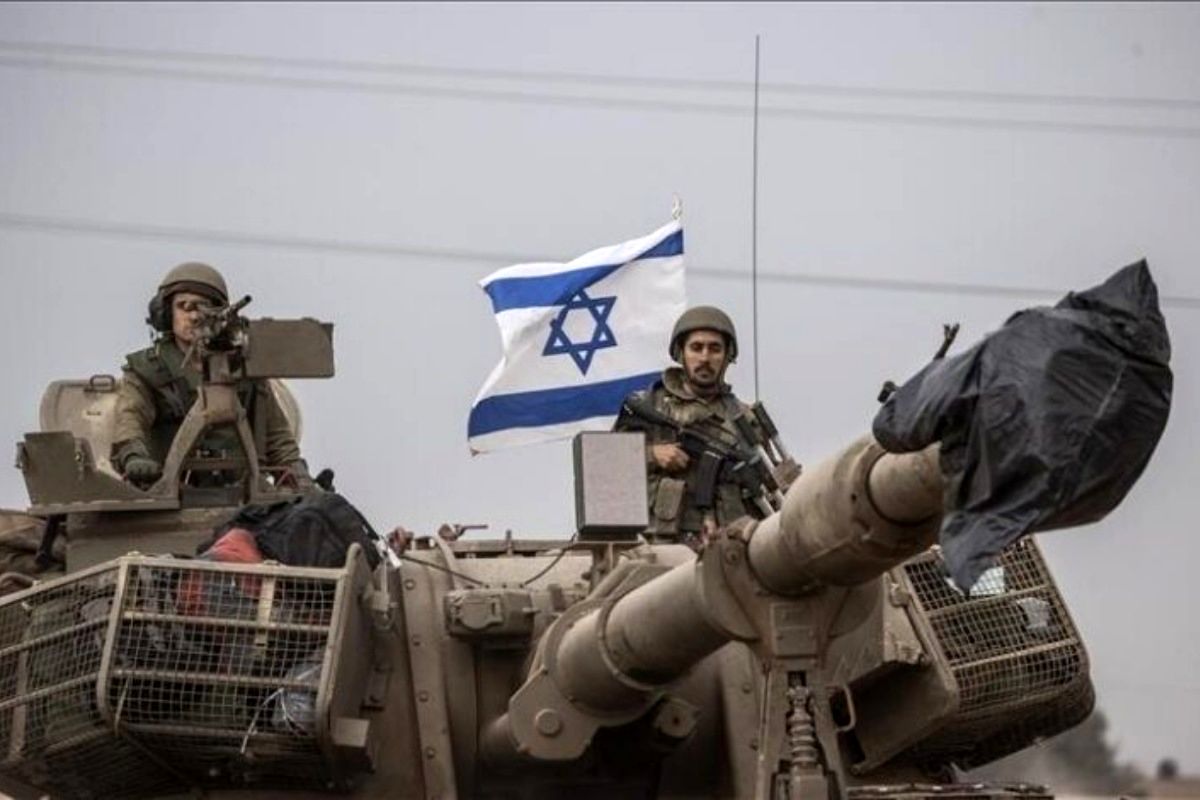
Strategic Council Online - Interview: A West Asian affairs expert said: One of the main objectives of the recent attacks by the Israeli regime on Syria is to prevent the establishment of a strong central authority or government in Syria. Therefore, it is trying to prevent the comprehensive rule of the new government under the name of Ahmad al-Sharaa or al-Julani by attacking and invading southern Syria and various regions of the country, even Damascus.

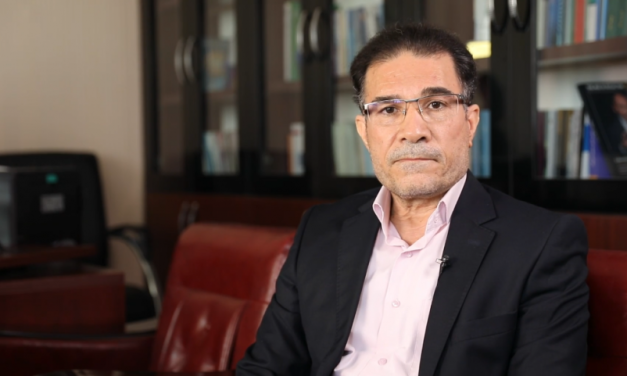
Davoud Ahmadzadeh, in an interview with the website of the Strategic Council on Foreign Relations, stated: “Among the most important reasons for the Israeli regime’s attacks on Syria are preventing the establishment of a strong central authority, the fragmentation of Syria if possible, and the annexation of more areas of Syria other than the occupied Golan to the occupied territories.” Regarding the latest aggression by the Israeli regime, Ahmadzadeh explained: “In its latest aggression, this regime attacked Beit Jann. This attack was under the pretext that some supporters of Hamas were there, so in several villages, with armored brigades and complete encirclement, they tried to capture armed groups in a way.”
Ahmadzadeh believes that another reason that can be cited for the Israeli regime’s efforts to create a turbulent and unstable Syria is this regime’s competition with Turkey. He added: “Turkey is among the countries that supported the Hay’at Tahrir al-Sham group, and its overt support led to the overthrow of Bashar al-Assad’s government. The competition that has now arisen between Turkey and the Israeli regime over gaining more influence in Syria has become a factor causing Tel Aviv to attack Syria intermittently. The pretext of the Israeli regime is to prevent the establishment of any military base by Turkey in Syria.”
Ahmadzadeh, in response to the question of how long these attacks will continue, said: “What is clear is that the attacks by the Israeli regime have intensified in recent weeks. One of the reasons is the lack of reaction from the Ahmad al-Shar’ government, which is trying to engage in peace and reconciliation with the Israeli regime through negotiations and diplomacy. Therefore, it has not shown any reaction to these attacks.”
He added: “During his trip to the White House and negotiations with Donald Trump, Jolani received assurances that the Israeli regime would not attack Syria again. However, even after these negotiations, the Israeli regime continues to seek to destroy Syria’s remaining military capabilities and strives to turn Syria into a weak, fragmented, and fragile country. Because the Zionist regime fears that the establishment of any central government in Syria and an independent authority in this country could be considered a source of threat to the regime.”
Ahmadzadeh, in response to the question of what the Arab world’s perspective is on issues related to the Israeli regime, explained: “If we summarize the Arab world in Saudi Arabia and aligned countries, some of these countries have joined the Abraham Accords, such as the UAE and Bahrain, and some are also secretly approaching the Israeli regime through American mediation. These countries only limit themselves to condemning these attacks in a media manner. Even Egypt, which has military capabilities, has not reacted in any way to this extensive aggression that this regime carries out against Syria, Lebanon, and the Gaza Strip.” According to this expert, because there is no common approach from Arab countries to respond to these aggressions, this very issue has caused this rogue regime to expand aggression in the region by defying all international laws and peremptory norms.
Ahmadzadeh, referring to the idea of forming Greater Israel from the Nile to the Euphrates by the Zionist regime, continued: “Since Islamic governments are suffering from differences and discord, and the Israeli regime sees full support from Trump behind it, after the 12-day war and recent developments in the region, it is trying to advance its military objectives with the situation that has arisen.”
0 Comments

LATEST CONTENT

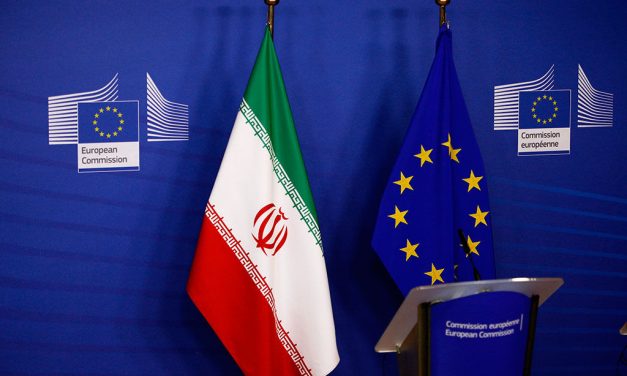
An Analysis of Europe’s Approach Towards Iran

Strategic Council Online – Opinion: The sanctions imposed by the European Union against the Islamic Republic of Iran before the activation of the snapback mechanism represent an effort to exert additional political and economic pressure on our country to change the system’s behavior regarding regional developments.

The Outlook for Ukraine Peace Negotiations

Strategic Council Online – Opinion: After nearly four years of conflict, the outlook for Ukraine-Russia peace negotiations remains unclear; not due to a lack of initiatives, but because of deep conflicts of interest, Russia’s strategy of exploiting the battlefield situation politically, and European confusion and lack of consensus. Achieving a lasting peace seems out of reach.

Review of the 2026 budget of the Zionist regime

Strategic Council Online – Opinion: It appears that the primary focus of the 2026 budget of the Israeli regime is on simultaneously managing war pressures, social discontent, and political ambiguities; even if this approach leads to the postponement of structural reforms and increases financial risks in the medium-term horizon.

The Implications of the United States’ New National Security Strategy on Global Order

Strategic Council Online – Opinion: The United States’ 2025 National Security Strategy (NSS 2025) is not merely a revision of Washington’s foreign policy, but an official declaration redefining its interests, sphere of influence, and the framework of international relations. This change could shake the foundations of the post-Cold War order and place Europe and NATO in a difficult position.

The goals of the Israeli regime in its military attacks on Syria

Strategic Council Online – Interview: A West Asian affairs expert said: One of the main objectives of the recent attacks by the Israeli regime on Syria is to prevent the establishment of a strong central authority or government in Syria. Therefore, it is trying to prevent the comprehensive rule of the new government under the name of Ahmad al-Sharaa or al-Julani by attacking and invading southern Syria and various regions of the country, even Damascus.

China’s Strategy to Become a Global Military Power

Strategic Council Online – Opinion: With its large arsenal of hypersonic missiles, advanced cyber capabilities, extensive satellite network, and survivable nuclear triad, China has become a serious competitor to the United States. Nevertheless, in strategic documents, including the 2025 National Security Document, China describes itself as a development-oriented power committed to the international order, whose path to rise does not pass through war.

Loading

Últimas publicaciones

An Analysis of Europe’s Approach Towards Iran

Strategic Council Online – Opinion: The sanctions imposed by the European Union against the Islamic Republic of Iran before the activation of the snapback mechanism represent an effort to exert additional political and economic pressure on our country to change the system’s behavior regarding regional developments.

The Outlook for Ukraine Peace Negotiations

Strategic Council Online – Opinion: After nearly four years of conflict, the outlook for Ukraine-Russia peace negotiations remains unclear; not due to a lack of initiatives, but because of deep conflicts of interest, Russia’s strategy of exploiting the battlefield situation politically, and European confusion and lack of consensus. Achieving a lasting peace seems out of reach.

Review of the 2026 budget of the Zionist regime

Strategic Council Online – Opinion: It appears that the primary focus of the 2026 budget of the Israeli regime is on simultaneously managing war pressures, social discontent, and political ambiguities; even if this approach leads to the postponement of structural reforms and increases financial risks in the medium-term horizon.

The Implications of the United States’ New National Security Strategy on Global Order

Strategic Council Online – Opinion: The United States’ 2025 National Security Strategy (NSS 2025) is not merely a revision of Washington’s foreign policy, but an official declaration redefining its interests, sphere of influence, and the framework of international relations. This change could shake the foundations of the post-Cold War order and place Europe and NATO in a difficult position.

The goals of the Israeli regime in its military attacks on Syria

Strategic Council Online – Interview: A West Asian affairs expert said: One of the main objectives of the recent attacks by the Israeli regime on Syria is to prevent the establishment of a strong central authority or government in Syria. Therefore, it is trying to prevent the comprehensive rule of the new government under the name of Ahmad al-Sharaa or al-Julani by attacking and invading southern Syria and various regions of the country, even Damascus.

China’s Strategy to Become a Global Military Power

Strategic Council Online – Opinion: With its large arsenal of hypersonic missiles, advanced cyber capabilities, extensive satellite network, and survivable nuclear triad, China has become a serious competitor to the United States. Nevertheless, in strategic documents, including the 2025 National Security Document, China describes itself as a development-oriented power committed to the international order, whose path to rise does not pass through war.

Loading

DERNIER CONTENU

An Analysis of Europe’s Approach Towards Iran

Strategic Council Online – Opinion: The sanctions imposed by the European Union against the Islamic Republic of Iran before the activation of the snapback mechanism represent an effort to exert additional political and economic pressure on our country to change the system’s behavior regarding regional developments.

The Outlook for Ukraine Peace Negotiations

Strategic Council Online – Opinion: After nearly four years of conflict, the outlook for Ukraine-Russia peace negotiations remains unclear; not due to a lack of initiatives, but because of deep conflicts of interest, Russia’s strategy of exploiting the battlefield situation politically, and European confusion and lack of consensus. Achieving a lasting peace seems out of reach.

Review of the 2026 budget of the Zionist regime

Strategic Council Online – Opinion: It appears that the primary focus of the 2026 budget of the Israeli regime is on simultaneously managing war pressures, social discontent, and political ambiguities; even if this approach leads to the postponement of structural reforms and increases financial risks in the medium-term horizon.

The Implications of the United States’ New National Security Strategy on Global Order

Strategic Council Online – Opinion: The United States’ 2025 National Security Strategy (NSS 2025) is not merely a revision of Washington’s foreign policy, but an official declaration redefining its interests, sphere of influence, and the framework of international relations. This change could shake the foundations of the post-Cold War order and place Europe and NATO in a difficult position.

The goals of the Israeli regime in its military attacks on Syria

Strategic Council Online – Interview: A West Asian affairs expert said: One of the main objectives of the recent attacks by the Israeli regime on Syria is to prevent the establishment of a strong central authority or government in Syria. Therefore, it is trying to prevent the comprehensive rule of the new government under the name of Ahmad al-Sharaa or al-Julani by attacking and invading southern Syria and various regions of the country, even Damascus.

China’s Strategy to Become a Global Military Power

Strategic Council Online – Opinion: With its large arsenal of hypersonic missiles, advanced cyber capabilities, extensive satellite network, and survivable nuclear triad, China has become a serious competitor to the United States. Nevertheless, in strategic documents, including the 2025 National Security Document, China describes itself as a development-oriented power committed to the international order, whose path to rise does not pass through war.

Loading