Failure of the Israeli Regime’s Assassination Policy in Containing the Resistance Front

2025/09/08 | interview, Politics, top news

Strategic Council Online - Interview: A senior West Asia affairs analyst stated: By assassinating Yemeni executive officials, the Israeli regime has not only failed to achieve its military objectives, but its position has also been weakened in the diplomatic arena. In contrast, Yemen and the Resistance Front are continuing their path with greater cohesion, and the future outlook indicates that not only will their military capabilities not diminish, but their political standing will also be enhanced at the regional and global levels.

Assassination of Executive Officials: A Sign of the Israeli Regime’s Military Incapability

Dr. Jafar Ghanadbashi, in an interview with the website of the Strategic Council on Foreign Relations, referring to the recent attack by the Israeli regime on Sana’a and the martyrdom of the Prime Minister of Yemen and several cabinet ministers, stated: “The assassination of these individuals, more than indicating the intelligence and military capability of the Zionist regime, demonstrates this regime’s helplessness against Yemen’s defensive and military power, because the assassinated officials, including the Prime Minister and the Ministers of Foreign Affairs, Intelligence, and Economy, were individuals who had executive responsibilities and direct contact with the people; therefore, accessing them was not difficult. Unlike military commanders or Resistance leaders who are within complex protective layers, cabinet ministers are inevitably exposed to public view and daily commutes.”
The West Asia affairs expert “considers this action to lack military value” and believes that “the Israeli regime, with such an approach, has changed the level of engagement.” According to the analyst of the Arab world, “This pattern could have consequences beyond the Yemen arena, because if the assassination of executive officials becomes a normal procedure, many governments and countries will be exposed to similar risks; a matter from which even the Western allies of the Israeli regime will suffer.”

Political and Diplomatic Consequences at the Regional and Global Levels
Ghanadbashi, referring to the political and diplomatic consequences of this attack, stated: “The Israeli regime plans such actions under conditions where it is facing increasing pressures on the global stage. The adoption of two resolutions in the UN General Assembly in recent years, supported by over 140 countries for the full membership of Palestine, indicates that a global consensus for recognizing the State of Palestine is taking shape.”
The West Asia affairs expert emphasized that “the decision of the governments of France, UK, Spain, Australia, and the Netherlands to recognize the State of Palestine is a sign of the impact of public opinion in changing the foreign policy direction of these governments, including France, which has always been in the ranks of Tel Aviv’s supporters.” Therefore, according to him, the attack on Yemeni officials should be evaluated within this same framework because the Israeli regime is trying to divert attention from its legitimacy crisis and international pressures by expanding the fronts of engagement and transferring tensions to various points in the region. But in practice, such actions have not only failed to weaken the Resistance Front but have strengthened its legitimacy in global public opinion.” From Ghanadbashi’s perspective, “The assassination of Yemen’s political leaders is similar to actions previously taken against Hamas or the Hezbollah officials; but experience has shown that these policies not only do not stop the objectives of the Resistance but increase its cohesion and persistence.”

Yemen: A Model of Sustained Resistance
In another part of his analysis, Ghanadbashi addresses Yemen’s special position in regional equations. He recalls that “Yemen is the only country that has been able to force the United States to accept a ceasefire and stop the war; something unprecedented in the last century.” According to the West Asia affairs analyst, “The combination of Yemen’s geopolitical position, indigenous capabilities in the defensive and missile domains, as well as the resistant spirit of its people, has turned this country into a rare model of standing against foreign pressures.”
He emphasizes that “even with the assassination of executive officials by the Zionist regime, Yemen’s field capability will not change; because the country’s defensive and military infrastructures are still active and dynamic. Moreover, the Yemeni nation, despite economic shortages and pressures, considers resistance a religious and national duty and has remained inflexible in the face of pressures.” Ghanadbashi believes that “the recent assassination should be assessed as part of a year and a half of failed efforts by the Israeli regime and its Western allies to strike Yemen; efforts that, despite American and British bombings, have not yielded results and have ultimately forced these countries to retreat.”
In conclusion, Ghanadbashi summarizes that “the Israeli regime, by assassinating Yemeni executive officials, has not only failed to achieve its military objectives, but its position has also been weakened in the diplomatic arena. In contrast, Yemen and the Resistance Front are continuing their path with greater cohesion, and the future outlook indicates that not only will their military capabilities not diminish, but their political standing will also be enhanced at the regional and global levels.”
0 Comments

LATEST CONTENT

America’s Zero-Sum Game in Iraq

Online Strategic Council – Memoir: The swift selection of Nouri al-Maliki for the premiership constitutes a new phase in Iraq’s political sphere. Multiple factors have played a role in this process, the most important being the prevailing situation in Iraq and the region. Under such circumstances, Iraq requires a powerful and experienced prime minister who can keep the country away from the dangers of wars and crises.

America’s Strategy for Creating Tension in the Asia-Pacific

Strategic Council Online – Opinion: Relations between some countries in the Asia-Pacific region, such as China and Japan or China and Australia, which were previously relatively normal, are trending towards deterioration, and the primary reason for this is the aggressive policies of the United States of America.

The Collapse of the European Security Illusion with the Continuation of the Ukraine War?

Strategic Council Online – Interview: The Ukraine war has become a new turning point in the political, security, and even commercial relations of allies on both sides of the Atlantic. While this war is nearing its fourth year, many questions still remain regarding its future and its consequences; among them, will the continuation of the Ukraine war lead to the collapse of the European security illusion?

Is Greenland Pushing Europe Toward China?

Strategic Council Online – Interview: A European affairs expert believes that the seizure of Greenland will certainly weaken America’s relations with Europe and its allies. Donald Trump’s view is that he does not need these countries, but if Europe faces significant pressure from the United States, it is natural for it to move toward China.

Alarm Bells Sound for ISIS Revival in Syria: Threat to Iraq and West Asia

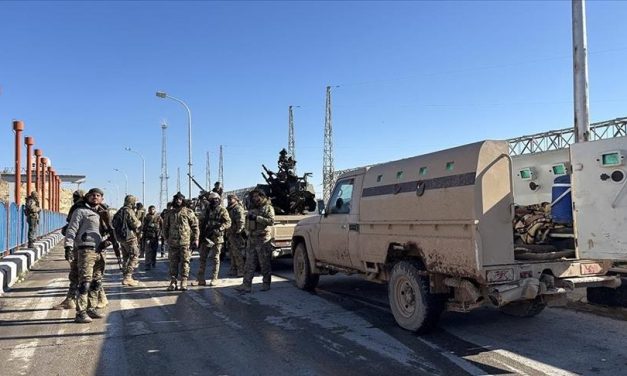
Strategic Council Online – Opinion: Numerous documents and pieces of evidence indicate that ISIS, which in recent years has been the region’s biggest threat to security and stability after the Zionist regime, has once again in recent months become a focal point for political and security exploitation by American and Zionist regime security, intelligence, and political circles.

Afghanistan’s Effective Role in the Economy of Eurasia

Strategic Council Online – Interview: A regional affairs researcher stated: Despite projects such as the Khaf-Herat railway and the Herat-Balkh-Mazar-i-Sharif corridor being on the agenda, insecurity and the absence of an inclusive government remain the most significant obstacles to realizing transit corridors and Afghanistan playing an effective role in the economy of Eurasia.

Loading

Últimas publicaciones

America’s Zero-Sum Game in Iraq

Online Strategic Council – Memoir: The swift selection of Nouri al-Maliki for the premiership constitutes a new phase in Iraq’s political sphere. Multiple factors have played a role in this process, the most important being the prevailing situation in Iraq and the region. Under such circumstances, Iraq requires a powerful and experienced prime minister who can keep the country away from the dangers of wars and crises.

America’s Strategy for Creating Tension in the Asia-Pacific

Strategic Council Online – Opinion: Relations between some countries in the Asia-Pacific region, such as China and Japan or China and Australia, which were previously relatively normal, are trending towards deterioration, and the primary reason for this is the aggressive policies of the United States of America.

The Collapse of the European Security Illusion with the Continuation of the Ukraine War?

Strategic Council Online – Interview: The Ukraine war has become a new turning point in the political, security, and even commercial relations of allies on both sides of the Atlantic. While this war is nearing its fourth year, many questions still remain regarding its future and its consequences; among them, will the continuation of the Ukraine war lead to the collapse of the European security illusion?

Is Greenland Pushing Europe Toward China?

Strategic Council Online – Interview: A European affairs expert believes that the seizure of Greenland will certainly weaken America’s relations with Europe and its allies. Donald Trump’s view is that he does not need these countries, but if Europe faces significant pressure from the United States, it is natural for it to move toward China.

Alarm Bells Sound for ISIS Revival in Syria: Threat to Iraq and West Asia

Strategic Council Online – Opinion: Numerous documents and pieces of evidence indicate that ISIS, which in recent years has been the region’s biggest threat to security and stability after the Zionist regime, has once again in recent months become a focal point for political and security exploitation by American and Zionist regime security, intelligence, and political circles.

Afghanistan’s Effective Role in the Economy of Eurasia

Strategic Council Online – Interview: A regional affairs researcher stated: Despite projects such as the Khaf-Herat railway and the Herat-Balkh-Mazar-i-Sharif corridor being on the agenda, insecurity and the absence of an inclusive government remain the most significant obstacles to realizing transit corridors and Afghanistan playing an effective role in the economy of Eurasia.

Loading

DERNIER CONTENU

America’s Zero-Sum Game in Iraq

Online Strategic Council – Memoir: The swift selection of Nouri al-Maliki for the premiership constitutes a new phase in Iraq’s political sphere. Multiple factors have played a role in this process, the most important being the prevailing situation in Iraq and the region. Under such circumstances, Iraq requires a powerful and experienced prime minister who can keep the country away from the dangers of wars and crises.

America’s Strategy for Creating Tension in the Asia-Pacific

Strategic Council Online – Opinion: Relations between some countries in the Asia-Pacific region, such as China and Japan or China and Australia, which were previously relatively normal, are trending towards deterioration, and the primary reason for this is the aggressive policies of the United States of America.

The Collapse of the European Security Illusion with the Continuation of the Ukraine War?

Strategic Council Online – Interview: The Ukraine war has become a new turning point in the political, security, and even commercial relations of allies on both sides of the Atlantic. While this war is nearing its fourth year, many questions still remain regarding its future and its consequences; among them, will the continuation of the Ukraine war lead to the collapse of the European security illusion?

Is Greenland Pushing Europe Toward China?

Strategic Council Online – Interview: A European affairs expert believes that the seizure of Greenland will certainly weaken America’s relations with Europe and its allies. Donald Trump’s view is that he does not need these countries, but if Europe faces significant pressure from the United States, it is natural for it to move toward China.

Alarm Bells Sound for ISIS Revival in Syria: Threat to Iraq and West Asia

Strategic Council Online – Opinion: Numerous documents and pieces of evidence indicate that ISIS, which in recent years has been the region’s biggest threat to security and stability after the Zionist regime, has once again in recent months become a focal point for political and security exploitation by American and Zionist regime security, intelligence, and political circles.

Afghanistan’s Effective Role in the Economy of Eurasia

Strategic Council Online – Interview: A regional affairs researcher stated: Despite projects such as the Khaf-Herat railway and the Herat-Balkh-Mazar-i-Sharif corridor being on the agenda, insecurity and the absence of an inclusive government remain the most significant obstacles to realizing transit corridors and Afghanistan playing an effective role in the economy of Eurasia.

Loading