Dimensions and Scope of the Conflict between Ankara and Syrian Kurds

2025/02/05 | Note, Politics, top news

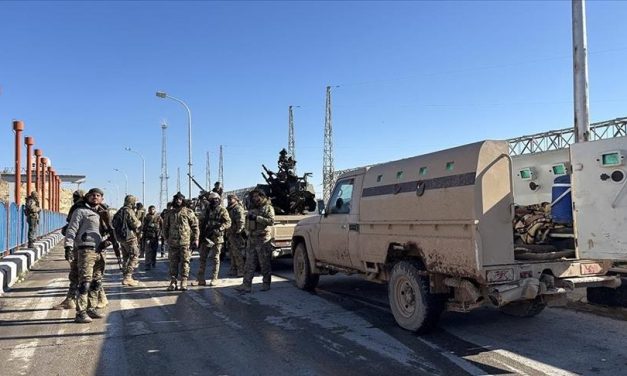
Strategic Council Online – Guest Opinion: The increase in civilian casualties and ordinary citizens in the northern and eastern regions of Syria, following the continuation and intensification of air and artillery attacks by the Turkish army and its affiliated militias, namely the Syrian National Army (SNA), has led to growing concerns about the future course of developments in Syria.

Mohammad Mahdi Maleki – Regional Affairs Expert

The coming to power of the Tahrir al-Sham ruling body has led many regional and international actors to increase their influence in Syria to advance its developments for their own benefit.

Meanwhile, Turkey is one of the regional actors that seeks to exert maximum influence in the future course of developments in Syria so that it can use the unstable and turbulent conditions prevailing in Syria in the early months of its transition to secure its interests in some of the most important common files with Syria, namely the issue of Syrian refugees and the threat to the Kurds.

On the one hand, Ankara is trying to achieve some of its regional goals by using force and violence against the Syrian Kurds. On the other hand, it is seeking to implement the peace process by implementing some policies inside Syria, a peace that seems to be in conflict with putting pressure on the Syrian Kurds.

However, regarding the issue of the recent tension between Turkey and the Syrian Kurdish forces, various factors must be taken into account, including the Western approach, the management of the tension and conflict between Ankara and the West, the issue of the PKK and its role in the issue from the perspective of Turkey and the Syrian Kurds, the role of the Erbil officials, and of course, how the various Kurdish movements in Syria have achieved unity.

In this regard, the following axes can be noted;

The Western approach to the recent tension between Turkey and the SDF

– The support of the West (the United States and its European allies) for the Syrian Kurds can perhaps be considered the most important tool and component of the power of the Syrian Kurds against Turkey.

– The US and France are very active on the issue of the Syrian Kurds, which is, of course, a deep-rooted issue and their long-standing and extensive connections with groups and movements in the autonomous region of Syria are proof of this.

– The establishment of a new US military base in Kobani is considered Washington’s most important response to the increase in attacks and pressure on the Syrian Kurds, but what exactly is the purpose of the US military in Syria, and why they have not taken any specific action to support the SDF forces in the heavy battle with the Turkish army and militias close to Ankara is another matter.

A meeting was recently held between “Mazlum Abdi,” the commander of the Syrian Democratic Forces, and General “Michael Corilla,” the commander of the US Central Command (CENTCOM). The two sides discussed various issues, including the assessment of the current situation in Syria, joint operations against ISIS, the importance of international efforts to rehabilitate families in the al-Hol camp, and securing prisons.

“Managing Tension and Conflict Between Ankara and the West”

– Managing the conflict of tension and interests between the United States and Turkey is a strategic issue that depends on the performance of both sides, including what approach the White House will take towards Ankara and its actions in Syria and the autonomous region of Syria in the new Trump era. Trump recently called Erdogan his friend and said that Erdogan had stopped attacking the Kurds at his request.

– Trump’s deputy special envoy for the Middle East, Morgan Ortagus, has called on the new US president to make one of his priorities preventing ISIS from regaining power in Syria after the fall of Bashar al-Assad’s government and the current power vacuum in the country, to protect camps and prisons controlled by Syrian Kurds and to prevent ISIS from regaining power, which, according to him, requires support for the Syrian Kurds.

“The PKK and its role”

– Turkey considers the YPG forces, which are part of the Syrian Democratic Forces, to be an extension of the PKK and believes that the SDF should be disarmed and destroyed because it has defined the Kurdistan Workers’ Party as a threat to its own national security.

– For several years, the Turkish army has continuously and repeatedly carried out air and sometimes ground attacks against the Kurdish areas of Iraq and Syria under the pretext of the presence of PKK forces, which are said to have resulted in the deaths of hundreds of civilians and ordinary Iraqi and Syrian citizens, which is itself a violation of human rights.

– The Turkish army’s attacks against the Kurdistan Regional Government of Iraq and Rojava (the Kurdish region of Syria) are considered a violation of the national sovereignty and national integrity of the two countries in question and require Ankara to be held accountable for its violation of international laws and rights.

“Playing the role of Erbil officials”

– Another influential component in this issue is the approach of the Iraqi Region. The recent meeting between Masoud Barzani (party leader) and Mazloum Abdi was welcomed by some Kurdish groups and politicians as an indication of the effectiveness of the regional role in the Syrian Kurds’ issue.

– Given the proximity of the National Council of the Kurds of Syria (ENKS) to Erbil and, of course, the meeting between Abdi and Barzani, it seems that the necessary preparations have been made to create a common vision and initial understandings between the various Kurdish movements and the unity and cohesion of the autonomous region (AANES).

“How to achieve unity among the various Kurdish movements in Syria.”

– Despite the role of France, America, and Erbil in holding Kurdish talks between the various Syrian Kurdish parties and making progress in this regard, there are still contradictions and conflicts among the internal Kurdish groups and movements in Syria on specific issues. They have still not reached a consensus and understanding within the framework of what they call the Kurdish-Kurdish dialogue. It should be noted that one of the differences between the Patriotic Council and the SDF is the issue of the presence or absence of the PKK among the Syrian Democratic Forces.
0 Comments

LATEST CONTENT

America’s Zero-Sum Game in Iraq

Online Strategic Council – Memoir: The swift selection of Nouri al-Maliki for the premiership constitutes a new phase in Iraq’s political sphere. Multiple factors have played a role in this process, the most important being the prevailing situation in Iraq and the region. Under such circumstances, Iraq requires a powerful and experienced prime minister who can keep the country away from the dangers of wars and crises.

America’s Strategy for Creating Tension in the Asia-Pacific

Strategic Council Online – Opinion: Relations between some countries in the Asia-Pacific region, such as China and Japan or China and Australia, which were previously relatively normal, are trending towards deterioration, and the primary reason for this is the aggressive policies of the United States of America.

The Collapse of the European Security Illusion with the Continuation of the Ukraine War?

Strategic Council Online – Interview: The Ukraine war has become a new turning point in the political, security, and even commercial relations of allies on both sides of the Atlantic. While this war is nearing its fourth year, many questions still remain regarding its future and its consequences; among them, will the continuation of the Ukraine war lead to the collapse of the European security illusion?

Is Greenland Pushing Europe Toward China?

Strategic Council Online – Interview: A European affairs expert believes that the seizure of Greenland will certainly weaken America’s relations with Europe and its allies. Donald Trump’s view is that he does not need these countries, but if Europe faces significant pressure from the United States, it is natural for it to move toward China.

Alarm Bells Sound for ISIS Revival in Syria: Threat to Iraq and West Asia

Strategic Council Online – Opinion: Numerous documents and pieces of evidence indicate that ISIS, which in recent years has been the region’s biggest threat to security and stability after the Zionist regime, has once again in recent months become a focal point for political and security exploitation by American and Zionist regime security, intelligence, and political circles.

Afghanistan’s Effective Role in the Economy of Eurasia

Strategic Council Online – Interview: A regional affairs researcher stated: Despite projects such as the Khaf-Herat railway and the Herat-Balkh-Mazar-i-Sharif corridor being on the agenda, insecurity and the absence of an inclusive government remain the most significant obstacles to realizing transit corridors and Afghanistan playing an effective role in the economy of Eurasia.

Loading

Últimas publicaciones

America’s Zero-Sum Game in Iraq

Online Strategic Council – Memoir: The swift selection of Nouri al-Maliki for the premiership constitutes a new phase in Iraq’s political sphere. Multiple factors have played a role in this process, the most important being the prevailing situation in Iraq and the region. Under such circumstances, Iraq requires a powerful and experienced prime minister who can keep the country away from the dangers of wars and crises.

America’s Strategy for Creating Tension in the Asia-Pacific

Strategic Council Online – Opinion: Relations between some countries in the Asia-Pacific region, such as China and Japan or China and Australia, which were previously relatively normal, are trending towards deterioration, and the primary reason for this is the aggressive policies of the United States of America.

The Collapse of the European Security Illusion with the Continuation of the Ukraine War?

Strategic Council Online – Interview: The Ukraine war has become a new turning point in the political, security, and even commercial relations of allies on both sides of the Atlantic. While this war is nearing its fourth year, many questions still remain regarding its future and its consequences; among them, will the continuation of the Ukraine war lead to the collapse of the European security illusion?

Is Greenland Pushing Europe Toward China?

Strategic Council Online – Interview: A European affairs expert believes that the seizure of Greenland will certainly weaken America’s relations with Europe and its allies. Donald Trump’s view is that he does not need these countries, but if Europe faces significant pressure from the United States, it is natural for it to move toward China.

Alarm Bells Sound for ISIS Revival in Syria: Threat to Iraq and West Asia

Strategic Council Online – Opinion: Numerous documents and pieces of evidence indicate that ISIS, which in recent years has been the region’s biggest threat to security and stability after the Zionist regime, has once again in recent months become a focal point for political and security exploitation by American and Zionist regime security, intelligence, and political circles.

Afghanistan’s Effective Role in the Economy of Eurasia

Strategic Council Online – Interview: A regional affairs researcher stated: Despite projects such as the Khaf-Herat railway and the Herat-Balkh-Mazar-i-Sharif corridor being on the agenda, insecurity and the absence of an inclusive government remain the most significant obstacles to realizing transit corridors and Afghanistan playing an effective role in the economy of Eurasia.

Loading

DERNIER CONTENU

America’s Zero-Sum Game in Iraq

Online Strategic Council – Memoir: The swift selection of Nouri al-Maliki for the premiership constitutes a new phase in Iraq’s political sphere. Multiple factors have played a role in this process, the most important being the prevailing situation in Iraq and the region. Under such circumstances, Iraq requires a powerful and experienced prime minister who can keep the country away from the dangers of wars and crises.

America’s Strategy for Creating Tension in the Asia-Pacific

Strategic Council Online – Opinion: Relations between some countries in the Asia-Pacific region, such as China and Japan or China and Australia, which were previously relatively normal, are trending towards deterioration, and the primary reason for this is the aggressive policies of the United States of America.

The Collapse of the European Security Illusion with the Continuation of the Ukraine War?

Strategic Council Online – Interview: The Ukraine war has become a new turning point in the political, security, and even commercial relations of allies on both sides of the Atlantic. While this war is nearing its fourth year, many questions still remain regarding its future and its consequences; among them, will the continuation of the Ukraine war lead to the collapse of the European security illusion?

Is Greenland Pushing Europe Toward China?

Strategic Council Online – Interview: A European affairs expert believes that the seizure of Greenland will certainly weaken America’s relations with Europe and its allies. Donald Trump’s view is that he does not need these countries, but if Europe faces significant pressure from the United States, it is natural for it to move toward China.

Alarm Bells Sound for ISIS Revival in Syria: Threat to Iraq and West Asia

Strategic Council Online – Opinion: Numerous documents and pieces of evidence indicate that ISIS, which in recent years has been the region’s biggest threat to security and stability after the Zionist regime, has once again in recent months become a focal point for political and security exploitation by American and Zionist regime security, intelligence, and political circles.

Afghanistan’s Effective Role in the Economy of Eurasia

Strategic Council Online – Interview: A regional affairs researcher stated: Despite projects such as the Khaf-Herat railway and the Herat-Balkh-Mazar-i-Sharif corridor being on the agenda, insecurity and the absence of an inclusive government remain the most significant obstacles to realizing transit corridors and Afghanistan playing an effective role in the economy of Eurasia.

Loading