Zionist Regime’s New Plan to Occupy Northern Gaza; Dark Outlook

Strategic Council Online - Opinion: Since the first days of the Gaza war, the Zionist regime has been trying to compel the residents of northern Gaza to accept a forced migration" to the Rafah and Egypt crossing by various means, including bombing, destruction, publishing real and virtual announcements, terrorizing, etc.

Hamid Khoshayand – an expert on regional issues

Relocating Palestinians from northern Gaza is one of the long-standing schemes of the Zionist regime, which was first proposed in 1954 in the form of a 43-page plan known as “Naboo.” Since then, when a new plan themed, the “Generals’ Plan,” was put on the agenda, the Zionist regime has pursued a specific goal about northern Gaza, and that is to try to evict the Palestinian residents from this region completely.

The occupation of northern Gaza is the first step of an old, grand, and “step-by-step” plan of the Zionist regime to advance the policy of “expanding the western borders” of this regime to the Sinai Peninsula and the Suez Canal.

Recently, a new plan was presented to Netanyahu by several former commanders of the Zionist regime army and at the initiative of General Giora Island, the head of the army operations department. According to this scheme, any region in the northern axis of Netsarim, the center of the Gaza Strip, and all neighborhoods would be declared a “military zone,” and the remaining 300,000 Palestinians would leave so that this area remains under the complete military occupation of the Zionist regime.

According to the Zionist generals, this plan not only drives out the remaining population from northern Gaza but also prevents the return of the displaced residents of northern Gaza (areas such as Beit Lahia, Beit Hanoun, Jabaliyah, Shujaiyeh, and Gaza City) and lays the groundwork for the construction of new settlements and provides accommodation for Zionists. General Eiland, the engineer of this plan, said: “Later, this detailed plan can be implemented in the Rafah crossing in the south of the Gaza Strip and other areas.”

Although the generals’ plan has been welcomed by Netanyahu, it should be noted that its advancement in the field faces “difficult obstacles” and is practically “impossible” for the following reasons:

One: The geography and small area of ​​Gaza are the first obstacles to the implementation of the plan to evacuate and occupy northern Gaza. Meanwhile, the small area has created this important “advantage” for the Resistance fighters, who can easily move underground in hundreds of kilometers of hidden tunnels, some of which are in the north of Gaza, and can reach any point to gain access to Gaza, where the Zionist enemy is stationed.

The rocket attacks of al-Qassam battalions, which from time to time fire from the north of Gaza towards the Occupied Territories, show that even if the Zionists occupy the north of Gaza, Hamas still can deliver numerous blows to this regime from inside the tunnels.

Two: The Palestinians living in Gaza will never allow the Zionist regime to implement or advance such a plan. More than 11 months of intense round-the-clock attacks, heavy bombings, all kinds of military operations, psychological measures, etc., have not been able to break the resistance of the people of Gaza and compel them to leave Gaza. It is natural that despite this spirit, the plan of the Zionist regime to evacuate northern Gaza will never be realized.

Three: The Islamic Resistance in occupied Palestine and the region is the next obstacle in this field. Between 1967 and 2005, Gaza was occupied by the Zionist regime but was finally forced to withdraw due to Palestinian resistance. Today, when the Palestinian resistance groups are in a higher “position of power” in every respect compared to those years, they do not allow such a plan to proceed.

Four: The Egyptian government’s opposition is one of the next obstacles. In this regard, Egypt follows a specific policy. To maintain its national security and sovereignty, it has a buffer zone and has erected fences on its border. It opporeses any forced or voluntary migration of Palestinians from Gaza.

Five: There are problems and challenges inside the Zionist regime in implementing this plan. Implementing such a scheme requires internal consensus, a ready and powerful army, the cooperation of public opinion and various political currents with the cabinet, etc., and Preparations that are practically unavailable in the Zionist regime. With an army that is 60% worn out and has lost its strength, it is impossible to advance the occupation plans, which have their own problems and obstacles.

Six: The US Administration is also against the plan to occupy northern Gaza. In addition to Biden, even if Kamala Harris wins the American elections in November, she will most likely prevent the implementation of Netanyahu’s plans regarding re-occupation to preserve her political image and human rights.

Speaking at a recent meeting in Philadelphia for the National Association of Journalists, Harris hinted at this issue by saying, “Israel should not reoccupy the besieged Palestinian territory after the end of the nearly year-long war.”

Seven: The positions of the countries of the world and international organizations, including the firm opposition of all Arab states, which are against any plan to expel Palestinians from northern Gaza and occupy it due to security, political, economic, and identity consequences.

The new plan of the former commanders of the Zionist regime to occupy northern Gaza is disrupting the process of establishing a ceasefire in Gaza. This is while talking about such a plan in a situation where internal differences and divisions at various political, military, and security levels within the Zionist regime have intensified and reached their peak. A large part of political parties and currents and public opinion are also against the continuation of the war, which will have no fruit but imposing “more costs” for the Zionist regime.
0 Comments

LATEST CONTENT

The Security Equation of Southern Lebanon for the Zionist Regime

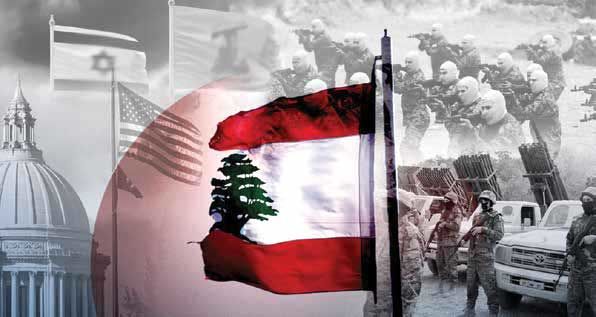
Strategic Council Online – Opinion: American-Zionist objectives in the region are not limited to weakening Hezbollah. Efforts to disarm Iraqi resistance groups such as Kata’ib Hezbollah and the Popular Mobilization Forces are also part of their subsequent plans.

Commercial Exploitation of Peace; The Gaza Committee in Confrontation with International Legitimacy

Strategic Council Online – Report: While the second phase of the implementation of the Gaza ceasefire has begun, the establishment of the “Peace Board” chaired by Donald Trump on the sidelines of the Davos meeting (22 January 2026) has become more than a technical mechanism for reconstruction and has turned into a test for the future of the international order.
Despite the signing of the charter by 22 out of 60 invited countries, the limited presence of global leaders at the Davos ceremony and the non-acceptance of this body by the European Union and key Western countries indicate a deep divide in global perceptions of the legitimacy of this mechanism.
In this report, drawing on the analysis of Hadi Borhani, a regional affairs expert, and international data, three strategic questions are addressed: Is the Peace Board an instrument for implementing UN Security Council Resolution 2803 or a substitute for the United Nations? How does the hierarchical architecture of this committee intensify executive challenges in Gaza? And finally, can this body create sustainable peace without the cooperation of Palestinians and with the concentration of power in the hands of a single individual?

America’s Zero-Sum Game in Iraq

Online Strategic Council – Memoir: The swift selection of Nouri al-Maliki for the premiership constitutes a new phase in Iraq’s political sphere. Multiple factors have played a role in this process, the most important being the prevailing situation in Iraq and the region. Under such circumstances, Iraq requires a powerful and experienced prime minister who can keep the country away from the dangers of wars and crises.

America’s Strategy for Creating Tension in the Asia-Pacific

Strategic Council Online – Opinion: Relations between some countries in the Asia-Pacific region, such as China and Japan or China and Australia, which were previously relatively normal, are trending towards deterioration, and the primary reason for this is the aggressive policies of the United States of America.

Loading

Últimas publicaciones

The Security Equation of Southern Lebanon for the Zionist Regime

Strategic Council Online – Opinion: American-Zionist objectives in the region are not limited to weakening Hezbollah. Efforts to disarm Iraqi resistance groups such as Kata’ib Hezbollah and the Popular Mobilization Forces are also part of their subsequent plans.

Commercial Exploitation of Peace; The Gaza Committee in Confrontation with International Legitimacy

Strategic Council Online – Report: While the second phase of the implementation of the Gaza ceasefire has begun, the establishment of the “Peace Board” chaired by Donald Trump on the sidelines of the Davos meeting (22 January 2026) has become more than a technical mechanism for reconstruction and has turned into a test for the future of the international order.
Despite the signing of the charter by 22 out of 60 invited countries, the limited presence of global leaders at the Davos ceremony and the non-acceptance of this body by the European Union and key Western countries indicate a deep divide in global perceptions of the legitimacy of this mechanism.
In this report, drawing on the analysis of Hadi Borhani, a regional affairs expert, and international data, three strategic questions are addressed: Is the Peace Board an instrument for implementing UN Security Council Resolution 2803 or a substitute for the United Nations? How does the hierarchical architecture of this committee intensify executive challenges in Gaza? And finally, can this body create sustainable peace without the cooperation of Palestinians and with the concentration of power in the hands of a single individual?

America’s Zero-Sum Game in Iraq

Online Strategic Council – Memoir: The swift selection of Nouri al-Maliki for the premiership constitutes a new phase in Iraq’s political sphere. Multiple factors have played a role in this process, the most important being the prevailing situation in Iraq and the region. Under such circumstances, Iraq requires a powerful and experienced prime minister who can keep the country away from the dangers of wars and crises.

America’s Strategy for Creating Tension in the Asia-Pacific

Strategic Council Online – Opinion: Relations between some countries in the Asia-Pacific region, such as China and Japan or China and Australia, which were previously relatively normal, are trending towards deterioration, and the primary reason for this is the aggressive policies of the United States of America.

Loading

DERNIER CONTENU

The Security Equation of Southern Lebanon for the Zionist Regime

Strategic Council Online – Opinion: American-Zionist objectives in the region are not limited to weakening Hezbollah. Efforts to disarm Iraqi resistance groups such as Kata’ib Hezbollah and the Popular Mobilization Forces are also part of their subsequent plans.

Commercial Exploitation of Peace; The Gaza Committee in Confrontation with International Legitimacy

Strategic Council Online – Report: While the second phase of the implementation of the Gaza ceasefire has begun, the establishment of the “Peace Board” chaired by Donald Trump on the sidelines of the Davos meeting (22 January 2026) has become more than a technical mechanism for reconstruction and has turned into a test for the future of the international order.
Despite the signing of the charter by 22 out of 60 invited countries, the limited presence of global leaders at the Davos ceremony and the non-acceptance of this body by the European Union and key Western countries indicate a deep divide in global perceptions of the legitimacy of this mechanism.
In this report, drawing on the analysis of Hadi Borhani, a regional affairs expert, and international data, three strategic questions are addressed: Is the Peace Board an instrument for implementing UN Security Council Resolution 2803 or a substitute for the United Nations? How does the hierarchical architecture of this committee intensify executive challenges in Gaza? And finally, can this body create sustainable peace without the cooperation of Palestinians and with the concentration of power in the hands of a single individual?

America’s Zero-Sum Game in Iraq

Online Strategic Council – Memoir: The swift selection of Nouri al-Maliki for the premiership constitutes a new phase in Iraq’s political sphere. Multiple factors have played a role in this process, the most important being the prevailing situation in Iraq and the region. Under such circumstances, Iraq requires a powerful and experienced prime minister who can keep the country away from the dangers of wars and crises.

America’s Strategy for Creating Tension in the Asia-Pacific

Strategic Council Online – Opinion: Relations between some countries in the Asia-Pacific region, such as China and Japan or China and Australia, which were previously relatively normal, are trending towards deterioration, and the primary reason for this is the aggressive policies of the United States of America.

Loading

DERNIER CONTENU

The Security Equation of Southern Lebanon for the Zionist Regime

Strategic Council Online – Opinion: American-Zionist objectives in the region are not limited to weakening Hezbollah. Efforts to disarm Iraqi resistance groups such as Kata’ib Hezbollah and the Popular Mobilization Forces are also part of their subsequent plans.

Commercial Exploitation of Peace; The Gaza Committee in Confrontation with International Legitimacy

Strategic Council Online – Report: While the second phase of the implementation of the Gaza ceasefire has begun, the establishment of the “Peace Board” chaired by Donald Trump on the sidelines of the Davos meeting (22 January 2026) has become more than a technical mechanism for reconstruction and has turned into a test for the future of the international order.
Despite the signing of the charter by 22 out of 60 invited countries, the limited presence of global leaders at the Davos ceremony and the non-acceptance of this body by the European Union and key Western countries indicate a deep divide in global perceptions of the legitimacy of this mechanism.
In this report, drawing on the analysis of Hadi Borhani, a regional affairs expert, and international data, three strategic questions are addressed: Is the Peace Board an instrument for implementing UN Security Council Resolution 2803 or a substitute for the United Nations? How does the hierarchical architecture of this committee intensify executive challenges in Gaza? And finally, can this body create sustainable peace without the cooperation of Palestinians and with the concentration of power in the hands of a single individual?

America’s Zero-Sum Game in Iraq

Online Strategic Council – Memoir: The swift selection of Nouri al-Maliki for the premiership constitutes a new phase in Iraq’s political sphere. Multiple factors have played a role in this process, the most important being the prevailing situation in Iraq and the region. Under such circumstances, Iraq requires a powerful and experienced prime minister who can keep the country away from the dangers of wars and crises.

America’s Strategy for Creating Tension in the Asia-Pacific

Strategic Council Online – Opinion: Relations between some countries in the Asia-Pacific region, such as China and Japan or China and Australia, which were previously relatively normal, are trending towards deterioration, and the primary reason for this is the aggressive policies of the United States of America.

Loading

DERNIER CONTENU

The Security Equation of Southern Lebanon for the Zionist Regime

Strategic Council Online – Opinion: American-Zionist objectives in the region are not limited to weakening Hezbollah. Efforts to disarm Iraqi resistance groups such as Kata’ib Hezbollah and the Popular Mobilization Forces are also part of their subsequent plans.

Commercial Exploitation of Peace; The Gaza Committee in Confrontation with International Legitimacy

Strategic Council Online – Report: While the second phase of the implementation of the Gaza ceasefire has begun, the establishment of the “Peace Board” chaired by Donald Trump on the sidelines of the Davos meeting (22 January 2026) has become more than a technical mechanism for reconstruction and has turned into a test for the future of the international order.
Despite the signing of the charter by 22 out of 60 invited countries, the limited presence of global leaders at the Davos ceremony and the non-acceptance of this body by the European Union and key Western countries indicate a deep divide in global perceptions of the legitimacy of this mechanism.
In this report, drawing on the analysis of Hadi Borhani, a regional affairs expert, and international data, three strategic questions are addressed: Is the Peace Board an instrument for implementing UN Security Council Resolution 2803 or a substitute for the United Nations? How does the hierarchical architecture of this committee intensify executive challenges in Gaza? And finally, can this body create sustainable peace without the cooperation of Palestinians and with the concentration of power in the hands of a single individual?

America’s Zero-Sum Game in Iraq

Online Strategic Council – Memoir: The swift selection of Nouri al-Maliki for the premiership constitutes a new phase in Iraq’s political sphere. Multiple factors have played a role in this process, the most important being the prevailing situation in Iraq and the region. Under such circumstances, Iraq requires a powerful and experienced prime minister who can keep the country away from the dangers of wars and crises.

America’s Strategy for Creating Tension in the Asia-Pacific

Strategic Council Online – Opinion: Relations between some countries in the Asia-Pacific region, such as China and Japan or China and Australia, which were previously relatively normal, are trending towards deterioration, and the primary reason for this is the aggressive policies of the United States of America.

Loading