Scenarios Ahead of Kashmir Crisis

2019/09/30 | Note, Politics, top news

Strategic Council Online: There is a scenario about Kashmir whereby in the absence of any solution, the critical situation of Muslims in Kashmir will continue until other options are found in India and Pakistan in the future. Nozar Shafiei - Subcontinent Affairs Expert

The current events in Kashmir between India and Pakistan are the outcome of what happened about a month ago when the Indian government revoked Kashmir’s autonomy. The root of this crisis, of course, goes back to many years ago, at least to 1974 when the Indian Subcontinent was divided. At that point, however, it was not made clear whether Kashmir should eventually join India or Pakistan. So, tensions and conflicts have been going on between India and Pakistan ever since.

From time to time, conflicts are exacerbated under various pretexts. In fact, Pakistan considers the break-up of the Indian Subcontinent and its national unity incomplete without annexing Kashmir. Pakistan claims that the Indian Subcontinent is divided on the basis of religion, geographical location and the will of the inhabitants of each region, and if these are our basis, Kashmir should join Pakistan.

That is why Pakistan invaded Kashmir in 1947. In contrast, India believes that in the year after Pakistan attacked Kashmir, the Indian-dominated Hindu ruler of India, Harry Singh, demanded military assistance from New Delhi and agreed that Kashmir come under the Indian control irrespective of India’s foreign and military policy. So from Delhi’s point of view, Kashmir is an integral part of India.

Also at that time, Lord Mountbatten, the governor-general of India, believed that the best way to bring about peace was for Kashmir to be controlled by India until a public vote on Kashmir’s fate takes place. Accordingly, the Indian army occupied two-thirds of Kashmir and Pakistan took control of the northern part of the state. In fact, the end of the first war between the two countries in 1949 was accompanied by the division of Kashmir and the creation of a “line of control” between the two countries. So these issues have existed in the past and caused tensions between India and Pakistan, with both countries having their own nuclear weapons.

Since the issue of Kashmir is a territorial one it is very difficult to resolve, especially as India believes that Kashmir is a domestic issue and ultimately a matter of Indian-Pakistani relations that does not allow any country or organization to enter into the dispute. Unlike India, Islamabad seeks to internationalize this issue.

Now that India has abolished Kashmir’s autonomy, rhetoric between the two countries’ authorities has intensified. In the latest reaction, the Indian Foreign Minister has declared that Pakistan’s Kashmir is part of India, and Pakistan has strongly responded to the Indian Foreign Minister’s “extremist rhetoric”.

The question now is what scenarios can be envisioned for the future of this conflict; the first scenario is Kashmir’s accession to India; the second is Kashmir’s accession to Pakistan; and the third scenario is the formation of a larger, independent Kashmir that includes both Pakistan-held and India-held Kashmir.

The third scenario includes a smaller independent Kashmir, so that the part held by India is ceded to the country and Pakistan-held Kashmir be annexed to Kashmir Valley. Then a smaller and independent Kashmir will be formed.

The fourth scenario is maintaining the status quo, i.e. accepting Kashmir as it was previously divided.

Finally, a no-solution scenario is that the critical situation of Muslims in Kashmir will continue without any solution until other alternatives are offered in the future.

Nevertheless, the ball is in the Pakistani court now, as India has taken steps to abolish Kashmir autonomy, and it is now the turn of the Islamabad government to respond, in a move, to India’s decision to abrogate Kashmir autonomy.

Of course, Pakistan seems to be in favor of settling the matter diplomatically, but India is unlikely to simply backtrack on what it has done. Because Indian Prime Minister Narendra Modi is a nationalist and those who voted for him in the parliamentary elections expected him to take the action on Kashmir. Modi in his election campaign slogans had promised voters to abrogate Kashmir autonomy. Anyways, today Kashmir can be the root of a new crisis and challenges in India-Pakistan relations.
0 Comments

Submit a Comment

Your email address will not be published. Required fields are marked *

LATEST CONTENT

America’s Zero-Sum Game in Iraq

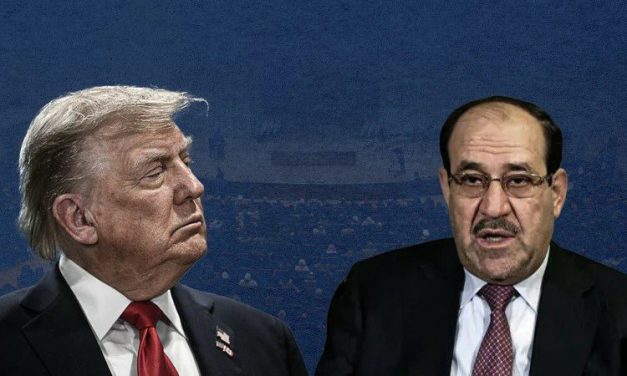
Online Strategic Council – Memoir: The swift selection of Nouri al-Maliki for the premiership constitutes a new phase in Iraq’s political sphere. Multiple factors have played a role in this process, the most important being the prevailing situation in Iraq and the region. Under such circumstances, Iraq requires a powerful and experienced prime minister who can keep the country away from the dangers of wars and crises.

America’s Strategy for Creating Tension in the Asia-Pacific

Strategic Council Online – Opinion: Relations between some countries in the Asia-Pacific region, such as China and Japan or China and Australia, which were previously relatively normal, are trending towards deterioration, and the primary reason for this is the aggressive policies of the United States of America.

The Collapse of the European Security Illusion with the Continuation of the Ukraine War?

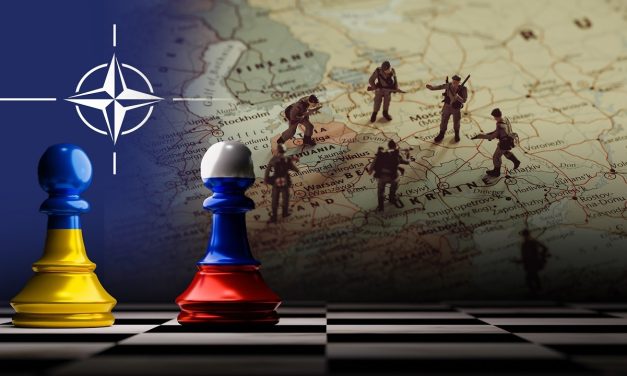
Strategic Council Online – Interview: The Ukraine war has become a new turning point in the political, security, and even commercial relations of allies on both sides of the Atlantic. While this war is nearing its fourth year, many questions still remain regarding its future and its consequences; among them, will the continuation of the Ukraine war lead to the collapse of the European security illusion?

Is Greenland Pushing Europe Toward China?

Strategic Council Online – Interview: A European affairs expert believes that the seizure of Greenland will certainly weaken America’s relations with Europe and its allies. Donald Trump’s view is that he does not need these countries, but if Europe faces significant pressure from the United States, it is natural for it to move toward China.

Alarm Bells Sound for ISIS Revival in Syria: Threat to Iraq and West Asia

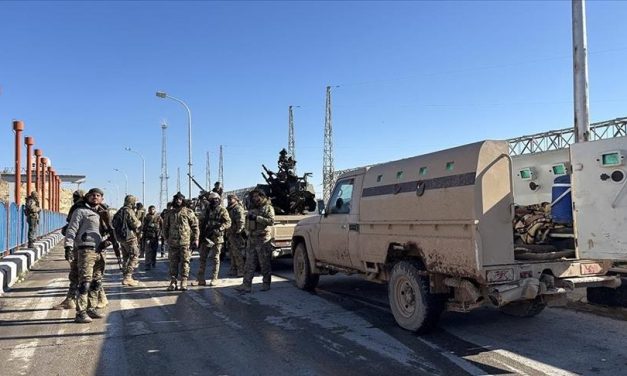
Strategic Council Online – Opinion: Numerous documents and pieces of evidence indicate that ISIS, which in recent years has been the region’s biggest threat to security and stability after the Zionist regime, has once again in recent months become a focal point for political and security exploitation by American and Zionist regime security, intelligence, and political circles.

Afghanistan’s Effective Role in the Economy of Eurasia

Strategic Council Online – Interview: A regional affairs researcher stated: Despite projects such as the Khaf-Herat railway and the Herat-Balkh-Mazar-i-Sharif corridor being on the agenda, insecurity and the absence of an inclusive government remain the most significant obstacles to realizing transit corridors and Afghanistan playing an effective role in the economy of Eurasia.

Loading

Últimas publicaciones

America’s Zero-Sum Game in Iraq

Online Strategic Council – Memoir: The swift selection of Nouri al-Maliki for the premiership constitutes a new phase in Iraq’s political sphere. Multiple factors have played a role in this process, the most important being the prevailing situation in Iraq and the region. Under such circumstances, Iraq requires a powerful and experienced prime minister who can keep the country away from the dangers of wars and crises.

America’s Strategy for Creating Tension in the Asia-Pacific

Strategic Council Online – Opinion: Relations between some countries in the Asia-Pacific region, such as China and Japan or China and Australia, which were previously relatively normal, are trending towards deterioration, and the primary reason for this is the aggressive policies of the United States of America.

The Collapse of the European Security Illusion with the Continuation of the Ukraine War?

Strategic Council Online – Interview: The Ukraine war has become a new turning point in the political, security, and even commercial relations of allies on both sides of the Atlantic. While this war is nearing its fourth year, many questions still remain regarding its future and its consequences; among them, will the continuation of the Ukraine war lead to the collapse of the European security illusion?

Is Greenland Pushing Europe Toward China?

Strategic Council Online – Interview: A European affairs expert believes that the seizure of Greenland will certainly weaken America’s relations with Europe and its allies. Donald Trump’s view is that he does not need these countries, but if Europe faces significant pressure from the United States, it is natural for it to move toward China.

Alarm Bells Sound for ISIS Revival in Syria: Threat to Iraq and West Asia

Strategic Council Online – Opinion: Numerous documents and pieces of evidence indicate that ISIS, which in recent years has been the region’s biggest threat to security and stability after the Zionist regime, has once again in recent months become a focal point for political and security exploitation by American and Zionist regime security, intelligence, and political circles.

Afghanistan’s Effective Role in the Economy of Eurasia

Strategic Council Online – Interview: A regional affairs researcher stated: Despite projects such as the Khaf-Herat railway and the Herat-Balkh-Mazar-i-Sharif corridor being on the agenda, insecurity and the absence of an inclusive government remain the most significant obstacles to realizing transit corridors and Afghanistan playing an effective role in the economy of Eurasia.

Loading

DERNIER CONTENU

America’s Zero-Sum Game in Iraq

Online Strategic Council – Memoir: The swift selection of Nouri al-Maliki for the premiership constitutes a new phase in Iraq’s political sphere. Multiple factors have played a role in this process, the most important being the prevailing situation in Iraq and the region. Under such circumstances, Iraq requires a powerful and experienced prime minister who can keep the country away from the dangers of wars and crises.

America’s Strategy for Creating Tension in the Asia-Pacific

Strategic Council Online – Opinion: Relations between some countries in the Asia-Pacific region, such as China and Japan or China and Australia, which were previously relatively normal, are trending towards deterioration, and the primary reason for this is the aggressive policies of the United States of America.

The Collapse of the European Security Illusion with the Continuation of the Ukraine War?

Strategic Council Online – Interview: The Ukraine war has become a new turning point in the political, security, and even commercial relations of allies on both sides of the Atlantic. While this war is nearing its fourth year, many questions still remain regarding its future and its consequences; among them, will the continuation of the Ukraine war lead to the collapse of the European security illusion?

Is Greenland Pushing Europe Toward China?

Strategic Council Online – Interview: A European affairs expert believes that the seizure of Greenland will certainly weaken America’s relations with Europe and its allies. Donald Trump’s view is that he does not need these countries, but if Europe faces significant pressure from the United States, it is natural for it to move toward China.

Alarm Bells Sound for ISIS Revival in Syria: Threat to Iraq and West Asia

Strategic Council Online – Opinion: Numerous documents and pieces of evidence indicate that ISIS, which in recent years has been the region’s biggest threat to security and stability after the Zionist regime, has once again in recent months become a focal point for political and security exploitation by American and Zionist regime security, intelligence, and political circles.

Afghanistan’s Effective Role in the Economy of Eurasia

Strategic Council Online – Interview: A regional affairs researcher stated: Despite projects such as the Khaf-Herat railway and the Herat-Balkh-Mazar-i-Sharif corridor being on the agenda, insecurity and the absence of an inclusive government remain the most significant obstacles to realizing transit corridors and Afghanistan playing an effective role in the economy of Eurasia.

Loading