Trump and the Humiliation of Europe in the Ukraine Crisis

2025/08/30 | interview, Politics, top news

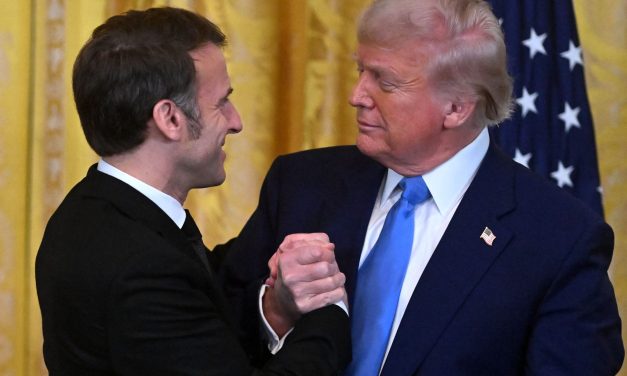
Strategic Council Online - Interview: A senior international affairs analyst stated that Trump's deal-oriented and authoritarian diplomacy, disregarding the complexities of a multipolar world, is doomed to failure. Lasting peace in Ukraine will only be possible through cooperation with Europe and respect for international law. Donald Trump, the President of the United States, with a deal-oriented approach aimed at quickly ending the war in Ukraine, has increased pressure on Europe to accept primary responsibility for that country's security guarantees. According to a Politico report, senior Pentagon officials, in meetings with European defense ministers, emphasized that the U.S. would play a minimal role in this regard, with the main burden falling on Europe. This approach, evident at the August 18 meeting in Washington with European leaders and Volodymyr Zelenskyy, highlights a deep rift in transatlantic relations. Europe, concerned about the diminishing U.S. commitments to NATO and the fragility of the peace, is seeking security independence and strengthening its own diplomacy.

Trump’s Authoritarian Diplomacy

Jalal Khoshchehreh, in an interview with the Strategic Council on Foreign Relations’ website, stated that Donald Trump’s approach to the Ukraine crisis is a sign of “the illusion of returning to the bipolar order of the Cold War.” He believes that “the U.S. President, with an authoritarian view and relying on the economic and military superiority of the United States, is trying to dictate an imposed peace not only to Ukraine but also to Europe and even Russia.”

Khoshchehreh says: “Trump imagines that with the surrender model, where the superior power imposes conditions on others, he can engineer global equations.” This analyst referred to historical examples, saying: “When the Soviet army attacked Czechoslovakia, Hungary, and Poland, the West was forced to accept this situation. But today’s world is no longer that bipolar world. The collapse of the Soviet Union and the emergence of new actors like China and West Asian countries have made the equations more complex.” This expert emphasizes that “America’s unilateral efforts to impose peace, as seen in the Alaska summit or the Washington meetings, will face resistance from Europe and even Putin.” In Khoshchehreh’s view, this authoritarian diplomacy “cannot lead to lasting peace.”

Referring to Europe’s historical role as an architect of global diplomacy, Khoshchehreh believes that Europe, contrary to Trump’s perception, cannot merely play the role of America’s assistant. He says: “Europe, especially Britain and France, with their long history in diplomacy, will not accept being marginalized.” According to the international affairs analyst, “Although Europe has been under American influence in many cases since the Cold War and even after the formation of the European Union, it will now resist an imposed peace that jeopardizes Ukraine’s territorial integrity or leads to a clear Russian victory.”

Khoshchehreh points to the London meeting and Europe’s efforts to reduce its dependence on America, adding: “Europeans, by increasing defense budgets and proposing ideas like nuclear weapons sharing, have shown that they are seeking strategic independence from America.” He believes that Britain, as the “father of global diplomacy,” and France, with its Gaullist legacy, are unlikely to submit to American hegemony and Trump’s authoritarian diplomacy. This analyst emphasizes that “Europe, especially in the Ukraine crisis, is trying to play a more active role and avoid being humiliated in peace negotiations.”

Complex Equations of Ukraine: Peace or Surrender?

According to Khoshchehreh, the Ukraine crisis, beyond a regional conflict, is an arena for the confrontation of major powers. This expert believes that “Trump’s campaign promises to end the war in a few days, a few weeks, or even a month or two are more of a show than reality.” Khoshchehreh says: “Trump is seeking the Nobel Peace Prize, but this naive view of geopolitics, where he thinks he can impose peace by relying on military and economic power, is not compatible with the realities of today’s world.”

He points to the previous diplomatic failures of Trump’s second administration, such as unimplemented agreements in Lebanon and West Asia, to failures in managing crises in Africa and Asia, and specifically the ongoing massacre in Gaza, saying: “Lasting peace requires continuous diplomacy and international consensus, not unilateral imposition.” The international affairs analyst warns that “America’s efforts to reach an agreement with Russia at the expense of Ukraine’s territorial integrity and the humiliation of Europe will not only not lead to peace but could also escalate tensions.” Khoshchehreh points to “the role of regional actors like Saudi Arabia and the UAE, which, with their pragmatic diplomacy, have refused to accept America’s imposed policies and Trump’s authoritarian diplomacy, just as Europe will ultimately not submit to Washington’s dictates for ending the war in Ukraine in favor of U.S. interests and Trump’s ill-considered goals.”

Transatlantic Relations and the Future of European Security

Khoshchehreh sees U.S.-Europe relations as the backbone of the transatlantic order but believes that Trump’s unilateral approach has endangered this relationship. Referring to the 1.2 trillion euro trade volume between the U.S. and Europe in 2022, he emphasizes that Europe is America’s largest trading partner and a key market for companies such as Apple, Google, and Tesla.

According to this expert, “Europe, despite its security dependence on NATO, has significant economic and diplomatic power and cannot be marginalized.” Khoshchehreh believes that “although  America’s efforts to create a rift between the eastern and western members of the European Union were somewhat successful, the European Union has maintained its cohesion.” He notes that “if Trump continues his authoritarian policies, Europe may move towards greater security independence, something that could fundamentally change the global order.” In conclusion, Khoshchehreh states that “Trump’s deal-oriented and authoritarian diplomacy, disregarding the complexities of a multipolar world, is doomed to failure, and lasting peace in Ukraine will only be possible through cooperation with Europe and respect for international law.”
0 Comments

LATEST CONTENT

America’s Zero-Sum Game in Iraq

Online Strategic Council – Memoir: The swift selection of Nouri al-Maliki for the premiership constitutes a new phase in Iraq’s political sphere. Multiple factors have played a role in this process, the most important being the prevailing situation in Iraq and the region. Under such circumstances, Iraq requires a powerful and experienced prime minister who can keep the country away from the dangers of wars and crises.

America’s Strategy for Creating Tension in the Asia-Pacific

Strategic Council Online – Opinion: Relations between some countries in the Asia-Pacific region, such as China and Japan or China and Australia, which were previously relatively normal, are trending towards deterioration, and the primary reason for this is the aggressive policies of the United States of America.

The Collapse of the European Security Illusion with the Continuation of the Ukraine War?

Strategic Council Online – Interview: The Ukraine war has become a new turning point in the political, security, and even commercial relations of allies on both sides of the Atlantic. While this war is nearing its fourth year, many questions still remain regarding its future and its consequences; among them, will the continuation of the Ukraine war lead to the collapse of the European security illusion?

Is Greenland Pushing Europe Toward China?

Strategic Council Online – Interview: A European affairs expert believes that the seizure of Greenland will certainly weaken America’s relations with Europe and its allies. Donald Trump’s view is that he does not need these countries, but if Europe faces significant pressure from the United States, it is natural for it to move toward China.

Alarm Bells Sound for ISIS Revival in Syria: Threat to Iraq and West Asia

Strategic Council Online – Opinion: Numerous documents and pieces of evidence indicate that ISIS, which in recent years has been the region’s biggest threat to security and stability after the Zionist regime, has once again in recent months become a focal point for political and security exploitation by American and Zionist regime security, intelligence, and political circles.

Afghanistan’s Effective Role in the Economy of Eurasia

Strategic Council Online – Interview: A regional affairs researcher stated: Despite projects such as the Khaf-Herat railway and the Herat-Balkh-Mazar-i-Sharif corridor being on the agenda, insecurity and the absence of an inclusive government remain the most significant obstacles to realizing transit corridors and Afghanistan playing an effective role in the economy of Eurasia.

Loading

Últimas publicaciones

America’s Zero-Sum Game in Iraq

Online Strategic Council – Memoir: The swift selection of Nouri al-Maliki for the premiership constitutes a new phase in Iraq’s political sphere. Multiple factors have played a role in this process, the most important being the prevailing situation in Iraq and the region. Under such circumstances, Iraq requires a powerful and experienced prime minister who can keep the country away from the dangers of wars and crises.

America’s Strategy for Creating Tension in the Asia-Pacific

Strategic Council Online – Opinion: Relations between some countries in the Asia-Pacific region, such as China and Japan or China and Australia, which were previously relatively normal, are trending towards deterioration, and the primary reason for this is the aggressive policies of the United States of America.

The Collapse of the European Security Illusion with the Continuation of the Ukraine War?

Strategic Council Online – Interview: The Ukraine war has become a new turning point in the political, security, and even commercial relations of allies on both sides of the Atlantic. While this war is nearing its fourth year, many questions still remain regarding its future and its consequences; among them, will the continuation of the Ukraine war lead to the collapse of the European security illusion?

Is Greenland Pushing Europe Toward China?

Strategic Council Online – Interview: A European affairs expert believes that the seizure of Greenland will certainly weaken America’s relations with Europe and its allies. Donald Trump’s view is that he does not need these countries, but if Europe faces significant pressure from the United States, it is natural for it to move toward China.

Alarm Bells Sound for ISIS Revival in Syria: Threat to Iraq and West Asia

Strategic Council Online – Opinion: Numerous documents and pieces of evidence indicate that ISIS, which in recent years has been the region’s biggest threat to security and stability after the Zionist regime, has once again in recent months become a focal point for political and security exploitation by American and Zionist regime security, intelligence, and political circles.

Afghanistan’s Effective Role in the Economy of Eurasia

Strategic Council Online – Interview: A regional affairs researcher stated: Despite projects such as the Khaf-Herat railway and the Herat-Balkh-Mazar-i-Sharif corridor being on the agenda, insecurity and the absence of an inclusive government remain the most significant obstacles to realizing transit corridors and Afghanistan playing an effective role in the economy of Eurasia.

Loading

DERNIER CONTENU

America’s Zero-Sum Game in Iraq

Online Strategic Council – Memoir: The swift selection of Nouri al-Maliki for the premiership constitutes a new phase in Iraq’s political sphere. Multiple factors have played a role in this process, the most important being the prevailing situation in Iraq and the region. Under such circumstances, Iraq requires a powerful and experienced prime minister who can keep the country away from the dangers of wars and crises.

America’s Strategy for Creating Tension in the Asia-Pacific

Strategic Council Online – Opinion: Relations between some countries in the Asia-Pacific region, such as China and Japan or China and Australia, which were previously relatively normal, are trending towards deterioration, and the primary reason for this is the aggressive policies of the United States of America.

The Collapse of the European Security Illusion with the Continuation of the Ukraine War?

Strategic Council Online – Interview: The Ukraine war has become a new turning point in the political, security, and even commercial relations of allies on both sides of the Atlantic. While this war is nearing its fourth year, many questions still remain regarding its future and its consequences; among them, will the continuation of the Ukraine war lead to the collapse of the European security illusion?

Is Greenland Pushing Europe Toward China?

Strategic Council Online – Interview: A European affairs expert believes that the seizure of Greenland will certainly weaken America’s relations with Europe and its allies. Donald Trump’s view is that he does not need these countries, but if Europe faces significant pressure from the United States, it is natural for it to move toward China.

Alarm Bells Sound for ISIS Revival in Syria: Threat to Iraq and West Asia

Strategic Council Online – Opinion: Numerous documents and pieces of evidence indicate that ISIS, which in recent years has been the region’s biggest threat to security and stability after the Zionist regime, has once again in recent months become a focal point for political and security exploitation by American and Zionist regime security, intelligence, and political circles.

Afghanistan’s Effective Role in the Economy of Eurasia

Strategic Council Online – Interview: A regional affairs researcher stated: Despite projects such as the Khaf-Herat railway and the Herat-Balkh-Mazar-i-Sharif corridor being on the agenda, insecurity and the absence of an inclusive government remain the most significant obstacles to realizing transit corridors and Afghanistan playing an effective role in the economy of Eurasia.

Loading