Dimensions and Negative Consequences of Netanyahu’s “Greater Israel” Idea

2025/08/26 | Note, Politics, top news

Strategic Council Online– Opinion: Netanyahu, the Prime Minister of the Zionist regime, in an interview with the i24 network, while receiving the "Promised Land" talisman from Sharon Gal, a former representative of the right-wing faction, said he is very attached to the ideal of "Greater Israel." In this interview, he emphasized that he sees himself on a historical and spiritual mission that includes generations of Jews who dreamed of coming here and generations of Jews who will come after us.

Barsam Mohammadi – Regional Affairs Expert

These statements have been met with severe condemnation among Arab countries, which see them as a threat to their sovereignty and territorial integrity. The foreign ministers of 31 Arab and Muslim countries, along with the heads of the Arab League, the Organization of Islamic Cooperation, and the Persian Gulf Cooperation Council, condemned the recent statements by the Prime Minister of the Zionist regime regarding the so-called “Greater Israel” and warned that these statements endanger Arab national security and regional stability.

The idea of “Greater Israel” (Eretz Yisrael HaShlema) refers to a historical-religious concept that defines the borders of the occupied territories known as Israel based on extreme and fabricated ideological narratives. These borders extend far beyond the recognized international borders of modern-day Israel or even the pre-1967 war borders and include areas such as the West Bank of the Jordan River, the Gaza Strip, and parts of Jordan, Syria, and Lebanon.

Although this idea has always been presented in a non-public and more limited form since the emergence of the Zionist regime, references to “Greater Israel” have become more common since the current cabinet was sworn in in 2022.

Last year, in a television documentary, footage was broadcast of Smotrich, the Finance Minister of the Israeli regime’s cabinet, supporting the expansion of the borders of the occupied territories to Damascus. He stated that Israel would gradually encompass not only all Palestinian territories but also parts of Jordan, Lebanon, Egypt, Syria, Iraq, and Saudi Arabia.

Other ministers and Knesset members have also, especially in the past year, more or less spoken about and supported this idea. Netanyahu, although he does not officially and permanently speak of annexing all these areas to Israel, except for his recent statements, has always had a profound and undeniable connection with this idea.

Netanyahu and his allies in the extreme right-wing coalitions have repeatedly used the terms Judea and Samaria instead of the West Bank in their speeches and statements and have emphasized the right of the Zionist regime’s sovereignty over these areas, which is a reflection of ideas related to “Greater Israel.”

Although Netanyahu may not explicitly speak of the immediate annexation of all the territories proposed in the form of “Greater Israel,” his policies of territorial occupation, settlement expansion, his opposition to the formation of an independent Palestinian state, and his extreme ideological discourse are all in line with consolidating the control of the usurper regime over the territories that are at the heart of the “Greater Israel” idea. Many consider his policies to be the gradual realization of this historical-religious idea, which has been one of the main obstacles to peace and a source of ongoing tension in the region.

Although this idea is far from reality and its realization is not as simple as Netanyahu imagines, merely talking about it in a situation where the region has entered a new stage of tension and conflict due to the warmongering policies of the Zionist regime reveals the grand and dangerous goals of this criminal regime.

If the Zionist regime officially puts this idea on its agenda, it could have significant consequences as follows:

First, given the widespread opposition to the “Greater Israel” idea in the Arab world, it could lead to increased isolation of the Zionist regime. Such positions would even put the Zionist regime’s traditional allies in the West in a difficult position and lead to broader international condemnation and punitive measures.

Second, regarding Palestine, since it may lead to facilitating the complete destruction of the prospect of realizing a Palestinian state, it will be met with a harsh reaction from the Palestinian resistance and significantly increase the depth and scope of armed struggle in the West Bank, the Gaza Strip, and other areas.

Third, this idea naturally helps legitimize and strengthen the discourse and axis of resistance. Naturally, as the Zionist regime moves towards realizing “Greater Israel,” resistance groups from Palestine to Yemen will see this discourse as renewed, concrete, and dangerous evidence of the expansionist nature of the Israeli regime and the necessity of armed confrontation with it.

Fourth, in Arab countries, because it directly exposes their sovereignty and national security to fundamental threats, it intensely arouses anti-Zionist sentiments and public anger in these countries, and public opinion pressures lead to the adoption of aggressive policies against the criminal regime in these countries. So much so that Arab governments, under public pressure and feeling the necessity to confront the expansionism of the Zionist regime, may be forced to strengthen their defensive capabilities or even consider more costly military options.

Meanwhile, the process of normalization of relations of some Arab countries with the Zionist regime (known as the Abraham Accords) could be completely halted or even reversed. Naturally, the continuation of such discourse by Netanyahu removes the political justification for normalization.

Fifth, and finally, the insistence of the Zionist regime on this project could act as a new factor in exacerbating regional tensions and risk igniting a new regional war with the participation of various actors.

The discourse of “Greater Israel” by Netanyahu is not merely an internal political maneuver but an explicit danger declaration for the security and stability of West Asia. This issue is a serious alarm for Arab and Islamic countries about how dangerous continued appeasement with the criminal and expansionist actions of the Zionist regime is, and how, in the short term, it can confront the security, sovereignty, and territorial integrity of these countries with fundamental threats.
0 Comments

LATEST CONTENT

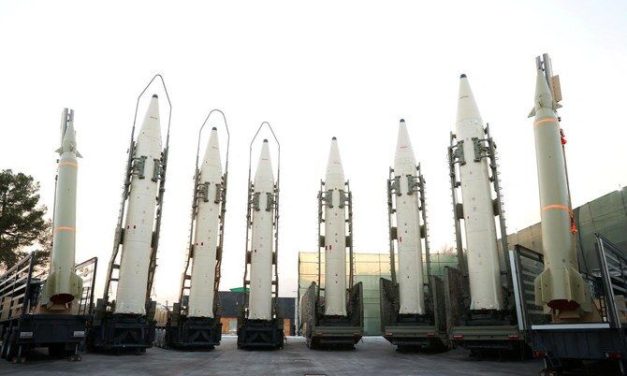
An Analysis of Iran’s Missile Capability

Strategic Council Online – Interview: A strategic affairs analyst said: Iran’s missile doctrine is not only part of its deterrent capability but also part of the security identity of the Islamic Republic of Iran and should not be weakened.

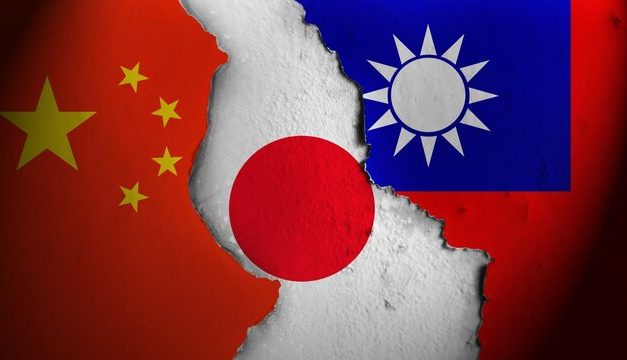
Japan-China Tensions Over Taiwan

Strategic Council Online – Interview: An international affairs expert said that U.S. President Donald Trump, in a phone call this week with Sanae Takaichi, asked her not to further escalate disputes with China. Earlier this month, Takaichi created a rare tension with Beijing by stating that “a potential Chinese attack on Taiwan could lead to military action by Japan,” remarks that drew a sharp reaction from China. Beijing demanded that she retract these statements, but the Japanese Prime Minister has not done so thus far, and Tokyo has only emphasized that its policy regarding Taiwan has not changed.

A Look at bin Salman’s Recent Trip to America

Strategic Council Online – Opinion: The recent trip of the Saudi Crown Prince to America was a targeted effort to solidify the strategic partnership with Washington, reduce political uncertainties, and strengthen Riyadh’s political role-playing.

Creating the Right Narrative: A Principled Strategy for Countering the Enemy’s Soft War

Strategic Council Online – Interview: A media expert stated: Given the intensification of the West’s soft war and psychological operations against Iran, our country’s primary strategy must be based on public education, strengthening national cohesion, developing international media, and countering the distortion of history through creating the right narrative.

F-35 Sale to Saudi Arabia: From Promise to Reality

Strategic Council Online – Interview: An international affairs analyst said: The issue of selling the F-35 to Saudi Arabia is not merely a military case, but rather part of a regional engineering that Washington is trying to advance.

Caspian Sea Water Level Drop; A Geopolitical Harm for Coastal Countries

Strategic Council Online – Interview: An expert in geopolitics stated, “The unprecedented drop in the Caspian Sea water level is not only an environmental threat but also a geopolitical alarm bell for Iran and the coastal countries, requiring urgent multilateral cooperation.”

Loading

Últimas publicaciones

An Analysis of Iran’s Missile Capability

Strategic Council Online – Interview: A strategic affairs analyst said: Iran’s missile doctrine is not only part of its deterrent capability but also part of the security identity of the Islamic Republic of Iran and should not be weakened.

Japan-China Tensions Over Taiwan

Strategic Council Online – Interview: An international affairs expert said that U.S. President Donald Trump, in a phone call this week with Sanae Takaichi, asked her not to further escalate disputes with China. Earlier this month, Takaichi created a rare tension with Beijing by stating that “a potential Chinese attack on Taiwan could lead to military action by Japan,” remarks that drew a sharp reaction from China. Beijing demanded that she retract these statements, but the Japanese Prime Minister has not done so thus far, and Tokyo has only emphasized that its policy regarding Taiwan has not changed.

A Look at bin Salman’s Recent Trip to America

Strategic Council Online – Opinion: The recent trip of the Saudi Crown Prince to America was a targeted effort to solidify the strategic partnership with Washington, reduce political uncertainties, and strengthen Riyadh’s political role-playing.

Creating the Right Narrative: A Principled Strategy for Countering the Enemy’s Soft War

Strategic Council Online – Interview: A media expert stated: Given the intensification of the West’s soft war and psychological operations against Iran, our country’s primary strategy must be based on public education, strengthening national cohesion, developing international media, and countering the distortion of history through creating the right narrative.

F-35 Sale to Saudi Arabia: From Promise to Reality

Strategic Council Online – Interview: An international affairs analyst said: The issue of selling the F-35 to Saudi Arabia is not merely a military case, but rather part of a regional engineering that Washington is trying to advance.

Caspian Sea Water Level Drop; A Geopolitical Harm for Coastal Countries

Strategic Council Online – Interview: An expert in geopolitics stated, “The unprecedented drop in the Caspian Sea water level is not only an environmental threat but also a geopolitical alarm bell for Iran and the coastal countries, requiring urgent multilateral cooperation.”

Loading

DERNIER CONTENU

An Analysis of Iran’s Missile Capability

Strategic Council Online – Interview: A strategic affairs analyst said: Iran’s missile doctrine is not only part of its deterrent capability but also part of the security identity of the Islamic Republic of Iran and should not be weakened.

Japan-China Tensions Over Taiwan

Strategic Council Online – Interview: An international affairs expert said that U.S. President Donald Trump, in a phone call this week with Sanae Takaichi, asked her not to further escalate disputes with China. Earlier this month, Takaichi created a rare tension with Beijing by stating that “a potential Chinese attack on Taiwan could lead to military action by Japan,” remarks that drew a sharp reaction from China. Beijing demanded that she retract these statements, but the Japanese Prime Minister has not done so thus far, and Tokyo has only emphasized that its policy regarding Taiwan has not changed.

A Look at bin Salman’s Recent Trip to America

Strategic Council Online – Opinion: The recent trip of the Saudi Crown Prince to America was a targeted effort to solidify the strategic partnership with Washington, reduce political uncertainties, and strengthen Riyadh’s political role-playing.

Creating the Right Narrative: A Principled Strategy for Countering the Enemy’s Soft War

Strategic Council Online – Interview: A media expert stated: Given the intensification of the West’s soft war and psychological operations against Iran, our country’s primary strategy must be based on public education, strengthening national cohesion, developing international media, and countering the distortion of history through creating the right narrative.

F-35 Sale to Saudi Arabia: From Promise to Reality

Strategic Council Online – Interview: An international affairs analyst said: The issue of selling the F-35 to Saudi Arabia is not merely a military case, but rather part of a regional engineering that Washington is trying to advance.

Caspian Sea Water Level Drop; A Geopolitical Harm for Coastal Countries

Strategic Council Online – Interview: An expert in geopolitics stated, “The unprecedented drop in the Caspian Sea water level is not only an environmental threat but also a geopolitical alarm bell for Iran and the coastal countries, requiring urgent multilateral cooperation.”

Loading