Prohibition of Attacks on Nuclear Facilities in International Law and Consequences of Violation

2025/07/01 | Note, Politics, top news

Strategic Council Online – Opinion: The international community has prohibited attacks on nuclear facilities for clear reasons based on lived experiences, and various legal documents have emphasized this.

Dr. Ali Karbalaei Hosseini – International Law Researcher

Among the main legal and security reasons and documents prohibiting attacks on nuclear facilities are the following:

  • Catastrophic Environmental Risks: According to Article 56 of the 1977 Additional Protocol to the Geneva Conventions, nuclear facilities are granted special protection, even during wartime, due to the dangers posed by radioactive radiation.
  • Undermining Trust in the Non-Proliferation Framework: Under Article IV of the Treaty on the Non-Proliferation of Nuclear Weapons (NPT), member states have the right to develop peaceful nuclear energy, and attacking their facilities constitutes a violation of this right.
  • Threat to Global Security: The IAEA, in the second version of INFCIRC/225 in 1981, emphasized that attacks on nuclear facilities could escalate international crises.

Historical Examples of Violating This Prohibition

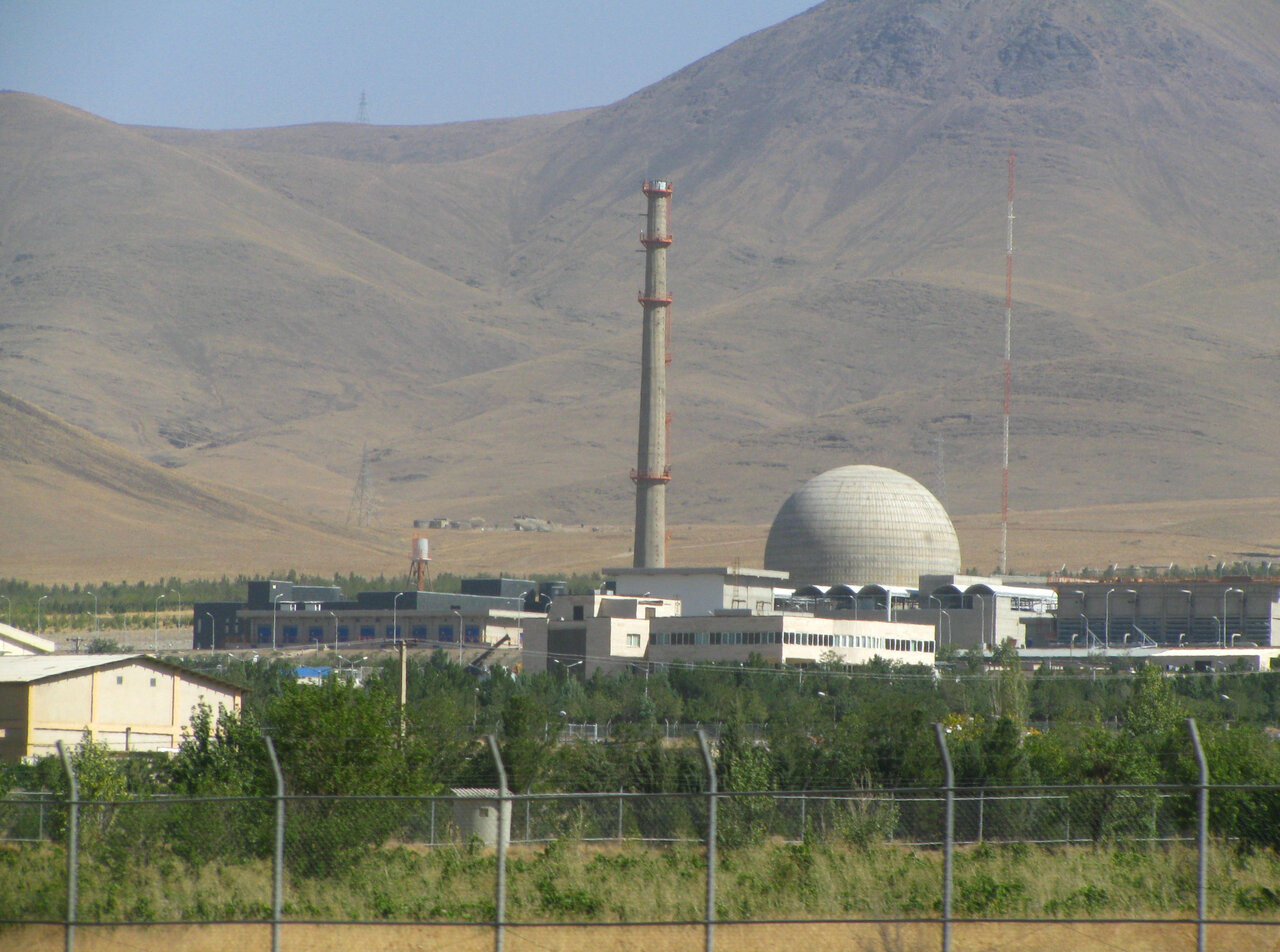
Despite the prohibition mentioned above, historical records show that aggressive regimes have no hesitation in violating international law and even committing war crimes, as responsible international institutions have failed to act as they should. In addition to the recent joint aggression by the Zionist regime and the U.S. against Iran’s peaceful nuclear facilities and the inaction of the UN Security Council and the IAEA in condemning this blatant violation, other historical precedents include:

  • Iraq’s Attack on Iran’s Nuclear Facilities (1980-1988): During the imposed war by Iraq against Iran, Saddam’s regime bombed the Tehran research reactor and other Iranian nuclear facilities multiple times. Although the UN condemned these attacks, no practical action was taken.
  • Israel’s Attack on Iraq’s Osirak Reactor (1981): The Israeli regime bombed the Osirak reactor. Although the Security Council condemned this act in Resolution 487 (1981), no sanctions or penalties were imposed on Israel.
  • Assassination of Iran’s Nuclear Scientists: While assassination is not a direct attack on facilities, according to the IAEA’s report on Iran (GOV/2011/65), such actions can undermine the NPT framework.

A review of these historical cases reveals that the UN has taken a passive approach in defending the nuclear rights of member states. Even if we consider the Security Council’s condemnations of the Zionist regime and Iraq, we now witness the UN’s decline in performance following the Zionist regime’s attack on Iran’s nuclear facilities, as it has failed to issue even a formal condemnation.

The Right to Withdraw from the NPT in Case of Attacks on Nuclear Facilities and the IAEA’s Silence

Like other international treaties, the NPT grants member states the right to withdraw. According to Article X of the NPT, member states are permitted to withdraw from the treaty in the event of “extraordinary events jeopardizing their supreme interests.” Based on existing records, an attack on a country’s nuclear facilities can be considered such a threat, especially if:

  • The Security Council and the IAEA fail to fulfill their obligations (as per UNSC Resolution 1540, which emphasizes the protection of nuclear facilities).
  • The aggressor regime acts without international authorization (such as the joint attack by the Zionist regime and the U.S. on Iran’s nuclear facilities).

To date, the only historical case of withdrawal from the NPT is that of North Korea. Pyongyang withdrew in 2003 following U.S. accusations and the IAEA’s delay in investigating the claims.

Iran’s Parliament Suspends Cooperation with the IAEA

After years of Iran’s unwavering cooperation with the IAEA, the Islamic Consultative Assembly (Iran’s Parliament) passed a bill on 4 Tir 1404 (June 25, 2025) suspending cooperation with the agency. According to this bill, “IAEA inspectors are not permitted to enter the country for inspections unless the security of Iran’s nuclear facilities and peaceful nuclear activities is guaranteed, and this is subject to approval by the Supreme National Security Council.”

The IAEA’s Violation of Confidentiality and Espionage Risks

Under Article VIII of the IAEA Statute, the Agency is obligated to protect the confidential information of its Member States. Additionally, the IAEA Director General, under the Confidentiality Regulations (INFCIRC/263), is prohibited from disclosing information without the consent of a member state. However, despite these obligations, over the years, sensitive details about Iran’s nuclear program have been leaked from the IAEA without the agency taking measures to prevent such violations.

Two notable cases of unlawful information disclosure by the IAEA include:

  • Iran’s Nuclear Dossier (2009-2012): Some reports indicate that Iran’s confidential documents were informally leaked to the media. Iran officially condemned this in a letter to the IAEA Board of Governors (GOV/2012/8).
  • Iraq’s Dossier (1991-2003): Some analysts believe IAEA information was shared with the U.S., providing a pretext for the attack on Iraq.

Is There a Mechanism to Hold the IAEA Accountable for Espionage?

  • Filing a Complaint with the Board of Governors: States can report violations by the Director General to the Board under Article XII of the IAEA Statute.
  • Referral to the UN Security Council: In cases of severe violations, the Board can refer the matter to the Security Council.
  • Suspending Cooperation with the IAEA: States can limit cooperation in response to the IAEA’s misconduct, as Iran did in reducing its JCPOA commitments in 2019. The recent parliamentary bill is also based on this approach.

Weakening of the NPT if Member States’ Nuclear Programs Are Endangered

International law and the NPT remain viable only as long as they ensure the security of member states’ nuclear programs. If attacks on nuclear facilities go unanswered or the IAEA fails to protect confidential information, countries will have no incentive to remain in the NPT. Cases like North Korea and Iran’s threats indicate that the gradual death of the NPT is not unlikely if injustices persist. International law and the NPT only hold meaning under a balance of power and security guarantees; otherwise, countries will be driven to exit the non-proliferation regime.
0 Comments

LATEST CONTENT

An Analysis of Iran’s Missile Capability

Strategic Council Online – Interview: A strategic affairs analyst said: Iran’s missile doctrine is not only part of its deterrent capability but also part of the security identity of the Islamic Republic of Iran and should not be weakened.

Japan-China Tensions Over Taiwan

Strategic Council Online – Interview: An international affairs expert said that U.S. President Donald Trump, in a phone call this week with Sanae Takaichi, asked her not to further escalate disputes with China. Earlier this month, Takaichi created a rare tension with Beijing by stating that “a potential Chinese attack on Taiwan could lead to military action by Japan,” remarks that drew a sharp reaction from China. Beijing demanded that she retract these statements, but the Japanese Prime Minister has not done so thus far, and Tokyo has only emphasized that its policy regarding Taiwan has not changed.

A Look at bin Salman’s Recent Trip to America

Strategic Council Online – Opinion: The recent trip of the Saudi Crown Prince to America was a targeted effort to solidify the strategic partnership with Washington, reduce political uncertainties, and strengthen Riyadh’s political role-playing.

Creating the Right Narrative: A Principled Strategy for Countering the Enemy’s Soft War

Strategic Council Online – Interview: A media expert stated: Given the intensification of the West’s soft war and psychological operations against Iran, our country’s primary strategy must be based on public education, strengthening national cohesion, developing international media, and countering the distortion of history through creating the right narrative.

F-35 Sale to Saudi Arabia: From Promise to Reality

Strategic Council Online – Interview: An international affairs analyst said: The issue of selling the F-35 to Saudi Arabia is not merely a military case, but rather part of a regional engineering that Washington is trying to advance.

Caspian Sea Water Level Drop; A Geopolitical Harm for Coastal Countries

Strategic Council Online – Interview: An expert in geopolitics stated, “The unprecedented drop in the Caspian Sea water level is not only an environmental threat but also a geopolitical alarm bell for Iran and the coastal countries, requiring urgent multilateral cooperation.”

Loading

Últimas publicaciones

An Analysis of Iran’s Missile Capability

Strategic Council Online – Interview: A strategic affairs analyst said: Iran’s missile doctrine is not only part of its deterrent capability but also part of the security identity of the Islamic Republic of Iran and should not be weakened.

Japan-China Tensions Over Taiwan

Strategic Council Online – Interview: An international affairs expert said that U.S. President Donald Trump, in a phone call this week with Sanae Takaichi, asked her not to further escalate disputes with China. Earlier this month, Takaichi created a rare tension with Beijing by stating that “a potential Chinese attack on Taiwan could lead to military action by Japan,” remarks that drew a sharp reaction from China. Beijing demanded that she retract these statements, but the Japanese Prime Minister has not done so thus far, and Tokyo has only emphasized that its policy regarding Taiwan has not changed.

A Look at bin Salman’s Recent Trip to America

Strategic Council Online – Opinion: The recent trip of the Saudi Crown Prince to America was a targeted effort to solidify the strategic partnership with Washington, reduce political uncertainties, and strengthen Riyadh’s political role-playing.

Creating the Right Narrative: A Principled Strategy for Countering the Enemy’s Soft War

Strategic Council Online – Interview: A media expert stated: Given the intensification of the West’s soft war and psychological operations against Iran, our country’s primary strategy must be based on public education, strengthening national cohesion, developing international media, and countering the distortion of history through creating the right narrative.

F-35 Sale to Saudi Arabia: From Promise to Reality

Strategic Council Online – Interview: An international affairs analyst said: The issue of selling the F-35 to Saudi Arabia is not merely a military case, but rather part of a regional engineering that Washington is trying to advance.

Caspian Sea Water Level Drop; A Geopolitical Harm for Coastal Countries

Strategic Council Online – Interview: An expert in geopolitics stated, “The unprecedented drop in the Caspian Sea water level is not only an environmental threat but also a geopolitical alarm bell for Iran and the coastal countries, requiring urgent multilateral cooperation.”

Loading

DERNIER CONTENU

An Analysis of Iran’s Missile Capability

Strategic Council Online – Interview: A strategic affairs analyst said: Iran’s missile doctrine is not only part of its deterrent capability but also part of the security identity of the Islamic Republic of Iran and should not be weakened.

Japan-China Tensions Over Taiwan

Strategic Council Online – Interview: An international affairs expert said that U.S. President Donald Trump, in a phone call this week with Sanae Takaichi, asked her not to further escalate disputes with China. Earlier this month, Takaichi created a rare tension with Beijing by stating that “a potential Chinese attack on Taiwan could lead to military action by Japan,” remarks that drew a sharp reaction from China. Beijing demanded that she retract these statements, but the Japanese Prime Minister has not done so thus far, and Tokyo has only emphasized that its policy regarding Taiwan has not changed.

A Look at bin Salman’s Recent Trip to America

Strategic Council Online – Opinion: The recent trip of the Saudi Crown Prince to America was a targeted effort to solidify the strategic partnership with Washington, reduce political uncertainties, and strengthen Riyadh’s political role-playing.

Creating the Right Narrative: A Principled Strategy for Countering the Enemy’s Soft War

Strategic Council Online – Interview: A media expert stated: Given the intensification of the West’s soft war and psychological operations against Iran, our country’s primary strategy must be based on public education, strengthening national cohesion, developing international media, and countering the distortion of history through creating the right narrative.

F-35 Sale to Saudi Arabia: From Promise to Reality

Strategic Council Online – Interview: An international affairs analyst said: The issue of selling the F-35 to Saudi Arabia is not merely a military case, but rather part of a regional engineering that Washington is trying to advance.

Caspian Sea Water Level Drop; A Geopolitical Harm for Coastal Countries

Strategic Council Online – Interview: An expert in geopolitics stated, “The unprecedented drop in the Caspian Sea water level is not only an environmental threat but also a geopolitical alarm bell for Iran and the coastal countries, requiring urgent multilateral cooperation.”

Loading