An Analysis of Recent Developments in Egypt-Turkiye Relations, Its Implications

2024/09/15 | Note, Politics, top news

Strategic Council Online – Opinion: Egypt and Türkiye are going through a developing relationship. In the past seven months, we have witnessed two "important developments" in the relations between Türkiye and Egypt. First, Erdoğan's visit to Egypt in February was done for the first time after the 2013 events in Egypt and Morsi's removal from power. Second, the recent visit of Egyptian President Sisi to Turkey in September 1403), which took place after 12 years, can be considered very important and the beginning of a new phase in Egypt-Turkey relations.

Hamid Khoshayand – an expert on regional issues

Relations between Egypt and Turkey were severed in 2013 after Sisi, the head of the Joint Chiefs of Staff at the time, ousted Mohamed Morsi, the president of the Brotherhood of Egypt and a great ally of Erdogan. After this incident, Erdogan swore that he would “never” talk to “someone like him” (Sisi). However, the process of normalizing relations between the two countries started during the 2022 World Cup, when the presidents of the two countries met in Doha for the first time after many years at the initiative of the Emir of Qatar.

Regarding the resumption of Ankara-Cairo relations, there are points, the most important of which are as follows:

One, the ten-year tension in Turkey-Egypt relations has primarily been in political and diplomatic relations. In other fields, especially the economy, commercial and trade ties have continued to grow, although cautiously. During this period, based on statistics, Ankara was Cairo’s fifth trading partner.

Two, Resuming Turkey’s relations with Egypt is part of Erdogan’s “step-by-step normalization” policy, prioritizing improving and strengthening relations with Arab countries.

Three: Although Türkiye seeks “normalization of relations,” it does not seek “strategic relations” with Egypt. There are two clear reasons why Türkiye is not seeking to establish strategic relations with Egypt at the moment:

First, the challenges and obstacles to improving relations are serious and important. For example, the two countries continue to compete over how to draw water borders in the Mediterranean Sea and in eastern Libya. Egypt considers eastern Libya its strategic depth. On the other hand, Turkey has a strategic and geostrategic view of eastern Libya due to the extension of maritime borders.

Second, upgrading relations from a normal level to a strategic one requires political, military, security, and economic “deep ties” and “common understanding” regarding bilateral issues and taking long and serious steps. The function of strategic relations is to strengthen the security of partners, promote interests in the outside world, and confront the common enemy. In dozens of other cases, such issues will not be discussed in Ankara-Cairo relations even for years to come.

Four; Regarding the effective factors in normalizing relations between Turkey and Egypt, the role of the private sector and “mutual economic interests” as one of the main drivers, especially from Ankara, is prominent and important.

Egypt is a large Arab and African country whose stability and economic development depend on “investment” and foreign aid. This issue is considered a unique opportunity for Turkish economic companies that are involved with economic issues and problems due to the high cost of production. This issue is so important for Turkish investors that they have invested more than 3 billion dollars in Egypt since the beginning of normalization, which is not more than a year.

Meanwhile, Egypt’s economy, facing financial and economic pressures, benefits more from cooperation with Turkey. Attracting Turkish businessmen to Egypt’s capital market significantly contributes to the troubled economy, even in a situation where aid from former allies such as Saudi Arabia and the UAE has stopped.

In addition, economic relations with Türkiye can modernize and develop Egypt’s military and defense capabilities. Cooperation with Turkiye provides special opportunities for the “Egyptian workforce” to work on Turkey’s reconstruction projects in Libya and other areas. The joint development of natural gas resources in the Mediterranean Sea is another economic opportunity for Egypt.

Five; In the field of foreign policy, in addition to the necessities arising from the developments of the Gaza war and the need for synergy between Turkey and Egypt in this field, the “Libya case” is one of the important drivers for improving the relations between the Turkish government and Egypt, which of course is one of Cairo’s priorities.

The consequences of the conflict in Libya have brought the two sides to the “understanding” that an agreement in Libya is only possible through peace and reconciliation. If this issue is resolved, it will definitely have outstanding achievements for Turkey, Egypt, and the Libyan people, whose effects will be visible in various energy sectors, industries, commerce, construction, labor, etc.

Final point: Despite the improvement of the relations between the two countries and the progress and important results that have been achieved in the political, economic, commercial, etc. fields, the Egyptian government is still concerned about the situation of the Muslim Brotherhood in Turkey, so it prefers to wait until the concerns caused by the activities of the Brotherhood are resolved. Turkey continues to proceed with “caution”.

The recent behavior of the Turkish government towards the Brotherhood also shows that this issue can be overshadowed by Ankara’s relations with Egypt and become subordinate to it, not in an absolute and complete way, but in “necessary” and “emergency” situations. Also, the cancellation of the citizenship of several Brotherhood leaders in Turkey immediately after Erdogan’s return from his trip to Egypt and their expulsion from Turkey shows that with the progress in the relations between Ankara and Cairo, the situation of the Brotherhood is more strongly influenced by the interests of Turkey and Egypt and based on the changing regional conditions.
0 Comments

LATEST CONTENT

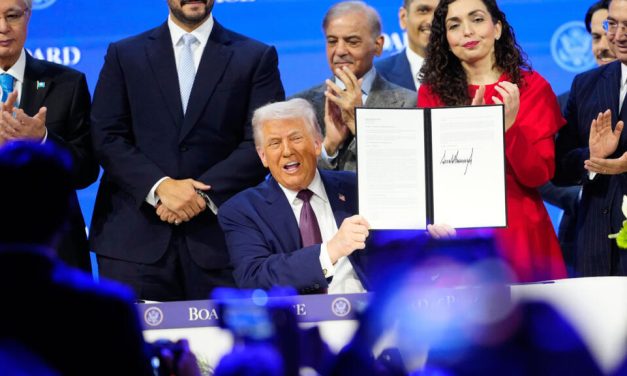
Commercial Exploitation of Peace; The Gaza Committee in Confrontation with International Legitimacy

Strategic Council Online – Report: While the second phase of the implementation of the Gaza ceasefire has begun, the establishment of the “Peace Board” chaired by Donald Trump on the sidelines of the Davos meeting (22 January 2026) has become more than a technical mechanism for reconstruction and has turned into a test for the future of the international order.
Despite the signing of the charter by 22 out of 60 invited countries, the limited presence of global leaders at the Davos ceremony and the non-acceptance of this body by the European Union and key Western countries indicate a deep divide in global perceptions of the legitimacy of this mechanism.
In this report, drawing on the analysis of Hadi Borhani, a regional affairs expert, and international data, three strategic questions are addressed: Is the Peace Board an instrument for implementing UN Security Council Resolution 2803 or a substitute for the United Nations? How does the hierarchical architecture of this committee intensify executive challenges in Gaza? And finally, can this body create sustainable peace without the cooperation of Palestinians and with the concentration of power in the hands of a single individual?

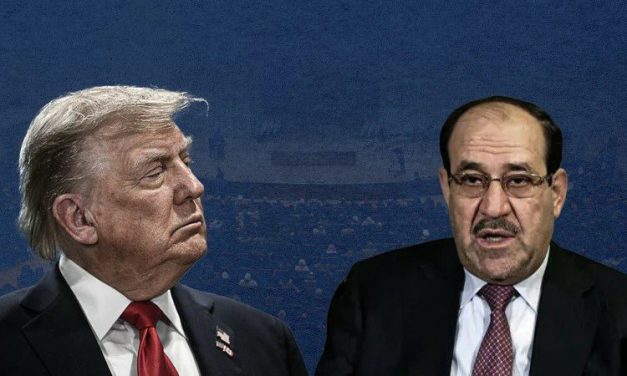
America’s Zero-Sum Game in Iraq

Online Strategic Council – Memoir: The swift selection of Nouri al-Maliki for the premiership constitutes a new phase in Iraq’s political sphere. Multiple factors have played a role in this process, the most important being the prevailing situation in Iraq and the region. Under such circumstances, Iraq requires a powerful and experienced prime minister who can keep the country away from the dangers of wars and crises.

America’s Strategy for Creating Tension in the Asia-Pacific

Strategic Council Online – Opinion: Relations between some countries in the Asia-Pacific region, such as China and Japan or China and Australia, which were previously relatively normal, are trending towards deterioration, and the primary reason for this is the aggressive policies of the United States of America.

The Collapse of the European Security Illusion with the Continuation of the Ukraine War?

Strategic Council Online – Interview: The Ukraine war has become a new turning point in the political, security, and even commercial relations of allies on both sides of the Atlantic. While this war is nearing its fourth year, many questions still remain regarding its future and its consequences; among them, will the continuation of the Ukraine war lead to the collapse of the European security illusion?

Is Greenland Pushing Europe Toward China?

Strategic Council Online – Interview: A European affairs expert believes that the seizure of Greenland will certainly weaken America’s relations with Europe and its allies. Donald Trump’s view is that he does not need these countries, but if Europe faces significant pressure from the United States, it is natural for it to move toward China.

Alarm Bells Sound for ISIS Revival in Syria: Threat to Iraq and West Asia

Strategic Council Online – Opinion: Numerous documents and pieces of evidence indicate that ISIS, which in recent years has been the region’s biggest threat to security and stability after the Zionist regime, has once again in recent months become a focal point for political and security exploitation by American and Zionist regime security, intelligence, and political circles.

Afghanistan’s Effective Role in the Economy of Eurasia

Strategic Council Online – Interview: A regional affairs researcher stated: Despite projects such as the Khaf-Herat railway and the Herat-Balkh-Mazar-i-Sharif corridor being on the agenda, insecurity and the absence of an inclusive government remain the most significant obstacles to realizing transit corridors and Afghanistan playing an effective role in the economy of Eurasia.

Loading

Últimas publicaciones

Commercial Exploitation of Peace; The Gaza Committee in Confrontation with International Legitimacy

Strategic Council Online – Report: While the second phase of the implementation of the Gaza ceasefire has begun, the establishment of the “Peace Board” chaired by Donald Trump on the sidelines of the Davos meeting (22 January 2026) has become more than a technical mechanism for reconstruction and has turned into a test for the future of the international order.
Despite the signing of the charter by 22 out of 60 invited countries, the limited presence of global leaders at the Davos ceremony and the non-acceptance of this body by the European Union and key Western countries indicate a deep divide in global perceptions of the legitimacy of this mechanism.
In this report, drawing on the analysis of Hadi Borhani, a regional affairs expert, and international data, three strategic questions are addressed: Is the Peace Board an instrument for implementing UN Security Council Resolution 2803 or a substitute for the United Nations? How does the hierarchical architecture of this committee intensify executive challenges in Gaza? And finally, can this body create sustainable peace without the cooperation of Palestinians and with the concentration of power in the hands of a single individual?

America’s Zero-Sum Game in Iraq

Online Strategic Council – Memoir: The swift selection of Nouri al-Maliki for the premiership constitutes a new phase in Iraq’s political sphere. Multiple factors have played a role in this process, the most important being the prevailing situation in Iraq and the region. Under such circumstances, Iraq requires a powerful and experienced prime minister who can keep the country away from the dangers of wars and crises.

America’s Strategy for Creating Tension in the Asia-Pacific

Strategic Council Online – Opinion: Relations between some countries in the Asia-Pacific region, such as China and Japan or China and Australia, which were previously relatively normal, are trending towards deterioration, and the primary reason for this is the aggressive policies of the United States of America.

The Collapse of the European Security Illusion with the Continuation of the Ukraine War?

Strategic Council Online – Interview: The Ukraine war has become a new turning point in the political, security, and even commercial relations of allies on both sides of the Atlantic. While this war is nearing its fourth year, many questions still remain regarding its future and its consequences; among them, will the continuation of the Ukraine war lead to the collapse of the European security illusion?

Is Greenland Pushing Europe Toward China?

Strategic Council Online – Interview: A European affairs expert believes that the seizure of Greenland will certainly weaken America’s relations with Europe and its allies. Donald Trump’s view is that he does not need these countries, but if Europe faces significant pressure from the United States, it is natural for it to move toward China.

Alarm Bells Sound for ISIS Revival in Syria: Threat to Iraq and West Asia

Strategic Council Online – Opinion: Numerous documents and pieces of evidence indicate that ISIS, which in recent years has been the region’s biggest threat to security and stability after the Zionist regime, has once again in recent months become a focal point for political and security exploitation by American and Zionist regime security, intelligence, and political circles.

Afghanistan’s Effective Role in the Economy of Eurasia

Strategic Council Online – Interview: A regional affairs researcher stated: Despite projects such as the Khaf-Herat railway and the Herat-Balkh-Mazar-i-Sharif corridor being on the agenda, insecurity and the absence of an inclusive government remain the most significant obstacles to realizing transit corridors and Afghanistan playing an effective role in the economy of Eurasia.

Loading

DERNIER CONTENU

Commercial Exploitation of Peace; The Gaza Committee in Confrontation with International Legitimacy

Strategic Council Online – Report: While the second phase of the implementation of the Gaza ceasefire has begun, the establishment of the “Peace Board” chaired by Donald Trump on the sidelines of the Davos meeting (22 January 2026) has become more than a technical mechanism for reconstruction and has turned into a test for the future of the international order.
Despite the signing of the charter by 22 out of 60 invited countries, the limited presence of global leaders at the Davos ceremony and the non-acceptance of this body by the European Union and key Western countries indicate a deep divide in global perceptions of the legitimacy of this mechanism.
In this report, drawing on the analysis of Hadi Borhani, a regional affairs expert, and international data, three strategic questions are addressed: Is the Peace Board an instrument for implementing UN Security Council Resolution 2803 or a substitute for the United Nations? How does the hierarchical architecture of this committee intensify executive challenges in Gaza? And finally, can this body create sustainable peace without the cooperation of Palestinians and with the concentration of power in the hands of a single individual?

America’s Zero-Sum Game in Iraq

Online Strategic Council – Memoir: The swift selection of Nouri al-Maliki for the premiership constitutes a new phase in Iraq’s political sphere. Multiple factors have played a role in this process, the most important being the prevailing situation in Iraq and the region. Under such circumstances, Iraq requires a powerful and experienced prime minister who can keep the country away from the dangers of wars and crises.

America’s Strategy for Creating Tension in the Asia-Pacific

Strategic Council Online – Opinion: Relations between some countries in the Asia-Pacific region, such as China and Japan or China and Australia, which were previously relatively normal, are trending towards deterioration, and the primary reason for this is the aggressive policies of the United States of America.

The Collapse of the European Security Illusion with the Continuation of the Ukraine War?

Strategic Council Online – Interview: The Ukraine war has become a new turning point in the political, security, and even commercial relations of allies on both sides of the Atlantic. While this war is nearing its fourth year, many questions still remain regarding its future and its consequences; among them, will the continuation of the Ukraine war lead to the collapse of the European security illusion?

Is Greenland Pushing Europe Toward China?

Strategic Council Online – Interview: A European affairs expert believes that the seizure of Greenland will certainly weaken America’s relations with Europe and its allies. Donald Trump’s view is that he does not need these countries, but if Europe faces significant pressure from the United States, it is natural for it to move toward China.

Alarm Bells Sound for ISIS Revival in Syria: Threat to Iraq and West Asia

Strategic Council Online – Opinion: Numerous documents and pieces of evidence indicate that ISIS, which in recent years has been the region’s biggest threat to security and stability after the Zionist regime, has once again in recent months become a focal point for political and security exploitation by American and Zionist regime security, intelligence, and political circles.

Afghanistan’s Effective Role in the Economy of Eurasia

Strategic Council Online – Interview: A regional affairs researcher stated: Despite projects such as the Khaf-Herat railway and the Herat-Balkh-Mazar-i-Sharif corridor being on the agenda, insecurity and the absence of an inclusive government remain the most significant obstacles to realizing transit corridors and Afghanistan playing an effective role in the economy of Eurasia.

Loading