EU’s Dual and Ineffective Stance on Gaza War

2024/01/21 | interview, Politics, top news

Strategic Council Online - Interview: An expert on European affairs said: The French foreign minister recently after two Zionist ministers demanded the settlement of the people of Gaza outside of this area, stated that “it’s not up to Israel to determine the future of Gaza, which is Palestinian land."

In an interview with the website of the Strategic Council of Foreign Relations, Alireza Thamoudi said: “The European Union is one of the members of the quadrilateral committee, which was formed at the beginning of the third millennium regarding the Palestinian issue; the committee included Russia, Europe, America, and the United Nations. However, the issue that is raised is that the European Union is a marginal and secondary player in this regard. Because it is considered America’s main actor, the European Union cannot be very active in this field and is considered more of a financial donor.

According to Thamoudi, the most important position of the European Union on the issue of Palestine is the two-state solution, and the main policy of the European Union is to return to the borders of 1967 and go for the two-state solution. Therefore, all the positions of the European Union in recent years have been based on these two general views.

He emphasized: “European countries are strongly opposed to Israeli settlements in the West Bank and have even imposed sanctions in this regard.” European Union will not buy products made in those settlements. Another point is that the European Union claims that Hamas is a terrorist group, and they are against removing Hamas from the list of terrorist groups.

Pointing out that not all the EU countries have adopted a common position on the issue of Palestine, this expert said: “According to the historical records and proximity to the Zionist regime, the positions of EU states are different.”

Thamoudi explained that the Dutch foreign minister and some other European officials have also taken a position in addition to the French foreign minister. Josep Borrell, the High Representative of the European Union for Foreign Affairs and Security Policy, and Ms. Ursula von der Leyen, president of the European Commission, are among those who took a stand. Burrell said that the words of the two hardline Israeli ministers were irresponsible and provocative and a gross violation of human rights. Burrell also believes that the experience of the past 30 years has shown that the solution must be injected from outside. In the sense that the Palestinians and the Israelis themselves cannot reach an agreement and a solution must be provided from outside, but this problem must be resolved.”

The expert on European affairs stated that the European countries generally consider the attacks of the Zionist regime after the initial attack by Hamas to be self-defense, and said: “After the differences emerged between Hamas and Fatah following the parliamentary elections, the European Union made a mistake and did not accept the legitimate elections and cut off its relations with Hamas. At that time, the European Union, calling Hamas a terrorist group, made its relationship with this group conditional on Hamas discontinuing terrorist acts and recognizing the Zionist regime. Since then, relations between Hamas and the European Union have not been friendly.

Thamoudi continued: “The emphasis of the European authorities in the last few days regarding Gaza and the forced displacement of Palestinians was that they adhere to the two-state solution. In general, the Europeans have these goals in mind for Gaza: firstly, that the Zionist regime does not maintain a security presence in Gaza; secondly, that Hamas would not hold power; and finally, they are against the forced relocation of Palestinians from Gaza.

He went on to point out that the Europeans have also condemned the attacks of the Zionist regime on Gaza and emphasized that, nevertheless, European countries are not important players in the field of Palestinian developments, and the US is the decision-maker. Of course, China could also play an effective role, but its positions towards Hamas and the Zionist regime have caused it to distance itself from this regime to some extent, and it cannot play the role of a mediator. In fact, the position of the European Union in the current situation is still to support the Zionist regime but coupled with a bit of criticism against the actions of Israel towards the Palestinians.

The European issues expert emphasized: “If we look at the last 20 years, even during the Oslo and Madrid agreements made in Europe, the European Union could not be a special actor because it is a secondary actor and can only be effective in normative issues. “Also, the European Union is facing its own internal issues, and in the field of foreign policy, it has focused more on the war in Ukraine.”

He continued: “Europe’s firm stance on the war in Ukraine and the condemnation of Russia’s attacks and their relative inaction towards the war in Palestine met with reactions, and some accused Brussels of having double standards about the issue of war and human rights violations.
0 Comments

LATEST CONTENT

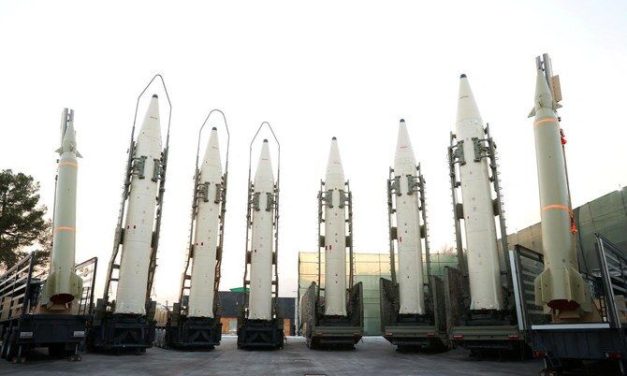
An Analysis of Iran’s Missile Capability

Strategic Council Online – Interview: A strategic affairs analyst said: Iran’s missile doctrine is not only part of its deterrent capability but also part of the security identity of the Islamic Republic of Iran and should not be weakened.

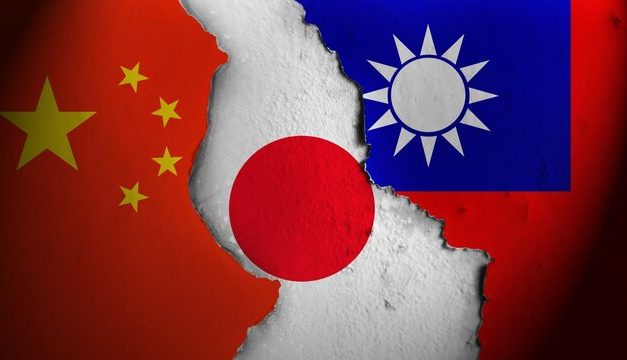
Japan-China Tensions Over Taiwan

Strategic Council Online – Interview: An international affairs expert said that U.S. President Donald Trump, in a phone call this week with Sanae Takaichi, asked her not to further escalate disputes with China. Earlier this month, Takaichi created a rare tension with Beijing by stating that “a potential Chinese attack on Taiwan could lead to military action by Japan,” remarks that drew a sharp reaction from China. Beijing demanded that she retract these statements, but the Japanese Prime Minister has not done so thus far, and Tokyo has only emphasized that its policy regarding Taiwan has not changed.

A Look at bin Salman’s Recent Trip to America

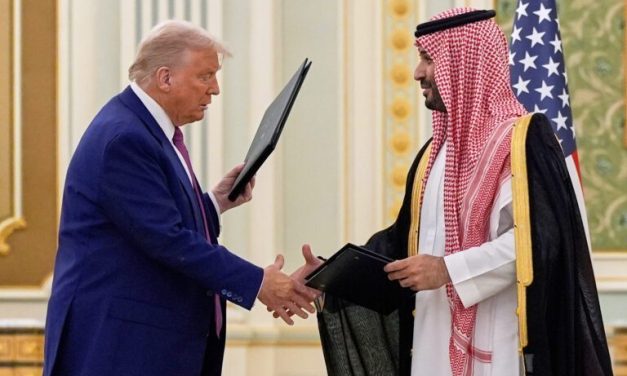
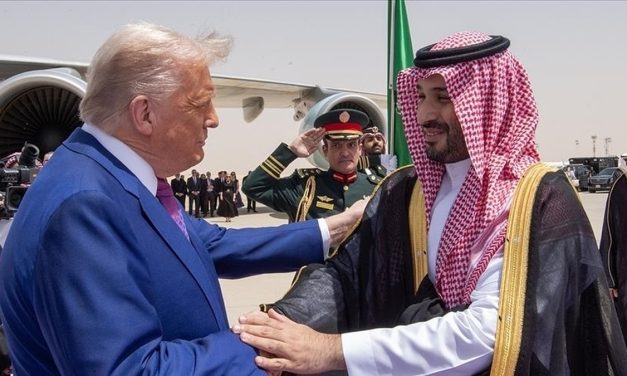
Strategic Council Online – Opinion: The recent trip of the Saudi Crown Prince to America was a targeted effort to solidify the strategic partnership with Washington, reduce political uncertainties, and strengthen Riyadh’s political role-playing.

Creating the Right Narrative: A Principled Strategy for Countering the Enemy’s Soft War

Strategic Council Online – Interview: A media expert stated: Given the intensification of the West’s soft war and psychological operations against Iran, our country’s primary strategy must be based on public education, strengthening national cohesion, developing international media, and countering the distortion of history through creating the right narrative.

F-35 Sale to Saudi Arabia: From Promise to Reality

Strategic Council Online – Interview: An international affairs analyst said: The issue of selling the F-35 to Saudi Arabia is not merely a military case, but rather part of a regional engineering that Washington is trying to advance.

Caspian Sea Water Level Drop; A Geopolitical Harm for Coastal Countries

Strategic Council Online – Interview: An expert in geopolitics stated, “The unprecedented drop in the Caspian Sea water level is not only an environmental threat but also a geopolitical alarm bell for Iran and the coastal countries, requiring urgent multilateral cooperation.”

Loading

Últimas publicaciones

An Analysis of Iran’s Missile Capability

Strategic Council Online – Interview: A strategic affairs analyst said: Iran’s missile doctrine is not only part of its deterrent capability but also part of the security identity of the Islamic Republic of Iran and should not be weakened.

Japan-China Tensions Over Taiwan

Strategic Council Online – Interview: An international affairs expert said that U.S. President Donald Trump, in a phone call this week with Sanae Takaichi, asked her not to further escalate disputes with China. Earlier this month, Takaichi created a rare tension with Beijing by stating that “a potential Chinese attack on Taiwan could lead to military action by Japan,” remarks that drew a sharp reaction from China. Beijing demanded that she retract these statements, but the Japanese Prime Minister has not done so thus far, and Tokyo has only emphasized that its policy regarding Taiwan has not changed.

A Look at bin Salman’s Recent Trip to America

Strategic Council Online – Opinion: The recent trip of the Saudi Crown Prince to America was a targeted effort to solidify the strategic partnership with Washington, reduce political uncertainties, and strengthen Riyadh’s political role-playing.

Creating the Right Narrative: A Principled Strategy for Countering the Enemy’s Soft War

Strategic Council Online – Interview: A media expert stated: Given the intensification of the West’s soft war and psychological operations against Iran, our country’s primary strategy must be based on public education, strengthening national cohesion, developing international media, and countering the distortion of history through creating the right narrative.

F-35 Sale to Saudi Arabia: From Promise to Reality

Strategic Council Online – Interview: An international affairs analyst said: The issue of selling the F-35 to Saudi Arabia is not merely a military case, but rather part of a regional engineering that Washington is trying to advance.

Caspian Sea Water Level Drop; A Geopolitical Harm for Coastal Countries

Strategic Council Online – Interview: An expert in geopolitics stated, “The unprecedented drop in the Caspian Sea water level is not only an environmental threat but also a geopolitical alarm bell for Iran and the coastal countries, requiring urgent multilateral cooperation.”

Loading

DERNIER CONTENU

An Analysis of Iran’s Missile Capability

Strategic Council Online – Interview: A strategic affairs analyst said: Iran’s missile doctrine is not only part of its deterrent capability but also part of the security identity of the Islamic Republic of Iran and should not be weakened.

Japan-China Tensions Over Taiwan

Strategic Council Online – Interview: An international affairs expert said that U.S. President Donald Trump, in a phone call this week with Sanae Takaichi, asked her not to further escalate disputes with China. Earlier this month, Takaichi created a rare tension with Beijing by stating that “a potential Chinese attack on Taiwan could lead to military action by Japan,” remarks that drew a sharp reaction from China. Beijing demanded that she retract these statements, but the Japanese Prime Minister has not done so thus far, and Tokyo has only emphasized that its policy regarding Taiwan has not changed.

A Look at bin Salman’s Recent Trip to America

Strategic Council Online – Opinion: The recent trip of the Saudi Crown Prince to America was a targeted effort to solidify the strategic partnership with Washington, reduce political uncertainties, and strengthen Riyadh’s political role-playing.

Creating the Right Narrative: A Principled Strategy for Countering the Enemy’s Soft War

Strategic Council Online – Interview: A media expert stated: Given the intensification of the West’s soft war and psychological operations against Iran, our country’s primary strategy must be based on public education, strengthening national cohesion, developing international media, and countering the distortion of history through creating the right narrative.

F-35 Sale to Saudi Arabia: From Promise to Reality

Strategic Council Online – Interview: An international affairs analyst said: The issue of selling the F-35 to Saudi Arabia is not merely a military case, but rather part of a regional engineering that Washington is trying to advance.

Caspian Sea Water Level Drop; A Geopolitical Harm for Coastal Countries

Strategic Council Online – Interview: An expert in geopolitics stated, “The unprecedented drop in the Caspian Sea water level is not only an environmental threat but also a geopolitical alarm bell for Iran and the coastal countries, requiring urgent multilateral cooperation.”

Loading