Impact of Regional Developments on the Zionist Regime’s anti-Iran Strategy

2023/07/23 | interview, Politics, top news

Strategic Council Online - Interview: An expert on the Zionist regime affairs said: A few Arab governments that pursued normalization of relations with the Zionist regime do not have the interest and haste of the past due to the changing conditions in the region and the existence of the extreme right-wing cabinet in the occupied territories.

In an interview with the website of the Strategic Council on Foreign Relations, Ali Abdi pointed out the impact of recent regional developments and improvement of relations between Iran and the countries of the region on the anti-Iranian policy of the Zionist regime and noted: Regardless of the security and military plans, the basis of the foreign policy of the Zionist regime is founded on the coalition building strategy against the Islamic Republic of Iran.

Saying that the peak of the Zionist regime’s policy of coalition building, which Netanyahu invented, was formed during the Trump era, and one of its results, unfortunately, was the assassination of General Soleimani, he added: The issues after the war in Ukraine have seriously challenged this basic strategy of the Zionist regime. If we don’t say that this macro policy has failed, we should say that under the current situation, this strategy has waned.

While emphasizing the importance of future developments and subsequent reactions of the Zionist regime, the expert on the Zionist regime affairs said: The Zionist regime’s coalition building was undertaken in two dimensions, the international and the West Asian region; for example, the so-called Arab NATO was pursued in the region in 2020, and it went a long way; but practically, the developments after the Ukraine war, the prominence of the role of Russia and China in the international order and the serious entry of China into the developments of the West Asia and Persian Gulf region, especially with the revival of relations between Iran and Saudi Arabia, suspended and stopped the Israeli regime’s foreign policy in this area.

Saying that in parallel with this path, the Israeli regime is pursuing a path to advance its goals in Central Asia, Abdi explained: The Zionist regime seeks to develop relations with the Republic of Azerbaijan and players in the Caucasus and Central Asia, especially with countries such as Turkmenistan, Kyrgyzstan, and Kazakhstan, so that, if possible, it could advance coalition building with the help of Turkey and the Republic of Azerbaijan.

He evaluated the opening of the embassy in Ashgabat, 17 kilometers from the Iranian border, and the development of relations with Tajikistan and Kazakhstan in this regard, and at the same time reminded: The capacity of the Central Asian countries is not at the same level as the Arab countries in the West Asian region; however, this region is also in Iran’s geopolitical sphere, and for this reason, serious attention should be paid to its developments and the movements of the Israeli regime.

The analyst of the Zionist regime affairs, while pointing to the strategic consequences of the cooperation between Russia and China in West Asia and the weakening of the focus and role of the United States in this region, explained the limitations of Tel Aviv in this new order and added: The Israeli regime is traditionally part of the Western bloc because it was built by it and has been under its protection for the past 75 years. Therefore, it cannot have an overnight turn towards Russia, China, or another power because then it will practically play with its existence. Therefore, it is unlikely that the Israeli regime can create an alliance with those countries against Iran in this situation.

Saying that publication of the news of Netanyahu’s visit to China has met with strong criticism among the residents of the occupied territories since they are worried that this visit will affect the relations with the United States, Abdi continued: Normalization of relations between the Israeli regime and the Arab countries of the region will be beneficial for those countries if the United States and the West continue to be the main power of the global hegemon and to maintain and stabilize relations with this hegemon, they have to pay a ransom to this player to support them and stabilize relations with the United States or not be damaged, but in the current transitional period, with the formation of a kind of multipolar order, all the equations are messed up, and we are witnessing changes in the world order and equations of international relations in the post-war situation of Ukraine.

The expert on the Zionist regime affairs said: During the Trump era, Netanyahu and the Israeli regime were very close friends and important allies of the United States in the region, and the Arab governments in the region who wanted to get close to Trump or keep him for themselves, considering his peculiar sentiments and personality instability put the discussion of closeness or normalization of relations with the Israeli regime on the agenda; but after Trump’s departure, the war in Ukraine and the disruption of the balance of power between the West and the East, the relations between Russia and the West, as well as China’s achievements in West Asia, this statement is no longer valid.

Referring to the recent relations between Saudi Arabia and the United States and the change in the country’s traditional attitude towards Washington, he reminded: The case of normalizing relations between the Arabs and the Israeli regime has not been taken off the table but has lost its particular importance. In addition, this normalization has high costs for the Arab governments.

Referring to the attempts of the Zionist regime to sabotage important industrial, military, and nuclear projects, as well as the attempt to assassinate Iran’s nuclear scientists as an important strategy of that regime against Iran to prevent and stop nuclear activities, Abdi noted: Currently, we are witnessing that Saudi Arabia is seeking nuclearization and has held negotiations for cooperation with Iran, and the Israeli regime has also expressed its opposition to Saudi Arabia’s nuclearization. Acting against Iran’s peaceful nuclear program is a warning to other countries that want to enter this path.

The analyst of the Zionist regime affairs stated: If in the past the Israeli regime’s actions against Iran’s nuclear program were met with the satisfying silence of Saudi Arabia or the UAE, now we can expect a different reaction and the costs for the Israeli regime have increased; because Iran has been a line breaker in this event and by advancing this plan, the path will be smoother for other countries; as we can see, other countries like Turkey, UAE, and Saudi Arabia want to enter into this cycle.
0 Comments

LATEST CONTENT

The Security Equation of Southern Lebanon for the Zionist Regime

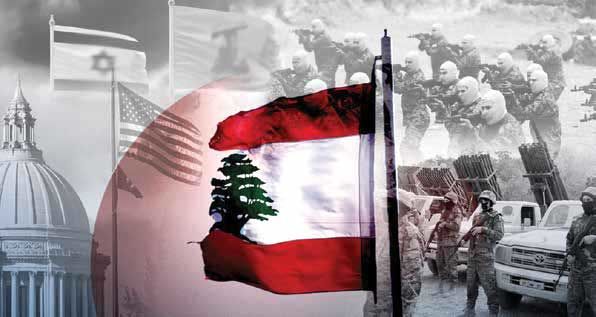
Strategic Council Online – Opinion: American-Zionist objectives in the region are not limited to weakening Hezbollah. Efforts to disarm Iraqi resistance groups such as Kata’ib Hezbollah and the Popular Mobilization Forces are also part of their subsequent plans.

Commercial Exploitation of Peace; The Gaza Committee in Confrontation with International Legitimacy

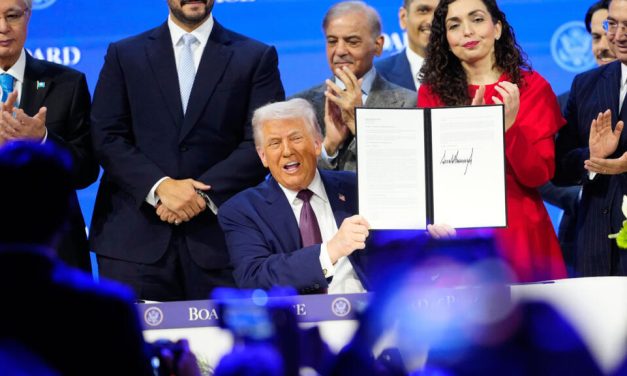
Strategic Council Online – Report: While the second phase of the implementation of the Gaza ceasefire has begun, the establishment of the “Peace Board” chaired by Donald Trump on the sidelines of the Davos meeting (22 January 2026) has become more than a technical mechanism for reconstruction and has turned into a test for the future of the international order.
Despite the signing of the charter by 22 out of 60 invited countries, the limited presence of global leaders at the Davos ceremony and the non-acceptance of this body by the European Union and key Western countries indicate a deep divide in global perceptions of the legitimacy of this mechanism.
In this report, drawing on the analysis of Hadi Borhani, a regional affairs expert, and international data, three strategic questions are addressed: Is the Peace Board an instrument for implementing UN Security Council Resolution 2803 or a substitute for the United Nations? How does the hierarchical architecture of this committee intensify executive challenges in Gaza? And finally, can this body create sustainable peace without the cooperation of Palestinians and with the concentration of power in the hands of a single individual?

America’s Zero-Sum Game in Iraq

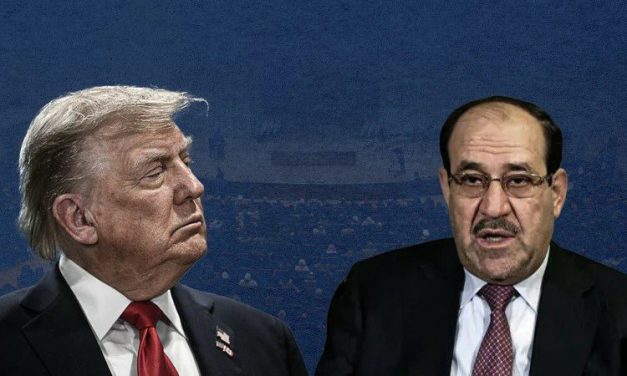
Online Strategic Council – Memoir: The swift selection of Nouri al-Maliki for the premiership constitutes a new phase in Iraq’s political sphere. Multiple factors have played a role in this process, the most important being the prevailing situation in Iraq and the region. Under such circumstances, Iraq requires a powerful and experienced prime minister who can keep the country away from the dangers of wars and crises.

America’s Strategy for Creating Tension in the Asia-Pacific

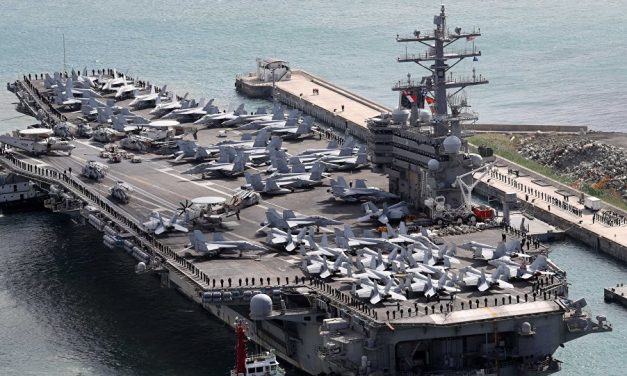
Strategic Council Online – Opinion: Relations between some countries in the Asia-Pacific region, such as China and Japan or China and Australia, which were previously relatively normal, are trending towards deterioration, and the primary reason for this is the aggressive policies of the United States of America.

Loading

Últimas publicaciones

The Security Equation of Southern Lebanon for the Zionist Regime

Strategic Council Online – Opinion: American-Zionist objectives in the region are not limited to weakening Hezbollah. Efforts to disarm Iraqi resistance groups such as Kata’ib Hezbollah and the Popular Mobilization Forces are also part of their subsequent plans.

Commercial Exploitation of Peace; The Gaza Committee in Confrontation with International Legitimacy

Strategic Council Online – Report: While the second phase of the implementation of the Gaza ceasefire has begun, the establishment of the “Peace Board” chaired by Donald Trump on the sidelines of the Davos meeting (22 January 2026) has become more than a technical mechanism for reconstruction and has turned into a test for the future of the international order.
Despite the signing of the charter by 22 out of 60 invited countries, the limited presence of global leaders at the Davos ceremony and the non-acceptance of this body by the European Union and key Western countries indicate a deep divide in global perceptions of the legitimacy of this mechanism.
In this report, drawing on the analysis of Hadi Borhani, a regional affairs expert, and international data, three strategic questions are addressed: Is the Peace Board an instrument for implementing UN Security Council Resolution 2803 or a substitute for the United Nations? How does the hierarchical architecture of this committee intensify executive challenges in Gaza? And finally, can this body create sustainable peace without the cooperation of Palestinians and with the concentration of power in the hands of a single individual?

America’s Zero-Sum Game in Iraq

Online Strategic Council – Memoir: The swift selection of Nouri al-Maliki for the premiership constitutes a new phase in Iraq’s political sphere. Multiple factors have played a role in this process, the most important being the prevailing situation in Iraq and the region. Under such circumstances, Iraq requires a powerful and experienced prime minister who can keep the country away from the dangers of wars and crises.

America’s Strategy for Creating Tension in the Asia-Pacific

Strategic Council Online – Opinion: Relations between some countries in the Asia-Pacific region, such as China and Japan or China and Australia, which were previously relatively normal, are trending towards deterioration, and the primary reason for this is the aggressive policies of the United States of America.

Loading

DERNIER CONTENU

The Security Equation of Southern Lebanon for the Zionist Regime

Strategic Council Online – Opinion: American-Zionist objectives in the region are not limited to weakening Hezbollah. Efforts to disarm Iraqi resistance groups such as Kata’ib Hezbollah and the Popular Mobilization Forces are also part of their subsequent plans.

Commercial Exploitation of Peace; The Gaza Committee in Confrontation with International Legitimacy

Strategic Council Online – Report: While the second phase of the implementation of the Gaza ceasefire has begun, the establishment of the “Peace Board” chaired by Donald Trump on the sidelines of the Davos meeting (22 January 2026) has become more than a technical mechanism for reconstruction and has turned into a test for the future of the international order.
Despite the signing of the charter by 22 out of 60 invited countries, the limited presence of global leaders at the Davos ceremony and the non-acceptance of this body by the European Union and key Western countries indicate a deep divide in global perceptions of the legitimacy of this mechanism.
In this report, drawing on the analysis of Hadi Borhani, a regional affairs expert, and international data, three strategic questions are addressed: Is the Peace Board an instrument for implementing UN Security Council Resolution 2803 or a substitute for the United Nations? How does the hierarchical architecture of this committee intensify executive challenges in Gaza? And finally, can this body create sustainable peace without the cooperation of Palestinians and with the concentration of power in the hands of a single individual?

America’s Zero-Sum Game in Iraq

Online Strategic Council – Memoir: The swift selection of Nouri al-Maliki for the premiership constitutes a new phase in Iraq’s political sphere. Multiple factors have played a role in this process, the most important being the prevailing situation in Iraq and the region. Under such circumstances, Iraq requires a powerful and experienced prime minister who can keep the country away from the dangers of wars and crises.

America’s Strategy for Creating Tension in the Asia-Pacific

Strategic Council Online – Opinion: Relations between some countries in the Asia-Pacific region, such as China and Japan or China and Australia, which were previously relatively normal, are trending towards deterioration, and the primary reason for this is the aggressive policies of the United States of America.

Loading

DERNIER CONTENU

The Security Equation of Southern Lebanon for the Zionist Regime

Strategic Council Online – Opinion: American-Zionist objectives in the region are not limited to weakening Hezbollah. Efforts to disarm Iraqi resistance groups such as Kata’ib Hezbollah and the Popular Mobilization Forces are also part of their subsequent plans.

Commercial Exploitation of Peace; The Gaza Committee in Confrontation with International Legitimacy

Strategic Council Online – Report: While the second phase of the implementation of the Gaza ceasefire has begun, the establishment of the “Peace Board” chaired by Donald Trump on the sidelines of the Davos meeting (22 January 2026) has become more than a technical mechanism for reconstruction and has turned into a test for the future of the international order.
Despite the signing of the charter by 22 out of 60 invited countries, the limited presence of global leaders at the Davos ceremony and the non-acceptance of this body by the European Union and key Western countries indicate a deep divide in global perceptions of the legitimacy of this mechanism.
In this report, drawing on the analysis of Hadi Borhani, a regional affairs expert, and international data, three strategic questions are addressed: Is the Peace Board an instrument for implementing UN Security Council Resolution 2803 or a substitute for the United Nations? How does the hierarchical architecture of this committee intensify executive challenges in Gaza? And finally, can this body create sustainable peace without the cooperation of Palestinians and with the concentration of power in the hands of a single individual?

America’s Zero-Sum Game in Iraq

Online Strategic Council – Memoir: The swift selection of Nouri al-Maliki for the premiership constitutes a new phase in Iraq’s political sphere. Multiple factors have played a role in this process, the most important being the prevailing situation in Iraq and the region. Under such circumstances, Iraq requires a powerful and experienced prime minister who can keep the country away from the dangers of wars and crises.

America’s Strategy for Creating Tension in the Asia-Pacific

Strategic Council Online – Opinion: Relations between some countries in the Asia-Pacific region, such as China and Japan or China and Australia, which were previously relatively normal, are trending towards deterioration, and the primary reason for this is the aggressive policies of the United States of America.

Loading

DERNIER CONTENU

The Security Equation of Southern Lebanon for the Zionist Regime

Strategic Council Online – Opinion: American-Zionist objectives in the region are not limited to weakening Hezbollah. Efforts to disarm Iraqi resistance groups such as Kata’ib Hezbollah and the Popular Mobilization Forces are also part of their subsequent plans.

Commercial Exploitation of Peace; The Gaza Committee in Confrontation with International Legitimacy

Strategic Council Online – Report: While the second phase of the implementation of the Gaza ceasefire has begun, the establishment of the “Peace Board” chaired by Donald Trump on the sidelines of the Davos meeting (22 January 2026) has become more than a technical mechanism for reconstruction and has turned into a test for the future of the international order.
Despite the signing of the charter by 22 out of 60 invited countries, the limited presence of global leaders at the Davos ceremony and the non-acceptance of this body by the European Union and key Western countries indicate a deep divide in global perceptions of the legitimacy of this mechanism.
In this report, drawing on the analysis of Hadi Borhani, a regional affairs expert, and international data, three strategic questions are addressed: Is the Peace Board an instrument for implementing UN Security Council Resolution 2803 or a substitute for the United Nations? How does the hierarchical architecture of this committee intensify executive challenges in Gaza? And finally, can this body create sustainable peace without the cooperation of Palestinians and with the concentration of power in the hands of a single individual?

America’s Zero-Sum Game in Iraq

Online Strategic Council – Memoir: The swift selection of Nouri al-Maliki for the premiership constitutes a new phase in Iraq’s political sphere. Multiple factors have played a role in this process, the most important being the prevailing situation in Iraq and the region. Under such circumstances, Iraq requires a powerful and experienced prime minister who can keep the country away from the dangers of wars and crises.

America’s Strategy for Creating Tension in the Asia-Pacific

Strategic Council Online – Opinion: Relations between some countries in the Asia-Pacific region, such as China and Japan or China and Australia, which were previously relatively normal, are trending towards deterioration, and the primary reason for this is the aggressive policies of the United States of America.

Loading