A Glance at the UN Commission of Inquiry’s Vote on the War in Ukraine

2023/04/04 | interview, Politics, top news

Strategic Council Online - Interview: An international law professor assessed the formation of the Commission of Inquiry on “Russian war crimes” by the Human Rights Council as a political action aimed at putting pressure on Moscow and said: The crimes committed in the Ukraine war by both sides should not be ignored, but the international legal organizations should investigate the real causes behind the beginning of the war in Ukraine and the main factors that led to the outbreak of the war.

Dr. Gholamreza Khaji, in an interview with the website of the Strategic Council on Foreign Relations, referred to the serious accusations made by the United Nations Commission of Inquiry against Russia in connection with the war in Ukraine, including attacks on civilians and civilian infrastructure, intentional murder, illegal detention, torture and abduction of children and clarified: The Commission announced that the Russian army had committed war crimes in Ukraine. However, there is no evidence that this crime of genocide has been committed. The UN Human Rights Council chose the members of the Commission, and the Council is not legally considered in the UN structure, and its approvals do not have a solid legal basis.

He added that when reforms were raised in the United Nations, this Council was replaced by the Human Rights Commission. The Human Rights Commission was removed due to political and unprofessional performance, and the Human Rights Council replaced it. Still, the Human Rights Council does not have a clear legal position in the United Nations. Although this Council was not supposed to replace the International Criminal Court from the beginning, they have designed a court-like system for the Council. In this situation, such duties are not considered for the Human Rights Council, and the General Assembly should clarify its situation by preparing a resolution.

The professor of international law, referring to the lack of the assignment of the statute of the Human Rights Council, lack of clarity in the guarantee of enforcement, and also the political treatment of the cases, said: The UN General Assembly does not vote for the Security Council’s supervision over the Human Rights Council in the current situation; because the Security Council has not left a good record and it seems that this Council will be under the supervision of the United Nations General Assembly. According to Article 12, this Assembly does not have the required powers.

Khaji assessed the formation of the Commission to investigate “Russian war crimes” by the Human Rights Council as a political action aimed at putting pressure on Moscow and continued: Unfortunately, in recent years, we have witnessed the massacre and displacement of a large portion of the population in countries such as Iraq, Yemen, and Syria. We have seen the “stolen generation” crime in Canada and Australia! These are clear examples of human rights violations that have been thoroughly documented. There are hundreds of priorities for examining human rights issues.

Emphasizing that international legal organizations should investigate the real causes of the beginning of the war in Ukraine and the main factors that caused the outbreak of this war, he explained the role of NATO and the long-term plan of the United States to increase military and security pressure on Russia and suppress the Russians in Ukraine. He added that such issues should be considered if a commission investigates the war in Ukraine. But what we witnessed is only in line with exerting political pressure on Russia.

Referring to the decision of the Commission of Inquiry of the United Nations Human Rights Council regarding Russia’s attacks on Ukraine’s energy supply facilities as a “crime against humanity,” the analyst of international law noted that the definition of international crimes is clear and this decision cannot be a legal basis for a global decision. But unfortunately, when Western countries get desperate, they misuse technical and legal terms in line with their interests and offer another interpretation.

Unilateral US and EU sanctions against nations are to be “international crimes.”

Emphasizing that the crimes committed by both sides in the Ukraine war should not be ignored, Khaji reminded: If we want to define the exact international crime, all self-imposed and unilateral sanctions of the United States and the European Union against nations are international crimes, and should be filed for all of them in such commissions. What we are witnessing in such organizations today is discriminatory and political behavior that not only does nothing to create international stability and peace; instead, it causes an escalation of conflicts and hardening of the international atmosphere.

He pointed to the submission of the arrest warrant of the International Criminal Court against the Russian president. He said: Such measures are psychological and political warfare against Russia. Western countries have intensified this practice in the past decade, taking drastic, irrational, and unilateral actions. That too in a situation where no charges have been made, and they have presented a verdict unilaterally.

Explaining the consequences of the political actions of international technical and legal organizations, the professor of international law emphasized: We are witnessing the decline of the role of international organizations and the more vital role played by regional organizations. As we have repeatedly seen this issue regarding the continent of Africa and Latin America, they insist on solving their problems regionally; because public credibility and trust in the United Nations have been lost. In all the years from 1945 to 2022, the Security Council decided to attack only twice, once against Korea and once against Iraq; both times, US interests were at stake! Now everyone knows that such actions of the United Nations are political, and its outcome has only benefited a few Western countries and the Israeli regime.
0 Comments

Submit a Comment

Your email address will not be published. Required fields are marked *

LATEST CONTENT

The Security Equation of Southern Lebanon for the Zionist Regime

Strategic Council Online – Opinion: American-Zionist objectives in the region are not limited to weakening Hezbollah. Efforts to disarm Iraqi resistance groups such as Kata’ib Hezbollah and the Popular Mobilization Forces are also part of their subsequent plans.

Commercial Exploitation of Peace; The Gaza Committee in Confrontation with International Legitimacy

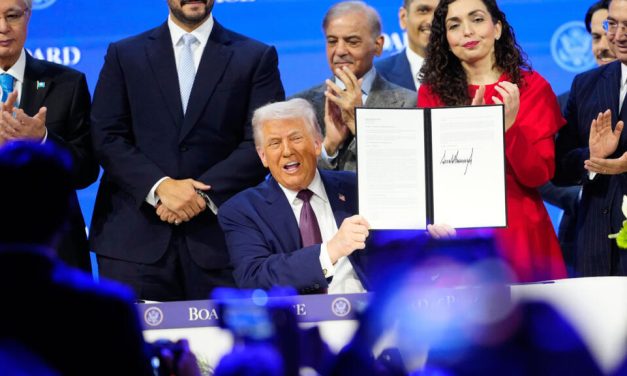
Strategic Council Online – Report: While the second phase of the implementation of the Gaza ceasefire has begun, the establishment of the “Peace Board” chaired by Donald Trump on the sidelines of the Davos meeting (22 January 2026) has become more than a technical mechanism for reconstruction and has turned into a test for the future of the international order.
Despite the signing of the charter by 22 out of 60 invited countries, the limited presence of global leaders at the Davos ceremony and the non-acceptance of this body by the European Union and key Western countries indicate a deep divide in global perceptions of the legitimacy of this mechanism.
In this report, drawing on the analysis of Hadi Borhani, a regional affairs expert, and international data, three strategic questions are addressed: Is the Peace Board an instrument for implementing UN Security Council Resolution 2803 or a substitute for the United Nations? How does the hierarchical architecture of this committee intensify executive challenges in Gaza? And finally, can this body create sustainable peace without the cooperation of Palestinians and with the concentration of power in the hands of a single individual?

America’s Zero-Sum Game in Iraq

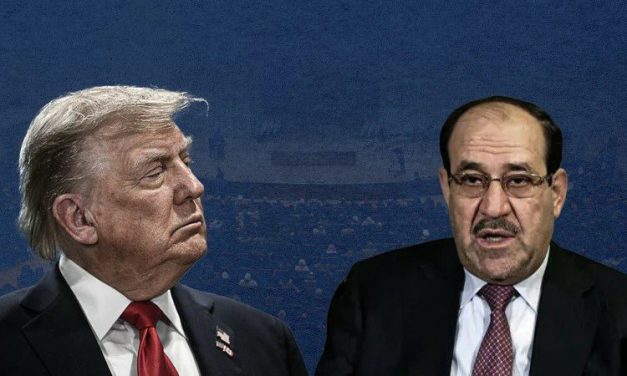
Online Strategic Council – Memoir: The swift selection of Nouri al-Maliki for the premiership constitutes a new phase in Iraq’s political sphere. Multiple factors have played a role in this process, the most important being the prevailing situation in Iraq and the region. Under such circumstances, Iraq requires a powerful and experienced prime minister who can keep the country away from the dangers of wars and crises.

America’s Strategy for Creating Tension in the Asia-Pacific

Strategic Council Online – Opinion: Relations between some countries in the Asia-Pacific region, such as China and Japan or China and Australia, which were previously relatively normal, are trending towards deterioration, and the primary reason for this is the aggressive policies of the United States of America.

Loading

Últimas publicaciones

The Security Equation of Southern Lebanon for the Zionist Regime

Strategic Council Online – Opinion: American-Zionist objectives in the region are not limited to weakening Hezbollah. Efforts to disarm Iraqi resistance groups such as Kata’ib Hezbollah and the Popular Mobilization Forces are also part of their subsequent plans.

Commercial Exploitation of Peace; The Gaza Committee in Confrontation with International Legitimacy

Strategic Council Online – Report: While the second phase of the implementation of the Gaza ceasefire has begun, the establishment of the “Peace Board” chaired by Donald Trump on the sidelines of the Davos meeting (22 January 2026) has become more than a technical mechanism for reconstruction and has turned into a test for the future of the international order.
Despite the signing of the charter by 22 out of 60 invited countries, the limited presence of global leaders at the Davos ceremony and the non-acceptance of this body by the European Union and key Western countries indicate a deep divide in global perceptions of the legitimacy of this mechanism.
In this report, drawing on the analysis of Hadi Borhani, a regional affairs expert, and international data, three strategic questions are addressed: Is the Peace Board an instrument for implementing UN Security Council Resolution 2803 or a substitute for the United Nations? How does the hierarchical architecture of this committee intensify executive challenges in Gaza? And finally, can this body create sustainable peace without the cooperation of Palestinians and with the concentration of power in the hands of a single individual?

America’s Zero-Sum Game in Iraq

Online Strategic Council – Memoir: The swift selection of Nouri al-Maliki for the premiership constitutes a new phase in Iraq’s political sphere. Multiple factors have played a role in this process, the most important being the prevailing situation in Iraq and the region. Under such circumstances, Iraq requires a powerful and experienced prime minister who can keep the country away from the dangers of wars and crises.

America’s Strategy for Creating Tension in the Asia-Pacific

Strategic Council Online – Opinion: Relations between some countries in the Asia-Pacific region, such as China and Japan or China and Australia, which were previously relatively normal, are trending towards deterioration, and the primary reason for this is the aggressive policies of the United States of America.

Loading

DERNIER CONTENU

The Security Equation of Southern Lebanon for the Zionist Regime

Strategic Council Online – Opinion: American-Zionist objectives in the region are not limited to weakening Hezbollah. Efforts to disarm Iraqi resistance groups such as Kata’ib Hezbollah and the Popular Mobilization Forces are also part of their subsequent plans.

Commercial Exploitation of Peace; The Gaza Committee in Confrontation with International Legitimacy

Strategic Council Online – Report: While the second phase of the implementation of the Gaza ceasefire has begun, the establishment of the “Peace Board” chaired by Donald Trump on the sidelines of the Davos meeting (22 January 2026) has become more than a technical mechanism for reconstruction and has turned into a test for the future of the international order.
Despite the signing of the charter by 22 out of 60 invited countries, the limited presence of global leaders at the Davos ceremony and the non-acceptance of this body by the European Union and key Western countries indicate a deep divide in global perceptions of the legitimacy of this mechanism.
In this report, drawing on the analysis of Hadi Borhani, a regional affairs expert, and international data, three strategic questions are addressed: Is the Peace Board an instrument for implementing UN Security Council Resolution 2803 or a substitute for the United Nations? How does the hierarchical architecture of this committee intensify executive challenges in Gaza? And finally, can this body create sustainable peace without the cooperation of Palestinians and with the concentration of power in the hands of a single individual?

America’s Zero-Sum Game in Iraq

Online Strategic Council – Memoir: The swift selection of Nouri al-Maliki for the premiership constitutes a new phase in Iraq’s political sphere. Multiple factors have played a role in this process, the most important being the prevailing situation in Iraq and the region. Under such circumstances, Iraq requires a powerful and experienced prime minister who can keep the country away from the dangers of wars and crises.

America’s Strategy for Creating Tension in the Asia-Pacific

Strategic Council Online – Opinion: Relations between some countries in the Asia-Pacific region, such as China and Japan or China and Australia, which were previously relatively normal, are trending towards deterioration, and the primary reason for this is the aggressive policies of the United States of America.

Loading

DERNIER CONTENU

The Security Equation of Southern Lebanon for the Zionist Regime

Strategic Council Online – Opinion: American-Zionist objectives in the region are not limited to weakening Hezbollah. Efforts to disarm Iraqi resistance groups such as Kata’ib Hezbollah and the Popular Mobilization Forces are also part of their subsequent plans.

Commercial Exploitation of Peace; The Gaza Committee in Confrontation with International Legitimacy

Strategic Council Online – Report: While the second phase of the implementation of the Gaza ceasefire has begun, the establishment of the “Peace Board” chaired by Donald Trump on the sidelines of the Davos meeting (22 January 2026) has become more than a technical mechanism for reconstruction and has turned into a test for the future of the international order.
Despite the signing of the charter by 22 out of 60 invited countries, the limited presence of global leaders at the Davos ceremony and the non-acceptance of this body by the European Union and key Western countries indicate a deep divide in global perceptions of the legitimacy of this mechanism.
In this report, drawing on the analysis of Hadi Borhani, a regional affairs expert, and international data, three strategic questions are addressed: Is the Peace Board an instrument for implementing UN Security Council Resolution 2803 or a substitute for the United Nations? How does the hierarchical architecture of this committee intensify executive challenges in Gaza? And finally, can this body create sustainable peace without the cooperation of Palestinians and with the concentration of power in the hands of a single individual?

America’s Zero-Sum Game in Iraq

Online Strategic Council – Memoir: The swift selection of Nouri al-Maliki for the premiership constitutes a new phase in Iraq’s political sphere. Multiple factors have played a role in this process, the most important being the prevailing situation in Iraq and the region. Under such circumstances, Iraq requires a powerful and experienced prime minister who can keep the country away from the dangers of wars and crises.

America’s Strategy for Creating Tension in the Asia-Pacific

Strategic Council Online – Opinion: Relations between some countries in the Asia-Pacific region, such as China and Japan or China and Australia, which were previously relatively normal, are trending towards deterioration, and the primary reason for this is the aggressive policies of the United States of America.

Loading

DERNIER CONTENU

The Security Equation of Southern Lebanon for the Zionist Regime

Strategic Council Online – Opinion: American-Zionist objectives in the region are not limited to weakening Hezbollah. Efforts to disarm Iraqi resistance groups such as Kata’ib Hezbollah and the Popular Mobilization Forces are also part of their subsequent plans.

Commercial Exploitation of Peace; The Gaza Committee in Confrontation with International Legitimacy

Strategic Council Online – Report: While the second phase of the implementation of the Gaza ceasefire has begun, the establishment of the “Peace Board” chaired by Donald Trump on the sidelines of the Davos meeting (22 January 2026) has become more than a technical mechanism for reconstruction and has turned into a test for the future of the international order.
Despite the signing of the charter by 22 out of 60 invited countries, the limited presence of global leaders at the Davos ceremony and the non-acceptance of this body by the European Union and key Western countries indicate a deep divide in global perceptions of the legitimacy of this mechanism.
In this report, drawing on the analysis of Hadi Borhani, a regional affairs expert, and international data, three strategic questions are addressed: Is the Peace Board an instrument for implementing UN Security Council Resolution 2803 or a substitute for the United Nations? How does the hierarchical architecture of this committee intensify executive challenges in Gaza? And finally, can this body create sustainable peace without the cooperation of Palestinians and with the concentration of power in the hands of a single individual?

America’s Zero-Sum Game in Iraq

Online Strategic Council – Memoir: The swift selection of Nouri al-Maliki for the premiership constitutes a new phase in Iraq’s political sphere. Multiple factors have played a role in this process, the most important being the prevailing situation in Iraq and the region. Under such circumstances, Iraq requires a powerful and experienced prime minister who can keep the country away from the dangers of wars and crises.

America’s Strategy for Creating Tension in the Asia-Pacific

Strategic Council Online – Opinion: Relations between some countries in the Asia-Pacific region, such as China and Japan or China and Australia, which were previously relatively normal, are trending towards deterioration, and the primary reason for this is the aggressive policies of the United States of America.

Loading