A Glance at Klichdaroglu’s Rivalry with Erdogan in Turkish Elections

2023/03/23 | Note, Politics, top news

Strategic Council Online - Opinion: After long speculations and consultations among Turkish parties known as the “Table of Six,” the leader of the People’s Republic Party, Kemal Klichdaroglu, was nominated as the presidential candidate of the six opposition parties after resolving the crisis with the “Good Party.” It is expected that 60 million people will participate in Turkey’s May 14 elections. Mahmoud Fazeli - International affairs analyst

Following that coalition, the roadmap for the transition process from the presidential to the parliamentary system was strengthened, and the six parties reached an agreement. Emphasizing that “Erdogan has caused the erosion of democracy in the country,” Klichdaroglu promises to change this situation. As a former employee of the government, Klichdaroglu is trying, in addition to repeatedly raising the economic crisis and emphasizing the increase in the inflation rate in Turkey, which has been going on for years, by criticizing the performance of the ruling government due to the recent earthquake in Turkey that killed 49,589 people, to increase the chance of winning the elections. In the road map of the six-party table, various issues have been emphasized by the parties forming this coalition, the essential parts of which are as follows:

Within the framework of the constitution, the agreed texts, laws, principles, and basis of separation of powers and supervision will be managed by consultation and compromise. Changes in the constitution will be strengthened for the transition to the parliamentary system. They will be implemented in the shortest possible time based on the structure of the House of Representatives that will be formed in the general elections. The distribution of ministries will be done based on the number of representatives that the political parties of the nation’s coalition will enter the parliament in the general elections. Each coalition party will have at least one minister in the cabinet. The president makes the appointment and dismissal of ministers with the agreement of the leader of the political party to which the minister is subordinate. The president will perform his powers and executive duties based on participation, consultation, and compromise. The president will consult with the leaders of the coalition parties on issues such as repeating the elections, declaring a state of emergency in the country, setting priorities in national security policies, and making important decisions about appointments at high levels.

Following Klichdaroglu’s presidential candidacy, the competition will undoubtedly become more complicated in that country’s upcoming elections. He is respected in the opposition circles as someone trying to re-establish democracy in Turkey. Respect for him is visible in the positions of “Meral Akşener, Head of the National Movement Party,” “Ali Babajan, Leader of the DEVA Party,” “Ahmet Davutoğlu, Leader of the Future Party,” ” Gultekin Uysal, Leader of the Democratic Party” and “Karamollaoğlu, Leader of the Felicity Party.”

Regarding the arrival of foreign refugees to Turkey, Klichdaroglu emphasizes: I will send the Syrian brothers to their homeland within one year at the latest without putting the stain of “racism” on the nation’s forehead. I will make Turkey the strongest country in the region and the Black Sea. During my presidency, we will control the border terminals that have become places of easy traffic without any investigation. The country’s border is its honor. No one can quickly enter Turkey without being questioned. Border security is the primary and mandatory responsibility of a sovereign nation. The area that remains within our borders is our sovereignty.

We will return to Iran the Afghans who cross the border of Iran and enter Turkey. In the first week of the presidency, I will close the borders to any smuggling. During the presidential term, I am pursuing two critical goals: one of them is to send Syrian immigrants to their country, and the other is to return those who came from Iran to their country of departure. We want Iran, Syria, and Afghanistan to know this. We do not prejudge any country or any foreigner. We do not wish for the population structure of our country to change. In this process, we will solve the issue of refugees in Turkey and define a crucial political leadership role for Turkey in the Mediterranean region.

In foreign policy, he promises to resume relations with NATO and the European Union. Regarding the membership of Sweden and Finland in NATO, he believes that if bilateral issues are transferred to multilateral organizations such as NATO, it will cause other countries to take a stand against Turkey. From Klichdaroglu’s point of view, the membership of Sweden and Finland will strengthen the security of collective security organizations such as NATO.

After being nominated by the Nation Alliance for the presidency, Klichdaroglu started meeting with parties with different tendencies. He will begin normalizing relations with other parties in internal affairs. He is expected to release Salaheddin Demirtaş, the former leader of the People’s Democratic Party, and Osman Kavala (accused of involvement in the Gezi events) from prison within the framework of the European Court of Human Rights rulings and will try to amend Turkey’s failed record and criticisms regarding human rights. He even vetoed the request of two mayors who were members of the People’s Republic Party who were considering resigning to run for the May 14 election.

Opposition groups of Erdogan’s government believe that Turkey needs a new discourse and that the upcoming elections will be susceptible for Turkey and the world. The upcoming elections will not be the election of a president or new representatives. Still, they will indicate the unique process of advancing the primary goals of that country by possible new leaders. Considering the political-economic effects of the 7.6 magnitude earthquake on February 6, 2023, and the continuous criticism of the government’s incompetence during that incident, the upcoming elections in Turkey have provided a new opportunity for opposition protests against Erdogan and the Justice and Development Party. According to them, there are widespread concerns that the May elections will be the last chance to preserve democracy and prevent the country’s tendency towards authoritarian management.

The May 14 elections in Turkey are also vital for international investors who have left Turkey due to the state of the stock markets and current policies in that country. Turkey’s usually disjointed opposition has, this time, agreed on a joint candidate to run against Erdogan in May. Turkey’s economic crisis in recent years and the devastating earthquake and damage of 2 trillion lire (about 105 billion dollars), equivalent to 9 percent of the country’s national income in 2023, have made Erdogan’s position much more fragile compared to the previous elections. However, his intelligence and long political experience should not be ignored in planning to deal with his opponents.
0 Comments

Submit a Comment

Your email address will not be published. Required fields are marked *

LATEST CONTENT

Commercial Exploitation of Peace; The Gaza Committee in Confrontation with International Legitimacy

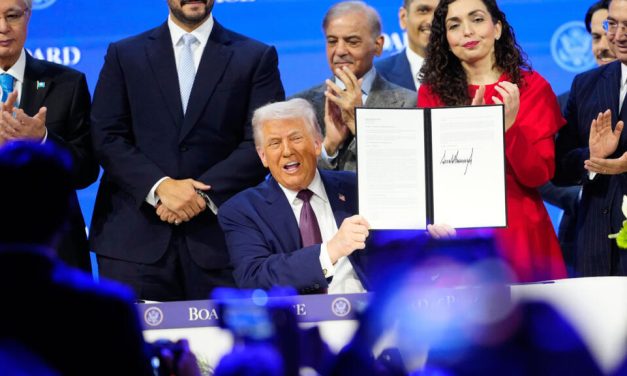
Strategic Council Online – Report: While the second phase of the implementation of the Gaza ceasefire has begun, the establishment of the “Peace Board” chaired by Donald Trump on the sidelines of the Davos meeting (22 January 2026) has become more than a technical mechanism for reconstruction and has turned into a test for the future of the international order.
Despite the signing of the charter by 22 out of 60 invited countries, the limited presence of global leaders at the Davos ceremony and the non-acceptance of this body by the European Union and key Western countries indicate a deep divide in global perceptions of the legitimacy of this mechanism.
In this report, drawing on the analysis of Hadi Borhani, a regional affairs expert, and international data, three strategic questions are addressed: Is the Peace Board an instrument for implementing UN Security Council Resolution 2803 or a substitute for the United Nations? How does the hierarchical architecture of this committee intensify executive challenges in Gaza? And finally, can this body create sustainable peace without the cooperation of Palestinians and with the concentration of power in the hands of a single individual?

America’s Zero-Sum Game in Iraq

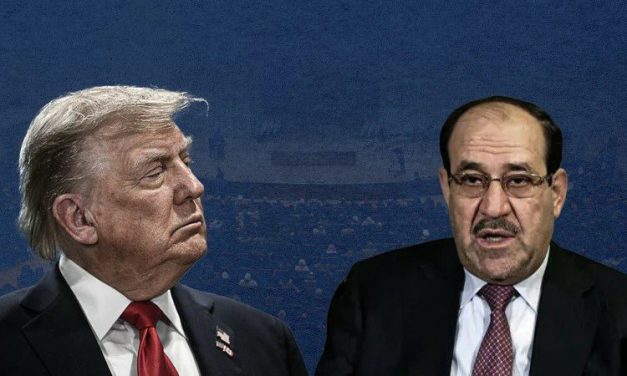
Online Strategic Council – Memoir: The swift selection of Nouri al-Maliki for the premiership constitutes a new phase in Iraq’s political sphere. Multiple factors have played a role in this process, the most important being the prevailing situation in Iraq and the region. Under such circumstances, Iraq requires a powerful and experienced prime minister who can keep the country away from the dangers of wars and crises.

America’s Strategy for Creating Tension in the Asia-Pacific

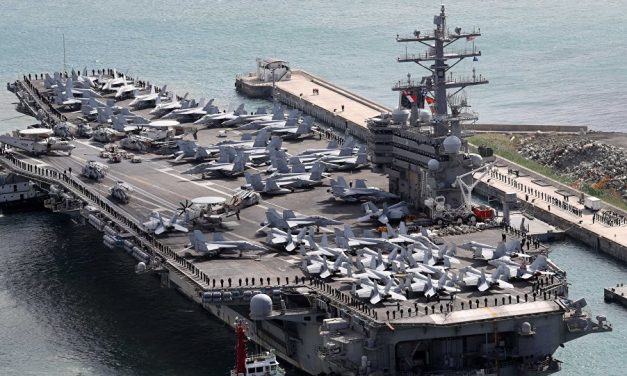
Strategic Council Online – Opinion: Relations between some countries in the Asia-Pacific region, such as China and Japan or China and Australia, which were previously relatively normal, are trending towards deterioration, and the primary reason for this is the aggressive policies of the United States of America.

The Collapse of the European Security Illusion with the Continuation of the Ukraine War?

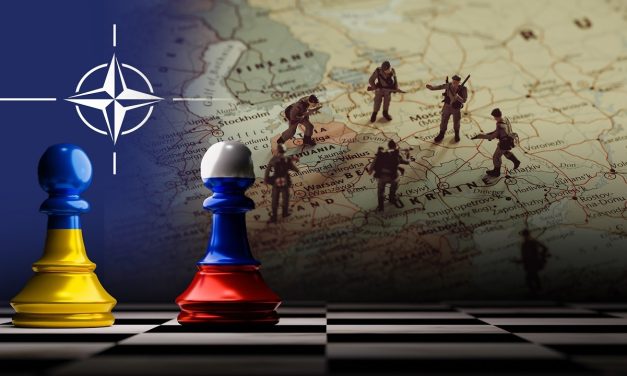
Strategic Council Online – Interview: The Ukraine war has become a new turning point in the political, security, and even commercial relations of allies on both sides of the Atlantic. While this war is nearing its fourth year, many questions still remain regarding its future and its consequences; among them, will the continuation of the Ukraine war lead to the collapse of the European security illusion?

Loading

Últimas publicaciones

Commercial Exploitation of Peace; The Gaza Committee in Confrontation with International Legitimacy

Strategic Council Online – Report: While the second phase of the implementation of the Gaza ceasefire has begun, the establishment of the “Peace Board” chaired by Donald Trump on the sidelines of the Davos meeting (22 January 2026) has become more than a technical mechanism for reconstruction and has turned into a test for the future of the international order.
Despite the signing of the charter by 22 out of 60 invited countries, the limited presence of global leaders at the Davos ceremony and the non-acceptance of this body by the European Union and key Western countries indicate a deep divide in global perceptions of the legitimacy of this mechanism.
In this report, drawing on the analysis of Hadi Borhani, a regional affairs expert, and international data, three strategic questions are addressed: Is the Peace Board an instrument for implementing UN Security Council Resolution 2803 or a substitute for the United Nations? How does the hierarchical architecture of this committee intensify executive challenges in Gaza? And finally, can this body create sustainable peace without the cooperation of Palestinians and with the concentration of power in the hands of a single individual?

America’s Zero-Sum Game in Iraq

Online Strategic Council – Memoir: The swift selection of Nouri al-Maliki for the premiership constitutes a new phase in Iraq’s political sphere. Multiple factors have played a role in this process, the most important being the prevailing situation in Iraq and the region. Under such circumstances, Iraq requires a powerful and experienced prime minister who can keep the country away from the dangers of wars and crises.

America’s Strategy for Creating Tension in the Asia-Pacific

Strategic Council Online – Opinion: Relations between some countries in the Asia-Pacific region, such as China and Japan or China and Australia, which were previously relatively normal, are trending towards deterioration, and the primary reason for this is the aggressive policies of the United States of America.

The Collapse of the European Security Illusion with the Continuation of the Ukraine War?

Strategic Council Online – Interview: The Ukraine war has become a new turning point in the political, security, and even commercial relations of allies on both sides of the Atlantic. While this war is nearing its fourth year, many questions still remain regarding its future and its consequences; among them, will the continuation of the Ukraine war lead to the collapse of the European security illusion?

Loading

DERNIER CONTENU

Commercial Exploitation of Peace; The Gaza Committee in Confrontation with International Legitimacy

Strategic Council Online – Report: While the second phase of the implementation of the Gaza ceasefire has begun, the establishment of the “Peace Board” chaired by Donald Trump on the sidelines of the Davos meeting (22 January 2026) has become more than a technical mechanism for reconstruction and has turned into a test for the future of the international order.
Despite the signing of the charter by 22 out of 60 invited countries, the limited presence of global leaders at the Davos ceremony and the non-acceptance of this body by the European Union and key Western countries indicate a deep divide in global perceptions of the legitimacy of this mechanism.
In this report, drawing on the analysis of Hadi Borhani, a regional affairs expert, and international data, three strategic questions are addressed: Is the Peace Board an instrument for implementing UN Security Council Resolution 2803 or a substitute for the United Nations? How does the hierarchical architecture of this committee intensify executive challenges in Gaza? And finally, can this body create sustainable peace without the cooperation of Palestinians and with the concentration of power in the hands of a single individual?

America’s Zero-Sum Game in Iraq

Online Strategic Council – Memoir: The swift selection of Nouri al-Maliki for the premiership constitutes a new phase in Iraq’s political sphere. Multiple factors have played a role in this process, the most important being the prevailing situation in Iraq and the region. Under such circumstances, Iraq requires a powerful and experienced prime minister who can keep the country away from the dangers of wars and crises.

America’s Strategy for Creating Tension in the Asia-Pacific

Strategic Council Online – Opinion: Relations between some countries in the Asia-Pacific region, such as China and Japan or China and Australia, which were previously relatively normal, are trending towards deterioration, and the primary reason for this is the aggressive policies of the United States of America.

The Collapse of the European Security Illusion with the Continuation of the Ukraine War?

Strategic Council Online – Interview: The Ukraine war has become a new turning point in the political, security, and even commercial relations of allies on both sides of the Atlantic. While this war is nearing its fourth year, many questions still remain regarding its future and its consequences; among them, will the continuation of the Ukraine war lead to the collapse of the European security illusion?

Loading

DERNIER CONTENU

Commercial Exploitation of Peace; The Gaza Committee in Confrontation with International Legitimacy

Strategic Council Online – Report: While the second phase of the implementation of the Gaza ceasefire has begun, the establishment of the “Peace Board” chaired by Donald Trump on the sidelines of the Davos meeting (22 January 2026) has become more than a technical mechanism for reconstruction and has turned into a test for the future of the international order.
Despite the signing of the charter by 22 out of 60 invited countries, the limited presence of global leaders at the Davos ceremony and the non-acceptance of this body by the European Union and key Western countries indicate a deep divide in global perceptions of the legitimacy of this mechanism.
In this report, drawing on the analysis of Hadi Borhani, a regional affairs expert, and international data, three strategic questions are addressed: Is the Peace Board an instrument for implementing UN Security Council Resolution 2803 or a substitute for the United Nations? How does the hierarchical architecture of this committee intensify executive challenges in Gaza? And finally, can this body create sustainable peace without the cooperation of Palestinians and with the concentration of power in the hands of a single individual?

America’s Zero-Sum Game in Iraq

Online Strategic Council – Memoir: The swift selection of Nouri al-Maliki for the premiership constitutes a new phase in Iraq’s political sphere. Multiple factors have played a role in this process, the most important being the prevailing situation in Iraq and the region. Under such circumstances, Iraq requires a powerful and experienced prime minister who can keep the country away from the dangers of wars and crises.

America’s Strategy for Creating Tension in the Asia-Pacific

Strategic Council Online – Opinion: Relations between some countries in the Asia-Pacific region, such as China and Japan or China and Australia, which were previously relatively normal, are trending towards deterioration, and the primary reason for this is the aggressive policies of the United States of America.

The Collapse of the European Security Illusion with the Continuation of the Ukraine War?

Strategic Council Online – Interview: The Ukraine war has become a new turning point in the political, security, and even commercial relations of allies on both sides of the Atlantic. While this war is nearing its fourth year, many questions still remain regarding its future and its consequences; among them, will the continuation of the Ukraine war lead to the collapse of the European security illusion?

Loading

DERNIER CONTENU

Commercial Exploitation of Peace; The Gaza Committee in Confrontation with International Legitimacy

Strategic Council Online – Report: While the second phase of the implementation of the Gaza ceasefire has begun, the establishment of the “Peace Board” chaired by Donald Trump on the sidelines of the Davos meeting (22 January 2026) has become more than a technical mechanism for reconstruction and has turned into a test for the future of the international order.
Despite the signing of the charter by 22 out of 60 invited countries, the limited presence of global leaders at the Davos ceremony and the non-acceptance of this body by the European Union and key Western countries indicate a deep divide in global perceptions of the legitimacy of this mechanism.
In this report, drawing on the analysis of Hadi Borhani, a regional affairs expert, and international data, three strategic questions are addressed: Is the Peace Board an instrument for implementing UN Security Council Resolution 2803 or a substitute for the United Nations? How does the hierarchical architecture of this committee intensify executive challenges in Gaza? And finally, can this body create sustainable peace without the cooperation of Palestinians and with the concentration of power in the hands of a single individual?

America’s Zero-Sum Game in Iraq

Online Strategic Council – Memoir: The swift selection of Nouri al-Maliki for the premiership constitutes a new phase in Iraq’s political sphere. Multiple factors have played a role in this process, the most important being the prevailing situation in Iraq and the region. Under such circumstances, Iraq requires a powerful and experienced prime minister who can keep the country away from the dangers of wars and crises.

America’s Strategy for Creating Tension in the Asia-Pacific

Strategic Council Online – Opinion: Relations between some countries in the Asia-Pacific region, such as China and Japan or China and Australia, which were previously relatively normal, are trending towards deterioration, and the primary reason for this is the aggressive policies of the United States of America.

The Collapse of the European Security Illusion with the Continuation of the Ukraine War?

Strategic Council Online – Interview: The Ukraine war has become a new turning point in the political, security, and even commercial relations of allies on both sides of the Atlantic. While this war is nearing its fourth year, many questions still remain regarding its future and its consequences; among them, will the continuation of the Ukraine war lead to the collapse of the European security illusion?

Loading