Impacts of Earthquake in Turkey on Presidential Election

2023/02/28 | Note, Politics, top news

Strategic Council Online - Opinion: While the disaster of the 7.8 magnitude earthquake has shaken Turkey, people of Turkey are going to vote in the presidential and parliamentary elections on May 14. All the opinion polls show that Erdoğan is in a tough competition with other rivals. The deadly disaster of the recent earthquake has added to Erdogan’s political and economic problems. Mahmoud Fazeli – Analyst of international affairs

Following the earthquake, Ankara declared a “level four” state of emergency and asked for international aid. Subsequently, international aid from dozens of countries, even Turkey’s regional rivals, poured into the country. Many families affected by the earthquake criticize the ruling government for failing to save the lives of their family members.

Although a number of Turkish parties continue to criticize Erdogan’s policies, Turkey’s ruling government has yet to face criticism from the media. The high number of pro-government domestic media means that the government controls the official news flow. The media reports little over poor condition of construction. Opponents believe that the high death toll is not only due to a natural disaster, but the damage is the result of the poor construction and ineffective rules and regulations.

Many believe that if the measures of the government in response to the earthquake are not successful, Erdogan may lose in the upcoming elections. But if he can manage the crisis well, he can strengthen his position. An effective and appropriate response to the crisis can strengthen the position of the Justice and Development Party and its leadership, but this will definitely be a big challenge for the government led by Erdogan. Of course, in case of failure, he may suffer the fate of “Bülent Ecevit” in the 1999 earthquake. While he has been in power for 20 years, Erdogan remembers well the economic crisis caused by the 1999 earthquake and the collapse of the coalition government of the Democratic Left Party, the Nationalist Movement Party, and the Motherland Party.

Following the declaration of a state of emergency in the quake-stricken areas for 3 months, this issue has become a pretext for attacking Erdogan by the opposition. A group of opponents of the government believe that it is not possible to hold elections on May 14. According to Article 78 of the Constitution, if it is not possible to hold elections due to war, the Turkish Parliament can postpone the elections for one year. Since the decision of the state of emergency was taken with an absolute majority and the support of the Nationalist Movement Party will be sufficient for the decision of the Justice and Development Party, it is likely that the decision to declare a state of emergency in the quake-stricken areas for 3 months, will be approved, even if the opposition parties do not participate in the parliamentary voting.

After the earthquake in Turkey, the issue of “postponing the elections” is heard from the faction of the Justice and Development Party. Supporters of such a theory believe that the Turkish parliament should help to postpone the elections, and November seems to be the most reasonable time to hold the elections. Not only politically, but also the physical condition of the quake-stricken areas is not suitable for holding elections.

Bülent Arinç, the former Speaker of the Parliament and one of the founders of the Justice and Development Party, has called for the postponement of the election date and claimed: The list of the voters’ names in the election has been invalidated and holding the election is legally and factually impossible, my proposal is that the presidential and parliamentary elections should either be merged with the 2024 local elections or postponed to November 2023. An average of 15 million citizens were affected by the earthquake. The situation is so bitter that there are no voters left in those areas. The President should meet directly with the leaders of the political parties present in the parliament and consult with them to solve this necessary issue. By putting a note in Article 78 of the Constitution, the possibility of postponing the holding of the elections, in addition to the situation mentioned in that article, can also exist during similar periods such as disasters when a state of emergency has been declared.

From the point of view of those in favor of holding the elections, any request to postpone the elections in Turkey will be an excuse for the current government officials to avoid holding the elections. They want to implement this plan through the Supreme Election Council of Turkey. In other words, they want to make special decisions in accordance with their interests.  Kemal Kılıçdaroğlu, the leader of the Republican People’s Party, responded to the call of “Bülent Arinç” to postpone the date of the elections and strongly reacted as follows: The date of the elections should be announced as soon as possible, whether on May 14 or June 18. Running away from the elections is not in anyone’s interest. The whole country will suffer from it.

Ahmet Davutoğlu, the leader of Future Party, in connection with the claims of postponing the elections, addressing Erdogan and the government, said: In such a painful time, your attempt to survive in governance by postponing the elections is the greatest injustice against the nation. Every decision you make by violating the rules of the constitution, every step you take under the guidance of the Supreme Election Council, will have the nature of a civilian coup. Do not aim for a civilian coup. The spokesperson of Turkey’s “Democracy and Progress” Party, in protesting the issue of postponing the elections, believes: According to the constitution, there is no possibility for postponing the elections in the current situation. Neither the Supreme Election Council nor the president can postpone the elections.

Kemal Kılıçdaroğlu, the leader of the Republican People’s Party, while strongly criticizing the government and the Justice and Development Party, which “ran away from responsibility in the earthquake disaster and left the people of the region alone”, also reacted to the government’s request to “postpone the elections” and emphasized: I say clearly that the elections will be held at the appointed time, the constitution is very clear about this. Elections cannot be postponed due to the disaster. There is no such provision, neither in the National Assembly, nor in the Supreme Election Council of Turkey, for postponing the election in case of a disaster, and there is no such reference either. Even for war, the Turkish parliament decides. Article 78 of the Constitution is very clear. Don’t even think about that. They made a special effort to see how they could turn this tragedy into a political base. This country has given Erdoğan a chance for 20 years, but from now on, it will not give him a chance, not even an hour. From our point of view, the term “disaster of the century” used by the Justice and Development Party should be called “ignorance of the century and unworthiness of the century”.
0 Comments

Submit a Comment

Your email address will not be published. Required fields are marked *

LATEST CONTENT

Commercial Exploitation of Peace; The Gaza Committee in Confrontation with International Legitimacy

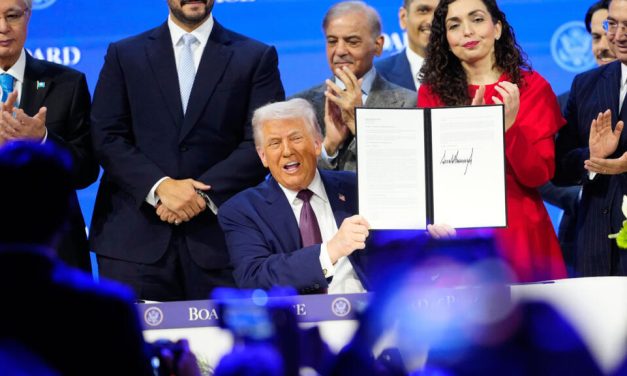
Strategic Council Online – Report: While the second phase of the implementation of the Gaza ceasefire has begun, the establishment of the “Peace Board” chaired by Donald Trump on the sidelines of the Davos meeting (22 January 2026) has become more than a technical mechanism for reconstruction and has turned into a test for the future of the international order.
Despite the signing of the charter by 22 out of 60 invited countries, the limited presence of global leaders at the Davos ceremony and the non-acceptance of this body by the European Union and key Western countries indicate a deep divide in global perceptions of the legitimacy of this mechanism.
In this report, drawing on the analysis of Hadi Borhani, a regional affairs expert, and international data, three strategic questions are addressed: Is the Peace Board an instrument for implementing UN Security Council Resolution 2803 or a substitute for the United Nations? How does the hierarchical architecture of this committee intensify executive challenges in Gaza? And finally, can this body create sustainable peace without the cooperation of Palestinians and with the concentration of power in the hands of a single individual?

America’s Zero-Sum Game in Iraq

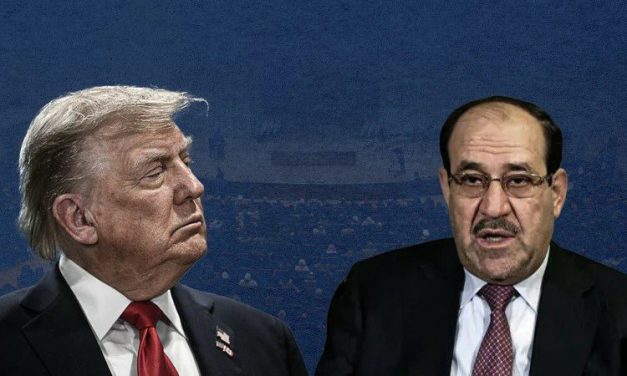
Online Strategic Council – Memoir: The swift selection of Nouri al-Maliki for the premiership constitutes a new phase in Iraq’s political sphere. Multiple factors have played a role in this process, the most important being the prevailing situation in Iraq and the region. Under such circumstances, Iraq requires a powerful and experienced prime minister who can keep the country away from the dangers of wars and crises.

America’s Strategy for Creating Tension in the Asia-Pacific

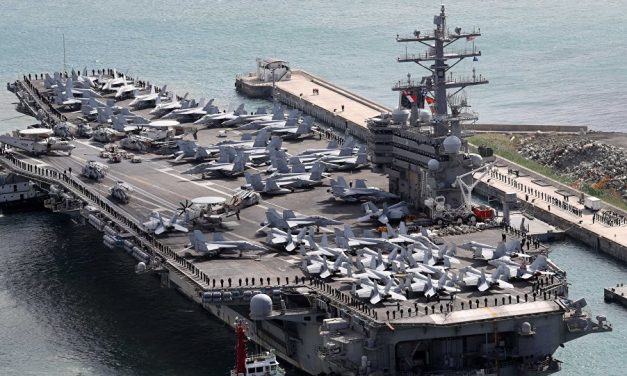
Strategic Council Online – Opinion: Relations between some countries in the Asia-Pacific region, such as China and Japan or China and Australia, which were previously relatively normal, are trending towards deterioration, and the primary reason for this is the aggressive policies of the United States of America.

The Collapse of the European Security Illusion with the Continuation of the Ukraine War?

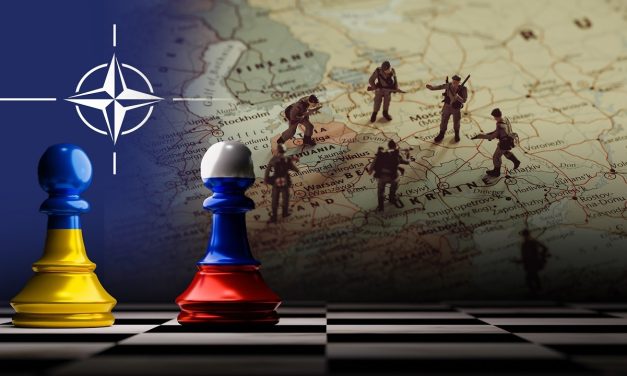
Strategic Council Online – Interview: The Ukraine war has become a new turning point in the political, security, and even commercial relations of allies on both sides of the Atlantic. While this war is nearing its fourth year, many questions still remain regarding its future and its consequences; among them, will the continuation of the Ukraine war lead to the collapse of the European security illusion?

Loading

Últimas publicaciones

Commercial Exploitation of Peace; The Gaza Committee in Confrontation with International Legitimacy

Strategic Council Online – Report: While the second phase of the implementation of the Gaza ceasefire has begun, the establishment of the “Peace Board” chaired by Donald Trump on the sidelines of the Davos meeting (22 January 2026) has become more than a technical mechanism for reconstruction and has turned into a test for the future of the international order.
Despite the signing of the charter by 22 out of 60 invited countries, the limited presence of global leaders at the Davos ceremony and the non-acceptance of this body by the European Union and key Western countries indicate a deep divide in global perceptions of the legitimacy of this mechanism.
In this report, drawing on the analysis of Hadi Borhani, a regional affairs expert, and international data, three strategic questions are addressed: Is the Peace Board an instrument for implementing UN Security Council Resolution 2803 or a substitute for the United Nations? How does the hierarchical architecture of this committee intensify executive challenges in Gaza? And finally, can this body create sustainable peace without the cooperation of Palestinians and with the concentration of power in the hands of a single individual?

America’s Zero-Sum Game in Iraq

Online Strategic Council – Memoir: The swift selection of Nouri al-Maliki for the premiership constitutes a new phase in Iraq’s political sphere. Multiple factors have played a role in this process, the most important being the prevailing situation in Iraq and the region. Under such circumstances, Iraq requires a powerful and experienced prime minister who can keep the country away from the dangers of wars and crises.

America’s Strategy for Creating Tension in the Asia-Pacific

Strategic Council Online – Opinion: Relations between some countries in the Asia-Pacific region, such as China and Japan or China and Australia, which were previously relatively normal, are trending towards deterioration, and the primary reason for this is the aggressive policies of the United States of America.

The Collapse of the European Security Illusion with the Continuation of the Ukraine War?

Strategic Council Online – Interview: The Ukraine war has become a new turning point in the political, security, and even commercial relations of allies on both sides of the Atlantic. While this war is nearing its fourth year, many questions still remain regarding its future and its consequences; among them, will the continuation of the Ukraine war lead to the collapse of the European security illusion?

Loading

DERNIER CONTENU

Commercial Exploitation of Peace; The Gaza Committee in Confrontation with International Legitimacy

Strategic Council Online – Report: While the second phase of the implementation of the Gaza ceasefire has begun, the establishment of the “Peace Board” chaired by Donald Trump on the sidelines of the Davos meeting (22 January 2026) has become more than a technical mechanism for reconstruction and has turned into a test for the future of the international order.
Despite the signing of the charter by 22 out of 60 invited countries, the limited presence of global leaders at the Davos ceremony and the non-acceptance of this body by the European Union and key Western countries indicate a deep divide in global perceptions of the legitimacy of this mechanism.
In this report, drawing on the analysis of Hadi Borhani, a regional affairs expert, and international data, three strategic questions are addressed: Is the Peace Board an instrument for implementing UN Security Council Resolution 2803 or a substitute for the United Nations? How does the hierarchical architecture of this committee intensify executive challenges in Gaza? And finally, can this body create sustainable peace without the cooperation of Palestinians and with the concentration of power in the hands of a single individual?

America’s Zero-Sum Game in Iraq

Online Strategic Council – Memoir: The swift selection of Nouri al-Maliki for the premiership constitutes a new phase in Iraq’s political sphere. Multiple factors have played a role in this process, the most important being the prevailing situation in Iraq and the region. Under such circumstances, Iraq requires a powerful and experienced prime minister who can keep the country away from the dangers of wars and crises.

America’s Strategy for Creating Tension in the Asia-Pacific

Strategic Council Online – Opinion: Relations between some countries in the Asia-Pacific region, such as China and Japan or China and Australia, which were previously relatively normal, are trending towards deterioration, and the primary reason for this is the aggressive policies of the United States of America.

The Collapse of the European Security Illusion with the Continuation of the Ukraine War?

Strategic Council Online – Interview: The Ukraine war has become a new turning point in the political, security, and even commercial relations of allies on both sides of the Atlantic. While this war is nearing its fourth year, many questions still remain regarding its future and its consequences; among them, will the continuation of the Ukraine war lead to the collapse of the European security illusion?

Loading

DERNIER CONTENU

Commercial Exploitation of Peace; The Gaza Committee in Confrontation with International Legitimacy

Strategic Council Online – Report: While the second phase of the implementation of the Gaza ceasefire has begun, the establishment of the “Peace Board” chaired by Donald Trump on the sidelines of the Davos meeting (22 January 2026) has become more than a technical mechanism for reconstruction and has turned into a test for the future of the international order.
Despite the signing of the charter by 22 out of 60 invited countries, the limited presence of global leaders at the Davos ceremony and the non-acceptance of this body by the European Union and key Western countries indicate a deep divide in global perceptions of the legitimacy of this mechanism.
In this report, drawing on the analysis of Hadi Borhani, a regional affairs expert, and international data, three strategic questions are addressed: Is the Peace Board an instrument for implementing UN Security Council Resolution 2803 or a substitute for the United Nations? How does the hierarchical architecture of this committee intensify executive challenges in Gaza? And finally, can this body create sustainable peace without the cooperation of Palestinians and with the concentration of power in the hands of a single individual?

America’s Zero-Sum Game in Iraq

Online Strategic Council – Memoir: The swift selection of Nouri al-Maliki for the premiership constitutes a new phase in Iraq’s political sphere. Multiple factors have played a role in this process, the most important being the prevailing situation in Iraq and the region. Under such circumstances, Iraq requires a powerful and experienced prime minister who can keep the country away from the dangers of wars and crises.

America’s Strategy for Creating Tension in the Asia-Pacific

Strategic Council Online – Opinion: Relations between some countries in the Asia-Pacific region, such as China and Japan or China and Australia, which were previously relatively normal, are trending towards deterioration, and the primary reason for this is the aggressive policies of the United States of America.

The Collapse of the European Security Illusion with the Continuation of the Ukraine War?

Strategic Council Online – Interview: The Ukraine war has become a new turning point in the political, security, and even commercial relations of allies on both sides of the Atlantic. While this war is nearing its fourth year, many questions still remain regarding its future and its consequences; among them, will the continuation of the Ukraine war lead to the collapse of the European security illusion?

Loading

DERNIER CONTENU

Commercial Exploitation of Peace; The Gaza Committee in Confrontation with International Legitimacy

Strategic Council Online – Report: While the second phase of the implementation of the Gaza ceasefire has begun, the establishment of the “Peace Board” chaired by Donald Trump on the sidelines of the Davos meeting (22 January 2026) has become more than a technical mechanism for reconstruction and has turned into a test for the future of the international order.
Despite the signing of the charter by 22 out of 60 invited countries, the limited presence of global leaders at the Davos ceremony and the non-acceptance of this body by the European Union and key Western countries indicate a deep divide in global perceptions of the legitimacy of this mechanism.
In this report, drawing on the analysis of Hadi Borhani, a regional affairs expert, and international data, three strategic questions are addressed: Is the Peace Board an instrument for implementing UN Security Council Resolution 2803 or a substitute for the United Nations? How does the hierarchical architecture of this committee intensify executive challenges in Gaza? And finally, can this body create sustainable peace without the cooperation of Palestinians and with the concentration of power in the hands of a single individual?

America’s Zero-Sum Game in Iraq

Online Strategic Council – Memoir: The swift selection of Nouri al-Maliki for the premiership constitutes a new phase in Iraq’s political sphere. Multiple factors have played a role in this process, the most important being the prevailing situation in Iraq and the region. Under such circumstances, Iraq requires a powerful and experienced prime minister who can keep the country away from the dangers of wars and crises.

America’s Strategy for Creating Tension in the Asia-Pacific

Strategic Council Online – Opinion: Relations between some countries in the Asia-Pacific region, such as China and Japan or China and Australia, which were previously relatively normal, are trending towards deterioration, and the primary reason for this is the aggressive policies of the United States of America.

The Collapse of the European Security Illusion with the Continuation of the Ukraine War?

Strategic Council Online – Interview: The Ukraine war has become a new turning point in the political, security, and even commercial relations of allies on both sides of the Atlantic. While this war is nearing its fourth year, many questions still remain regarding its future and its consequences; among them, will the continuation of the Ukraine war lead to the collapse of the European security illusion?

Loading