Hope & Doubts in Turkey – US Relations

2022/05/01 | Note, Politics, top news

Strategic Council Online – Opinion: Ankara considers the new trend in normalization of its relations with UAE, Saudi Arabia, the Zionist regime and its policy with regard to Ukraine crisis as a new step in its foreign policy. Mahmoud Faazeli, Analyst of International Issues

It goes without saying that the trend of normalization and U-turn in Erdogan’s position and his foreign policy is impressed by Turkey’s economic crisis and its destructive effects in internal sphere. Despite Ankara’s support to Ukraine and staying away from sanctions announced on Russia, Turkey’s intention to normalize its relations with the U.S. indicates a change in the country’s strategic policy.

Having been host to hold Ukraine – Russia talks in Istanbul, Ankara tries to finally arrange a get together between Putin and Zelensky in Turkey. If the objective realizes, Erdogan will bring about a winning card at the regional as well as internal level of his country.

Turkey heralds the beginning of a strategic mechanism between itself and the U.S. The decision was first announced in the course of the meeting between Sedat Unal, Deputy Foreign Minister of Turkey and Victoria Nuland, Under Secretary of State for Political Affairs of the United States. Within the framework of her tour to Greece, Cyprus and Turkey, Nuland expressed the purpose of her visit as to further strengthen of bilateral relations, to stress on supporting Ukraine and to coordinate the efforts against Russia because of Ukraine crisis.

In addition to her assessment of the meeting between Russian and Ukrainian delegations in Istanbul, Nuland and her accompanying delegation reviewed other issues related to the war between Russia and Ukraine, Syria, Azerbaijan, Armenia and the Zionist regime, security of energy, defensive cooperation as well as political and economic aspects of bilateral relations in her meeting with İbrahim Kalın, Turkish Presidential Spokesman and his Foreign Policy and Security Advisor.

From Under Secretary of State for Political Affairs of the United States’ point of view, friendly relations of Erdogan with Zelensky and Putin was effective in holding the peace talks in Turkey, that provides confidence building atmosphere to put an end to war. 

He said:” authority and geographical situation of Turkey in Black Sea is very important. Black Sea could serve as a transit route in the war that fortunately Turkey did not let it happen. In the talks we had with the Turkish government, they said that they were really sensitive to this issue, and they did not let sanctions imposed on Russia be violated through Turkish territory. Cooperation with each other is important at this stage. As a NATO member, Turkey decided to buy air defense systems and weaponry from Russia. This is a matter of concern to us. Both Turkish government and its citizens have clearly noticed that when they buy air defense systems from Russia, as it is witnessed in Ukraine, the weapons will not give any advantage to Turkey in the battlefield. On F-16 fighters, we are negotiating and waiting for Turkey’s demands in this respect. Negotiations on F-16s continue with Turkey, but we have not achieved any result yet”.

The U.S. Department of State sent a letter to the Congress about the selling of F-16 fighters to Turkey by Biden’s Administration, in which it has been mentioned that probable selling of F-16 fighters to Turkey will be in line with the U.S. national security interests and also will serve NATO long term unity. Mevlüt Çavuşoğlu, Minister of Foreign Affairs of Turkey assessed the letter on the selling of fighters to Turkey in the U.S. as positive. Evidences indicate that the demand is being studied by Defensive Security Cooperation Agency (relevant body for the export of the U.S. military equipment), under the title of External Military Selling”.

Simultaneously, several selected members of the Congress opposed the selling of the fighters. Likewise, ten anti – Turkey groups stationed in the U.S. have launched # Don’t Sell Jets to Turkey # campaign to prevent the selling of F-16 fighters to the country. The Campaign demands the U.S. Administration to observe international laws and do not sell F-16 fighters to Turkey. Among the supporting groups of the Campaign, the Greco – US Leadership Council, the U.S. National Committee of Armenians, International Coordinating Committee – Justice for Cyprus (PSEKA), California Greco – US Council can be mentioned”.

Greece Foreign Minister also believes:” although Turkey is a NATO member, but it has repeatedly threatened Greece; therefore, Turkey should stop threatening our country with war. Greece is not happy with buying military weapons by Turkey because under certain conditions, Greece may be the target of these weapons. Obviously, we have already announced to the American side that under which conditions we would agree with the selling of these weapons to Turkey. Today, our position which is originated from long-lasting principles of the foreign policy of our country has not changed. Under the pressure from Ukraine crisis, the U.S. raised some viewpoints but Greece’s considerations will continue to preserve”.

Simultaneously, some news is circulated that radars and missiles of Greek fighters have the capability to reconnaissance Turkish fighters and to attack them before pilots understand, therefore, it is necessary for Turkey to upgrade its F-16 squadrons. The upgrade is being made in Greece but has not been made in Turkey, and if the balance of power in Aegean Sea is removed, there is a greater chance for Turkish defeat in dogfights. Even the claim has been raised that if the U.S. Congress refused the selling of F-16 fighters to the country, Turkey may review the buying of Russian made Sokhoi-57 to replace them. Ankara has demanded Washington for 40 F-16 fighter jets and their upgrade.

Relations between Turkey and the U.S. turned sour as of 2019 due to deletion of Turkey from the selling program of the U.S. made F-35 fighters under the pretext of purchasing Russian made S-400 systems. Ankara planned to buy 100 F-35 fighters to modernize its Air Force but by buying S-400 missile defense systems from Russia by Ankara, now Turkey is looking for buying new fighters from other suppliers. Having challenged the decision repeatedly, Erdogan has now dealt with the reality and has demanded the repayment of $ 1.4 billion invested to buy F-35s.

The demand also included the modernization of 80 F-16 fighters in Turkey’s Air Force squadrons. In his telephone conversation with President Biden on March 10, 2022 and having referred that he would expect Turkey’s demand including the purchase of 40 new version of F-16 fighters from the U.S., and modernization of F-16 fighters would be finalized as soon as possible, Erdogan emphasized that time was ripe to lift the unjust sanctions imposed on Turkey in defense industries field.

While Turkish Foreign Minister will pay a visit to the U.S. on May 18, 2022 to meet his counterpart Anthony Blinken, the issue of selling F-35s continues to be a disputed matter between the two countries. Spokesman of the U.S. Department of State believes that Turkey is an important NATO ally and there have been a number of meetings exchanged between the two foreign ministers recently. Turkey has an important role to consider Russia as responsible in its war against Ukraine. That’s why Çavuşoğlu’s visit to Washington is considered as an opportunity.
0 Comments

Submit a Comment

Your email address will not be published. Required fields are marked *

LATEST CONTENT

Commercial Exploitation of Peace; The Gaza Committee in Confrontation with International Legitimacy

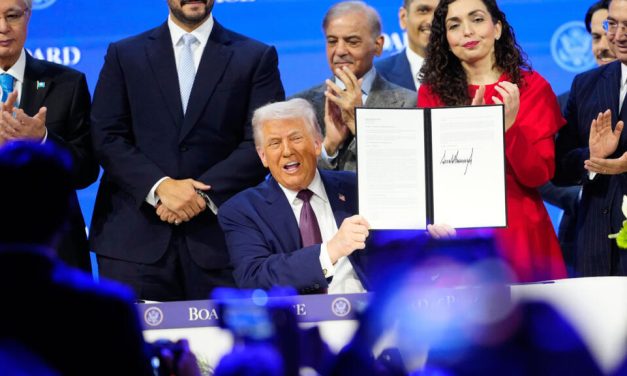
Strategic Council Online – Report: While the second phase of the implementation of the Gaza ceasefire has begun, the establishment of the “Peace Board” chaired by Donald Trump on the sidelines of the Davos meeting (22 January 2026) has become more than a technical mechanism for reconstruction and has turned into a test for the future of the international order.
Despite the signing of the charter by 22 out of 60 invited countries, the limited presence of global leaders at the Davos ceremony and the non-acceptance of this body by the European Union and key Western countries indicate a deep divide in global perceptions of the legitimacy of this mechanism.
In this report, drawing on the analysis of Hadi Borhani, a regional affairs expert, and international data, three strategic questions are addressed: Is the Peace Board an instrument for implementing UN Security Council Resolution 2803 or a substitute for the United Nations? How does the hierarchical architecture of this committee intensify executive challenges in Gaza? And finally, can this body create sustainable peace without the cooperation of Palestinians and with the concentration of power in the hands of a single individual?

America’s Zero-Sum Game in Iraq

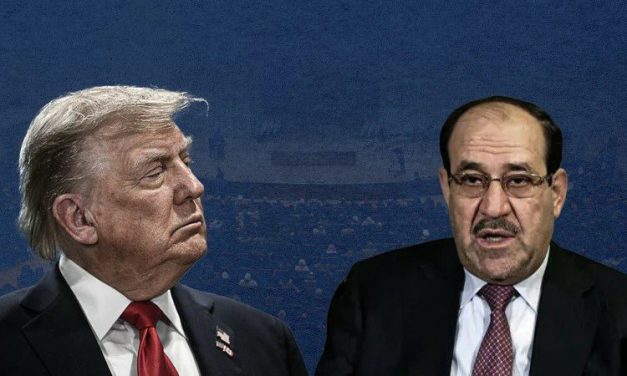
Online Strategic Council – Memoir: The swift selection of Nouri al-Maliki for the premiership constitutes a new phase in Iraq’s political sphere. Multiple factors have played a role in this process, the most important being the prevailing situation in Iraq and the region. Under such circumstances, Iraq requires a powerful and experienced prime minister who can keep the country away from the dangers of wars and crises.

America’s Strategy for Creating Tension in the Asia-Pacific

Strategic Council Online – Opinion: Relations between some countries in the Asia-Pacific region, such as China and Japan or China and Australia, which were previously relatively normal, are trending towards deterioration, and the primary reason for this is the aggressive policies of the United States of America.

The Collapse of the European Security Illusion with the Continuation of the Ukraine War?

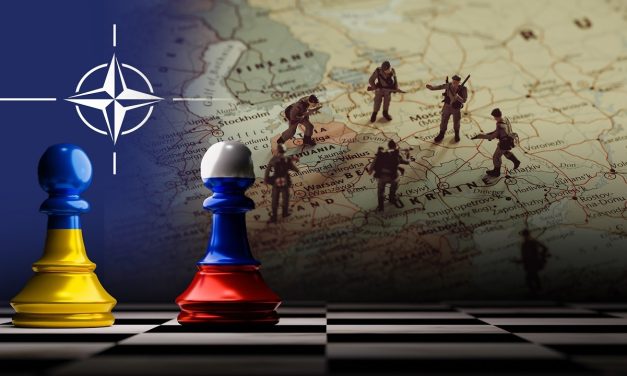
Strategic Council Online – Interview: The Ukraine war has become a new turning point in the political, security, and even commercial relations of allies on both sides of the Atlantic. While this war is nearing its fourth year, many questions still remain regarding its future and its consequences; among them, will the continuation of the Ukraine war lead to the collapse of the European security illusion?

Loading

Últimas publicaciones

Commercial Exploitation of Peace; The Gaza Committee in Confrontation with International Legitimacy

Strategic Council Online – Report: While the second phase of the implementation of the Gaza ceasefire has begun, the establishment of the “Peace Board” chaired by Donald Trump on the sidelines of the Davos meeting (22 January 2026) has become more than a technical mechanism for reconstruction and has turned into a test for the future of the international order.
Despite the signing of the charter by 22 out of 60 invited countries, the limited presence of global leaders at the Davos ceremony and the non-acceptance of this body by the European Union and key Western countries indicate a deep divide in global perceptions of the legitimacy of this mechanism.
In this report, drawing on the analysis of Hadi Borhani, a regional affairs expert, and international data, three strategic questions are addressed: Is the Peace Board an instrument for implementing UN Security Council Resolution 2803 or a substitute for the United Nations? How does the hierarchical architecture of this committee intensify executive challenges in Gaza? And finally, can this body create sustainable peace without the cooperation of Palestinians and with the concentration of power in the hands of a single individual?

America’s Zero-Sum Game in Iraq

Online Strategic Council – Memoir: The swift selection of Nouri al-Maliki for the premiership constitutes a new phase in Iraq’s political sphere. Multiple factors have played a role in this process, the most important being the prevailing situation in Iraq and the region. Under such circumstances, Iraq requires a powerful and experienced prime minister who can keep the country away from the dangers of wars and crises.

America’s Strategy for Creating Tension in the Asia-Pacific

Strategic Council Online – Opinion: Relations between some countries in the Asia-Pacific region, such as China and Japan or China and Australia, which were previously relatively normal, are trending towards deterioration, and the primary reason for this is the aggressive policies of the United States of America.

The Collapse of the European Security Illusion with the Continuation of the Ukraine War?

Strategic Council Online – Interview: The Ukraine war has become a new turning point in the political, security, and even commercial relations of allies on both sides of the Atlantic. While this war is nearing its fourth year, many questions still remain regarding its future and its consequences; among them, will the continuation of the Ukraine war lead to the collapse of the European security illusion?

Loading

DERNIER CONTENU

Commercial Exploitation of Peace; The Gaza Committee in Confrontation with International Legitimacy

Strategic Council Online – Report: While the second phase of the implementation of the Gaza ceasefire has begun, the establishment of the “Peace Board” chaired by Donald Trump on the sidelines of the Davos meeting (22 January 2026) has become more than a technical mechanism for reconstruction and has turned into a test for the future of the international order.
Despite the signing of the charter by 22 out of 60 invited countries, the limited presence of global leaders at the Davos ceremony and the non-acceptance of this body by the European Union and key Western countries indicate a deep divide in global perceptions of the legitimacy of this mechanism.
In this report, drawing on the analysis of Hadi Borhani, a regional affairs expert, and international data, three strategic questions are addressed: Is the Peace Board an instrument for implementing UN Security Council Resolution 2803 or a substitute for the United Nations? How does the hierarchical architecture of this committee intensify executive challenges in Gaza? And finally, can this body create sustainable peace without the cooperation of Palestinians and with the concentration of power in the hands of a single individual?

America’s Zero-Sum Game in Iraq

Online Strategic Council – Memoir: The swift selection of Nouri al-Maliki for the premiership constitutes a new phase in Iraq’s political sphere. Multiple factors have played a role in this process, the most important being the prevailing situation in Iraq and the region. Under such circumstances, Iraq requires a powerful and experienced prime minister who can keep the country away from the dangers of wars and crises.

America’s Strategy for Creating Tension in the Asia-Pacific

Strategic Council Online – Opinion: Relations between some countries in the Asia-Pacific region, such as China and Japan or China and Australia, which were previously relatively normal, are trending towards deterioration, and the primary reason for this is the aggressive policies of the United States of America.

The Collapse of the European Security Illusion with the Continuation of the Ukraine War?

Strategic Council Online – Interview: The Ukraine war has become a new turning point in the political, security, and even commercial relations of allies on both sides of the Atlantic. While this war is nearing its fourth year, many questions still remain regarding its future and its consequences; among them, will the continuation of the Ukraine war lead to the collapse of the European security illusion?

Loading

DERNIER CONTENU

Commercial Exploitation of Peace; The Gaza Committee in Confrontation with International Legitimacy

Strategic Council Online – Report: While the second phase of the implementation of the Gaza ceasefire has begun, the establishment of the “Peace Board” chaired by Donald Trump on the sidelines of the Davos meeting (22 January 2026) has become more than a technical mechanism for reconstruction and has turned into a test for the future of the international order.
Despite the signing of the charter by 22 out of 60 invited countries, the limited presence of global leaders at the Davos ceremony and the non-acceptance of this body by the European Union and key Western countries indicate a deep divide in global perceptions of the legitimacy of this mechanism.
In this report, drawing on the analysis of Hadi Borhani, a regional affairs expert, and international data, three strategic questions are addressed: Is the Peace Board an instrument for implementing UN Security Council Resolution 2803 or a substitute for the United Nations? How does the hierarchical architecture of this committee intensify executive challenges in Gaza? And finally, can this body create sustainable peace without the cooperation of Palestinians and with the concentration of power in the hands of a single individual?

America’s Zero-Sum Game in Iraq

Online Strategic Council – Memoir: The swift selection of Nouri al-Maliki for the premiership constitutes a new phase in Iraq’s political sphere. Multiple factors have played a role in this process, the most important being the prevailing situation in Iraq and the region. Under such circumstances, Iraq requires a powerful and experienced prime minister who can keep the country away from the dangers of wars and crises.

America’s Strategy for Creating Tension in the Asia-Pacific

Strategic Council Online – Opinion: Relations between some countries in the Asia-Pacific region, such as China and Japan or China and Australia, which were previously relatively normal, are trending towards deterioration, and the primary reason for this is the aggressive policies of the United States of America.

The Collapse of the European Security Illusion with the Continuation of the Ukraine War?

Strategic Council Online – Interview: The Ukraine war has become a new turning point in the political, security, and even commercial relations of allies on both sides of the Atlantic. While this war is nearing its fourth year, many questions still remain regarding its future and its consequences; among them, will the continuation of the Ukraine war lead to the collapse of the European security illusion?

Loading

DERNIER CONTENU

Commercial Exploitation of Peace; The Gaza Committee in Confrontation with International Legitimacy

Strategic Council Online – Report: While the second phase of the implementation of the Gaza ceasefire has begun, the establishment of the “Peace Board” chaired by Donald Trump on the sidelines of the Davos meeting (22 January 2026) has become more than a technical mechanism for reconstruction and has turned into a test for the future of the international order.
Despite the signing of the charter by 22 out of 60 invited countries, the limited presence of global leaders at the Davos ceremony and the non-acceptance of this body by the European Union and key Western countries indicate a deep divide in global perceptions of the legitimacy of this mechanism.
In this report, drawing on the analysis of Hadi Borhani, a regional affairs expert, and international data, three strategic questions are addressed: Is the Peace Board an instrument for implementing UN Security Council Resolution 2803 or a substitute for the United Nations? How does the hierarchical architecture of this committee intensify executive challenges in Gaza? And finally, can this body create sustainable peace without the cooperation of Palestinians and with the concentration of power in the hands of a single individual?

America’s Zero-Sum Game in Iraq

Online Strategic Council – Memoir: The swift selection of Nouri al-Maliki for the premiership constitutes a new phase in Iraq’s political sphere. Multiple factors have played a role in this process, the most important being the prevailing situation in Iraq and the region. Under such circumstances, Iraq requires a powerful and experienced prime minister who can keep the country away from the dangers of wars and crises.

America’s Strategy for Creating Tension in the Asia-Pacific

Strategic Council Online – Opinion: Relations between some countries in the Asia-Pacific region, such as China and Japan or China and Australia, which were previously relatively normal, are trending towards deterioration, and the primary reason for this is the aggressive policies of the United States of America.

The Collapse of the European Security Illusion with the Continuation of the Ukraine War?

Strategic Council Online – Interview: The Ukraine war has become a new turning point in the political, security, and even commercial relations of allies on both sides of the Atlantic. While this war is nearing its fourth year, many questions still remain regarding its future and its consequences; among them, will the continuation of the Ukraine war lead to the collapse of the European security illusion?

Loading