Creating security through neutralizing the policies of the global arrogance

2020/12/26 | interview, Politics, top news

Online Strategic Council—Interview: An expert of West Asia affairs says the link between the elements of “belief” and “the management Style of Soleimani” who had pinned his trust in God resulted in the defeat of Daesh.

Referring to some of the characteristics of General Qassem Soleimani how played a leading role in the fight against Daesh, Hossein Akbari told the Strategic Council on Foreign Relations said it could have taken at least 20 more years for the United States to become victorious over Daesh if General Soleimani had not fought terrorists.


Akbari further explained the impacts of the activities and measures by General Soleimani in establishing peace and stability in the region.


“Martyr Soleimani was a successful commander in the resistance front with a lot of sophistications who fought the enemies and removed obstacles. He was able to rely on religious teachings inspired by the thoughts and ideas of Imam Khomeini (PBUH) as well as the incumbent Leader of Islamic Revolution to make the plans of the global arrogance fail.”


General Soleimani’s victory over the global arrogance led to the creation of more security

This expert of West Asia affairs said the link between the tenets and values of the Islamic Revolution from the viewpoint of the ideology of Imam Khomeini (PBUH) under the command of General Someimani marked new events and incidents in the world.


“This resulted in the victory of General Soleimani, with the least equipment and tools in an unbalanced war, over the global arrogance and its regional and trans-regional allies in all areas and these victories resulted in the creation of more security.”


He said Americans were pretending to establish peace in order to wage a war while General Soleimani fought a war to establish peace.


“There are many examples of this. For example, Americans claim they made Saddam Hussein to surrender and when Saddam surrendered, Americans imposed a war on Iraq. In fact, they created peace in order to stage a war! The same was followed in Libya. In the nuclear negotiations with Qaddafi, Americans deposed him of weapons as well as tools and elements of power and ultimately destroyed Libya. Americans also forced Qaddafi into domestic conflicts in order to prevent him from re-gaining power. They are following the same pattern in Venezuela.”


Akbari said General Soleimani acted exactly in reverse and stood against Daesh and fought terrorists, adding that the Middle East, Europe and even the United States would not have been saved from the menace and scourge of Daesh terrorism.


He added that all the world would have been engaged in a war should the resistance movement had not fought Daesh and the United States had implemented his greater Middle East plan.


“If they could have destroyed the Muslim world in cultural terms, the Islamic community would have been forced to follow them. They could have divided Muslim states to 200 countries and implement the so-called Sykes–Picot Agreement. No one could guess what would happen! Perhaps we could have been witness many centuries to conflict, differences, tension and insecurity in the Muslim world so that the US has a reason to be present in the region”.


Referring to the danger of complete domination over the Middle East by the United States in rivalry with China, Russia and Europe, he said the Zionist regime would have exerted full dominance over the Muslim world if the US could have established the foundations of hegemony and arrogance in the region.


“In this case, it was unclear what would have happened for Muslims or Africans. Therefore, resistance movement was the only deterrence against the global arrogance and did not allow the US to fortify its foundation in the region and enter such a stage. The resistance movement today is proud of relying on great people such as Martyr Soleimani.”


Individual characteristics of Martyr Soleimani

Some individual characteristics of General Soleimani resulted in strengthening his power of resistance against the global arrogance, Akbari said, adding that the belief and trust of General Soleimani in God led him conclude that no power in the world can gain supremacy over the power of the Almighty God if the power of humans are linked with the power of God.


“General Soleimani, through sincerity, trust and resort to the Almighty God and through nigh prayers and connection with the God, as well as implementation of the religious tenets and values was able to double its spiritual power and make numerous victories in the sophisticated and unbalanced scenes of war.”


Akbari said General Soleimani believed that even enemies can be treated with honesty and if people link their power to the Almighty God, there will be no need to spread lies, deception and psychological operation; therefore, when General Soleimani negotiated with the enemy, even the archest enemies were confident of his sincerity and honesty.


General Soleimani was also outstanding for his courage and foresight. He would anticipate crises and was never worried about the outcome of weathering crises or what would happen to him. He always tried to remain away from the equation and would advance with a view to his sacred goal. Such a view on the scene and sacrifice could inspire more power for the resistance movement.


Akbari referred to the martyr-seeking and obedience of General Soleimani as two important features of his personality, saying that he struggled in the path of Allah and for this reason, he became victorious over enemies in unbalanced war.


“Look at all the resistance fronts from Iraq, Palestine, Lebanon, Syria and Yemen to Afghanistan; wherever the resistance movement has entered the scene, it has emerged victorious. This owes to the Almighty God.”


He added that no analyst in the world could have predicted that the people of Yemen would have military supremacy under resistance or the people of Palestine, Syria and Hezbollah would have gained such a power.


The role of Soleimani in strengthening the resistance front

Referring to the role played by General Soleimani in the fight against the followers of global arrogance, he said when they fabricated Daesh, it was a dangerous movement and could have taken control of half of the Muslim world.


“However, the Islamic Revolution, the resistance front and command of General Soleimani resulted in the defeat of Daesh. Otherwise, Muslim nations could have gone under the domination of the global arrogance. Americans could not dare standing against and fighting Daesh.”


Akbari added that it could have taken more than 20 years for the Americans to fight against Daesh and defeat it, saying the only factor which was able to combat Daesh and become victorious was the linking of the element of belief and trust in God under Soleimani-style management.


“General Soleimani believed in God and trusted the Almighty. Trust in God and the spirit of martyr-seeking changed these equations and the Daesh khalifate was eliminated. Americans were seeking to create an inside war across the Muslim world so that it takes hundreds of years,” he said, adding that the role played by General Soleimani in the resistance front was determining in stopping the goals and strategies of the Zionist regime and the United States and destroying the Takfiri currents.


Akbari said this was a historic event marked by General Soleimani and his ideology which will remain and acknowledged for the future generations.


Akbari added that the future generations will know that if resistance, resilience, foresight and bravery of General Soleimani had not succeeded him in the war fronts, the fate of the region would have remained unclear for years.


“Definitely, with the martyrdom of General Soleimani, which was an award on the part of the Almighty God, he has remained as a guide for humanity and a pattern of ideology and path for future generations.”
0 Comments

Submit a Comment

Your email address will not be published. Required fields are marked *

LATEST CONTENT

The Security Equation of Southern Lebanon for the Zionist Regime

Strategic Council Online – Opinion: American-Zionist objectives in the region are not limited to weakening Hezbollah. Efforts to disarm Iraqi resistance groups such as Kata’ib Hezbollah and the Popular Mobilization Forces are also part of their subsequent plans.

Commercial Exploitation of Peace; The Gaza Committee in Confrontation with International Legitimacy

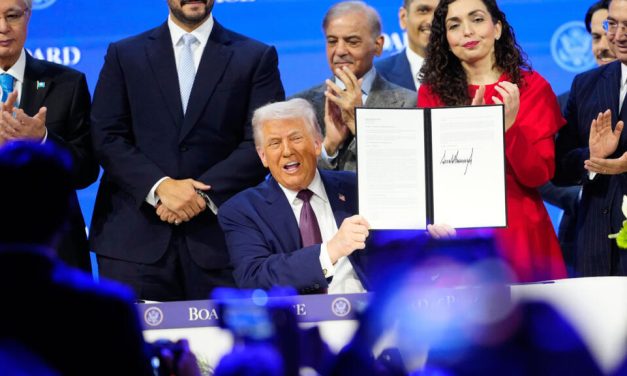
Strategic Council Online – Report: While the second phase of the implementation of the Gaza ceasefire has begun, the establishment of the “Peace Board” chaired by Donald Trump on the sidelines of the Davos meeting (22 January 2026) has become more than a technical mechanism for reconstruction and has turned into a test for the future of the international order.
Despite the signing of the charter by 22 out of 60 invited countries, the limited presence of global leaders at the Davos ceremony and the non-acceptance of this body by the European Union and key Western countries indicate a deep divide in global perceptions of the legitimacy of this mechanism.
In this report, drawing on the analysis of Hadi Borhani, a regional affairs expert, and international data, three strategic questions are addressed: Is the Peace Board an instrument for implementing UN Security Council Resolution 2803 or a substitute for the United Nations? How does the hierarchical architecture of this committee intensify executive challenges in Gaza? And finally, can this body create sustainable peace without the cooperation of Palestinians and with the concentration of power in the hands of a single individual?

America’s Zero-Sum Game in Iraq

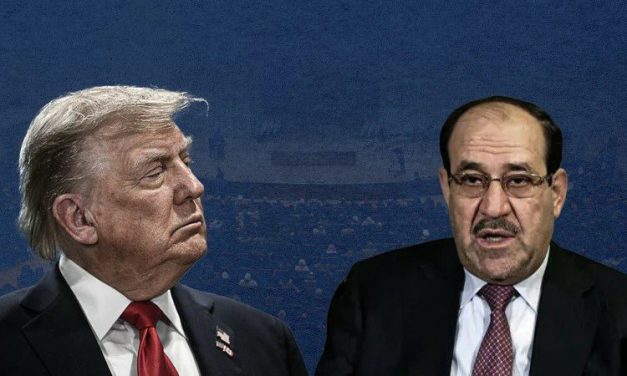
Online Strategic Council – Memoir: The swift selection of Nouri al-Maliki for the premiership constitutes a new phase in Iraq’s political sphere. Multiple factors have played a role in this process, the most important being the prevailing situation in Iraq and the region. Under such circumstances, Iraq requires a powerful and experienced prime minister who can keep the country away from the dangers of wars and crises.

America’s Strategy for Creating Tension in the Asia-Pacific

Strategic Council Online – Opinion: Relations between some countries in the Asia-Pacific region, such as China and Japan or China and Australia, which were previously relatively normal, are trending towards deterioration, and the primary reason for this is the aggressive policies of the United States of America.

Loading

Últimas publicaciones

The Security Equation of Southern Lebanon for the Zionist Regime

Strategic Council Online – Opinion: American-Zionist objectives in the region are not limited to weakening Hezbollah. Efforts to disarm Iraqi resistance groups such as Kata’ib Hezbollah and the Popular Mobilization Forces are also part of their subsequent plans.

Commercial Exploitation of Peace; The Gaza Committee in Confrontation with International Legitimacy

Strategic Council Online – Report: While the second phase of the implementation of the Gaza ceasefire has begun, the establishment of the “Peace Board” chaired by Donald Trump on the sidelines of the Davos meeting (22 January 2026) has become more than a technical mechanism for reconstruction and has turned into a test for the future of the international order.
Despite the signing of the charter by 22 out of 60 invited countries, the limited presence of global leaders at the Davos ceremony and the non-acceptance of this body by the European Union and key Western countries indicate a deep divide in global perceptions of the legitimacy of this mechanism.
In this report, drawing on the analysis of Hadi Borhani, a regional affairs expert, and international data, three strategic questions are addressed: Is the Peace Board an instrument for implementing UN Security Council Resolution 2803 or a substitute for the United Nations? How does the hierarchical architecture of this committee intensify executive challenges in Gaza? And finally, can this body create sustainable peace without the cooperation of Palestinians and with the concentration of power in the hands of a single individual?

America’s Zero-Sum Game in Iraq

Online Strategic Council – Memoir: The swift selection of Nouri al-Maliki for the premiership constitutes a new phase in Iraq’s political sphere. Multiple factors have played a role in this process, the most important being the prevailing situation in Iraq and the region. Under such circumstances, Iraq requires a powerful and experienced prime minister who can keep the country away from the dangers of wars and crises.

America’s Strategy for Creating Tension in the Asia-Pacific

Strategic Council Online – Opinion: Relations between some countries in the Asia-Pacific region, such as China and Japan or China and Australia, which were previously relatively normal, are trending towards deterioration, and the primary reason for this is the aggressive policies of the United States of America.

Loading

DERNIER CONTENU

The Security Equation of Southern Lebanon for the Zionist Regime

Strategic Council Online – Opinion: American-Zionist objectives in the region are not limited to weakening Hezbollah. Efforts to disarm Iraqi resistance groups such as Kata’ib Hezbollah and the Popular Mobilization Forces are also part of their subsequent plans.

Commercial Exploitation of Peace; The Gaza Committee in Confrontation with International Legitimacy

Strategic Council Online – Report: While the second phase of the implementation of the Gaza ceasefire has begun, the establishment of the “Peace Board” chaired by Donald Trump on the sidelines of the Davos meeting (22 January 2026) has become more than a technical mechanism for reconstruction and has turned into a test for the future of the international order.
Despite the signing of the charter by 22 out of 60 invited countries, the limited presence of global leaders at the Davos ceremony and the non-acceptance of this body by the European Union and key Western countries indicate a deep divide in global perceptions of the legitimacy of this mechanism.
In this report, drawing on the analysis of Hadi Borhani, a regional affairs expert, and international data, three strategic questions are addressed: Is the Peace Board an instrument for implementing UN Security Council Resolution 2803 or a substitute for the United Nations? How does the hierarchical architecture of this committee intensify executive challenges in Gaza? And finally, can this body create sustainable peace without the cooperation of Palestinians and with the concentration of power in the hands of a single individual?

America’s Zero-Sum Game in Iraq

Online Strategic Council – Memoir: The swift selection of Nouri al-Maliki for the premiership constitutes a new phase in Iraq’s political sphere. Multiple factors have played a role in this process, the most important being the prevailing situation in Iraq and the region. Under such circumstances, Iraq requires a powerful and experienced prime minister who can keep the country away from the dangers of wars and crises.

America’s Strategy for Creating Tension in the Asia-Pacific

Strategic Council Online – Opinion: Relations between some countries in the Asia-Pacific region, such as China and Japan or China and Australia, which were previously relatively normal, are trending towards deterioration, and the primary reason for this is the aggressive policies of the United States of America.

Loading

DERNIER CONTENU

The Security Equation of Southern Lebanon for the Zionist Regime

Strategic Council Online – Opinion: American-Zionist objectives in the region are not limited to weakening Hezbollah. Efforts to disarm Iraqi resistance groups such as Kata’ib Hezbollah and the Popular Mobilization Forces are also part of their subsequent plans.

Commercial Exploitation of Peace; The Gaza Committee in Confrontation with International Legitimacy

Strategic Council Online – Report: While the second phase of the implementation of the Gaza ceasefire has begun, the establishment of the “Peace Board” chaired by Donald Trump on the sidelines of the Davos meeting (22 January 2026) has become more than a technical mechanism for reconstruction and has turned into a test for the future of the international order.
Despite the signing of the charter by 22 out of 60 invited countries, the limited presence of global leaders at the Davos ceremony and the non-acceptance of this body by the European Union and key Western countries indicate a deep divide in global perceptions of the legitimacy of this mechanism.
In this report, drawing on the analysis of Hadi Borhani, a regional affairs expert, and international data, three strategic questions are addressed: Is the Peace Board an instrument for implementing UN Security Council Resolution 2803 or a substitute for the United Nations? How does the hierarchical architecture of this committee intensify executive challenges in Gaza? And finally, can this body create sustainable peace without the cooperation of Palestinians and with the concentration of power in the hands of a single individual?

America’s Zero-Sum Game in Iraq

Online Strategic Council – Memoir: The swift selection of Nouri al-Maliki for the premiership constitutes a new phase in Iraq’s political sphere. Multiple factors have played a role in this process, the most important being the prevailing situation in Iraq and the region. Under such circumstances, Iraq requires a powerful and experienced prime minister who can keep the country away from the dangers of wars and crises.

America’s Strategy for Creating Tension in the Asia-Pacific

Strategic Council Online – Opinion: Relations between some countries in the Asia-Pacific region, such as China and Japan or China and Australia, which were previously relatively normal, are trending towards deterioration, and the primary reason for this is the aggressive policies of the United States of America.

Loading

DERNIER CONTENU

The Security Equation of Southern Lebanon for the Zionist Regime

Strategic Council Online – Opinion: American-Zionist objectives in the region are not limited to weakening Hezbollah. Efforts to disarm Iraqi resistance groups such as Kata’ib Hezbollah and the Popular Mobilization Forces are also part of their subsequent plans.

Commercial Exploitation of Peace; The Gaza Committee in Confrontation with International Legitimacy

Strategic Council Online – Report: While the second phase of the implementation of the Gaza ceasefire has begun, the establishment of the “Peace Board” chaired by Donald Trump on the sidelines of the Davos meeting (22 January 2026) has become more than a technical mechanism for reconstruction and has turned into a test for the future of the international order.
Despite the signing of the charter by 22 out of 60 invited countries, the limited presence of global leaders at the Davos ceremony and the non-acceptance of this body by the European Union and key Western countries indicate a deep divide in global perceptions of the legitimacy of this mechanism.
In this report, drawing on the analysis of Hadi Borhani, a regional affairs expert, and international data, three strategic questions are addressed: Is the Peace Board an instrument for implementing UN Security Council Resolution 2803 or a substitute for the United Nations? How does the hierarchical architecture of this committee intensify executive challenges in Gaza? And finally, can this body create sustainable peace without the cooperation of Palestinians and with the concentration of power in the hands of a single individual?

America’s Zero-Sum Game in Iraq

Online Strategic Council – Memoir: The swift selection of Nouri al-Maliki for the premiership constitutes a new phase in Iraq’s political sphere. Multiple factors have played a role in this process, the most important being the prevailing situation in Iraq and the region. Under such circumstances, Iraq requires a powerful and experienced prime minister who can keep the country away from the dangers of wars and crises.

America’s Strategy for Creating Tension in the Asia-Pacific

Strategic Council Online – Opinion: Relations between some countries in the Asia-Pacific region, such as China and Japan or China and Australia, which were previously relatively normal, are trending towards deterioration, and the primary reason for this is the aggressive policies of the United States of America.

Loading