Corona Crisis & Strengthening Nationalist Approach Globally

2020/08/21 | Note, Politics, top news

Strategic Council Online - COVID 19 has been stagnating the world economy for at least a decade, and instead of countries working together to counter the coronavirus, we are witnessing a series of rivalries and political work. This process has largely called into question globalization and strengthened nationalism. Dr. Abdolreza Farajirad - Geopolitical Analyst

Corona can be considered an event or incident that has been unique in the international system for almost the past century, and no country was prepared for such an outbreak. Diseases such as SARS and Ebola were common in the past, but these diseases only grew in one area of ​​the world and then gradually disappeared. So in the beginning, the people of the world thought that COVID-19 was something like those diseases, but suddenly, considering that this disease spread in China and they did not take it as seriously as the previous diseases, it became widespread in the world and everywhere in Europe and stretched from the Middle East to the Americas and Latin America.

One of the problems we are witnessing with the outbreak of this disease is that countries have entered into a geopolitical competition which has caused the powers, instead of devoting their energy to cooperating and helping each other, to seek the culprit and prove what country caused the disease to spread worldwide; like the competition we see between the United States and China. If US President Donald Trump had not entered such a competitive environment, naturally the two countries could have cooperated more and controlled the disease to some extent.

In the beginning, when countries were less aware of the disease, aid such as respirators, disinfectants and masks were sent from China to other countries, even the United States, but overall we did not see good coordination between the countries.

One of the issues that fueled this discrepancy was the issue of the World Health Organization. The Americans accused the World Health Organization of being under the control of China; this was rejected by WHO. In fact, what is certain is that the performance of the World Health Organization in this regard was somewhat poor and it could not function properly.

In general, geopolitical rivalry between countries has prevented them from cooperating in drug distribution and vaccination.

Meanwhile, in this geopolitical competition, each country tries to be ahead of the others. In the sense that each country is trying to be registered as the first producer of the vaccine and they do not give complete information to each other in this regard, which is the intensification of the nationalist aspect and ignoring globalization in some countries.

At the same time, some international treaties, such as regional organizations and convergences have been weakened by the outbreak of the corona virus. In fact, people and governments are coming to the conclusion that the coronavirus was a great experiment, and that globalization, once effective in the economy and pushing capital easily across borders, is now left in different countries and across borders and could not reach the people in times of crisis to help their health. As a result, the question arises that do regional and global convergences help effectively in times of danger?

In the meantime, the misinformation provided by the leaders of some countries in the world, such as the United States, Brazil and even Belarus, led to erroneous imagery and intensified the spread of the disease.

Sometimes in the international system and even in our region at the level of regional countries, there have been controversies over this disease. For example, some Arabs in the south of the Persian Gulf, considering that they do not have a positive relationship with Iran, also entered COVID 19 disease in this competition. That is, they propagated among their own people that the disease had been spread by Iran or that the Islamic Republic had deliberately spread the disease among the Arab states. However, these accusations were completely wrong, and if these countries, instead of focusing on such claims, were working together at the regional level to control the virus, we would definitely see better results today. At the same time, countries’ economies would be less affected; In other words, other countries could trade more with each other and reduce the effects of the disease on their economies.

Of course, this issue is not unique to the Middle East, but it is prevalent throughout the world. However, if countries entered the cooperation phase instead of these competitions, they would suffer less and their economies would be less affected.

Therefore, in addition to the great damage it did to the global economy, this disease caused countries to engage in some political work. Regarding the impact of corona on the economy, it can be said that COVID 19 has been stagnating the world economy for at least a decade. However, instead of countries cooperating to fight the virus, we have witnessed a series of rivalries and policies, and this issue has led to the spread of disease and greater vulnerability of the economies, both globally and regionally. This process has largely questioned globalization and strengthened nationalism.
0 Comments

Submit a Comment

Your email address will not be published. Required fields are marked *

LATEST CONTENT

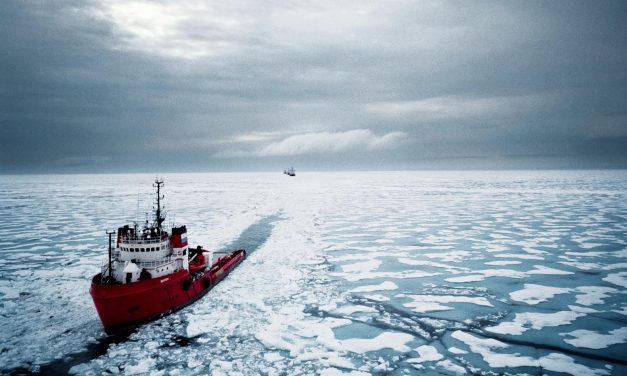
The Arctic; From Geographical Freezing to Geopolitical Boiling

Strategic Council Online – Opinion: The Arctic is no longer a frozen, remote periphery; it has become a live theater of great-power competition, where sea routes, port infrastructure, the law of the sea, and military deterrence are intertwined, shaping the future of maritime security.

The Zionist Regime’s Time Bomb Activated in the West Bank

Strategic Council Online – Opinion: In the midst of America’s military deployment to West Asia and the Persian Gulf, which has increased tensions at the regional and global levels, the Zionist regime has seized the opportunity and accelerated the advancement of its ambitious projects, including the process of the illegal annexation of the West Bank to the occupied territories.

With the End of New START, How Will the Future of Nuclear Security Be Shaped?

Strategic Council Online – Opinion: With the collapse of the last pillar of nuclear arms control between Washington and Moscow, the world stands on the threshold of a ruleless order that both carries the scent of unlimited competition and conceals within itself the possibility of new forms of bargaining.

Loading

Últimas publicaciones

The Arctic; From Geographical Freezing to Geopolitical Boiling

Strategic Council Online – Opinion: The Arctic is no longer a frozen, remote periphery; it has become a live theater of great-power competition, where sea routes, port infrastructure, the law of the sea, and military deterrence are intertwined, shaping the future of maritime security.

The Zionist Regime’s Time Bomb Activated in the West Bank

Strategic Council Online – Opinion: In the midst of America’s military deployment to West Asia and the Persian Gulf, which has increased tensions at the regional and global levels, the Zionist regime has seized the opportunity and accelerated the advancement of its ambitious projects, including the process of the illegal annexation of the West Bank to the occupied territories.

With the End of New START, How Will the Future of Nuclear Security Be Shaped?

Strategic Council Online – Opinion: With the collapse of the last pillar of nuclear arms control between Washington and Moscow, the world stands on the threshold of a ruleless order that both carries the scent of unlimited competition and conceals within itself the possibility of new forms of bargaining.

Loading

DERNIER CONTENU

The Arctic; From Geographical Freezing to Geopolitical Boiling

Strategic Council Online – Opinion: The Arctic is no longer a frozen, remote periphery; it has become a live theater of great-power competition, where sea routes, port infrastructure, the law of the sea, and military deterrence are intertwined, shaping the future of maritime security.

The Zionist Regime’s Time Bomb Activated in the West Bank

Strategic Council Online – Opinion: In the midst of America’s military deployment to West Asia and the Persian Gulf, which has increased tensions at the regional and global levels, the Zionist regime has seized the opportunity and accelerated the advancement of its ambitious projects, including the process of the illegal annexation of the West Bank to the occupied territories.

With the End of New START, How Will the Future of Nuclear Security Be Shaped?

Strategic Council Online – Opinion: With the collapse of the last pillar of nuclear arms control between Washington and Moscow, the world stands on the threshold of a ruleless order that both carries the scent of unlimited competition and conceals within itself the possibility of new forms of bargaining.

Loading

DERNIER CONTENU

The Arctic; From Geographical Freezing to Geopolitical Boiling

Strategic Council Online – Opinion: The Arctic is no longer a frozen, remote periphery; it has become a live theater of great-power competition, where sea routes, port infrastructure, the law of the sea, and military deterrence are intertwined, shaping the future of maritime security.

The Zionist Regime’s Time Bomb Activated in the West Bank

Strategic Council Online – Opinion: In the midst of America’s military deployment to West Asia and the Persian Gulf, which has increased tensions at the regional and global levels, the Zionist regime has seized the opportunity and accelerated the advancement of its ambitious projects, including the process of the illegal annexation of the West Bank to the occupied territories.

With the End of New START, How Will the Future of Nuclear Security Be Shaped?

Strategic Council Online – Opinion: With the collapse of the last pillar of nuclear arms control between Washington and Moscow, the world stands on the threshold of a ruleless order that both carries the scent of unlimited competition and conceals within itself the possibility of new forms of bargaining.

Loading

DERNIER CONTENU

The Arctic; From Geographical Freezing to Geopolitical Boiling

Strategic Council Online – Opinion: The Arctic is no longer a frozen, remote periphery; it has become a live theater of great-power competition, where sea routes, port infrastructure, the law of the sea, and military deterrence are intertwined, shaping the future of maritime security.

The Zionist Regime’s Time Bomb Activated in the West Bank

Strategic Council Online – Opinion: In the midst of America’s military deployment to West Asia and the Persian Gulf, which has increased tensions at the regional and global levels, the Zionist regime has seized the opportunity and accelerated the advancement of its ambitious projects, including the process of the illegal annexation of the West Bank to the occupied territories.

With the End of New START, How Will the Future of Nuclear Security Be Shaped?

Strategic Council Online – Opinion: With the collapse of the last pillar of nuclear arms control between Washington and Moscow, the world stands on the threshold of a ruleless order that both carries the scent of unlimited competition and conceals within itself the possibility of new forms of bargaining.

Loading