US Plan to Plunder Oil & Gas in Kurdish Areas of Syria

2020/08/15 | Note, Politics, top news

Strategic Council Online - At present, the US goal of maintaining presence in the Kurdish regions of Syria is to extract oil and gas, but the question is whether it is possible to implement this agreement and if so, how long will it continue, because the situation in the region is very sensitive and it cannot be assumed that if the Kurds dominate an area, they can use the resources and reserves there as they wish. Reza Mirabian - Middle East Affairs Expert

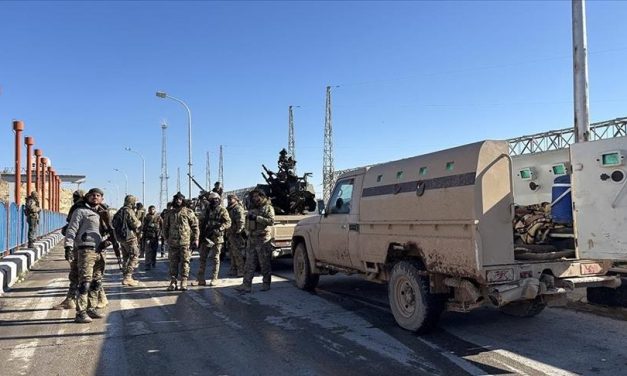
The United States recently signed an agreement with the Kurds in northern Syria to buy Syrian oil from them; The issue was met with a backlash from Iran, with Foreign Ministry spokesman Seyed Abbas Mousavi calling the signing of the oil deal an act against international law and a violation of the principle of national sovereignty and territorial integrity of Syria. Also in recent months, the US military has withdrawn coalition forces from a number of military bases and concentrated them in several larger bases due to increasing pressure on the United States to withdraw from Iraqi territory and escalation of attacks on US bases by the Resistance forces.

In parallel, US movements in Iraqi Kurdistan have increased, and the United States appears to be changing its policy of long-term presence in Iraq by investing more in the Kurdish areas of northern Iraq. The question now is what is the US view of the Kurds in Syria and Iraq at the moment, and what goals does Washington pursue to get closer to them?

In fact, it should not be overlooked that over the past decade or two, Americans have always used the Kurds in the region as a tool for their presence in Iraq and Syria. Therefore, during this period, they have tried to establish their presence in the Kurdish region and strengthened their position in Syria under the pretext of defending the Kurds.

Eventually, however, it became clear that these US efforts do not aim at supporting the Kurds, but seizing and looting Syria’s oil and gas resources. Because the Syrian gas and oil resources are located in the Kurdish region, the United States is trying to maintain its presence in Syria in the future under the guise of supporting the Kurds. In other words, Washington wants to have a share in Syria’s future by consolidating its position in Syria.

Experience has shown that when the Americans achieve their goals, they usually destroy the tools they have used in this direction, and in this particular case, if the United States achieves its goal, it will no longer pay attention to the demands of the Kurds. We saw the same situation in the Kurdistan region, where the Americans turned their backs on the Kurds in the referendum or did not support them during the ISIS attack on Erbil, and the only country that supported Erbil was the Islamic Republic of Iran.

So if the United States is making friends with a group or a country in the whole region, it is only to achieve its goals and use them only as a temporary tool. At the moment, the US goal of being in the Kurdish regions of Syria is to extract oil and gas, but the question is whether this agreement can be implemented and if it is implemented, how long it can last because the situation in the region is very sensitive and it cannot be assumed that if the Kurds controlled a region, they could use the resources there as they wished; Because in the end, the issue of security in these countries comes first, and if there is no security in the Kurdish regions of Syria, American companies will not be able to be there to extract oil and gas.

In general, the security situation in the region is unstable, and neither the Kurds nor any other group or country can guarantee American companies that they can safely extract oil and gas. Of course, such an agreement has not only economic value for the United States, but also political and geopolitical goals. The oil deal raises the Syrian Kurds’ cards for future talks with the Syrian government, and with the Kurds likely gaining power in the Syrian power structure, the United States could pursue its political goals in the country.

Regarding the Kurdish position on US actions, it should be noted that in such cases, unfortunately, the Kurds are forced to cooperate with the United States. In the end, however, the Kurds will not be able to fulfil their demands and will not benefit from cooperating with Washington.

It is unfortunate, then, that the Syrian Kurds have vested hope in the promises of the United States instead of consolidating their position in the political future of the country. And in a situation where it is not clear what the future of the US presence in Syria will be. Naturally, since there is also an Arab population in the area, the continuation of this trend will cause them to oppose the US presence. As a result, the Kurds may benefit from such cooperation in the short term, but in the long run, it will be detrimental to them.

It should also be noted that although governments based in Syria, Iraq, and even some regional governments, such as Iran, oppose the US presence in the region and in Kurdish areas; however, the people of these countries must express their dissatisfaction and resistance to this presence in order for this situation to end.

If the people of the region are not satisfied with the presence of the United States, naturally this country will not be able to be present in the region easily and in the long run.
0 Comments

Submit a Comment

Your email address will not be published. Required fields are marked *

LATEST CONTENT

America’s Zero-Sum Game in Iraq

Online Strategic Council – Memoir: The swift selection of Nouri al-Maliki for the premiership constitutes a new phase in Iraq’s political sphere. Multiple factors have played a role in this process, the most important being the prevailing situation in Iraq and the region. Under such circumstances, Iraq requires a powerful and experienced prime minister who can keep the country away from the dangers of wars and crises.

America’s Strategy for Creating Tension in the Asia-Pacific

Strategic Council Online – Opinion: Relations between some countries in the Asia-Pacific region, such as China and Japan or China and Australia, which were previously relatively normal, are trending towards deterioration, and the primary reason for this is the aggressive policies of the United States of America.

The Collapse of the European Security Illusion with the Continuation of the Ukraine War?

Strategic Council Online – Interview: The Ukraine war has become a new turning point in the political, security, and even commercial relations of allies on both sides of the Atlantic. While this war is nearing its fourth year, many questions still remain regarding its future and its consequences; among them, will the continuation of the Ukraine war lead to the collapse of the European security illusion?

Is Greenland Pushing Europe Toward China?

Strategic Council Online – Interview: A European affairs expert believes that the seizure of Greenland will certainly weaken America’s relations with Europe and its allies. Donald Trump’s view is that he does not need these countries, but if Europe faces significant pressure from the United States, it is natural for it to move toward China.

Alarm Bells Sound for ISIS Revival in Syria: Threat to Iraq and West Asia

Strategic Council Online – Opinion: Numerous documents and pieces of evidence indicate that ISIS, which in recent years has been the region’s biggest threat to security and stability after the Zionist regime, has once again in recent months become a focal point for political and security exploitation by American and Zionist regime security, intelligence, and political circles.

Afghanistan’s Effective Role in the Economy of Eurasia

Strategic Council Online – Interview: A regional affairs researcher stated: Despite projects such as the Khaf-Herat railway and the Herat-Balkh-Mazar-i-Sharif corridor being on the agenda, insecurity and the absence of an inclusive government remain the most significant obstacles to realizing transit corridors and Afghanistan playing an effective role in the economy of Eurasia.

Loading

Últimas publicaciones

America’s Zero-Sum Game in Iraq

Online Strategic Council – Memoir: The swift selection of Nouri al-Maliki for the premiership constitutes a new phase in Iraq’s political sphere. Multiple factors have played a role in this process, the most important being the prevailing situation in Iraq and the region. Under such circumstances, Iraq requires a powerful and experienced prime minister who can keep the country away from the dangers of wars and crises.

America’s Strategy for Creating Tension in the Asia-Pacific

Strategic Council Online – Opinion: Relations between some countries in the Asia-Pacific region, such as China and Japan or China and Australia, which were previously relatively normal, are trending towards deterioration, and the primary reason for this is the aggressive policies of the United States of America.

The Collapse of the European Security Illusion with the Continuation of the Ukraine War?

Strategic Council Online – Interview: The Ukraine war has become a new turning point in the political, security, and even commercial relations of allies on both sides of the Atlantic. While this war is nearing its fourth year, many questions still remain regarding its future and its consequences; among them, will the continuation of the Ukraine war lead to the collapse of the European security illusion?

Is Greenland Pushing Europe Toward China?

Strategic Council Online – Interview: A European affairs expert believes that the seizure of Greenland will certainly weaken America’s relations with Europe and its allies. Donald Trump’s view is that he does not need these countries, but if Europe faces significant pressure from the United States, it is natural for it to move toward China.

Alarm Bells Sound for ISIS Revival in Syria: Threat to Iraq and West Asia

Strategic Council Online – Opinion: Numerous documents and pieces of evidence indicate that ISIS, which in recent years has been the region’s biggest threat to security and stability after the Zionist regime, has once again in recent months become a focal point for political and security exploitation by American and Zionist regime security, intelligence, and political circles.

Afghanistan’s Effective Role in the Economy of Eurasia

Strategic Council Online – Interview: A regional affairs researcher stated: Despite projects such as the Khaf-Herat railway and the Herat-Balkh-Mazar-i-Sharif corridor being on the agenda, insecurity and the absence of an inclusive government remain the most significant obstacles to realizing transit corridors and Afghanistan playing an effective role in the economy of Eurasia.

Loading

DERNIER CONTENU

America’s Zero-Sum Game in Iraq

Online Strategic Council – Memoir: The swift selection of Nouri al-Maliki for the premiership constitutes a new phase in Iraq’s political sphere. Multiple factors have played a role in this process, the most important being the prevailing situation in Iraq and the region. Under such circumstances, Iraq requires a powerful and experienced prime minister who can keep the country away from the dangers of wars and crises.

America’s Strategy for Creating Tension in the Asia-Pacific

Strategic Council Online – Opinion: Relations between some countries in the Asia-Pacific region, such as China and Japan or China and Australia, which were previously relatively normal, are trending towards deterioration, and the primary reason for this is the aggressive policies of the United States of America.

The Collapse of the European Security Illusion with the Continuation of the Ukraine War?

Strategic Council Online – Interview: The Ukraine war has become a new turning point in the political, security, and even commercial relations of allies on both sides of the Atlantic. While this war is nearing its fourth year, many questions still remain regarding its future and its consequences; among them, will the continuation of the Ukraine war lead to the collapse of the European security illusion?

Is Greenland Pushing Europe Toward China?

Strategic Council Online – Interview: A European affairs expert believes that the seizure of Greenland will certainly weaken America’s relations with Europe and its allies. Donald Trump’s view is that he does not need these countries, but if Europe faces significant pressure from the United States, it is natural for it to move toward China.

Alarm Bells Sound for ISIS Revival in Syria: Threat to Iraq and West Asia

Strategic Council Online – Opinion: Numerous documents and pieces of evidence indicate that ISIS, which in recent years has been the region’s biggest threat to security and stability after the Zionist regime, has once again in recent months become a focal point for political and security exploitation by American and Zionist regime security, intelligence, and political circles.

Afghanistan’s Effective Role in the Economy of Eurasia

Strategic Council Online – Interview: A regional affairs researcher stated: Despite projects such as the Khaf-Herat railway and the Herat-Balkh-Mazar-i-Sharif corridor being on the agenda, insecurity and the absence of an inclusive government remain the most significant obstacles to realizing transit corridors and Afghanistan playing an effective role in the economy of Eurasia.

Loading