
Fouad Taghavi – International Economics Expert
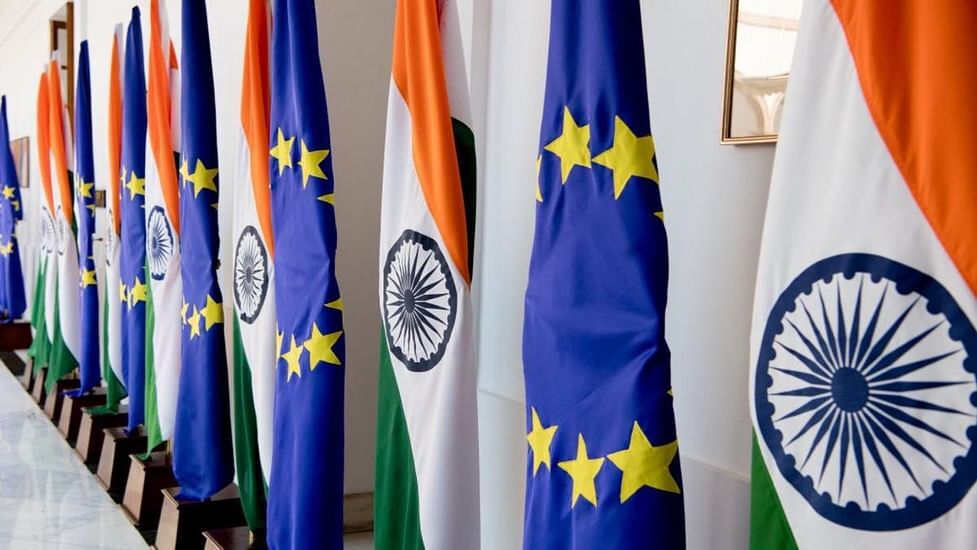
The goal of the trade agreement being negotiated between the European Union and India is to create the world’s largest free trade area by population. This treaty, which may reach the conclusion stage in the coming months, will have profound geopolitical and economic consequences beyond the borders of the two sides.
For countries including Eurasian nations, understanding the various dimensions of this emerging cooperation and formulating an appropriate strategic response is an unavoidable necessity. This agreement is not merely about increasing the exchange of goods; it is a clear sign of the rearrangement of the global economic order and the formation of selective alliances based on strategic trust.
The Economic Dimensions of a New Giant in the Making
This comprehensive agreement will integrate a market comprising nearly two billion consumers with a massive combined GDP. The primary objective is a significant boost to bilateral trade flows, which already exceed 120 billion euros annually. A significant, gradual reduction in tariffs across a wide range of sectors is planned.
The EU’s goal is better access for its automotive industry exports, chemical products, and specialized services to India’s high-potential market. In return, India gains easier export opportunities for its agricultural products, textiles, apparel, and information technology services to one of the world’s wealthiest markets. This complementary exchange could accelerate the economic growth of both parties.
Strategic cooperation in the fields of green technologies, the digital economy, and resilient supply chains is a vital and modern part of this treaty. Joint investment in developing renewable energy, secure digital infrastructure, and clean technologies will be the axis of this cooperation.
The transfer of technical knowledge and an increase in European direct investment in India’s industrial and technological sectors are also among other important components. These comprehensive dimensions elevate the agreement beyond a conventional trade treaty, turning it into a document for long-term economic convergence.
Geopolitical Motivations: The West’s Response to Strategic Dependency
This agreement cannot be considered merely an economic deal. Within the context of increasing strategic competition between the West and China, this treaty has become a key tool for reducing dependency and creating balance in the Indo-Pacific. The European Union, following the shocks of the COVID-19 pandemic and the Ukraine war, has become acutely aware of the risks of excessive reliance on a single country for supply chains. This “strategic dependency” has created deep concern, particularly in vital sectors such as semiconductors, critical minerals, and key pharmaceuticals.
India, with its young population, skilled workforce, dynamic economy, and political system close to the West, is seen as an attractive option for relocating parts of this supply chain. Cooperation in highly sensitive areas, such as the design and production of chips and the extraction and processing of rare earth minerals needed for the energy and digital transitions, constitutes the geostrategic heart of this agreement.
With this move, Europe effectively establishes India as a trusted partner in the ambitious “Global Gateway” plan for investing in resilient and sustainable infrastructure worldwide. This action weaves India into a network of Western technological cooperation and prevents the deepening of technological relations between New Delhi and Beijing.
Dual Consequences: From Marginalization to Opportunity Creation
The formation of this powerful economic axis could have complex and dual consequences for various Asian countries. On the one hand, a set of indirect challenges and threats is conceivable. Strengthening direct trade corridors between Europe and India via other sea routes or alternative land corridors, such as the International North–South Transport Corridor (INSTC), which does not pass through Iranian territory, may gradually diminish Iran’s attractiveness and potential transit role. This diversion of trade flows could weaken Iran’s income opportunities and geopolitical leverage.
Furthermore, channeling a considerable volume of European investments and economic attention towards India’s vast and fast-growing market may naturally reduce the share of other destinations, including West Asia, in Europe’s foreign investment portfolio. This “diversion effect” could be perceptible in the long term. Additionally, if India is strengthened as a rival production hub in some similar industries in the region (such as petrochemicals or steel), competition in traditional export markets will intensify.
On the other hand, completely ignoring the potential opportunities of this development is also not wise. For example, Iran could, with intelligence and active economic diplomacy, seek to create links with intermediary rings of these new value chains. For instance, exporting specific minerals or medium-value-added petrochemical products to India, which would ultimately be used in finished goods exported to Europe, could be a realistic possibility.
Developing “triangular cooperation” in areas such as green energy, agricultural technologies, or health tourism is also worth examining. The key to capitalizing on these opportunities is identifying Iran’s complementary comparative advantages relative to the Indian economy and presenting specific proposals.
A Fundamental Distinction from the Strategic Self-Sufficiency Model
Some analysts may interpret this agreement as a Western response to concepts like “strategic self-sufficiency”; however, deeper analysis reveals the fundamental distinction of this treaty. The strategy of Europe and India is, in essence, an integrative and connectivity-building project. The goal is not to disconnect from the world, but to create new, secure, and controllable interdependencies within a framework of shared values and strategic interests. This model seeks to diversify partners and reduce risk concentration, not to cut off dependency.
This treaty could mark Europe’s return to a selective, alliance-based multilateralism. In this new pattern, countries form more flexible economic blocs based on political and security commonalities. Within this framework, strategic considerations and the reduction of geopolitical risks often take priority over purely economic interests.
This phenomenon, more than a sign of a return to isolationist policies, indicates a fundamental transformation in the concept of globalization: it is being redefined not based on free-market ideology, but on strategic trust and alignment in security.
This text was translated using artificial intelligence and may contain errors. If you notice an apparent mistake that makes the text incomprehensible, please inform the website editors.


0 Comments