Strategic Opportunity to Advance Smart Energy Diplomacy

2025/11/16 | Economy, interview, top news

Strategic Council Online - Interview: An energy affairs analyst stated that the current state of Western sanctions policies indicates the need to redefine Iran's geo-energy position through smart energy diplomacy.

Reducing Europe’s Dependence on Russian Gas and Alternative Options
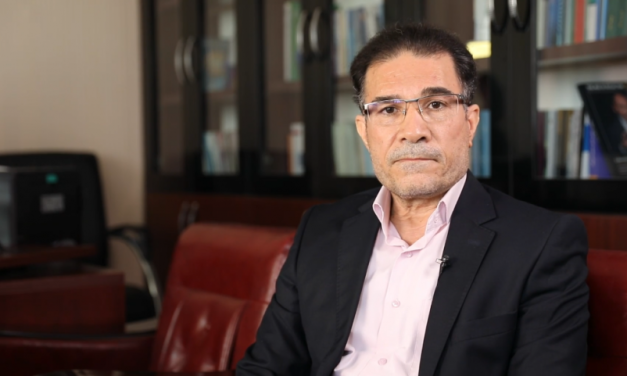
Seyed Mohammad Ali Khatibi, in an interview with the website of the Strategic Council on Foreign Relations, stated: “With the beginning of the Ukraine crisis and the extensive sanctions against Russia by the West, the world energy order has undergone a profound transformation, and this crisis continues.”
He added: “Europe, which for decades supplied a major part of its gas from Russia, suddenly faced the reality of severe dependence and an energy supply vacuum. After the cessation or reduction of gas flow from lines like Nord Stream, European countries, and especially Germany, even four years after the Ukraine war, are still searching for a sustainable solution.”
According to this expert, “Although Qatar’s role in sending energy to Europe and the more serious entry of the United States have somewhat mitigated the crisis, Europe is still looking for more reliable and sustainable options; options that guarantee supply security and are reliable within the framework of East-West relations.”
Iran’s former representative to OPEC emphasized, “Recent developments have made Iran’s geo-energy position more prominent than ever. Iran is the second-largest holder of gas reserves and the fourth-largest holder of oil reserves in the world, and this natural capacity makes it a pivotal player in any new energy equation.”
He explained: “Although Europe has turned in the short term towards sources such as LNG from the US and Qatar or increased imports from Norway, these paths are neither sustainable nor cheap. The costs of transporting and converting LNG have put additional pressure on the European economy and increased the continent’s vulnerability to geopolitical crises.”
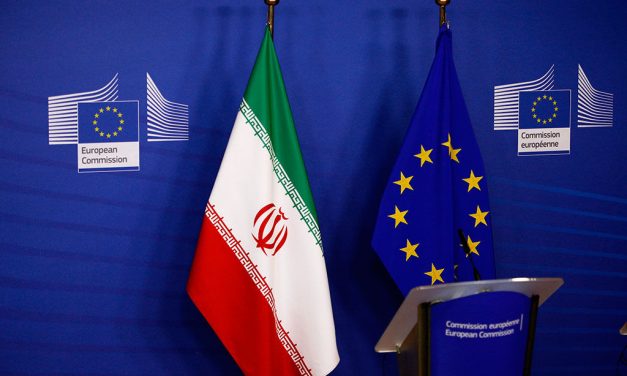
Referring to Iran’s geographical location, Khatibi said: “Iran can supply part of Europe’s gas needs through a safe, short, land-based route via Turkey or Armenia. Even if the sanctions are not lifted, European economic interests necessitate moving towards more realistic engagement with Tehran in the near future.”
He added: “Of course, Europe must have independence of action in this path and, apart from what the Israeli regime and the US dictate to them regarding how to deal with Iran, take the path of direct engagement with Tehran to achieve a win-win agreement in the energy sector. However, Europe is not yet on this path.”

Obstacles to Iran’s Energy Exports
The energy analyst continued: “Despite huge oil and gas capacities, Iran’s energy exports in recent years have faced limitations due to political pressures and unilateral US sanctions. Iran’s problem lies not in production or technical capacity, but in the externally imposed political obstacles. If the international environment, especially regarding sanctions, becomes rational, Iran will be able to export several billion cubic meters of gas to various destinations in a short period.”
Referring to the situation of the country’s gas fields, especially South Pars, Khatibi noted: “Over the past two decades, Iran has been able to bring a significant portion of its gas reserves into the production cycle, but the lack of foreign investment and new technologies has caused part of the country’s potential capacity to remain unused. The continuation of the sanctions cycle has also created problems in supplying domestic energy.”
He emphasized: “With the return of European or Asian companies to Iran’s energy sector, gas production levels could be increased by 30% in less than three years, and exports could be multiplied.”
According to Khatibi: “Iran is located in a region sensitive in terms of geopolitics; but unlike many energy-exporting countries, political stability and the security of transmission lines in the country are guaranteed. Countries in the region from the Persian Gulf to the Eastern Mediterranean have repeatedly faced military conflicts, while Iran has been able to maintain its stability, a component that Europe and Asia need for their energy future.”
He recalled: “US sanctions against Iran’s energy sector, in the form of the policy of maximum pressure and reducing oil sales to zero, are not only illegal and contrary to the principles of free trade, but have also been to the detriment of Western consumers themselves. This policy, during the first and second Trump administrations, never stopped Iran’s energy production and exports.”
Khatibi added, “The maximum pressure policy disrupted the energy market balance. In fact, if Iran had an active presence in the global market, Europe would not have faced a severe energy crisis, and prices would not have increased so much.”

Potential Cooperation with China and India in Energy Exports
Iran’s former OPEC representative emphasized the need to pivot to the East and deepen cooperation with emerging powers. He said: “China and India, as two major energy importers, will play a pivotal role in the future of the global market. Iran, with its privileged geographical location, vast resources, and historical ties with East Asia, can use this opportunity to create balance in its energy policy.”
He noted: “Tehran and Beijing, by signing the 25-year cooperation document, have laid a strategic foundation for developing long-term cooperation in the energy sector. China seeks to diversify its energy sources, and Iran can be one of its most reliable partners in supplying oil and gas. Also, India, with its rapid economic growth, has an increasing energy demand. Within the framework of projects such as Chabahar Port and the Peace Pipeline, sustainable cooperation can be designed.”
Khatibi stated that “Iran’s focus should be on long-term contracts, joint investment in export infrastructure, and the development of LNG technology so that the country can stabilize its share in the global market,” adding: “The global energy market is redefining itself, and countries that distance themselves from short-term policies and move towards sustainable and smart partnerships will be successful.”
This expert emphasized: “The world today is entering a new stage of geo-energy competition; a stage in which Iran’s oil and gas resources will be crucial not only for regional stability but also for global energy security.”
He concluded: “The sanctions on Russia showed that Europe’s unilateral dependence on one supplier was a strategic mistake. In these conditions, Iran, with its abundant capacities, internal stability, and privileged geographical position, can become a pillar of balance in the energy market, provided that the path of rational and win-win cooperation with the East and the West is pursued in a balanced manner.”
0 Comments

LATEST CONTENT

An Analysis of Europe’s Approach Towards Iran

Strategic Council Online – Opinion: The sanctions imposed by the European Union against the Islamic Republic of Iran before the activation of the snapback mechanism represent an effort to exert additional political and economic pressure on our country to change the system’s behavior regarding regional developments.

The Outlook for Ukraine Peace Negotiations

Strategic Council Online – Opinion: After nearly four years of conflict, the outlook for Ukraine-Russia peace negotiations remains unclear; not due to a lack of initiatives, but because of deep conflicts of interest, Russia’s strategy of exploiting the battlefield situation politically, and European confusion and lack of consensus. Achieving a lasting peace seems out of reach.

Review of the 2026 budget of the Zionist regime

Strategic Council Online – Opinion: It appears that the primary focus of the 2026 budget of the Israeli regime is on simultaneously managing war pressures, social discontent, and political ambiguities; even if this approach leads to the postponement of structural reforms and increases financial risks in the medium-term horizon.

The Implications of the United States’ New National Security Strategy on Global Order

Strategic Council Online – Opinion: The United States’ 2025 National Security Strategy (NSS 2025) is not merely a revision of Washington’s foreign policy, but an official declaration redefining its interests, sphere of influence, and the framework of international relations. This change could shake the foundations of the post-Cold War order and place Europe and NATO in a difficult position.

The goals of the Israeli regime in its military attacks on Syria

Strategic Council Online – Interview: A West Asian affairs expert said: One of the main objectives of the recent attacks by the Israeli regime on Syria is to prevent the establishment of a strong central authority or government in Syria. Therefore, it is trying to prevent the comprehensive rule of the new government under the name of Ahmad al-Sharaa or al-Julani by attacking and invading southern Syria and various regions of the country, even Damascus.

China’s Strategy to Become a Global Military Power

Strategic Council Online – Opinion: With its large arsenal of hypersonic missiles, advanced cyber capabilities, extensive satellite network, and survivable nuclear triad, China has become a serious competitor to the United States. Nevertheless, in strategic documents, including the 2025 National Security Document, China describes itself as a development-oriented power committed to the international order, whose path to rise does not pass through war.

Loading

Últimas publicaciones

An Analysis of Europe’s Approach Towards Iran

Strategic Council Online – Opinion: The sanctions imposed by the European Union against the Islamic Republic of Iran before the activation of the snapback mechanism represent an effort to exert additional political and economic pressure on our country to change the system’s behavior regarding regional developments.

The Outlook for Ukraine Peace Negotiations

Strategic Council Online – Opinion: After nearly four years of conflict, the outlook for Ukraine-Russia peace negotiations remains unclear; not due to a lack of initiatives, but because of deep conflicts of interest, Russia’s strategy of exploiting the battlefield situation politically, and European confusion and lack of consensus. Achieving a lasting peace seems out of reach.

Review of the 2026 budget of the Zionist regime

Strategic Council Online – Opinion: It appears that the primary focus of the 2026 budget of the Israeli regime is on simultaneously managing war pressures, social discontent, and political ambiguities; even if this approach leads to the postponement of structural reforms and increases financial risks in the medium-term horizon.

The Implications of the United States’ New National Security Strategy on Global Order

Strategic Council Online – Opinion: The United States’ 2025 National Security Strategy (NSS 2025) is not merely a revision of Washington’s foreign policy, but an official declaration redefining its interests, sphere of influence, and the framework of international relations. This change could shake the foundations of the post-Cold War order and place Europe and NATO in a difficult position.

The goals of the Israeli regime in its military attacks on Syria

Strategic Council Online – Interview: A West Asian affairs expert said: One of the main objectives of the recent attacks by the Israeli regime on Syria is to prevent the establishment of a strong central authority or government in Syria. Therefore, it is trying to prevent the comprehensive rule of the new government under the name of Ahmad al-Sharaa or al-Julani by attacking and invading southern Syria and various regions of the country, even Damascus.

China’s Strategy to Become a Global Military Power

Strategic Council Online – Opinion: With its large arsenal of hypersonic missiles, advanced cyber capabilities, extensive satellite network, and survivable nuclear triad, China has become a serious competitor to the United States. Nevertheless, in strategic documents, including the 2025 National Security Document, China describes itself as a development-oriented power committed to the international order, whose path to rise does not pass through war.

Loading

DERNIER CONTENU

An Analysis of Europe’s Approach Towards Iran

Strategic Council Online – Opinion: The sanctions imposed by the European Union against the Islamic Republic of Iran before the activation of the snapback mechanism represent an effort to exert additional political and economic pressure on our country to change the system’s behavior regarding regional developments.

The Outlook for Ukraine Peace Negotiations

Strategic Council Online – Opinion: After nearly four years of conflict, the outlook for Ukraine-Russia peace negotiations remains unclear; not due to a lack of initiatives, but because of deep conflicts of interest, Russia’s strategy of exploiting the battlefield situation politically, and European confusion and lack of consensus. Achieving a lasting peace seems out of reach.

Review of the 2026 budget of the Zionist regime

Strategic Council Online – Opinion: It appears that the primary focus of the 2026 budget of the Israeli regime is on simultaneously managing war pressures, social discontent, and political ambiguities; even if this approach leads to the postponement of structural reforms and increases financial risks in the medium-term horizon.

The Implications of the United States’ New National Security Strategy on Global Order

Strategic Council Online – Opinion: The United States’ 2025 National Security Strategy (NSS 2025) is not merely a revision of Washington’s foreign policy, but an official declaration redefining its interests, sphere of influence, and the framework of international relations. This change could shake the foundations of the post-Cold War order and place Europe and NATO in a difficult position.

The goals of the Israeli regime in its military attacks on Syria

Strategic Council Online – Interview: A West Asian affairs expert said: One of the main objectives of the recent attacks by the Israeli regime on Syria is to prevent the establishment of a strong central authority or government in Syria. Therefore, it is trying to prevent the comprehensive rule of the new government under the name of Ahmad al-Sharaa or al-Julani by attacking and invading southern Syria and various regions of the country, even Damascus.

China’s Strategy to Become a Global Military Power

Strategic Council Online – Opinion: With its large arsenal of hypersonic missiles, advanced cyber capabilities, extensive satellite network, and survivable nuclear triad, China has become a serious competitor to the United States. Nevertheless, in strategic documents, including the 2025 National Security Document, China describes itself as a development-oriented power committed to the international order, whose path to rise does not pass through war.

Loading