

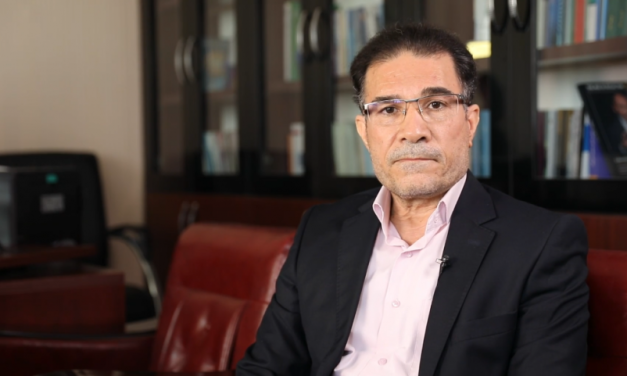
Ehsan Kiani, in a dialogue with the website of the Strategic Council on Foreign Relations, stated: “In the first year of the Ukraine-Russia war, it was somewhat difficult for Europe to replace its energy resources, but later it managed to some extent instill a culture of conservation in part of the target societies and also somewhat succeeded in securing alternative resources from both the United States and the West Asia region. For this reason, as was thought, at least in Europe, the energy crisis did not form to the extent that it would become a security crisis and has remained merely an economic issue.”
Kiani believes that the impact of this issue on Iran’s market was not positive, because Russia’s economic dependence on currency resources from oil sales increased the necessity of diversifying its customers in Asia and forced Iran to sell its oil at a lower price and with more discount than before. Therefore, it is estimated that the Ukraine crisis has not had a positive impact on Iran’s energy market.”
Kiani explained regarding the impact of sanctions on Iran’s energy market: “In this regard, US secondary sanctions are impactful from the perspective that they force private companies and governments to reduce their financial dealings with Iran. The main impact of sanctions on Iran’s energy market has been the reduction of its oil customers, and according to estimates by domestic media, ninety percent of Iran’s oil is sold to China, and this itself means that Iran does not have a strong hand in oil pricing.”
This international affairs expert emphasized: However, this does not necessarily mean that Iran’s foreign currency income has decreased, because Iran has been able to make reforms in this area both by increasing production and through modifying the path of currency entry into the country from the perspective of being able to replace the UAE dirham route. On the other hand, Iran can, through some bilateral and multilateral contracts from the perspective of diversifying the type of exchange and the type of oil sales stabilization, provide some of its needs in such a way that no specific damage is inflicted on those incomes resulting from currency supply.
Kiani explained about the discussion of Iran’s tools for preserving and stabilizing its oil revenues: “The discussion of replacing the currency stabilization route through the UAE dirham and preventing multiplicity and parallel work in oil sales can lead to the consolidation and stabilization of oil income and prevent the reduction that occurs through intermediaries.” Noting that Iran is forced to use informal routes due to sanctions, he added: “When this route turns into several informal routes, it can create additional side costs and higher profit margins for that intermediary and overall reduce oil income.”
The international affairs expert, in response to the question of how effective long-term contracts with Asian customers are in stabilizing oil income, said that Iran has almost no Asian customers other than China, and the other customers do not buy much oil from our country to make Iran have any specific plans.
He pointed out: “It seems that Iran can make plans by stabilizing the China route so that this oil export turns into a long-term investment and becomes useful for infrastructure projects inside the country.”
Kiani, in response to the question of whether focusing on the export of natural gas and LNG can improve Iran’s income balance or not, explained: “If our country has customers for natural gas, this is possible, but given the situation that has formed in Iran-Europe relations, it is unlikely that Iran can invest in this path. In the discussion of exporting to Qatar and then exporting to another customer, it is also unclear how achievable this is.”




0 Comments