

Dr. Kamran Karami – Expert on Arabian Peninsula Issues
The Saudi-American petrodollar agreement was concluded after the 1973 oil crisis. This equation led Riyadh to price its oil exports exclusively in US dollars and to invest excess oil revenues in US Treasury bonds. In return, Washington provided military support to the Kingdom of Saudi Arabia without committing to a formal treaty.
The non-renewal of this strategic oil agreement, if realized, indicates several important components in the dual process of erosion- finding the macro role of US-China competition at the level of the international system:
The first component is China’s transformation into Saudi Arabia’s first oil-trading partner, which has brought the actor’s oil purchase from the kingdom to nearly 3 million barrels per day. At the same time, the growth of non-oil trade in the framework of the Comprehensive Strategic Partnership Agreement, the overlap of the Belt and Road Initiative with the Saudi 2030 Initiative, and the two sides’ eagerness to finalize free trade with the Persian Gulf Cooperation Council have made China the first partner of Saudi Arabia’s political economy.
The second component, which is in line with China’s role in emerging international trends and the turning of capital flow to the East, is the erosion of the political and economic role of the United States for Saudi Arabia and the Arab governments. The decrease in US oil imports from Saudi Arabia to less than 300,000 barrels is a good reflection of this important development. In such an environment, the US becoming the fifth economic partner of Saudi Arabia after China, the European Union, Japan, and India is another part of significant changes in the international political economy of the Persian Gulf. The limitation of America’s role in providing advanced weapons and some intelligence-security consultations shows the diversification of the portfolio of international partners for Saudi Arabia.
The result of the action of these two components contains several important points:
First, in the context of its global competition, one of the fundamental aspects of this is the hegemony of global financial institutions and mechanisms. China has a fundamental need for the globalization of the yuan. Beijing has long intensified pressure on its oil partners to denominate a significant portion of their oil and non-oil trade in currencies other than the dollar. Naturally, Saudi Arabia will have to solve the concerns and considerations and, more importantly, the pressure on China by changing its financial portfolio.
Second, the shift in the energy landscape towards renewable energies has made Saudi Arabia more aware of this development than other actors and, as a result, prepares itself for its impulses, from changing oil marketing and pricing to new payments and, more importantly, investing in renewable energy as part of the 2030 initiative, from gas and nuclear to green hydrogen.
Third, the growing influence of emerging economies that has manifested itself in the BRICS bloc is another part of the changing trends in the international political economy, which has reminded these players of the need to create alternative financial mechanisms due to the issue of the extent and scope of US sanctions.
Fourth, through this issue, Saudi Arabia is trying to use it as a playing card in its volatile relations with America. In the sense that in the absence of the umbrella of American support in the military and security fields, other areas can also be affected. The Saudis seem to be trying to use divergent elements to finalize the official military agreement with the United States.
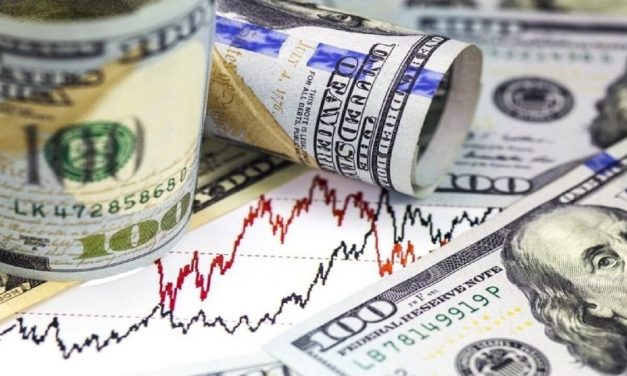
In the end, it should be noted that the current path of dollarization is at the beginning of its course and should be considered part of the future vision and not the current time. Nearly 80% of global oil sales are still priced in dollars and 20% in other currencies. Although the path has gained significant speed, there is still a long way to go before de-dollarization and creating an alternative financial system.






0 Comments