
Latif Ghasemi – Geopolitical Affairs Expert
The transformation of the Arctic is not merely a product of climate change, but rather the result of geography returning to the center of international politics. The reduction in ice thickness and the lengthening of shipping seasons have turned the “Northern Sea Route” from a theoretical idea into a practical option for global trade. This change alone was enough to transform a region once on the margins of strategic calculations into an arena for great power competition.
Reports published by the Atlantic Council on Sweden’s new strategy indicate that the Nordic countries consider the Arctic not merely an environmental issue, but part of Europe’s security architecture. Within this framework, the issues of hybrid threats, the protection of maritime infrastructure, and the security of shipping lanes have become new priorities.
On the other side, analyses published in Eurasia Review emphasize that the Arctic has entered a phase of “sustained competition,” a competition that neither escalates to the level of direct war nor returns to the carefree cooperation of the past. This region today is a clear example of controlled competition: major actors proceed with caution, but they do not retreat.
Russia’s Strategy; Gradual Consolidation, Not Noisy Display
Russia has invested more strategically in the Arctic than any other actor. The longest coastline, direct access to resources, and historical experience of presence in this expanse have placed Moscow in a privileged position. But what matters is not merely its presence, but its modus operandi.
Analyses published by the Russian International Affairs Council show that the Kremlin considers the Arctic part of its national security and even its geopolitical identity. In practice, Russia’s strategy rests on three pillars:
First, the reconstruction and modernization of Soviet-era military bases. This action is not merely symbolic; rather, it creates a network of anchor points for logistical support, aerial and maritime surveillance, and ensuring sustained presence.
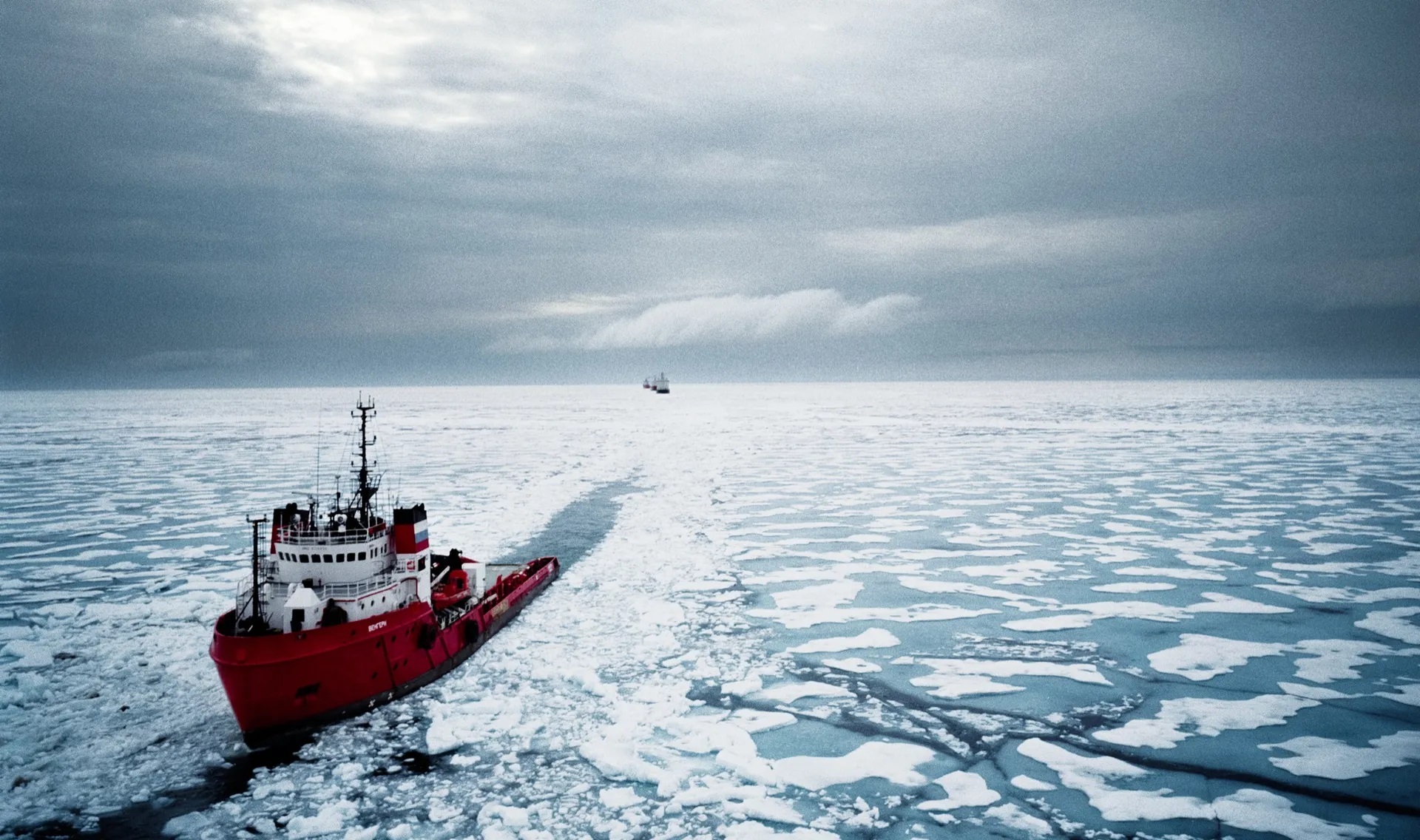
Second, the development of a nuclear-powered icebreaker fleet and port infrastructure. By possessing the world’s most advanced icebreaker fleet, Russia effectively holds operational control over the Northern Sea Route. This control translates into simultaneous economic and political power.
Third, pursuing legal claims within the framework of the UN Convention on the Law of the Sea. Moscow seeks to bolster its physical presence with legal legitimacy. This fusion of hard power and legal instruments is the same pattern seen in other strategic regions: consolidation before rules are finalized.
In reality, Russia is advancing in the Arctic not with haste and fanfare, but with patience and planning. This “quiet consolidation” may be less noisy than large-scale exercises, but it has a more profound impact.
Greenland has become one of the flashpoints of this competition. Analyses published by the Stimson Center indicate that this island is highly significant both in terms of critical mineral resources and due to its strategic location for monitoring the North Atlantic Ocean.
In this case, it is not just about rivalry between Russia and the West; intra-alliance relations are also under pressure. The United States, Europe, and the Scandinavian countries each have their own perception of how to manage this space. This very difference in perceptions shows that the Arctic is not merely a field for bloc confrontation; it is also an arena for readjusting relations within blocs.
Behavioral Patterns of Great Powers in the Arctic
By juxtaposing the behavior of Russia, the United States, and the Nordic countries, several distinct behavioral patterns can be identified:
First, pre-emptive presence; no power waits for the complete consolidation of rules; everyone strives to cement their foothold before legal arrangements are finalized.
Second, the linkage between economy and security: investment in ports, energy, and maritime corridors is not merely economic; it is an instrument of influence and deterrence.
Third, managing tension below the threshold of war; competition is intense, but everyone knows that direct conflict in the Arctic would carry unpredictable costs; therefore, actors resort to grey-zone tools, selective diplomacy, and limited shows of force.
Fourth, the simultaneous use of hard and soft tools, from naval exercises to legal argumentation and media narrative-building, all serve to consolidate position.
These patterns are not limited to the Arctic. What we see in this frozen expanse is being replicated in other maritime regions, with the difference that the Arctic, due to the novelty of its routes and resources, displays these behaviors more clearly and starkly.
Implications for Future Maritime Security
Maritime security in the 21st century is no longer solely dependent on the number of ships and submarines. Port infrastructure, satellite surveillance networks, icebreaker capability, legal legitimacy, and even narrative management are all components of modern maritime power. The Arctic has revealed this transformation with greater clarity.
Competition in this region demonstrates that future maritime power will be networked and multi-layered. A country that can simultaneously advance physical presence, economic infrastructure, and legal legitimacy gains a superior position. Russia is precisely consolidating its position with such an approach.
The Arctic, ultimately, is not an exception; it is a preview. What happens today in the cold northern waters will be repeated tomorrow in other strategic seas. Understanding the dynamics at play in this region makes it possible to comprehend the behavioral patterns of great powers; patterns shaped by strategic patience, gradual consolidation, and the combination of diverse instruments.
In a world where power competition has returned to the forefront of politics, the Arctic shows that seas have once again become the main stage of geopolitics, but this time not with 19th-century cannons, but with networks, infrastructure, and rules that are still being formed.
This text was translated using artificial intelligence and may contain errors. If you notice a clear error that makes the text incomprehensible, please inform the website editors.


0 Comments