

Hossein Rouyvaran, in an interview with the website of the Strategic Council on Foreign Relations, stated: “Iran’s geographical location has not changed. Its position overlooking the Persian Gulf, the center of energy exports, and the Strait of Hormuz remains Iran’s strategic advantage.”
He added: “Ansarullah, as a member of the Axis of Resistance in the Bab el-Mandeb, despite the efforts of the US, European powers, and the Israeli regime, was able to solidify its position, and no one can deny this new reality.”
This expert emphasized: “The Zionist regime, by attacking Iran, tried to show that with Western support, it can contain any power in the region; but Iran’s response created a new balance in the war.”
He said: “The Israeli regime may have air superiority, but Iran, with its missile power, which is also active in the Israeli regime’s airspace, established a balance of power and demonstrated its military strength.”
Rouyvaran considered this balance a turning point in regional deterrence and stressed: “Iran was able to counter all the Western capabilities at the disposal of the Israeli regime, and this achievement has strategic importance.”
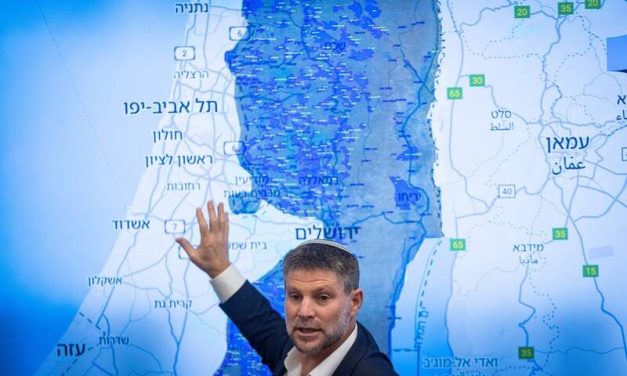
He added: “Netanyahu has openly spoken about expanding the borders of the Israeli regime and published a map that included parts of Egypt, Lebanon, Jordan, Syria, Iraq, Saudi Arabia, Kuwait, and the West Bank. This map is a threat to the entire region and shows that the Israeli regime is still bent on expansionism.”
Rouyvaran noted: “Under such circumstances, the tendency towards Iran becomes more pronounced, because the US has shown that it has no ally in the region other than the Israeli regime. Even Qatar was not safe from the attacks of this regime.”
He added: “Iran is now receiving more attention from regional countries because it is the only country capable of creating a real balance of power with the Israeli regime.”
He emphasized, “Recent developments have led to Iran receiving more support from regional countries than before. An example of this was the support of the Arab League and the Organization of Islamic Cooperation for Iran after the Israeli regime’s attack; support that indicates the countries’ security concerns and their desire to cooperate with Iran.”
The Failure of US Plans and the Limitations of the ‘Abraham’ Accords
Rouyvaran, regarding the announced US plans for the region, said: “Trump had no coherent plan for peace. He made a different statement every day, and no clear strategy can be extracted from his rhetoric.”
He added: “The United States has always sought to consolidate its hegemony, but Trump, with the so-called Abraham Accords, exhausted the existing capacities.”
He explained: “During Trump’s term, countries like the UAE, Bahrain, Sudan, and Morocco normalized their relations with the Israeli regime, but this process cannot be expanded further. Even Saudi Arabia, which is a key player in this process, has announced that without the realization of a two-state solution, it will not recognize the Israeli regime.”
Rouyvaran emphasized: “Given the Israeli regime’s widespread crimes in Gaza, Arab public opinion will not allow governments to expand the Abraham Accords. This regime is in the most isolated situation in its history, and such isolation is unprecedented since its establishment.”
He added: “European countries, to relieve pressure from public opinion, have raised the issue of recognizing a Palestinian state, but such a change is not seen in the US; therefore, the current trend is not in favor of Washington or the Israeli regime.”
Rouyvaran stressed: “While the Israeli regime seeks to eliminate the two-state idea, US plans have practically reached a dead end.”
Rouyvaran, regarding the Israeli regime’s goals in line with the US grand strategy, said: “Netanyahu has defined many of his actions within the framework of Washington’s objectives and tries to highlight the role of the Israeli regime in engineering the new order of West Asia.”
He added: “Although the US failed to realize its new plan in West Asia, the Israeli regime claims it has provided this opportunity for Washington.”
He explained: “In the view of some American politicians, the Israeli regime has created changes in Syria and Lebanon in favor of the West, but the facts on the ground show that they neither succeeded in weakening Hezbollah in Lebanon nor were they able to create a stable system in Syria.”
He emphasized: “Although the Israeli regime has acted in line with US policies, the consequence of this alignment is the intensification of Western public anger against Washington. According to polls, the majority of youth under 35 in the West support Palestine and oppose the Israeli regime.”
Rouyvaran said: “This social development creates long-term costs for the West because the new generation does not accept the narrative of the Zionist media and has a more critical view of US policies in West Asia.”
He added, “The main priority of the West now is China and Russia, and Iran is not its direct target. However, the US is trying to pressure China by controlling the energy resources of the Persian Gulf and targets Iran, Russia, and Venezuela.”
He noted: “The US cannot contain Russia, therefore it has focused pressure on Iran and Venezuela to threaten China’s energy supply route by restricting energy exports. Although Iran’s share in energy exports is less compared to other countries, unlike some regional governments, it enjoys independence in decision-making.”
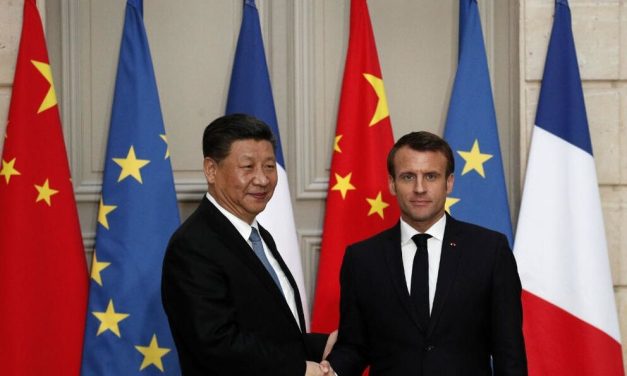
Rouyvaran emphasized: “US pressure on Tehran is part of the broader pressure on Beijing, and this doubles the importance of Iran’s strategic coordination with China.”
He concluded: “Iran must act in its global interactions in such a way that the West realizes that confrontation with Tehran is to its own detriment.”





0 Comments