Consequences of U.S. Intelligence Assistance to Kyiv for Attacking Russian Infrastructure

Online Strategic Council - Discussion: A university professor stated that recent developments in the Ukraine war, with Washington's new decision to provide intelligence assistance to Kyiv for attacking Russian infrastructure, have once again altered the strategic balance in Eastern Europe.

Dr. Yusuf Molaei, a university professor and international affairs expert, continued in an interview with the Foreign Relations Strategic Council website: On the other hand, the provision of the first G7 loan from frozen Russian assets has broken the boundaries of the economic dispute between the West and Moscow. Under such circumstances, the future of the war is moving towards a “protracted and time-consuming battle,” and red lines are being redefined.

From U.S. Intelligence Assistance to Changing the Rules on the Battlefield

The analyst said: “The direct entry of the United States into the intelligence phase of the war, meaning providing targeted data to Kyiv for attacks on Russian refineries, energy transmission lines, and power plants, signifies crossing a traditional red line; because until now, Washington had tried to maintain an indirect role.”
He noted: “Although America uses the term ‘non-offensive intelligence support,’ this level of cooperation could push Russia towards unpredictable reactions, because Moscow had previously warned that any U.S. intelligence or military involvement in attacks deep into Russian territory could lead to an escalation of the conflict and even the war’s expansion beyond the region. Now we are observing a change in the nature of the war from a military classic to a hybrid war centered on intelligence, energy, and economics.”
This analyst added: “This new approach was designed to pressure Moscow to return it to the negotiating table, but in practice, it backfired. Russia, by adopting a policy of asymmetric response, is attempting to demonstrate that its deterrent tools extend beyond the geography of Ukraine. Therefore, Washington has unintentionally entered a stage that will be more difficult to control than before.”

The Battle of Wills After the Inconclusive Alaska and Washington Meetings
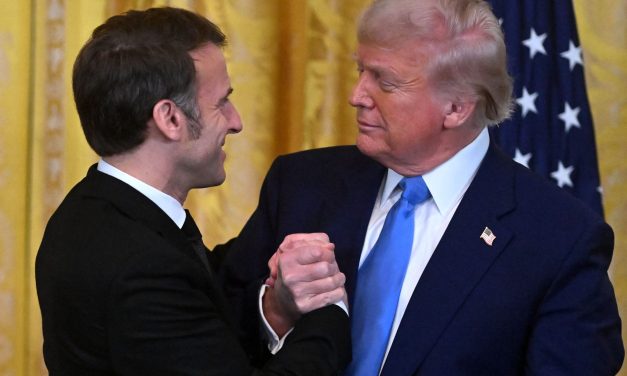
Molaei emphasized: “Following the inconclusive political talks at the Alaska meeting between Donald Trump and Vladimir Putin and the failure of the Washington meeting to create consensus between America and its European allies, the Ukraine war has transformed from a ‘tactical conflict’ into a ‘battle of wills.'”
He said: “When diplomatic efforts prove ineffective, political will replaces rationality. Moscow and Kyiv, with Western support, no longer desire a ceasefire, and both have concluded that stopping at this stage would mean accepting a relative defeat. Therefore, continuing the war until the outlined goals are achieved is part of the new strategy of both sides.”
He added: “The Ukraine war is no longer solely confined to military geography but has become a competition of prestige. For Russia, this war is part of rebuilding its geopolitical identity in opposition to the West. For the West, maintaining the credibility of the global liberal order depends on continued support for Ukraine. The battlefield is not just about land, but also about meaning and the power of narrative.”
According to Molaei, “The result of such a situation is that any ceasefire proposal or peace dialogue faces complete distrust; the current war of attrition is the result of the common language between Moscow and the West being called into question. This is the battle of wills; a war in which the logic of compromise has given way to the logic of elimination.”

G7 Loan: Crossing Russia’s Economic Red Lines
Simultaneously with field developments, the G7’s decision to provide a $26.5 billion loan to Ukraine from the interest on frozen Russian assets has added a new dimension to the East-West economic confrontation. Molaei described this move as “potentially transformative, but high-risk” and said: “For the first time since World War II, the financial resources of a country involved in a conflict are not only frozen but used for the benefit of the opposing side; a decision that crosses international norms regarding the ownership of sovereign assets.”
He added: “Russia has described this action as state theft and warned that in response, it will seize Western countries’ assets within its own territory. Thus, a second kind of economic war is taking shape, turning the financial and energy fronts into part of the Ukraine war.”
According to Molaei, “This loan goes beyond financing the war and sends a message to Moscow that the Western financial system is ready to use unconventional tools to contain Russia, but in return, it increases distrust in the global financial system. Countries that keep their reserves in Western banks are now asking: if their relations with Washington or Brussels sour, will their assets remain safe?”
He continued: “This loan symbolizes crossing Russia’s economic red lines and shows that the war has transcended the military dimension and entered the structure of the global economy; a situation that will complicate trade wars and currency battles.”

Diplomacy at the Boiling Point
Despite the escalation of conflicts and both sides crossing political and military red lines, Molaei believes that “one can still speak of diplomacy at the boiling point; a situation that arises during the most critical junctures of wars.”
He explained: “When all parties reach a point where continuing the war yields no gains and the costs exceed the benefits, the path for negotiations opens; that same diplomacy at the boiling point, when no red lines remain and rationality enters the arena to prevent collapse.”
Molaei added: “The Ukraine war is also on the verge of such a stage; Russia is facing economic pressure and accumulated sanctions, and Ukraine is in a state of attrition regarding infrastructure and human resources. Western support has also diminished due to public opinion fatigue and the energy crisis in Europe. These conditions could push the parties towards forced negotiations.”
He emphasized: “Returning to diplomacy requires credible mediation; perhaps the role of China, Turkey, or India will be decisive in this regard. Otherwise, in the absence of a new diplomatic mechanism, the risk of the war expanding into new domains, including cyber, energy, and space, is likely.”
Molaei concluded with a warning: “Recent developments should not be viewed solely within the framework of U.S.-Russia confrontation, but rather analyzed within the context of changing international order. U.S. intelligence assistance, the G7 loan, and Russia’s reactions are signs of the global system transitioning from ‘mutual deterrence’ to ‘mutual pressure’; a situation that will shape the future of the Ukraine war and power relations in the twenty-first century.”
0 Comments

LATEST CONTENT

America’s Zero-Sum Game in Iraq

Online Strategic Council – Memoir: The swift selection of Nouri al-Maliki for the premiership constitutes a new phase in Iraq’s political sphere. Multiple factors have played a role in this process, the most important being the prevailing situation in Iraq and the region. Under such circumstances, Iraq requires a powerful and experienced prime minister who can keep the country away from the dangers of wars and crises.

America’s Strategy for Creating Tension in the Asia-Pacific

Strategic Council Online – Opinion: Relations between some countries in the Asia-Pacific region, such as China and Japan or China and Australia, which were previously relatively normal, are trending towards deterioration, and the primary reason for this is the aggressive policies of the United States of America.

The Collapse of the European Security Illusion with the Continuation of the Ukraine War?

Strategic Council Online – Interview: The Ukraine war has become a new turning point in the political, security, and even commercial relations of allies on both sides of the Atlantic. While this war is nearing its fourth year, many questions still remain regarding its future and its consequences; among them, will the continuation of the Ukraine war lead to the collapse of the European security illusion?

Is Greenland Pushing Europe Toward China?

Strategic Council Online – Interview: A European affairs expert believes that the seizure of Greenland will certainly weaken America’s relations with Europe and its allies. Donald Trump’s view is that he does not need these countries, but if Europe faces significant pressure from the United States, it is natural for it to move toward China.

Alarm Bells Sound for ISIS Revival in Syria: Threat to Iraq and West Asia

Strategic Council Online – Opinion: Numerous documents and pieces of evidence indicate that ISIS, which in recent years has been the region’s biggest threat to security and stability after the Zionist regime, has once again in recent months become a focal point for political and security exploitation by American and Zionist regime security, intelligence, and political circles.

Afghanistan’s Effective Role in the Economy of Eurasia

Strategic Council Online – Interview: A regional affairs researcher stated: Despite projects such as the Khaf-Herat railway and the Herat-Balkh-Mazar-i-Sharif corridor being on the agenda, insecurity and the absence of an inclusive government remain the most significant obstacles to realizing transit corridors and Afghanistan playing an effective role in the economy of Eurasia.

Loading

Últimas publicaciones

America’s Zero-Sum Game in Iraq

Online Strategic Council – Memoir: The swift selection of Nouri al-Maliki for the premiership constitutes a new phase in Iraq’s political sphere. Multiple factors have played a role in this process, the most important being the prevailing situation in Iraq and the region. Under such circumstances, Iraq requires a powerful and experienced prime minister who can keep the country away from the dangers of wars and crises.

America’s Strategy for Creating Tension in the Asia-Pacific

Strategic Council Online – Opinion: Relations between some countries in the Asia-Pacific region, such as China and Japan or China and Australia, which were previously relatively normal, are trending towards deterioration, and the primary reason for this is the aggressive policies of the United States of America.

The Collapse of the European Security Illusion with the Continuation of the Ukraine War?

Strategic Council Online – Interview: The Ukraine war has become a new turning point in the political, security, and even commercial relations of allies on both sides of the Atlantic. While this war is nearing its fourth year, many questions still remain regarding its future and its consequences; among them, will the continuation of the Ukraine war lead to the collapse of the European security illusion?

Is Greenland Pushing Europe Toward China?

Strategic Council Online – Interview: A European affairs expert believes that the seizure of Greenland will certainly weaken America’s relations with Europe and its allies. Donald Trump’s view is that he does not need these countries, but if Europe faces significant pressure from the United States, it is natural for it to move toward China.

Alarm Bells Sound for ISIS Revival in Syria: Threat to Iraq and West Asia

Strategic Council Online – Opinion: Numerous documents and pieces of evidence indicate that ISIS, which in recent years has been the region’s biggest threat to security and stability after the Zionist regime, has once again in recent months become a focal point for political and security exploitation by American and Zionist regime security, intelligence, and political circles.

Afghanistan’s Effective Role in the Economy of Eurasia

Strategic Council Online – Interview: A regional affairs researcher stated: Despite projects such as the Khaf-Herat railway and the Herat-Balkh-Mazar-i-Sharif corridor being on the agenda, insecurity and the absence of an inclusive government remain the most significant obstacles to realizing transit corridors and Afghanistan playing an effective role in the economy of Eurasia.

Loading

DERNIER CONTENU

America’s Zero-Sum Game in Iraq

Online Strategic Council – Memoir: The swift selection of Nouri al-Maliki for the premiership constitutes a new phase in Iraq’s political sphere. Multiple factors have played a role in this process, the most important being the prevailing situation in Iraq and the region. Under such circumstances, Iraq requires a powerful and experienced prime minister who can keep the country away from the dangers of wars and crises.

America’s Strategy for Creating Tension in the Asia-Pacific

Strategic Council Online – Opinion: Relations between some countries in the Asia-Pacific region, such as China and Japan or China and Australia, which were previously relatively normal, are trending towards deterioration, and the primary reason for this is the aggressive policies of the United States of America.

The Collapse of the European Security Illusion with the Continuation of the Ukraine War?

Strategic Council Online – Interview: The Ukraine war has become a new turning point in the political, security, and even commercial relations of allies on both sides of the Atlantic. While this war is nearing its fourth year, many questions still remain regarding its future and its consequences; among them, will the continuation of the Ukraine war lead to the collapse of the European security illusion?

Is Greenland Pushing Europe Toward China?

Strategic Council Online – Interview: A European affairs expert believes that the seizure of Greenland will certainly weaken America’s relations with Europe and its allies. Donald Trump’s view is that he does not need these countries, but if Europe faces significant pressure from the United States, it is natural for it to move toward China.

Alarm Bells Sound for ISIS Revival in Syria: Threat to Iraq and West Asia

Strategic Council Online – Opinion: Numerous documents and pieces of evidence indicate that ISIS, which in recent years has been the region’s biggest threat to security and stability after the Zionist regime, has once again in recent months become a focal point for political and security exploitation by American and Zionist regime security, intelligence, and political circles.

Afghanistan’s Effective Role in the Economy of Eurasia

Strategic Council Online – Interview: A regional affairs researcher stated: Despite projects such as the Khaf-Herat railway and the Herat-Balkh-Mazar-i-Sharif corridor being on the agenda, insecurity and the absence of an inclusive government remain the most significant obstacles to realizing transit corridors and Afghanistan playing an effective role in the economy of Eurasia.

Loading