The Outlook for Political-Security Developments in Syria

Strategic Council Online – Interview: A regional affairs expert stated that at present, it is impossible to have an accurate prediction whether Syria will move towards stability or another civil war will occur in the country in the next six months to a year.

Hadi Seyed  Afghahi, in an interview with the website of the Strategic Council on Foreign Relations, emphasized that the situation in Syria has entered a dark tunnel after the fall of Bashar al-Assad, and no prospect or glimmer of hope for opening and establishing order and security in the country is visible. He stated: The situation in Syria is very fragile; the transitional government of Ahmad al-Jarba still lacks the legitimacy and acceptance of the general Syrian populace, especially in turbulent areas like eastern Euphrates, the Al-Suwayda region, or even the western coastal region where the Alawite minority is predominantly present.

He pointed to the problems of the current Syrian government in providing security and stability. He said: The multiplicity of decision-making centers, the arbitrary actions of armed groups operating fire-at-will in Syria who are unwilling to come under the umbrella of the current government, the demands for a share by Syrian internal groups and ethnicities, and regional and international actors are among the problems and issues that have made the process of consolidating the new sovereignty in Syria difficult. In fact, the policy of internal groups and regional and international actors towards Syria will shape the future of this country.

This regional affairs expert, noting that the US, Turkey, the Zionist regime, Saudi Arabia, and Qatar support Ahmad al-Jarba, but are still not sure he will succeed in establishing stability in Syria, stated: After all, Ahmad al-Jarba came to power without holding elections, and his declaration of himself as president of Syria for four years may or may not be accepted by the Syrian people and the international community, and this issue has only been accepted by a few countries that covet Syria and its resources. Consequently, Syria cannot easily interact with countries worldwide officially, as per international treaties.

Regarding the Zionist regime’s demand for a share from the current Syrian government, he noted: The Zionist regime wants to dominate Syria’s security, political, and territorial situation, which has angered Turkey, as Turkey considers itself a major claimant for a share in Syria’s current situation. On the other hand, Saudi Arabia is supposed to inject 13 billion dollars into Syria’s economy to stabilize its economic situation. Naturally, through this, it seeks to exert influence and gain concessions from Syria.

This regional affairs expert regarding the tensions that arose over the Al-Suwayda region and the Druze in Syria said: Inside Suwayda, some Druze are unwilling to go under the umbrella of the Zionist regime and are seeking autonomy through an agreement and obtaining guarantees from the US and Saudi Arabia; on the other hand, they do not want to confront the current Syrian government to stabilize their security situation in this way.

Seyed Afghahi regarding the possible fragmentation of Syria and the Zionist regime’s approach towards it stated: The Zionist regime claims it does not want to occupy all of Syria, but instead wants to disarm the entire region and provide a security belt to prevent military action against the Israeli regime, especially in the southern and southwestern areas of Daraa, Al-Suwayda, Al-Quneitra, and the Golan.

He said: In a meeting that the foreign minister of the Syrian interim government had for four hours in Paris with the Minister of Strategic Affairs of the Zionist regime, mediated by the US special envoy for Lebanon and Syria, it was finally concluded that the Syrian government would give assurances to the Zionist regime that it wants to establish security, provided that this regime does not attack Syria under the pretext of supporting some ethnicities and minorities. Moreover, Ahmad al-Jarba knows that until the government gains control over Al-Suwayda, Hasakah, and Deir ez-Zor and establishes its forces in these areas, it cannot dominate all of Syria.

Seyed Afghahi continued: On the other hand, besides the Zionist regime, Turkey also has interventions in Syria’s political-security process and knows that the Zionist regime, under the pretext of supporting the Kurdish and Druze minorities, wants to dominate sensitive areas of Syria.

This regional affairs expert emphasized: The Israeli regime, in attacking Syria, first seeks its own security and then the issue of water and the economy. While the water issue is a global crisis, the Zionist regime is trying to divert all water resources in the region towards the Occupied Territories, which is a tense and important issue for the Syrian people.

Stating that the US seeks to create stability and strengthen Ahmad al-Jarba’s position in Syria, he said: In the meeting Ahmad al-Jarba had with Trump in Saudi Arabia, he gave Trump all kinds of promises and commitments, and in return, Trump also promised to lift sanctions against Syria, but lifting all sanctions, including “Caesar,” must be approved by Congress.

This regional affairs expert emphasized: The US and the Zionist regime are waiting to persuade Ahmad al-Jarba to establish political relations with the Zionist regime and sign the Abraham Accords, to bring Syria under their control. Hence, the situation in Syria is fragile.

He said: To what extent the general public in Syria will accept this situation and roadmap regarding Syria is unclear. Many Syrians do not accept the Israeli regime’s flag flying in Syria. This is a fact, and clashes and tensions in Aleppo, Idlib, and Hasakah are still ongoing.

This regional affairs expert regarding Russia’s role and the changing game in favor of this country following recent developments and the Israeli regime’s attacks on Syria stated: This happening is unlikely, at least shortly. Many issues, positions, strategies, and roles must be clarified. Syria’s interactions are changing, and soon Syrian officials will have negotiations with Russia; therefore, Russia’s role in Syria’s future will probably change, and we must see in which direction it goes. Of course, it is predictable that Syrian-Russian interaction will be with Turkey’s agreement.

Seyed Afghahi noted: Of course, the Saudis and Emiratis are not happy that Turkey is an important claimant for a share in Syria, do not welcome this issue, and welcome any opportunity to push Turkey back in Syria. This very issue may disrupt the process of some interactions in Syria.

He finally stressed: The issue of non-Syrian armed groups in Syria is still a fundamental problem in the country, and it is also unclear exactly which countries support them. Therefore, it is impossible to have an accurate prediction whether in the next six months to a year, Syria will move towards stability or another civil war will occur in the country.
0 Comments

LATEST CONTENT

Commercial Exploitation of Peace; The Gaza Committee in Confrontation with International Legitimacy

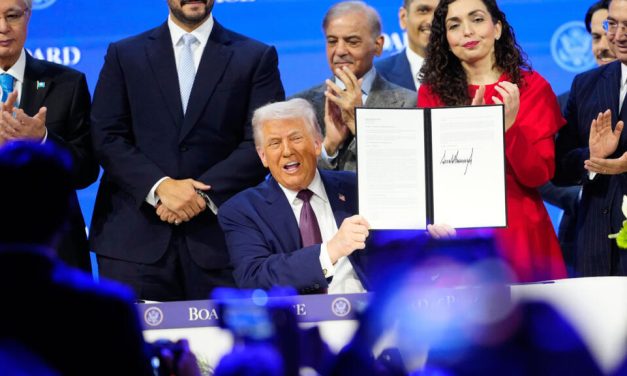
Strategic Council Online – Report: While the second phase of the implementation of the Gaza ceasefire has begun, the establishment of the “Peace Board” chaired by Donald Trump on the sidelines of the Davos meeting (22 January 2026) has become more than a technical mechanism for reconstruction and has turned into a test for the future of the international order.
Despite the signing of the charter by 22 out of 60 invited countries, the limited presence of global leaders at the Davos ceremony and the non-acceptance of this body by the European Union and key Western countries indicate a deep divide in global perceptions of the legitimacy of this mechanism.
In this report, drawing on the analysis of Hadi Borhani, a regional affairs expert, and international data, three strategic questions are addressed: Is the Peace Board an instrument for implementing UN Security Council Resolution 2803 or a substitute for the United Nations? How does the hierarchical architecture of this committee intensify executive challenges in Gaza? And finally, can this body create sustainable peace without the cooperation of Palestinians and with the concentration of power in the hands of a single individual?

America’s Zero-Sum Game in Iraq

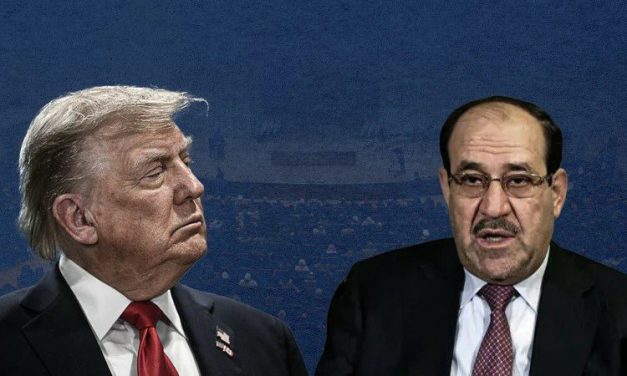
Online Strategic Council – Memoir: The swift selection of Nouri al-Maliki for the premiership constitutes a new phase in Iraq’s political sphere. Multiple factors have played a role in this process, the most important being the prevailing situation in Iraq and the region. Under such circumstances, Iraq requires a powerful and experienced prime minister who can keep the country away from the dangers of wars and crises.

America’s Strategy for Creating Tension in the Asia-Pacific

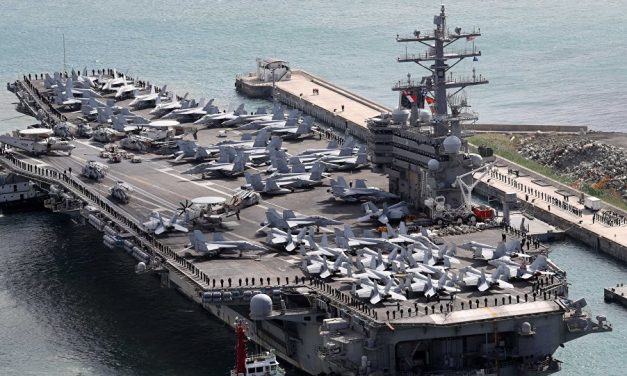
Strategic Council Online – Opinion: Relations between some countries in the Asia-Pacific region, such as China and Japan or China and Australia, which were previously relatively normal, are trending towards deterioration, and the primary reason for this is the aggressive policies of the United States of America.

The Collapse of the European Security Illusion with the Continuation of the Ukraine War?

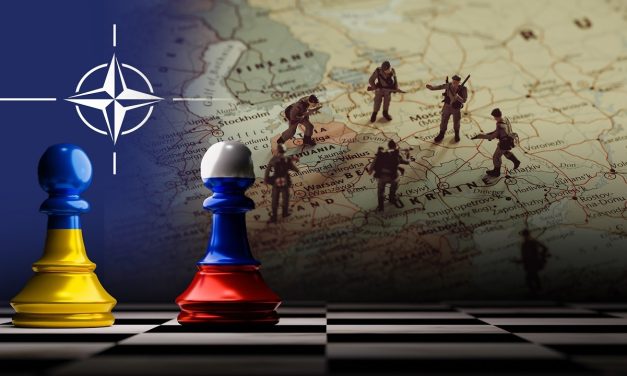
Strategic Council Online – Interview: The Ukraine war has become a new turning point in the political, security, and even commercial relations of allies on both sides of the Atlantic. While this war is nearing its fourth year, many questions still remain regarding its future and its consequences; among them, will the continuation of the Ukraine war lead to the collapse of the European security illusion?

Loading

Últimas publicaciones

Commercial Exploitation of Peace; The Gaza Committee in Confrontation with International Legitimacy

Strategic Council Online – Report: While the second phase of the implementation of the Gaza ceasefire has begun, the establishment of the “Peace Board” chaired by Donald Trump on the sidelines of the Davos meeting (22 January 2026) has become more than a technical mechanism for reconstruction and has turned into a test for the future of the international order.
Despite the signing of the charter by 22 out of 60 invited countries, the limited presence of global leaders at the Davos ceremony and the non-acceptance of this body by the European Union and key Western countries indicate a deep divide in global perceptions of the legitimacy of this mechanism.
In this report, drawing on the analysis of Hadi Borhani, a regional affairs expert, and international data, three strategic questions are addressed: Is the Peace Board an instrument for implementing UN Security Council Resolution 2803 or a substitute for the United Nations? How does the hierarchical architecture of this committee intensify executive challenges in Gaza? And finally, can this body create sustainable peace without the cooperation of Palestinians and with the concentration of power in the hands of a single individual?

America’s Zero-Sum Game in Iraq

Online Strategic Council – Memoir: The swift selection of Nouri al-Maliki for the premiership constitutes a new phase in Iraq’s political sphere. Multiple factors have played a role in this process, the most important being the prevailing situation in Iraq and the region. Under such circumstances, Iraq requires a powerful and experienced prime minister who can keep the country away from the dangers of wars and crises.

America’s Strategy for Creating Tension in the Asia-Pacific

Strategic Council Online – Opinion: Relations between some countries in the Asia-Pacific region, such as China and Japan or China and Australia, which were previously relatively normal, are trending towards deterioration, and the primary reason for this is the aggressive policies of the United States of America.

The Collapse of the European Security Illusion with the Continuation of the Ukraine War?

Strategic Council Online – Interview: The Ukraine war has become a new turning point in the political, security, and even commercial relations of allies on both sides of the Atlantic. While this war is nearing its fourth year, many questions still remain regarding its future and its consequences; among them, will the continuation of the Ukraine war lead to the collapse of the European security illusion?

Loading

DERNIER CONTENU

Commercial Exploitation of Peace; The Gaza Committee in Confrontation with International Legitimacy

Strategic Council Online – Report: While the second phase of the implementation of the Gaza ceasefire has begun, the establishment of the “Peace Board” chaired by Donald Trump on the sidelines of the Davos meeting (22 January 2026) has become more than a technical mechanism for reconstruction and has turned into a test for the future of the international order.
Despite the signing of the charter by 22 out of 60 invited countries, the limited presence of global leaders at the Davos ceremony and the non-acceptance of this body by the European Union and key Western countries indicate a deep divide in global perceptions of the legitimacy of this mechanism.
In this report, drawing on the analysis of Hadi Borhani, a regional affairs expert, and international data, three strategic questions are addressed: Is the Peace Board an instrument for implementing UN Security Council Resolution 2803 or a substitute for the United Nations? How does the hierarchical architecture of this committee intensify executive challenges in Gaza? And finally, can this body create sustainable peace without the cooperation of Palestinians and with the concentration of power in the hands of a single individual?

America’s Zero-Sum Game in Iraq

Online Strategic Council – Memoir: The swift selection of Nouri al-Maliki for the premiership constitutes a new phase in Iraq’s political sphere. Multiple factors have played a role in this process, the most important being the prevailing situation in Iraq and the region. Under such circumstances, Iraq requires a powerful and experienced prime minister who can keep the country away from the dangers of wars and crises.

America’s Strategy for Creating Tension in the Asia-Pacific

Strategic Council Online – Opinion: Relations between some countries in the Asia-Pacific region, such as China and Japan or China and Australia, which were previously relatively normal, are trending towards deterioration, and the primary reason for this is the aggressive policies of the United States of America.

The Collapse of the European Security Illusion with the Continuation of the Ukraine War?

Strategic Council Online – Interview: The Ukraine war has become a new turning point in the political, security, and even commercial relations of allies on both sides of the Atlantic. While this war is nearing its fourth year, many questions still remain regarding its future and its consequences; among them, will the continuation of the Ukraine war lead to the collapse of the European security illusion?

Loading

DERNIER CONTENU

Commercial Exploitation of Peace; The Gaza Committee in Confrontation with International Legitimacy

Strategic Council Online – Report: While the second phase of the implementation of the Gaza ceasefire has begun, the establishment of the “Peace Board” chaired by Donald Trump on the sidelines of the Davos meeting (22 January 2026) has become more than a technical mechanism for reconstruction and has turned into a test for the future of the international order.
Despite the signing of the charter by 22 out of 60 invited countries, the limited presence of global leaders at the Davos ceremony and the non-acceptance of this body by the European Union and key Western countries indicate a deep divide in global perceptions of the legitimacy of this mechanism.
In this report, drawing on the analysis of Hadi Borhani, a regional affairs expert, and international data, three strategic questions are addressed: Is the Peace Board an instrument for implementing UN Security Council Resolution 2803 or a substitute for the United Nations? How does the hierarchical architecture of this committee intensify executive challenges in Gaza? And finally, can this body create sustainable peace without the cooperation of Palestinians and with the concentration of power in the hands of a single individual?

America’s Zero-Sum Game in Iraq

Online Strategic Council – Memoir: The swift selection of Nouri al-Maliki for the premiership constitutes a new phase in Iraq’s political sphere. Multiple factors have played a role in this process, the most important being the prevailing situation in Iraq and the region. Under such circumstances, Iraq requires a powerful and experienced prime minister who can keep the country away from the dangers of wars and crises.

America’s Strategy for Creating Tension in the Asia-Pacific

Strategic Council Online – Opinion: Relations between some countries in the Asia-Pacific region, such as China and Japan or China and Australia, which were previously relatively normal, are trending towards deterioration, and the primary reason for this is the aggressive policies of the United States of America.

The Collapse of the European Security Illusion with the Continuation of the Ukraine War?

Strategic Council Online – Interview: The Ukraine war has become a new turning point in the political, security, and even commercial relations of allies on both sides of the Atlantic. While this war is nearing its fourth year, many questions still remain regarding its future and its consequences; among them, will the continuation of the Ukraine war lead to the collapse of the European security illusion?

Loading

DERNIER CONTENU

Commercial Exploitation of Peace; The Gaza Committee in Confrontation with International Legitimacy

Strategic Council Online – Report: While the second phase of the implementation of the Gaza ceasefire has begun, the establishment of the “Peace Board” chaired by Donald Trump on the sidelines of the Davos meeting (22 January 2026) has become more than a technical mechanism for reconstruction and has turned into a test for the future of the international order.
Despite the signing of the charter by 22 out of 60 invited countries, the limited presence of global leaders at the Davos ceremony and the non-acceptance of this body by the European Union and key Western countries indicate a deep divide in global perceptions of the legitimacy of this mechanism.
In this report, drawing on the analysis of Hadi Borhani, a regional affairs expert, and international data, three strategic questions are addressed: Is the Peace Board an instrument for implementing UN Security Council Resolution 2803 or a substitute for the United Nations? How does the hierarchical architecture of this committee intensify executive challenges in Gaza? And finally, can this body create sustainable peace without the cooperation of Palestinians and with the concentration of power in the hands of a single individual?

America’s Zero-Sum Game in Iraq

Online Strategic Council – Memoir: The swift selection of Nouri al-Maliki for the premiership constitutes a new phase in Iraq’s political sphere. Multiple factors have played a role in this process, the most important being the prevailing situation in Iraq and the region. Under such circumstances, Iraq requires a powerful and experienced prime minister who can keep the country away from the dangers of wars and crises.

America’s Strategy for Creating Tension in the Asia-Pacific

Strategic Council Online – Opinion: Relations between some countries in the Asia-Pacific region, such as China and Japan or China and Australia, which were previously relatively normal, are trending towards deterioration, and the primary reason for this is the aggressive policies of the United States of America.

The Collapse of the European Security Illusion with the Continuation of the Ukraine War?

Strategic Council Online – Interview: The Ukraine war has become a new turning point in the political, security, and even commercial relations of allies on both sides of the Atlantic. While this war is nearing its fourth year, many questions still remain regarding its future and its consequences; among them, will the continuation of the Ukraine war lead to the collapse of the European security illusion?

Loading