US Impediments on Extending New START Treaty with Russia

Strategic Council Online - If President Donald Trump is re-elected in November 2020, given the current process, it can be predicted that the United States will refrain from extending the Strategic Arms Reduction Treaty in February 2021, and if this scenario is implemented the world can be expected to face a new arms race and all current nuclear restrictions on the United States would be lifted. Seyed Reza Mirtaher - Expert on Military and Strategic Issues

Russia and the United States have faced a number of tensions in the post-Cold War period, but these tensions have escalated during Donald Trump’s presidency. One of the most important aspects of the confrontation between Moscow and Washington goes back to Trump’s overall approach to withdraw from international agreements and treaties. Although Trump has so far withdrawn from various agreements such as the Joint Comprehensive Plan of Action (known also as Iran Nuclear Agreement), the Paris Climate Agreement or the Free Trade Agreement between the two sides of the Pacific, what seems to be a real concern for the Russians is the Trump administration’s determination to pull out of the arms deals. In this regard, we have seen that the Donald Trump administration finally withdrew from the INF (Intermediate Range Nuclear Forces Treaty) after a one- to two-year conflict with Russia. Because it was a treaty that first ruled between the Soviet Union and the United States, and then Russia and the United States. The treaty banned the deployment of short-range and medium-range missiles from 500 to 5,500 kilometers in Europe, but Washington’s withdrawal from the agreement in August 2019 had a negative security impact on Europe.

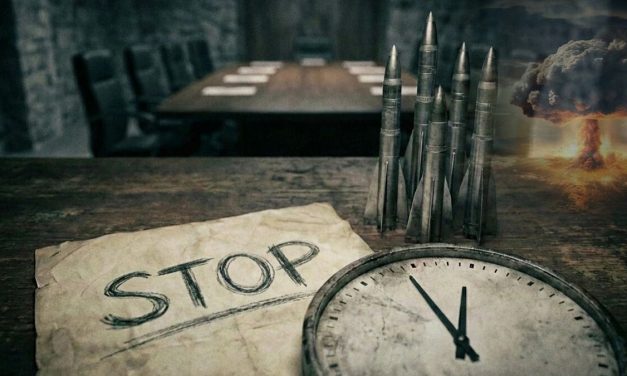
We have recently seen the Washington administration pull out of another important arms control treaty, the Open Skies Treaty, and what is now a major concern for Russia is the United States’ intention not to renew its START treaty (NPT). The latest agreement was signed in 2010 between Barack Obama and Dmitry Medvedev, the former presidents of America and Russia in Prague. Under the agreement, the two sides pledged to reduce their maximum number of ready-made nuclear warheads to 1,550, and to limit the number of shipments between 700 and 800. Given that the treaty expires in February 2021, we have seen repeated requests for its renewal, especially from Russia; Officials in the Trump administration, especially extremists such as John Bolton, a former White House national security adviser, were in favor of Washington’s withdrawal from the important arms deal.

Even now, it seems that the Americans are deliberately not intending to extend this important arms deal by imposing conditions that are very difficult to fulfill. It should be noted that the last round of talks between the United States and Russia took place in Vienna on July 2, and was supposed to be a two-day talks, but in practice did not last more than a day. In fact, due to deep differences between the two sides, the two-day talks ended on the first day. The positions taken by the two sides in the following days indicate that there are deep differences between Moscow and Washington over the renewal of the START treaty. The United States has made two conditions for extending the agreement, with Secretary of State Mike Pompeo repeating the terms several times since 2019. The first condition is that China must join the negotiations to reduce the number of strategic nuclear arsenals. However, the Chinese are completely opposed to this, and Beijing’s argument is that they still have a long way to go to reach a nuclear deal with the United States and Russia, and at this point they are still building and expanding their nuclear arsenal. Therefore, it is not correct to want to enter into negotiations to reduce nuclear weapons. According to statistics, China has about 300 nuclear warheads, while the United States and Russia each have at least 1,500 operational warheads.

The second condition is that Russia must stop its actions in the development and deployment of all kinds of ultrasonic weapons, which Moscow is expanding their operations. But this request has been strongly opposed by Russia. Ultrasonic weapons are missiles, either cruise or ballistic, that is more than five times faster than the speed of sound.

To sum it up, it must be noted that if President Donald Trump is re-elected in November 2020, given the current process, it can be predicted that the United States will refrain from extending the Strategic Arms Reduction Treaty in February 2021, and if this scenario takes place the world can be expected to face a new arms race and all current nuclear restrictions on the United States would be lifted.

At the same time, given the economic strength of the United States, they will try to keep Russia involved in a futile arms race by rebuilding and renovating its nuclear arsenal, with the goal of bringing the same disaster to the Soviet Union as in the Reagan era. This time, they will make Russia suffer the same fate the Soviet Union suffered under Reagan by imposing another arms race on Russia.
0 Comments

Submit a Comment

Your email address will not be published. Required fields are marked *

LATEST CONTENT

Creating the Right Narrative: A Principled Strategy for Countering the Enemy’s Soft War

Strategic Council Online – Interview: A media expert stated: Given the intensification of the West’s soft war and psychological operations against Iran, our country’s primary strategy must be based on public education, strengthening national cohesion, developing international media, and countering the distortion of history through creating the right narrative.

F-35 Sale to Saudi Arabia: From Promise to Reality

Strategic Council Online – Interview: An international affairs analyst said: The issue of selling the F-35 to Saudi Arabia is not merely a military case, but rather part of a regional engineering that Washington is trying to advance.

Caspian Sea Water Level Drop; A Geopolitical Harm for Coastal Countries

Strategic Council Online – Interview: An expert in geopolitics stated, “The unprecedented drop in the Caspian Sea water level is not only an environmental threat but also a geopolitical alarm bell for Iran and the coastal countries, requiring urgent multilateral cooperation.”

China’s Strategy to Counter the U.S. Effort to Escalate the Taiwan Crisis

Strategic Council Online – Interview: “Any miscalculated move could lead to escalating tensions and uncontrollable crises, but Beijing’s prudence and precise strategies have so far prevented the Taiwan issue from escalating into a crisis similar to that of Ukraine,” said an East Asia analyst.

Iran in the New Eurasian Order

Strategic Council Online – Interview: A geostrategic affairs analyst said: The emerging Eurasian order is not merely an economic plan, but an effort to redefine the global order based on independence, multilateralism, and regional convergence.

The Strategic Consequences of Iraq’s Recent Elections

Strategic Council Online – Interview: An Iraqi affairs analyst stated: Selecting Iraq’s future prime minister, determining foreign policy, and managing the new Baghdad government’s relations with regional countries and the world require internal political consensus following the recent parliamentary elections.

Loading

Últimas publicaciones

Creating the Right Narrative: A Principled Strategy for Countering the Enemy’s Soft War

Strategic Council Online – Interview: A media expert stated: Given the intensification of the West’s soft war and psychological operations against Iran, our country’s primary strategy must be based on public education, strengthening national cohesion, developing international media, and countering the distortion of history through creating the right narrative.

F-35 Sale to Saudi Arabia: From Promise to Reality

Strategic Council Online – Interview: An international affairs analyst said: The issue of selling the F-35 to Saudi Arabia is not merely a military case, but rather part of a regional engineering that Washington is trying to advance.

Caspian Sea Water Level Drop; A Geopolitical Harm for Coastal Countries

Strategic Council Online – Interview: An expert in geopolitics stated, “The unprecedented drop in the Caspian Sea water level is not only an environmental threat but also a geopolitical alarm bell for Iran and the coastal countries, requiring urgent multilateral cooperation.”

China’s Strategy to Counter the U.S. Effort to Escalate the Taiwan Crisis

Strategic Council Online – Interview: “Any miscalculated move could lead to escalating tensions and uncontrollable crises, but Beijing’s prudence and precise strategies have so far prevented the Taiwan issue from escalating into a crisis similar to that of Ukraine,” said an East Asia analyst.

Iran in the New Eurasian Order

Strategic Council Online – Interview: A geostrategic affairs analyst said: The emerging Eurasian order is not merely an economic plan, but an effort to redefine the global order based on independence, multilateralism, and regional convergence.

The Strategic Consequences of Iraq’s Recent Elections

Strategic Council Online – Interview: An Iraqi affairs analyst stated: Selecting Iraq’s future prime minister, determining foreign policy, and managing the new Baghdad government’s relations with regional countries and the world require internal political consensus following the recent parliamentary elections.

Loading

DERNIER CONTENU

Creating the Right Narrative: A Principled Strategy for Countering the Enemy’s Soft War

Strategic Council Online – Interview: A media expert stated: Given the intensification of the West’s soft war and psychological operations against Iran, our country’s primary strategy must be based on public education, strengthening national cohesion, developing international media, and countering the distortion of history through creating the right narrative.

F-35 Sale to Saudi Arabia: From Promise to Reality

Strategic Council Online – Interview: An international affairs analyst said: The issue of selling the F-35 to Saudi Arabia is not merely a military case, but rather part of a regional engineering that Washington is trying to advance.

Caspian Sea Water Level Drop; A Geopolitical Harm for Coastal Countries

Strategic Council Online – Interview: An expert in geopolitics stated, “The unprecedented drop in the Caspian Sea water level is not only an environmental threat but also a geopolitical alarm bell for Iran and the coastal countries, requiring urgent multilateral cooperation.”

China’s Strategy to Counter the U.S. Effort to Escalate the Taiwan Crisis

Strategic Council Online – Interview: “Any miscalculated move could lead to escalating tensions and uncontrollable crises, but Beijing’s prudence and precise strategies have so far prevented the Taiwan issue from escalating into a crisis similar to that of Ukraine,” said an East Asia analyst.

Iran in the New Eurasian Order

Strategic Council Online – Interview: A geostrategic affairs analyst said: The emerging Eurasian order is not merely an economic plan, but an effort to redefine the global order based on independence, multilateralism, and regional convergence.

The Strategic Consequences of Iraq’s Recent Elections

Strategic Council Online – Interview: An Iraqi affairs analyst stated: Selecting Iraq’s future prime minister, determining foreign policy, and managing the new Baghdad government’s relations with regional countries and the world require internal political consensus following the recent parliamentary elections.

Loading