
Ashkan Khakian – Arms Control Expert
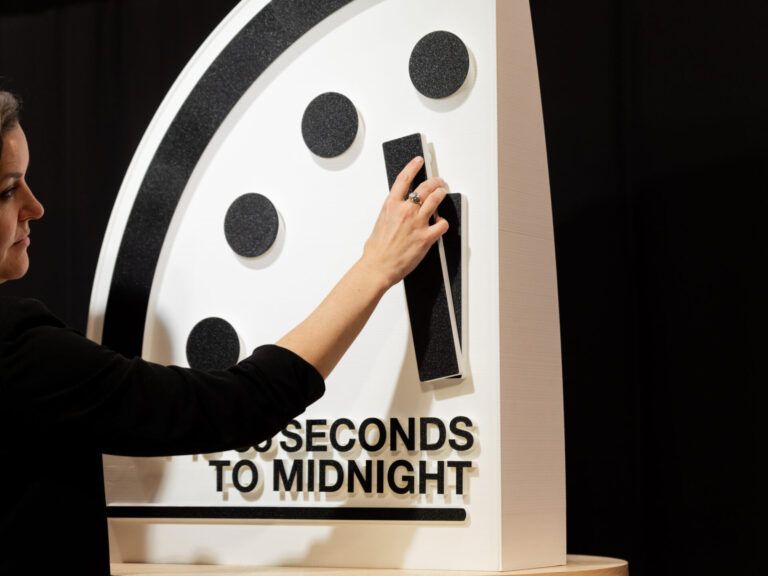
With the expiration of the New START treaty, the world has entered a space in which binding legal restrictions on the strategic arsenals of the two major powers have collapsed, and ambiguity has replaced mutual transparency. However, this very vacuum, instead of merely being a prelude to an arms race, could become an arena for reshaping the rules of the game in a multipolar order.
The central question is whether the end of the last nuclear arms control treaty between the United States and Russia necessarily leads to uncontrollable instability, or whether it could provide a tactical opportunity for new actors, and even non-nuclear-weapon states, within a transitioning system.
The analytical assumption of this article is that the collapse of the classical arms control system, while increasing short-term risks, simultaneously creates new bargaining space in which more flexible, multilateral, and regionally focused frameworks could replace the previous bipolar architecture.
Legal Vacuum and the Return of the Logic of Unlimited Competition
Analyses published by the RAND Corporation warn that the end of New START will make the world “more insecure” by eliminating the verification regime, data exchange, and caps on strategic warheads, thereby increasing strategic uncertainty. In such an environment, both sides may resort to developing additional capabilities to fill the information vacuum, and the logic of worst-case scenarios may prevail over calculations.
However, the Vienna Center for Disarmament and Non-Proliferation emphasizes that even before its expiration, the treaty had practically lost its full functionality due to the suspension of inspections, and what ended was more of a symbolic framework than an operational regime. From this perspective, the world had already entered a “post-arms control” state, and the treaty’s expiration merely formalizes an existing reality.
In circles close to conservative currents in the United States, including analyses published by the Hoover Institution, the argument is put forward that unilateral restrictions in the intense strategic competition environment with Russia and China reduce the flexibility of America’s deterrence, and breaking free from old constraints could create greater room for maneuver. This view sees the end of the treaty not as a threat, but as a return to the logic of unlimited competition among major powers.
However, this very return to unlimited competition also carries a paradoxical consequence: increasing the costs of non-agreement. When quantitative caps and transparency mechanisms disappear, the incentive to prevent misunderstanding and curb the unintended escalation of crises increases, and this very fact can act as a stimulus for new negotiations.
Europe and the Multipolarization of the Arms Control Agenda
Analyses by RUSI and SIPRI emphasize that Europe will be affected by the end of New START more than any other actor, as it is the primary geographical arena of US-Russia nuclear competition. The absence of quantitative restrictions could lead to the redeployment of strategic and intermediate-range systems around Europe, complicating deterrence calculations.
However, this very concern could make Europe a more active actor in arms control. SIPRI suggests that Europe should pursue “step-by-step” initiatives for transparency, confidence-building, and regional restrictions, even if a comprehensive bilateral agreement between Washington and Moscow is not achievable in the short term. This approach indicates that the arms control agenda is moving away from a bipolar format and shifting to a multi-level, multi-actor arena.
Responsible Statecraft and the Quincy Institute also emphasize that the post-New START space could move, instead of reproducing the Cold War pattern, towards frameworks that include China and, in the future, other nuclear powers. Although Beijing has so far shown no inclination to join similar restrictive regimes, the absence of any binding rules between the US and Russia increases political pressure for entering multilateral dialogues.
Tactical Opportunities for Non-Nuclear Actors
The collapse of the classical arms control system is not only a threat to non-nuclear-weapon states but could also create opportunities for them. In the past bipolar order, these countries were largely subject to rules written by others, but in the emerging multipolar system, the possibility of playing a more active role in shaping norms and regional initiatives becomes available.
Analyses by RAND and RUSI indicate that in the absence of binding agreements, initiatives such as “voluntary transparency,” “political declarations,” and “issue-specific restrictions” could serve as temporary tools to curb competition. These tools are not necessarily equivalent to classical treaties, but they can create a framework for risk reduction. Non-nuclear states can emphasize the necessity of such mechanisms within multilateral forums and leverage their positions to mediate or host dialogues.
In this framework, a crisis turns into a tactical opportunity. When major powers, due to intense competition, are unwilling to sign comprehensive treaties, limited, regional, or thematic agreements could become substitutes. For example, focusing on preventing the deployment of specific systems in sensitive regions, or on establishing emergency communication lines and crisis management mechanisms, could be the first steps in rebuilding trust.
For countries like Iran, which are subject to evolutions in non-proliferation regimes, double standards, and sanction pressures, this situation has two simultaneous consequences. On one hand, the erosion of arms control norms could make double standards more apparent and strengthen the space for criticizing the previous order. On the other hand, increased nuclear competition among major powers could also heighten sensitivities regarding regional nuclear programs. In such circumstances, the intelligent use of the multilateralism discourse and active participation in confidence-building initiatives could enhance a diplomatic position.
The end of New START is not merely a point in the collapse of a legal regime, but signifies a transition from the bipolar architecture of arms control to a more fluid and multipolar order. This transition undoubtedly increases ambiguity and risk, heightens the danger of an arms race. Still, it also raises the costs of lawlessness for major powers and compels them to seek new formats.
The tactical opportunity within this crisis lies in the fact that more diverse actors enter the scene, more flexible forms of agreement take shape, and arms control moves out of the monopoly of two powers. In such a perspective, the future of nuclear security will be shaped not by a return to the past, but by designing mechanisms appropriate to the multipolar reality of the twenty-first century.
This text was translated using artificial intelligence and may contain mistakes. If you notice a clear mistake that makes the text incomprehensible, please inform the website editors.





0 Comments