The Strategic Consequences of U.S.-China Competition in the Field of Artificial Intelligence

Strategic Council Online – Opinion: The continuation of competition between the United States and China in the cyber and artificial intelligence domains without common frameworks, transparency, and normative constraints will not result in the victory of one over the other, but will instead lead to the erosion of global trust in the technology domain. A world where every platform is suspect, every algorithm is a potential weapon, and every piece of data can be considered a threat.

Moslem Taghizadeh – Artificial Intelligence and Digital Transformation Expert

The competition between China and the United States in the field of artificial intelligence and cybersecurity should not be viewed merely as a technological race or even a classic geopolitical conflict. What is unfolding is a clash between two different conceptions of “power in the digital age”; two philosophies of governance, each striving to shape the future of the world’s information order according to its own internal logic. In this context, artificial intelligence is neither a tool nor a goal; rather, it is the primary arena for redefining authority, sovereignty, and control in the twenty-first century.

From the American perspective, artificial intelligence is a natural extension of techno-capitalism and market-driven innovation. Power emerges from corporations, platforms, and data ecosystems, with the government playing a largely delayed and reactive regulatory role. However, this very structure, considered America’s strength, has become a contradiction in cybersecurity: when data, algorithms, and information infrastructure are in the hands of private actors, the line between national security and corporate interests blurs. The TikTok case becomes significant from this viewpoint.

America’s official concern about TikTok is the Chinese government’s access to user data or the potential for intelligence infiltration operations, but the issue is deeper than these claims. Changing TikTok’s ownership structure, even if part of its shares are transferred to American consortia, does not change the nature of the algorithm, the logic of its recommender system, or its power to shape public attention. An algorithm is not merely code, but the embodiment of a cognitive logic: what gets seen, what gets amplified, and what gets marginalized. From this perspective, TikTok is not merely an external threat; it is a mirror in which America sees its own vulnerability in governing platforms.

The strategic point here is that the United States, in its effort to counter the alleged Chinese threat, is moving towards a kind of “securitization of ownership”; i.e., the assumption that shifting shares and legal control solves the security problem. But this approach can itself lead to a kind of structural abuse: an unprecedented concentration of regulatory power over data in the hands of the government or actors aligned with it, without transparent accountability mechanisms. In other words, the danger is not only “Chinese infiltration,” but the transformation of social platforms into legitimate tools of national security on both sides of the competition.

This issue draws attention to the history of cyber competition and digital armaments. Unlike conventional weapons, cyber tools are inherently ambiguous, deniable, and constantly evolving. There are no clear red lines or stable agreements that can effectively constrain state behavior. Artificial intelligence has intensified this situation. Today, a cyberattack no longer requires sustained human presence; algorithms can autonomously detect, adapt, infiltrate, and even make decisions. This means that speed, scale, and uncertainty have reached levels that undermine the logic of classical deterrence.

In this space, America and China are building offensive and defensive capabilities, but with different mindsets. America seeks more technological superiority and operational flexibility, while China pursues systemic resilience and centralized control. This difference is not merely technical; it is philosophical.

From the Chinese perspective, cybersecurity is part of social security. Data is considered a national resource, and artificial intelligence is a tool for maintaining cohesion, predicting instability, and macro-managing society. Therefore, AI governance in China is inherently state-driven, preemptive, and integrated.

In contrast, America is still grappling with this fundamental question: can unbridled innovation, platform freedom, and national security be maintained simultaneously? Many recent American policies suggest that the implicit answer to this question is negative, but this admission, rather than leading to a review of digital governance philosophy, often manifests as ad hoc measures, export restrictions, or ownership pressures. This is why some analysts believe America is “running on the wrong track” in the AI race: focusing on model size and speed of progress without solving the problems of trust, governance, and the sustainable integration of AI into the social fabric.

On the other hand, China, despite its rapid progress, faces a different challenge. Strict control over data and algorithms, while creating security and managerial advantages, carries the risk of reduced creativity, cognitive diversity, and global legitimacy. The international acceptance of Chinese AI technologies depends not only on their technical quality but also on the level of trust in their intent and governance framework. Ultimately, the China-U.S. competition is a competition over who defines the rules of the game.

At a deeper level, this competition signifies a transition from an order based on hard power to an order based on cognitive control. Security is no longer just about protecting infrastructure; it is about managing human perception, attention, and decision-making. In this sense, artificial intelligence and cybersecurity are intertwined because both deal directly with the cognitive layer of society. TikTok, malware, recommendation algorithms, language models, and surveillance systems are all components of a single field.

If this competition continues without common frameworks, transparency, and normative constraints, the primary danger will not be the victory of one over the other, but the erosion of global trust in technology. A world where every platform is suspect, every algorithm is a potential weapon, and every piece of data can be considered a threat.

The other fundamental issue is not which country has stronger artificial intelligence; rather, it is which one can provide a model of digital governance that is both efficient, legitimate, and applicable to today’s pluralistic world. The China-U.S. competition is a test for the future of political rationality in the age of artificial intelligence, a test whose outcome will be decisive far beyond the borders of these two countries.

This text was translated using artificial intelligence and may contain errors. If you notice an apparent mistake that makes the text incomprehensible, please inform the website editors.

0 Comments

LATEST CONTENT

The Strategic Consequences of U.S.-China Competition in the Field of Artificial Intelligence

Strategic Council Online – Opinion: The continuation of competition between the United States and China in the cyber and artificial intelligence domains without common frameworks, transparency, and normative constraints will not result in the victory of one over the other, but will instead lead to the erosion of global trust in the technology domain. A world where every platform is suspect, every algorithm is a potential weapon, and every piece of data can be considered a threat.

The Security Equation of Southern Lebanon for the Zionist Regime

Strategic Council Online – Opinion: American-Zionist objectives in the region are not limited to weakening Hezbollah. Efforts to disarm Iraqi resistance groups such as Kata’ib Hezbollah and the Popular Mobilization Forces are also part of their subsequent plans.

Commercial Exploitation of Peace; The Gaza Committee in Confrontation with International Legitimacy

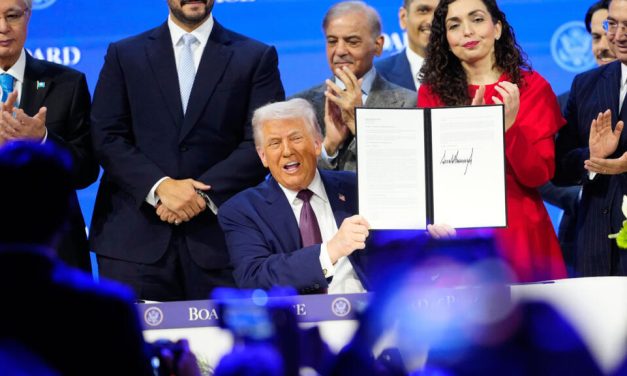
Strategic Council Online – Report: While the second phase of the implementation of the Gaza ceasefire has begun, the establishment of the “Peace Board” chaired by Donald Trump on the sidelines of the Davos meeting (22 January 2026) has become more than a technical mechanism for reconstruction and has turned into a test for the future of the international order.
Despite the signing of the charter by 22 out of 60 invited countries, the limited presence of global leaders at the Davos ceremony and the non-acceptance of this body by the European Union and key Western countries indicate a deep divide in global perceptions of the legitimacy of this mechanism.
In this report, drawing on the analysis of Hadi Borhani, a regional affairs expert, and international data, three strategic questions are addressed: Is the Peace Board an instrument for implementing UN Security Council Resolution 2803 or a substitute for the United Nations? How does the hierarchical architecture of this committee intensify executive challenges in Gaza? And finally, can this body create sustainable peace without the cooperation of Palestinians and with the concentration of power in the hands of a single individual?

America’s Zero-Sum Game in Iraq

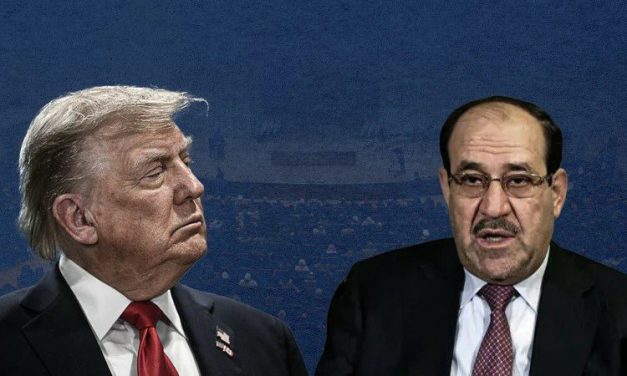
Online Strategic Council – Memoir: The swift selection of Nouri al-Maliki for the premiership constitutes a new phase in Iraq’s political sphere. Multiple factors have played a role in this process, the most important being the prevailing situation in Iraq and the region. Under such circumstances, Iraq requires a powerful and experienced prime minister who can keep the country away from the dangers of wars and crises.

Loading

Últimas publicaciones

The Strategic Consequences of U.S.-China Competition in the Field of Artificial Intelligence

Strategic Council Online – Opinion: The continuation of competition between the United States and China in the cyber and artificial intelligence domains without common frameworks, transparency, and normative constraints will not result in the victory of one over the other, but will instead lead to the erosion of global trust in the technology domain. A world where every platform is suspect, every algorithm is a potential weapon, and every piece of data can be considered a threat.

The Security Equation of Southern Lebanon for the Zionist Regime

Strategic Council Online – Opinion: American-Zionist objectives in the region are not limited to weakening Hezbollah. Efforts to disarm Iraqi resistance groups such as Kata’ib Hezbollah and the Popular Mobilization Forces are also part of their subsequent plans.

Commercial Exploitation of Peace; The Gaza Committee in Confrontation with International Legitimacy

Strategic Council Online – Report: While the second phase of the implementation of the Gaza ceasefire has begun, the establishment of the “Peace Board” chaired by Donald Trump on the sidelines of the Davos meeting (22 January 2026) has become more than a technical mechanism for reconstruction and has turned into a test for the future of the international order.
Despite the signing of the charter by 22 out of 60 invited countries, the limited presence of global leaders at the Davos ceremony and the non-acceptance of this body by the European Union and key Western countries indicate a deep divide in global perceptions of the legitimacy of this mechanism.
In this report, drawing on the analysis of Hadi Borhani, a regional affairs expert, and international data, three strategic questions are addressed: Is the Peace Board an instrument for implementing UN Security Council Resolution 2803 or a substitute for the United Nations? How does the hierarchical architecture of this committee intensify executive challenges in Gaza? And finally, can this body create sustainable peace without the cooperation of Palestinians and with the concentration of power in the hands of a single individual?

America’s Zero-Sum Game in Iraq

Online Strategic Council – Memoir: The swift selection of Nouri al-Maliki for the premiership constitutes a new phase in Iraq’s political sphere. Multiple factors have played a role in this process, the most important being the prevailing situation in Iraq and the region. Under such circumstances, Iraq requires a powerful and experienced prime minister who can keep the country away from the dangers of wars and crises.

Loading

DERNIER CONTENU

The Strategic Consequences of U.S.-China Competition in the Field of Artificial Intelligence

Strategic Council Online – Opinion: The continuation of competition between the United States and China in the cyber and artificial intelligence domains without common frameworks, transparency, and normative constraints will not result in the victory of one over the other, but will instead lead to the erosion of global trust in the technology domain. A world where every platform is suspect, every algorithm is a potential weapon, and every piece of data can be considered a threat.

The Security Equation of Southern Lebanon for the Zionist Regime

Strategic Council Online – Opinion: American-Zionist objectives in the region are not limited to weakening Hezbollah. Efforts to disarm Iraqi resistance groups such as Kata’ib Hezbollah and the Popular Mobilization Forces are also part of their subsequent plans.

Commercial Exploitation of Peace; The Gaza Committee in Confrontation with International Legitimacy

Strategic Council Online – Report: While the second phase of the implementation of the Gaza ceasefire has begun, the establishment of the “Peace Board” chaired by Donald Trump on the sidelines of the Davos meeting (22 January 2026) has become more than a technical mechanism for reconstruction and has turned into a test for the future of the international order.
Despite the signing of the charter by 22 out of 60 invited countries, the limited presence of global leaders at the Davos ceremony and the non-acceptance of this body by the European Union and key Western countries indicate a deep divide in global perceptions of the legitimacy of this mechanism.
In this report, drawing on the analysis of Hadi Borhani, a regional affairs expert, and international data, three strategic questions are addressed: Is the Peace Board an instrument for implementing UN Security Council Resolution 2803 or a substitute for the United Nations? How does the hierarchical architecture of this committee intensify executive challenges in Gaza? And finally, can this body create sustainable peace without the cooperation of Palestinians and with the concentration of power in the hands of a single individual?

America’s Zero-Sum Game in Iraq

Online Strategic Council – Memoir: The swift selection of Nouri al-Maliki for the premiership constitutes a new phase in Iraq’s political sphere. Multiple factors have played a role in this process, the most important being the prevailing situation in Iraq and the region. Under such circumstances, Iraq requires a powerful and experienced prime minister who can keep the country away from the dangers of wars and crises.

Loading

DERNIER CONTENU

The Strategic Consequences of U.S.-China Competition in the Field of Artificial Intelligence

Strategic Council Online – Opinion: The continuation of competition between the United States and China in the cyber and artificial intelligence domains without common frameworks, transparency, and normative constraints will not result in the victory of one over the other, but will instead lead to the erosion of global trust in the technology domain. A world where every platform is suspect, every algorithm is a potential weapon, and every piece of data can be considered a threat.

The Security Equation of Southern Lebanon for the Zionist Regime

Strategic Council Online – Opinion: American-Zionist objectives in the region are not limited to weakening Hezbollah. Efforts to disarm Iraqi resistance groups such as Kata’ib Hezbollah and the Popular Mobilization Forces are also part of their subsequent plans.

Commercial Exploitation of Peace; The Gaza Committee in Confrontation with International Legitimacy

Strategic Council Online – Report: While the second phase of the implementation of the Gaza ceasefire has begun, the establishment of the “Peace Board” chaired by Donald Trump on the sidelines of the Davos meeting (22 January 2026) has become more than a technical mechanism for reconstruction and has turned into a test for the future of the international order.
Despite the signing of the charter by 22 out of 60 invited countries, the limited presence of global leaders at the Davos ceremony and the non-acceptance of this body by the European Union and key Western countries indicate a deep divide in global perceptions of the legitimacy of this mechanism.
In this report, drawing on the analysis of Hadi Borhani, a regional affairs expert, and international data, three strategic questions are addressed: Is the Peace Board an instrument for implementing UN Security Council Resolution 2803 or a substitute for the United Nations? How does the hierarchical architecture of this committee intensify executive challenges in Gaza? And finally, can this body create sustainable peace without the cooperation of Palestinians and with the concentration of power in the hands of a single individual?

America’s Zero-Sum Game in Iraq

Online Strategic Council – Memoir: The swift selection of Nouri al-Maliki for the premiership constitutes a new phase in Iraq’s political sphere. Multiple factors have played a role in this process, the most important being the prevailing situation in Iraq and the region. Under such circumstances, Iraq requires a powerful and experienced prime minister who can keep the country away from the dangers of wars and crises.

Loading

DERNIER CONTENU

The Strategic Consequences of U.S.-China Competition in the Field of Artificial Intelligence

Strategic Council Online – Opinion: The continuation of competition between the United States and China in the cyber and artificial intelligence domains without common frameworks, transparency, and normative constraints will not result in the victory of one over the other, but will instead lead to the erosion of global trust in the technology domain. A world where every platform is suspect, every algorithm is a potential weapon, and every piece of data can be considered a threat.

The Security Equation of Southern Lebanon for the Zionist Regime

Strategic Council Online – Opinion: American-Zionist objectives in the region are not limited to weakening Hezbollah. Efforts to disarm Iraqi resistance groups such as Kata’ib Hezbollah and the Popular Mobilization Forces are also part of their subsequent plans.

Commercial Exploitation of Peace; The Gaza Committee in Confrontation with International Legitimacy

Strategic Council Online – Report: While the second phase of the implementation of the Gaza ceasefire has begun, the establishment of the “Peace Board” chaired by Donald Trump on the sidelines of the Davos meeting (22 January 2026) has become more than a technical mechanism for reconstruction and has turned into a test for the future of the international order.
Despite the signing of the charter by 22 out of 60 invited countries, the limited presence of global leaders at the Davos ceremony and the non-acceptance of this body by the European Union and key Western countries indicate a deep divide in global perceptions of the legitimacy of this mechanism.
In this report, drawing on the analysis of Hadi Borhani, a regional affairs expert, and international data, three strategic questions are addressed: Is the Peace Board an instrument for implementing UN Security Council Resolution 2803 or a substitute for the United Nations? How does the hierarchical architecture of this committee intensify executive challenges in Gaza? And finally, can this body create sustainable peace without the cooperation of Palestinians and with the concentration of power in the hands of a single individual?

America’s Zero-Sum Game in Iraq

Online Strategic Council – Memoir: The swift selection of Nouri al-Maliki for the premiership constitutes a new phase in Iraq’s political sphere. Multiple factors have played a role in this process, the most important being the prevailing situation in Iraq and the region. Under such circumstances, Iraq requires a powerful and experienced prime minister who can keep the country away from the dangers of wars and crises.

Loading