The Great Competition of the Century: Redefining the Rules of the Game by China and the United States

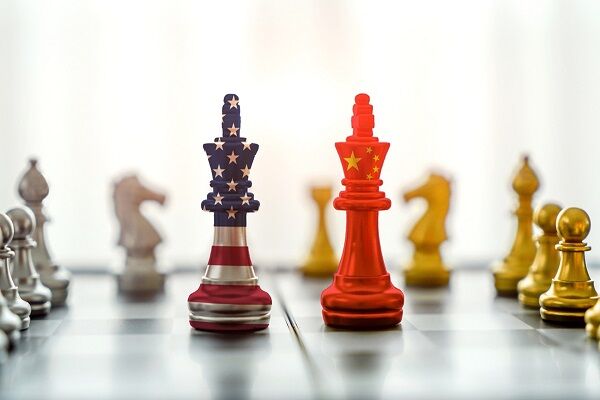
Strategic Council Online – Opinion: The global economy has entered a phase where competition among major powers is driven not by firing bullets, but through chips, supply chains, and technological standards. Economic security has become the main arena of strategic contention. In this landscape, Washington and Beijing are redefining the rules of the game, and its implications extend beyond bilateral relations, affecting the entire international order.

Arian Nourani – International Relations Analyst
Findings published by prominent think tanks indicate that technology has become the core of U.S.-China competition and can no longer be considered a purely economic or commercial domain. In recent years, particularly in the field of advanced semiconductors, the United States has defined its policy of technologically containing China as part of its own national security. Export restrictions on advanced chips, semiconductor manufacturing equipment, and even related technical knowledge are designed to slow China’s pace of technological advancement in sensitive defense and industrial sectors.

Technology, a Strategic Weapon in China’s Great Competition with the United States
Analyses published by the Atlantic Council and the Security Policy Center reveal that Washington employs technology as a tool of non-military deterrent leverage. Within this framework, access to key technologies is seen not as a commercial advantage but as an instrument for exercising strategic power. This approach has effectively erased the boundary between economy and security, turning the concept of “technology security” into an inseparable part of U.S. national security.
In response, China has interpreted these pressures not as temporary measures but as a structural effort to contain its rise. Its counter-response has been to move towards technological self-sufficiency and reduce dependence on West-centric supply chains. China’s industrial policies, including targeted support for domestic companies and prioritizing government procurement from local manufacturers, indicate that Beijing has also turned technology into a strategic weapon in the great competition of the century.
The second axis of competition relates to economic security and critical supply chains, which in recent years have become one of the most sensitive arenas of contention. Analyses published by the S. Rajaratnam School of International Studies (RSIS) and the think tank Trivium China show that China, relying on its dominant position in the production and processing of rare earth minerals, uses this advantage as a potential tool for economic pressure. Controlling the exports of these materials, which are vital to advanced industries, new energy, and defense technologies, allows Beijing to directly affect the economic security of other countries.
In 2025, intensified discussions about China’s management of rare-earth exports highlighted that supply chains are no longer neutral or apolitical. In such an environment, the global economy has transformed into a network of security interdependencies where any disruption can have strategic consequences. The U.S. and its allies have sought to reduce their vulnerability by diversifying supply sources and investing in alternative chains. However, this process is costly and time-consuming and cannot eliminate existing dependencies in the short term.
From China’s perspective, this situation provides an opportunity to solidify its role as a central player in the global economy. Beijing strives to demonstrate that global economic security cannot be achieved without China’s active participation, and that any attempt to sideline it will impose high costs on the entire international system.

New Deterrence in the Emerging Multipolar Order and Its Implications
The third axis points to a more profound transformation in which the economy has become part of strategic deterrence. Analyses by the Valdai Discussion Club on the multipolar economy and the role of coalitions such as BRICS Plus indicate that access to markets, infrastructure investment, and energy supply today play roles that were once the sole domain of military tools.
Within this framework, U.S.-China competition extends not only to economic growth but also to shaping the rules and institutions of the global economy. The U.S. endeavors to maintain its dominant position through technological standardization, sanctions regimes, and investment controls, while China, by promoting alternative financial and trade mechanisms, seeks to diminish the effectiveness of these tools. The outcome of this trend is the formation of a kind of mutual economic deterrence, where both sides aim to increase the costs of pressure from the other party without escalating into direct military confrontation.
Global economic security has become increasingly dependent on the competitive balance between the U.S. and China, and this competition constitutes the central pillar of the emerging international order. Technology, supply chains, and economic tools have all become elements of new deterrence, erasing the boundary between economy and security. For third countries, including Iran, this situation simultaneously presents both opportunities and risks. The deepening divide between Washington and Beijing can create space for economic and technological cooperation with China and increase the possibility of diversifying foreign relations, which should be pursued intelligently, given security and economic dependencies.
Ultimately, the great competition of the century between China and the United States shows that the global economy is no longer a neutral arena but has become the main field for exercising power. In such a world, countries that can adopt balanced and flexible policies based on a realistic understanding of this competition will have a greater chance of securing their economic security and enhancing their position in the transitioning order.
0 Comments

LATEST CONTENT

America’s Zero-Sum Game in Iraq

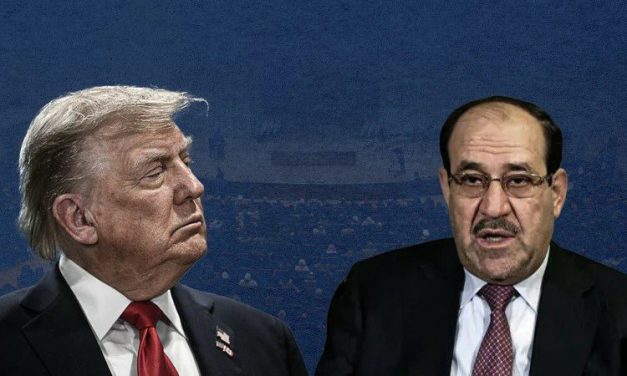
Online Strategic Council – Memoir: The swift selection of Nouri al-Maliki for the premiership constitutes a new phase in Iraq’s political sphere. Multiple factors have played a role in this process, the most important being the prevailing situation in Iraq and the region. Under such circumstances, Iraq requires a powerful and experienced prime minister who can keep the country away from the dangers of wars and crises.

America’s Strategy for Creating Tension in the Asia-Pacific

Strategic Council Online – Opinion: Relations between some countries in the Asia-Pacific region, such as China and Japan or China and Australia, which were previously relatively normal, are trending towards deterioration, and the primary reason for this is the aggressive policies of the United States of America.

The Collapse of the European Security Illusion with the Continuation of the Ukraine War?

Strategic Council Online – Interview: The Ukraine war has become a new turning point in the political, security, and even commercial relations of allies on both sides of the Atlantic. While this war is nearing its fourth year, many questions still remain regarding its future and its consequences; among them, will the continuation of the Ukraine war lead to the collapse of the European security illusion?

Is Greenland Pushing Europe Toward China?

Strategic Council Online – Interview: A European affairs expert believes that the seizure of Greenland will certainly weaken America’s relations with Europe and its allies. Donald Trump’s view is that he does not need these countries, but if Europe faces significant pressure from the United States, it is natural for it to move toward China.

Alarm Bells Sound for ISIS Revival in Syria: Threat to Iraq and West Asia

Strategic Council Online – Opinion: Numerous documents and pieces of evidence indicate that ISIS, which in recent years has been the region’s biggest threat to security and stability after the Zionist regime, has once again in recent months become a focal point for political and security exploitation by American and Zionist regime security, intelligence, and political circles.

Afghanistan’s Effective Role in the Economy of Eurasia

Strategic Council Online – Interview: A regional affairs researcher stated: Despite projects such as the Khaf-Herat railway and the Herat-Balkh-Mazar-i-Sharif corridor being on the agenda, insecurity and the absence of an inclusive government remain the most significant obstacles to realizing transit corridors and Afghanistan playing an effective role in the economy of Eurasia.

Loading

Últimas publicaciones

America’s Zero-Sum Game in Iraq

Online Strategic Council – Memoir: The swift selection of Nouri al-Maliki for the premiership constitutes a new phase in Iraq’s political sphere. Multiple factors have played a role in this process, the most important being the prevailing situation in Iraq and the region. Under such circumstances, Iraq requires a powerful and experienced prime minister who can keep the country away from the dangers of wars and crises.

America’s Strategy for Creating Tension in the Asia-Pacific

Strategic Council Online – Opinion: Relations between some countries in the Asia-Pacific region, such as China and Japan or China and Australia, which were previously relatively normal, are trending towards deterioration, and the primary reason for this is the aggressive policies of the United States of America.

The Collapse of the European Security Illusion with the Continuation of the Ukraine War?

Strategic Council Online – Interview: The Ukraine war has become a new turning point in the political, security, and even commercial relations of allies on both sides of the Atlantic. While this war is nearing its fourth year, many questions still remain regarding its future and its consequences; among them, will the continuation of the Ukraine war lead to the collapse of the European security illusion?

Is Greenland Pushing Europe Toward China?

Strategic Council Online – Interview: A European affairs expert believes that the seizure of Greenland will certainly weaken America’s relations with Europe and its allies. Donald Trump’s view is that he does not need these countries, but if Europe faces significant pressure from the United States, it is natural for it to move toward China.

Alarm Bells Sound for ISIS Revival in Syria: Threat to Iraq and West Asia

Strategic Council Online – Opinion: Numerous documents and pieces of evidence indicate that ISIS, which in recent years has been the region’s biggest threat to security and stability after the Zionist regime, has once again in recent months become a focal point for political and security exploitation by American and Zionist regime security, intelligence, and political circles.

Afghanistan’s Effective Role in the Economy of Eurasia

Strategic Council Online – Interview: A regional affairs researcher stated: Despite projects such as the Khaf-Herat railway and the Herat-Balkh-Mazar-i-Sharif corridor being on the agenda, insecurity and the absence of an inclusive government remain the most significant obstacles to realizing transit corridors and Afghanistan playing an effective role in the economy of Eurasia.

Loading

DERNIER CONTENU

America’s Zero-Sum Game in Iraq

Online Strategic Council – Memoir: The swift selection of Nouri al-Maliki for the premiership constitutes a new phase in Iraq’s political sphere. Multiple factors have played a role in this process, the most important being the prevailing situation in Iraq and the region. Under such circumstances, Iraq requires a powerful and experienced prime minister who can keep the country away from the dangers of wars and crises.

America’s Strategy for Creating Tension in the Asia-Pacific

Strategic Council Online – Opinion: Relations between some countries in the Asia-Pacific region, such as China and Japan or China and Australia, which were previously relatively normal, are trending towards deterioration, and the primary reason for this is the aggressive policies of the United States of America.

The Collapse of the European Security Illusion with the Continuation of the Ukraine War?

Strategic Council Online – Interview: The Ukraine war has become a new turning point in the political, security, and even commercial relations of allies on both sides of the Atlantic. While this war is nearing its fourth year, many questions still remain regarding its future and its consequences; among them, will the continuation of the Ukraine war lead to the collapse of the European security illusion?

Is Greenland Pushing Europe Toward China?

Strategic Council Online – Interview: A European affairs expert believes that the seizure of Greenland will certainly weaken America’s relations with Europe and its allies. Donald Trump’s view is that he does not need these countries, but if Europe faces significant pressure from the United States, it is natural for it to move toward China.

Alarm Bells Sound for ISIS Revival in Syria: Threat to Iraq and West Asia

Strategic Council Online – Opinion: Numerous documents and pieces of evidence indicate that ISIS, which in recent years has been the region’s biggest threat to security and stability after the Zionist regime, has once again in recent months become a focal point for political and security exploitation by American and Zionist regime security, intelligence, and political circles.

Afghanistan’s Effective Role in the Economy of Eurasia

Strategic Council Online – Interview: A regional affairs researcher stated: Despite projects such as the Khaf-Herat railway and the Herat-Balkh-Mazar-i-Sharif corridor being on the agenda, insecurity and the absence of an inclusive government remain the most significant obstacles to realizing transit corridors and Afghanistan playing an effective role in the economy of Eurasia.

Loading