

Reza Majidzadeh – Development Researcher
For example, in the field of artificial intelligence, before China introduced DeepSeek, Iranians’ access to many AI features was limited and restricted. This issue also relates to the discussion of sanctions, payment, and connection to such technologies. Because the competition between China and the U.S. has become so intense, two poles have emerged side by side, and the most important strategy for each is to attract international actors to itself. In this competition, a series of advantages is created for countries seeking access to technology. Among these advantages is that the sanctions that might be imposed are likely to become ineffective. Today’s world is the world of AI platforms, and in a sense, the era of capitalism has ended, and the period of techno-feudalism has begun, where large platforms and their owners, like Elon Musk, are running the world. Just as Musk helped Donald Trump win the 2024 U.S. elections. Therefore, in this regard, the more competition there is, the more open access will become. Still, if there is no competition and, for example, only the U.S. is the sole player in this arena, due to sanctions, access will be very limited or closed.
Regarding opportunities for cooperation between Iran and China in the fields of artificial intelligence, chips, and digital infrastructure, it should be noted that in all three areas, China is advancing shoulder-to-shoulder with the U.S. Of course, the main artificial intelligence that is still not openly accessible in the world is learning AI, which can create foundational transformations in various fields. Cooperation with China is possible in this area, provided that existing limitations can be overcome. After all, due to its extensive trade with the U.S., China is forced to proceed with caution and hesitation in some areas. However, in new technologies, limitations have not yet been widely established; moreover, the planned cooperation with China can serve as a basis for accessing new technologies, including in AI and robotics. This helps to build the infrastructure necessary for production in the age of artificial intelligence.
It should not be overlooked that, during the years of sanctions, our country was unable to build its technology infrastructure, which is a problem in itself. Therefore, in transitioning to the new world, it is necessary to make that infrastructure. Since China is a leader in this field, it can provide significant advantages to our country. The same applies to other technologies; in semiconductors and in the control China has over mineral resources related to rare-earth metals used in these industries, Iran can seek help from China. For this reason, China has gained high bargaining power in today’s world. These issues help in finding a series of innovations and innovative solutions to bypass the limitations of the Western international order, especially regarding sanctions.
However, regarding the risks of technological dependence on China and the challenges this poses to Iran’s strategic independence, it must be said that there are indeed risks, and every strategy our country pursues has both costs and benefits. Here, security considerations are the primary focus. This is especially true in a situation where there are concerns that restrictions related to the nuclear program may intensify with the approach of European countries, and the danger of military attack has not yet been eliminated. Therefore, in this environment, if Iran places all its technology infrastructure under the control of a single country or sources all its technology from a single country, its security may be undermined, much like what happened to the pagers in Lebanon. Consequently, to avoid this risk, the most important strategy could be to move towards pursuing a process of gradual internalization in new technologies. That is, a foundation must be created where, from the starting point to the point of completion, the entire process is not dependent on a single power, whether Eastern or Western.
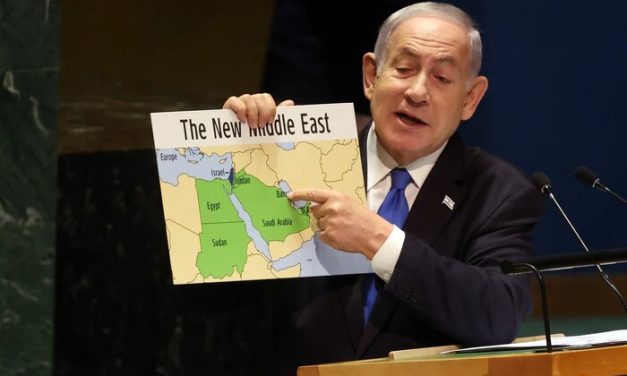
The US Ambassador Lifts the Veil; The Strategic Danger of the “Greater Israel” Project for West Asia
Strategic Council Online –Opinion: The “Greater Israel” project, whose realization requires the annexation of parts of the territory of regional countries into the occupied lands, has long passed the stage of theorization and, especially in recent months, has taken on an operational form. This plan, which was once discussed in extremist Zionist circles as an unattainable ideal, is today, with the explicit support of the United States, being transformed into an executive program targeting the regional order.







0 Comments