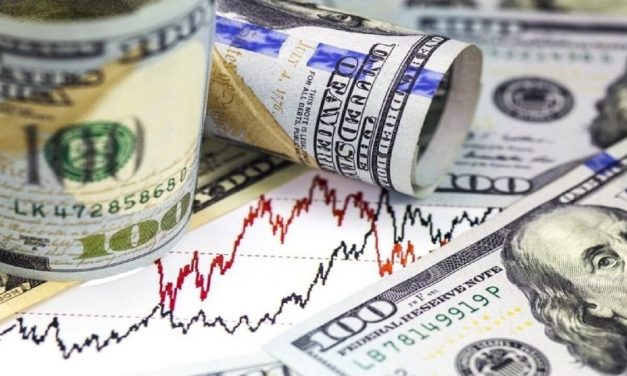
Escalation of the U.S.-China Trade War and Its International Consequences

2025/10/19 | Economy, interview, top news

Online Strategic Council - Dialogue: A senior Chinese affairs analyst stated that recent developments in U.S.-China economic relations are a clear sign that the trade war between the world's two major powers has entered a new phase.

Dr. Ismail Bashiri, in an interview with the Foreign Relations Strategic Council website, stated: “The economic confrontation between the two countries has moved from the phase of tariffs and export restrictions to a structural and strategic stage.” He said that “China’s recent decision to impose extensive controls on the export of a wide range of industrial and technological products is a move that could challenge the global trade order.”
Bashiri added: “From Beijing’s perspective, this decision was a response to the aggressive U.S. policies in recent years, particularly during the tenure of Donald Trump.” He noted that “Trump, from the first days of his presidency in his first administration until now, has pursued a policy of maximum economic pressure on China, intending to curb its industrial growth. However, in practice, this policy not only failed to stop China but instead pushed it towards technological self-sufficiency and the establishment of independent supply chains.”
He emphasized that “the continuation of this trend indicates a shift in the balance of power in the global economy; because China has now become an actor that can disrupt global markets with its internal decisions. The U.S.’s 100% tariff on imports from China, announced by Trump following Beijing’s decision to impose restrictions on the export of certain specific and strategic goods, clearly indicates that the two major economies have entered a phase of confrontation where the main losers will be global consumers.”

Trump’s Strategic Error and Its Consequences
Dr. Bashiri said: “During both of his presidential terms, Trump started the tariff war without scientific backing and without regard for its global consequences. For example, Trump’s decision to impose 50% tariffs on Indian goods under the pretext of India purchasing oil from Russia was a clear example of his unilateral and unprofessional policies. Because this move not only distanced New Delhi from Washington but also led India towards new cooperation with Beijing and Moscow, securing a new position for itself in Asian equations.”
He emphasized that “Trump’s policies were effectively implemented not only against China but also against many of America’s friendly and allied countries. With his merchant mentality and purely business-oriented perspective, Trump did not value any country or economic partner. His decisions were made impulsively, driven by political excitement.” Bashiri noted that “as a result of this approach, the traditional trust of Western allies in U.S. economic policy has been damaged. Many of Washington’s former partners have sought to diversify their trade relations towards the East.”
This China affairs analyst added: “Trump, with his ‘America First’ slogan, actually brought about isolation for the country; because these policies led European and Asian countries to gradually realize that they should not base their economic security on the stability of Washington’s decisions.” He said that “heavy tariffs, export restrictions, and threats against multinational companies neither led to the return of production to U.S. soil nor reduced the U.S. trade deficit. On the contrary, they caused increased inflation, pressure on domestic industries, and instability in the global supply chain.” Bashiri recalled that “the economic policies of the Trump administration not only failed to achieve desired results against China but also weakened America’s position in the global economy. Because Trump, with his personal and non-institutional approach, took the U.S. economic policymaking structure out of predictability and caused a global increase in distrust towards the U.S. economy.”

Global Consequences and the Breaking of Western Economic Monopoly
Dr. Bashiri emphasized that “the U.S.-China trade war is no longer a bilateral dispute but a structural crisis in the international trade system. Given the interdependence of economies in the global supply chain, any decision from Washington or Beijing can have domino effects in the markets of Europe, Asia, and even Africa.”
Bashiri added, “In recent years, relying on a policy of balanced globalization and the development of multilateral agreements such as the Belt and Road Initiative, China has been able to expand its economic influence beyond East Asia. In contrast, the United States, by withdrawing from multilateral agreements and focusing on unilateral pressures, has weakened its position in managing the global economic order.” He noted that “Beijing’s new stance on export controls and retaliatory tariffs, although a sharp response to Washington’s pressures, strategically indicates China’s desire to redefine the global trade order in its favor. Beijing is now striving to create a new structure of cooperation by establishing economic links with developing countries and strengthening regional economic blocs, thereby reducing dependence on the dollar and the U.S. economy.”
He said that “the world is on the verge of forming two parallel economic systems; one under the umbrella of the Western axis and the other within the orbit of the East. Such a divide will, in the short term, lead to increased production costs and global inflation. Still, in the long term, it could lead to a new balance that limits U.S. economic dominance.” This China affairs expert concluded by emphasizing that “the future of the global economy depends on countries’ ability to adapt to the new order; an order shaped not merely based on competition but on redefining the concept of economic independence and mutual cooperation. Trump’s policies, with all their controversies, inadvertently caused the world to think more than ever about the necessity of moving beyond the Western economic monopoly, and this is perhaps the greatest unintended consequence of the U.S.-China trade war.”
0 Comments

LATEST CONTENT

European Independence from the United States; From Dream to Reality

Strategic Council Online – Opinion: Europe has spoken of “strategic autonomy” for years, but each new crisis reveals that the gap between its aspiration for self-reliance and the reality of its security dependence on the United States remains significantly unbridged.

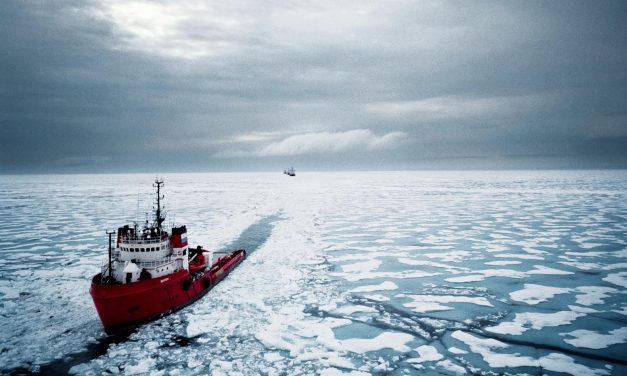
The Arctic; From Geographical Freezing to Geopolitical Boiling

Strategic Council Online – Opinion: The Arctic is no longer a frozen, remote periphery; it has become a live theater of great-power competition, where sea routes, port infrastructure, the law of the sea, and military deterrence are intertwined, shaping the future of maritime security.

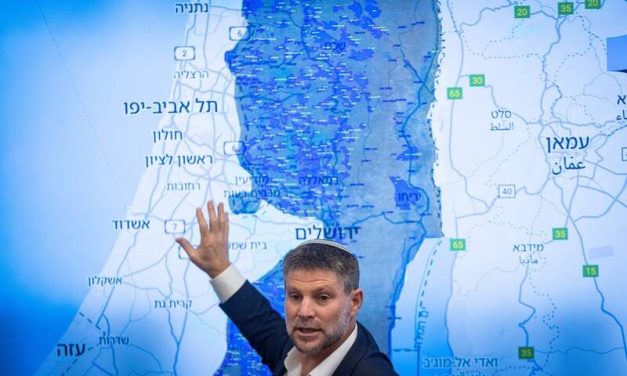
The Zionist Regime’s Time Bomb Activated in the West Bank

Strategic Council Online – Opinion: In the midst of America’s military deployment to West Asia and the Persian Gulf, which has increased tensions at the regional and global levels, the Zionist regime has seized the opportunity and accelerated the advancement of its ambitious projects, including the process of the illegal annexation of the West Bank to the occupied territories.

Loading

Últimas publicaciones

European Independence from the United States; From Dream to Reality

Strategic Council Online – Opinion: Europe has spoken of “strategic autonomy” for years, but each new crisis reveals that the gap between its aspiration for self-reliance and the reality of its security dependence on the United States remains significantly unbridged.

The Arctic; From Geographical Freezing to Geopolitical Boiling

Strategic Council Online – Opinion: The Arctic is no longer a frozen, remote periphery; it has become a live theater of great-power competition, where sea routes, port infrastructure, the law of the sea, and military deterrence are intertwined, shaping the future of maritime security.

The Zionist Regime’s Time Bomb Activated in the West Bank

Strategic Council Online – Opinion: In the midst of America’s military deployment to West Asia and the Persian Gulf, which has increased tensions at the regional and global levels, the Zionist regime has seized the opportunity and accelerated the advancement of its ambitious projects, including the process of the illegal annexation of the West Bank to the occupied territories.

Loading

DERNIER CONTENU

European Independence from the United States; From Dream to Reality

Strategic Council Online – Opinion: Europe has spoken of “strategic autonomy” for years, but each new crisis reveals that the gap between its aspiration for self-reliance and the reality of its security dependence on the United States remains significantly unbridged.

The Arctic; From Geographical Freezing to Geopolitical Boiling

Strategic Council Online – Opinion: The Arctic is no longer a frozen, remote periphery; it has become a live theater of great-power competition, where sea routes, port infrastructure, the law of the sea, and military deterrence are intertwined, shaping the future of maritime security.

The Zionist Regime’s Time Bomb Activated in the West Bank

Strategic Council Online – Opinion: In the midst of America’s military deployment to West Asia and the Persian Gulf, which has increased tensions at the regional and global levels, the Zionist regime has seized the opportunity and accelerated the advancement of its ambitious projects, including the process of the illegal annexation of the West Bank to the occupied territories.

Loading

DERNIER CONTENU

European Independence from the United States; From Dream to Reality

Strategic Council Online – Opinion: Europe has spoken of “strategic autonomy” for years, but each new crisis reveals that the gap between its aspiration for self-reliance and the reality of its security dependence on the United States remains significantly unbridged.

The Arctic; From Geographical Freezing to Geopolitical Boiling

Strategic Council Online – Opinion: The Arctic is no longer a frozen, remote periphery; it has become a live theater of great-power competition, where sea routes, port infrastructure, the law of the sea, and military deterrence are intertwined, shaping the future of maritime security.

The Zionist Regime’s Time Bomb Activated in the West Bank

Strategic Council Online – Opinion: In the midst of America’s military deployment to West Asia and the Persian Gulf, which has increased tensions at the regional and global levels, the Zionist regime has seized the opportunity and accelerated the advancement of its ambitious projects, including the process of the illegal annexation of the West Bank to the occupied territories.

Loading

DERNIER CONTENU

European Independence from the United States; From Dream to Reality

Strategic Council Online – Opinion: Europe has spoken of “strategic autonomy” for years, but each new crisis reveals that the gap between its aspiration for self-reliance and the reality of its security dependence on the United States remains significantly unbridged.

The Arctic; From Geographical Freezing to Geopolitical Boiling

Strategic Council Online – Opinion: The Arctic is no longer a frozen, remote periphery; it has become a live theater of great-power competition, where sea routes, port infrastructure, the law of the sea, and military deterrence are intertwined, shaping the future of maritime security.

The Zionist Regime’s Time Bomb Activated in the West Bank

Strategic Council Online – Opinion: In the midst of America’s military deployment to West Asia and the Persian Gulf, which has increased tensions at the regional and global levels, the Zionist regime has seized the opportunity and accelerated the advancement of its ambitious projects, including the process of the illegal annexation of the West Bank to the occupied territories.

Loading