
Zahra Asghari – International Affairs Expert
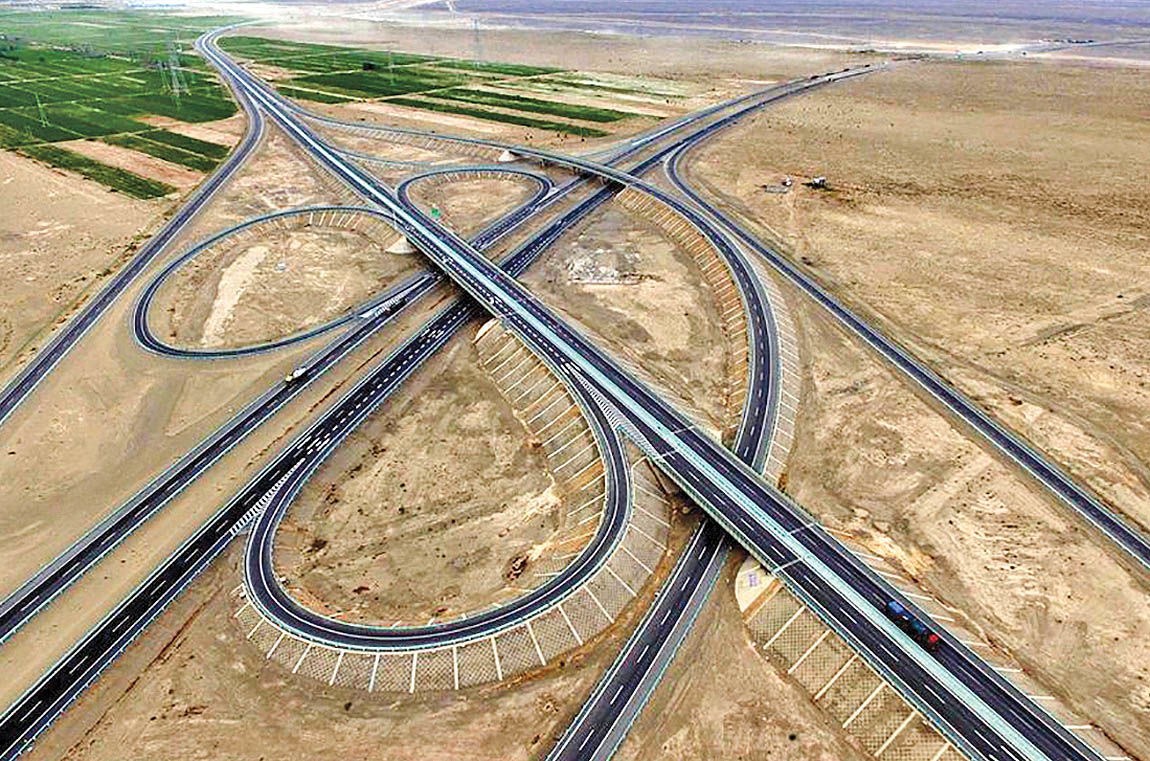
The Belt and Road Initiative consists of an economic belt and a transcontinental corridor that connects China by land to Southeast Asia, South Asia, Central Asia, Russia, and Europe, as well as a maritime route linking China’s coastal regions with Southeast and South Asia, the South Pacific, West Asia, and East Africa, extending to Europe.
Although the initiative continues to expand, its path and nature have changed. In the first half of 2025, China’s investments and new contracts under this plan reached USD 124 billion, setting a new record. Total economic interactions within this framework have so far amounted to approximately USD 1.3 trillion.
Key features of this initiative include a focus on smaller, lower-risk projects and a growing investment in renewable energy (around USD 9.7 billion). However, oil and gas still dominate with USD 44 billion, while a significant rise in mining and metals investments (USD 25 billion) is noteworthy.
The largest share of investments has been absorbed in Africa (USD 39 billion) and Central Asia (USD 25 billion). In contrast, Latin America has had only a marginal share of about 1 percent so far.
It is worth noting that some countries, including Italy (2023) and Panama (2025), have withdrawn from the initiative. Nevertheless, more than 150 countries remain part of the plan.
From a technical and economic standpoint, China’s focus on smaller projects under the BRI addresses global criticism regarding its “debt trap” policy, while also ensuring faster project completion and higher returns.
Geopolitically, China seeks to secure new energy and raw material routes by concentrating on Africa and Central Asia, thereby expanding its influence in regions less dependent on the West. The reduced presence in Latin America reflects tougher competition with the United States in Washington’s backyard. Moreover, the withdrawal of some countries demonstrates that the BRI faces political resistance and pressure from the West. Still, the substantial investments from other regions and states highlight China’s continued assertiveness in this domain.
Despite challenges, the initiative offers benefits that make it worthwhile for China. Firstly, it promotes financial stability and reduces risks, while smaller projects create opportunities for new joint financing models and debt control. Secondly, it diversifies the energy sector: China is balancing energy security (oil and gas) with the global transition to clean energy, offering a model that other states can emulate. Finally, geographically, BRI investments in Africa and Central Asia not only secure natural resources but also provide China with strategic depth against the West.
Following the Ukraine crisis, serious border and political disputes between China and India, as well as India and Pakistan, hinder the formation of full integration under the Belt and Road Initiative.
From the beginning, the greatest challenge facing this Chinese economic project has been insecurity and tensions in the international system. Financial and technical issues may be obstacles, but political and security challenges remain decisive factors that could shape its fate. For example, Ukraine holds a key position in the initiative. On June 6, 2020, China and Ukraine signed a governmental agreement to expand joint cooperation in infrastructure development. Ukraine has been one of China’s most important trade partners in Europe, with Beijing investing heavily in its ports and transportation infrastructure in recent years. However, the failure of peace negotiations between Russia and Ukraine leaves the outlook for these agreements and the route through Ukraine uncertain.
The recent SCO Summit in China once again brought the Belt and Road Initiative into focus. Undoubtedly, this meeting can create an environment for synergy, prevent negative competition among members, and open new pathways while removing obstacles.
The summit can further enhance the political, security, and regional legitimacy dimensions of this project. With the presence of leaders from Central Asia, Iran, and Russia, China can strengthen the Central Asia–Iran–Russia corridor as a main artery of the initiative. In addition, new SCO agreements among Central Asian countries focusing on transportation, railways, and transit roads—situated at the heart of the Silk Road’s land routes—deserve special attention, especially since the ongoing war in Ukraine and political-security tensions among Ukraine, the U.S., the EU, and Russia do not indicate a clear prospect for China’s access to Europe through Ukraine.
While the U.S. seeks to restrict the economic ties of SCO members, these states aim to adopt at least a minimal collective stance to avoid isolation vis-à-vis Washington. Moreover, Trump’s trade war has driven Russia, India, and China closer in strengthening regional economic relations, with the SCO serving as a key platform to consolidate this cooperation.







0 Comments